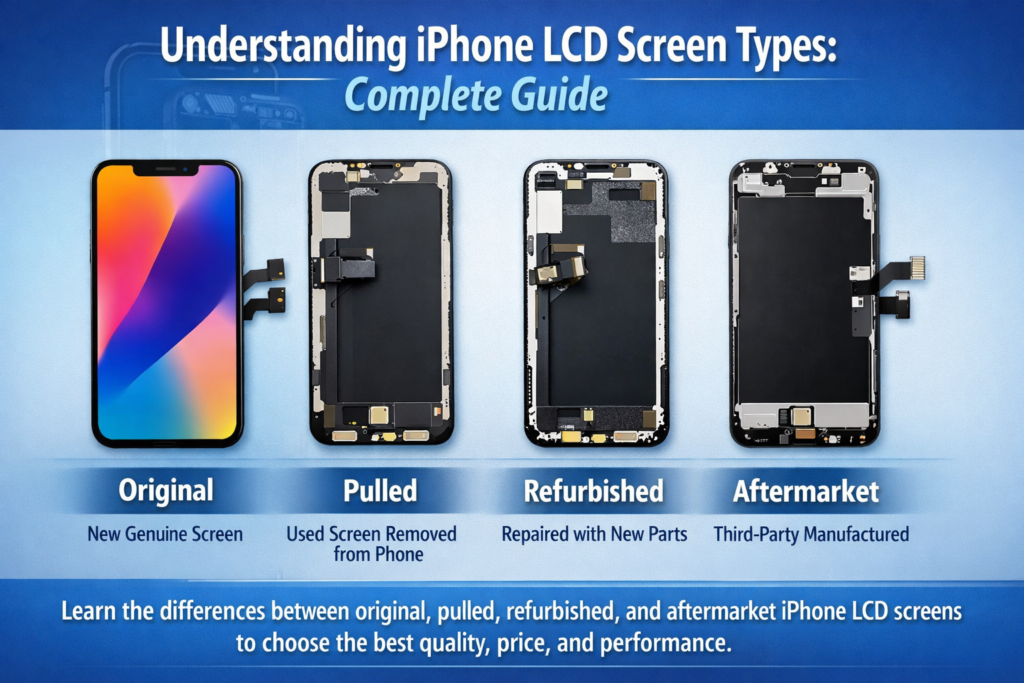
Hvad er en original ny LCD-skærm
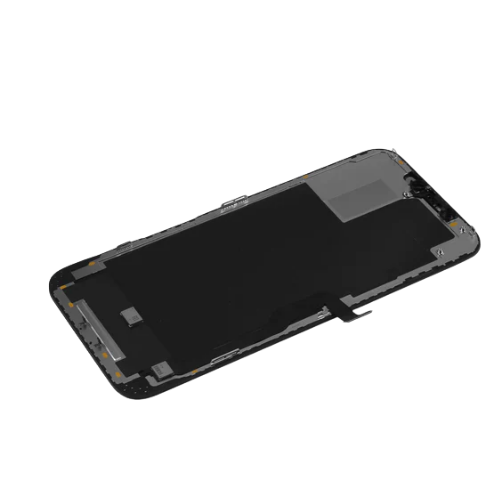
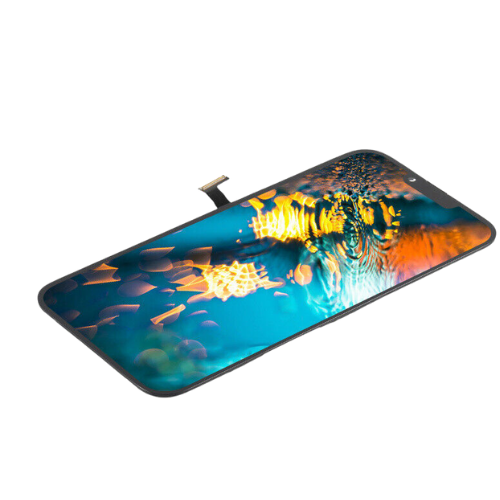
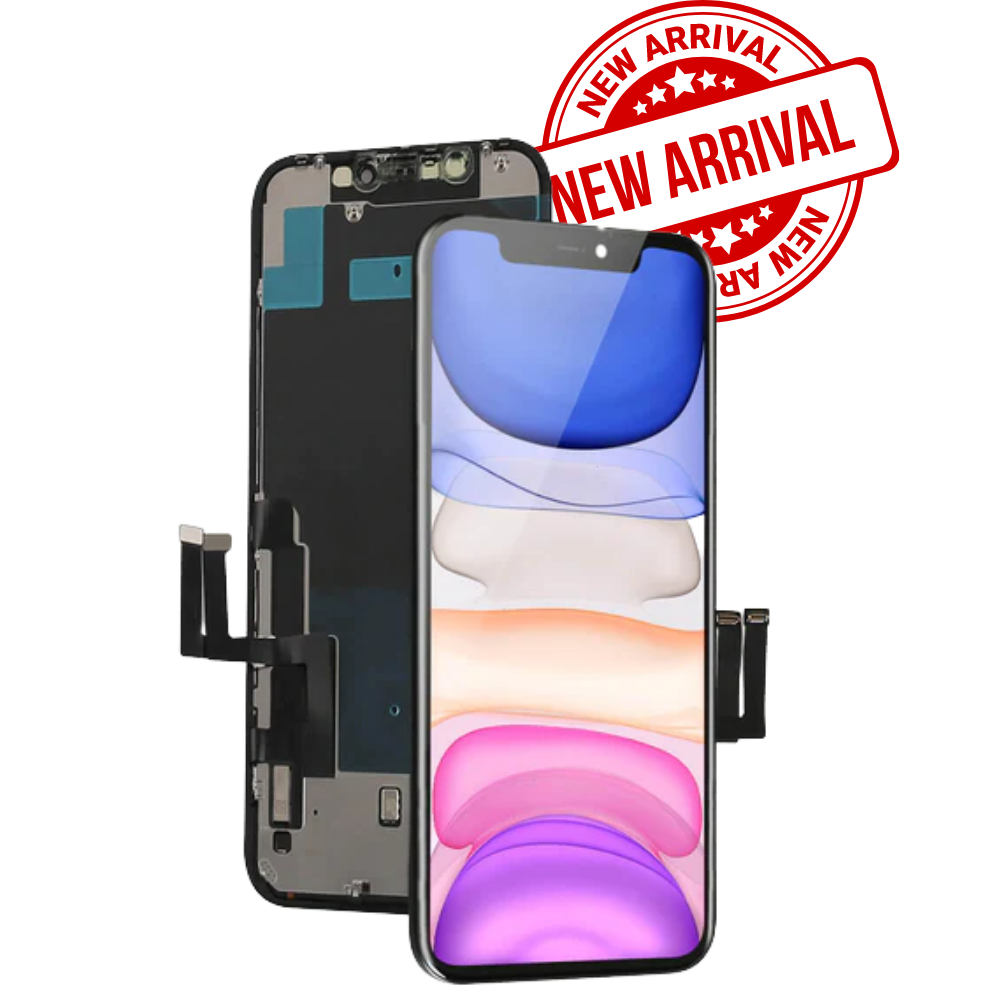
Når folk taler om bedst mulige iPhone LCD-skærm, de refererer normalt til det, der kaldes en original ny skærm. Dette er i det væsentlige en skærm, der opfylder Apples fabriksstandarder med hensyn til materialer, kalibrering, og ydeevne. Imidlertid, her er den virkelighed, de fleste købere ikke er klar over: ægte splinternye originalskærme er sjældent tilgængelige på det åbne marked, fordi de er stramt kontrolleret inden for officielle reparationskanaler.
Så det, du ser mærket som "oprindeligt nyt" på engrosmarkeder, refererer ofte til OEM-kvalitet skærme fremstillet efter samme specifikationer, sendes ikke nødvendigvis direkte fra Apple. Disse skærme leverer næsten perfekt farvenøjagtighed, høje lysstyrkeniveauer, og jævn berøringsfølsomhed. Faktisk, premium OEM-kvalitet skærme kan opnå op til 95–100 % af original skærmkvalitet afhængig af kilden.
Tænk på det som at købe et luksusur: den autentiske version sælges sjældent uden for autoriserede butikker, men fabriksækvivalenter af høj kvalitet kan stadig levere enestående ydeevne. Til reparationsvirksomheder og distributører, denne kategori ligger i toppen af kvalitetspyramiden - høj pris, lav defektrate, og maksimal kundetilfredshed.
Hvad er en original pulled (Adskilt) Skærm
An original trukket skærm (også kaldet adskilt skærm) kommer direkte fra en brugt iPhone. Enheden kan være ødelagt eller genbrugt, men selve skærmen forbliver intakt og funktionel. Disse skærme tages i betragtning 100% originale komponenter fordi de er fremstillet af Apple eller dets officielle leverandører.
Det, der gør pulled screens attraktive, er deres autentisk præstation. Du får perfekt farvekalibrering, original lysstyrke, og fuld kompatibilitet med funktioner som True Tone og Face ID. Det er i det væsentlige den samme oplevelse som en helt ny telefon - bare genbrugt.
Imidlertid, der er en afvejning. Udbuddet er begrænset, og kvaliteten kan variere afhængigt af, hvor forsigtigt skærmen blev fjernet. Selv mikroskopiske skader under demontering kan føre til problemer senere. Derfor spørger erfarne købere altid: Blev denne skærm professionelt fjernet og testet?
På mange måder, trukket skærme er som brugte luksusbiler - de kan være en utrolig ting, hvis de kommer korrekt, men risikabelt, hvis du ikke kender leverandøren.
Hvad er en renoveret skærm (Glas udskiftet)
EN renoveret skærm- ofte kaldet "original LCD med udskiftet glas" - er et af de mest populære valg på markedet i dag. Konceptet er enkelt: de originalt displaypanel er bevaret, men det knuste ydre glas udskiftes med et nyt.
Denne proces giver leverandører mulighed for at genbruge komponenter af høj værdi, mens skærmens udseende gendannes. Resultatet? Et produkt der leverer næsten original skærmkvalitet til en lavere pris. I mange tilfælde, brugere kan ikke engang se forskel på daglig brug.
Men det er her, tingene bliver vanskelige. Den endelige kvalitet afhænger i høj grad af renoveringsprocessen. Avancerede renoveringsfabrikker bruger avancerede lamineringsmaskiner og premium glas, sikrer fremragende berøringsrespons og holdbarhed. Lavere renovere kan bruge billigere glas eller dårlige limningsteknikker, fører til problemer som berøringsforsinkelse eller reduceret klarhed.
Du kan tænke på renoverede skærme som et "repareret vindue med den originale motor intakt." Hvis det gøres rigtigt, det er en smart og omkostningseffektiv løsning.
Hvad er eftermarkedet LCD-skærm
Eftermarkedsskærme er fuldt tredjepartsfremstillede skærme designet til at efterligne den originale iPhone-skærm. De er den mest tilgængelige mulighed og kommer i flere kvalitetsniveauer, fra budget til præmie.
Den største fordel? Pris. Nogle entry-level LCD-skærme koster kun 20–30 % af den originale skærmpris, hvilket gør dem yderst attraktive til lavbudgetreparationer.
Imidlertid, Ulempen er inkonsekvens. Skærme af lavere kvalitet lider ofte under:
- Dårlig farvenøjagtighed (70–85 % af originalen)
- Lavere lysstyrke
- Højere fejlprocenter (op til 12%)
Premium eftermarkedsskærme er forbedret markant i de seneste år, men de matcher stadig sjældent præcisionen og holdbarheden af originale komponenter.
Enkelt set, eftermarkedsskærme er som fast fashion – de ser godt ud i starten, men levetid og konsistens kan være tvivlsom.
Kerneforskelle mellem skærmtyper
Displaykvalitet (Farve, Lysstyrke)
Skærmkvalitet er der, hvor forskellen bliver mærkbar med det samme. Originale skærme gennemgår farvekalibrering på fabriksniveau, sikrer ensartet og nøjagtig farvegengivelse på tværs af enheder.
Eftermarkedsskærme, især lavere ende, virker ofte lidt blålig eller mat. Lysstyrken kan også være væsentligt lavere, gør udendørs synlighed til en udfordring.
Renoveret og trukket skærme, på den anden side, opretholde næsten original skærmkvalitet, fordi de bevarer det originale panel.
Berøringsfølsomhed & Præstation
Touch-ydeevne er en anden vigtig differentiator. Originale skærme tilbud præcis, hurtig, og stabil berøringsrespons, mens billigere alternativer kan opleve forsinkelse, spøgelsesberøringer, eller mistede input.
Renoverede skærme fungerer godt, hvis der bruges glas af høj kvalitet. Imidlertid, dårlig renovering kan påvirke berøringsfølsomheden negativt.
Holdbarhed & Levetid
Holdbarheden afhænger i høj grad af materialer og fremstillingsstandarder. Brug originale og højkvalitets renoverede skærme premium glas og stærke bindingsteknikker, gør dem mere modstandsdygtige over for skader.
Billige eftermarkedsskærme har en tendens til at revne lettere og kan nedbrydes inden for måneder.
Funktionskompatibilitet (Ægte tone, Face ID)
En af de største skjulte forskelle er funktionskompatibilitet. Originale og højkvalitetsskærme understøtter fuldt ud funktioner som f.eks True Tone og Face ID, mens mange eftermarkedsskærme ikke gør det.
Dette kan påvirke brugeroplevelsen markant, især til avancerede iPhone-modeller.
Detaljeret sammenligningstabel
Sammenligning af pris og ydeevne
| Skærmtype | Kvalitetsniveau | Prisklasse | Levetid | Funktionssupport |
|---|---|---|---|---|
| Original Ny | ⭐⭐⭐⭐⭐ | Højest | Længst | Fuld |
| Træk original | ⭐⭐⭐⭐⭐ | Høj | Lang | Fuld |
| Renoveret (Glas udskiftet) | ⭐⭐⭐⭐ | Medium | Mellemlang | For det meste fuld |
| Eftermarked Premium | ⭐⭐⭐ | Medium-Lav | Medium | Delvis |
| Eftermarkedsbudget | ⭐⭐ | Lav | Kort | Begrænset |
Fordele og ulemper ved hver skærmtype
Originale nye skærme
Originale nye skærme leverer uovertruffen ydeevne og pålidelighed. De er ideelle til premium reparationer, hvor kvaliteten ikke kan gå på kompromis. Ulempen er deres høje omkostninger og begrænsede tilgængelighed.
Træk skærme
Trækskærme tilbyder ægte ydeevne til en lidt lavere pris. Imidlertid, de kræver omhyggelig indkøb og test for at undgå skjulte defekter.
Renoverede skærme
Renoverede skærme skaber en balance mellem pris og kvalitet. De er meget udbredt i bulk indkøb på grund af deres omkostningseffektivitet. Stadig, konsistens afhænger i høj grad af leverandørens kvalitet.
Eftermarkedsskærme
Eftermarkedsskærme er budgetvenlige og bredt tilgængelige. Imidlertid, kvaliteten varierer meget, gør leverandørvalg kritisk.
Fælles markedsmisforståelser
Sandheden om "original" etiket
Udtrykket "original" bliver ofte misbrugt på markedet. Mange sælgere mærker produkter som originale, selv når de er renoveret eller eftermarkedet.
Understanding the exact category is crucial to avoid overpaying for lower-quality products.
How Suppliers Mislead Buyers
Some suppliers use vague terms like:
- “AAA quality”
- “OEM equivalent”
- “Premium original”
These terms are not standardized and can be misleading. Always request detailed specifications and testing reports.
Bulk Purchasing Guide for Buyers
How to Evaluate Suppliers
Choosing the right supplier is the most important step in bulk purchasing. Look for suppliers with:
- Stable quality consistency
- Clear product classification
- Verified customer feedback
Key Quality Inspection Methods
Before placing large orders, always test samples. Fokus på:
- Lysstyrke og farvesammenligning
- Berøringsfølsomhed
- Sensor compatibility
Pricing Strategy and Risk Control
Never choose solely based on price. En billigere skærm med høje fejlprocenter vil koste mere i returnering og skade på omdømmet.
Overvejelser om logistik og eftersalg
Pålidelige leverandører bør tilbyde:
- Garantipolitikker
- Udskiftningsgarantier
- Stabile leveringstidslinjer
Konklusion
At vælge den rigtige iPhone LCD-skærm handler ikke kun om pris – det handler om balancerende kvalitet, pålidelighed, og langsigtet værdi. Originale nye og trukket skærme leverer den bedste ydeevne, mens renoverede skærme tilbyder en smart mellemvej. Eftermarkedsskærme kan fungere til budgetmarkeder, men de kræver omhyggelig udvælgelse.
Til storkøbere, nøglen ligger i leverandør verifikation, prøve test, og klar produktklassificering. Træf informerede beslutninger, og du vil ikke kun reducere omkostningerne, men også bygge en stærkere, mere troværdig forretning.
FAQS
1. Hvad er den bedste iPhone LCD-skærmtype?
Originale nye eller trukket skærme tilbyder den bedste kvalitet og ydeevne.
2. Er renoverede skærme pålidelige?
Ja, hvis de kommer fra højkvalitets renoveringsfabrikker.
3. Hvorfor er eftermarkedsskærme billigere?
De bruger billigere materialer og forenklede fremstillingsprocesser.
4. Hvordan kan jeg kontrollere skærmkvaliteten?
Test prøver og tjek leverandørcertificeringer før bulkordrer.
5. Hvilken skærmtype er bedst til engros?
Renoverede skærme tilbyder normalt den bedste balance mellem pris og kvalitet.