Qu'est-ce qu'un nouvel écran LCD d'origine
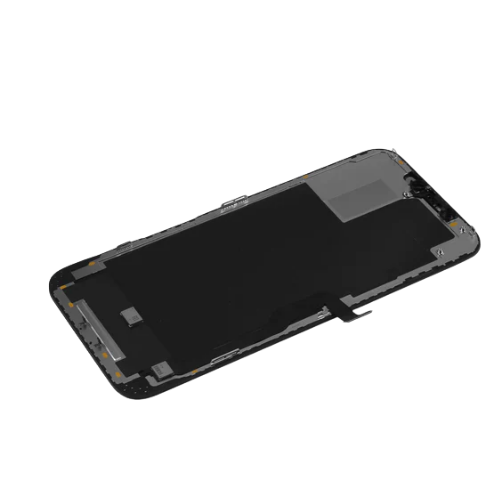
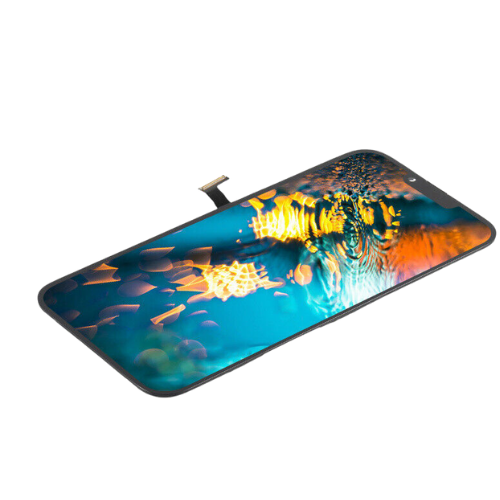
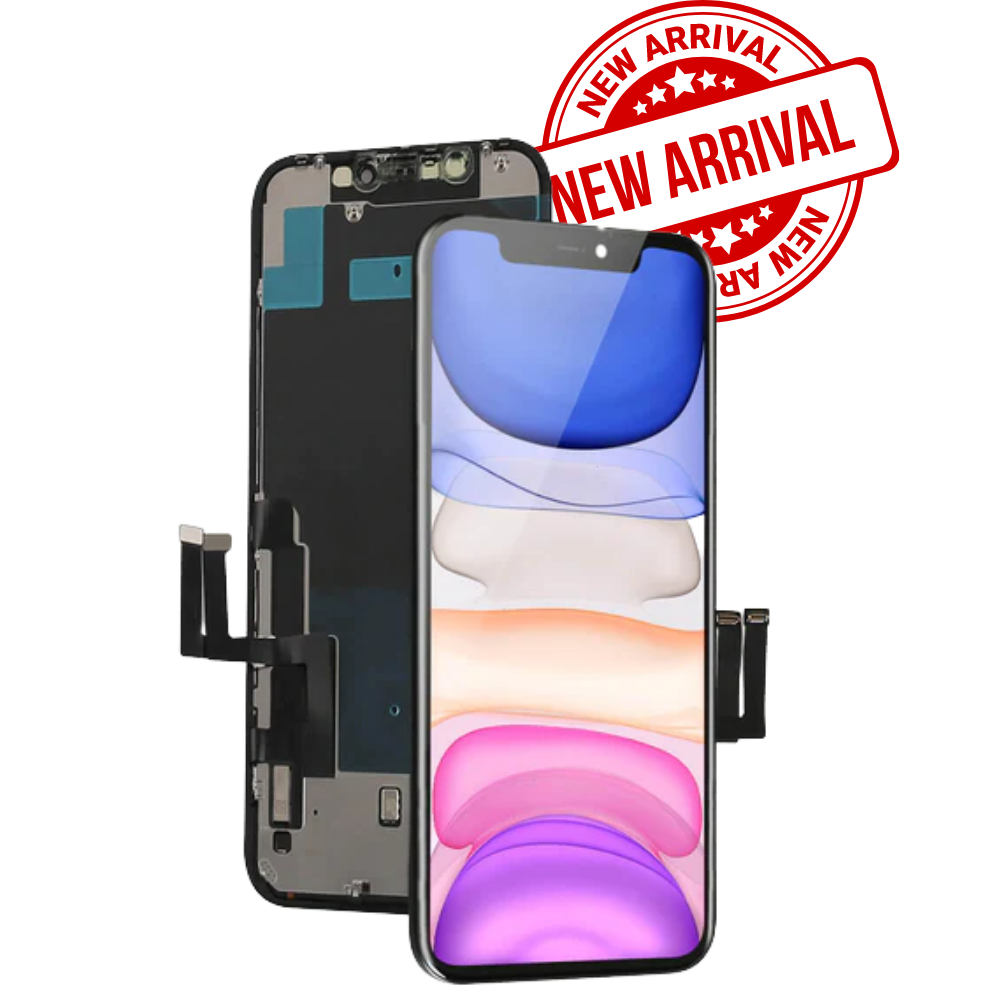
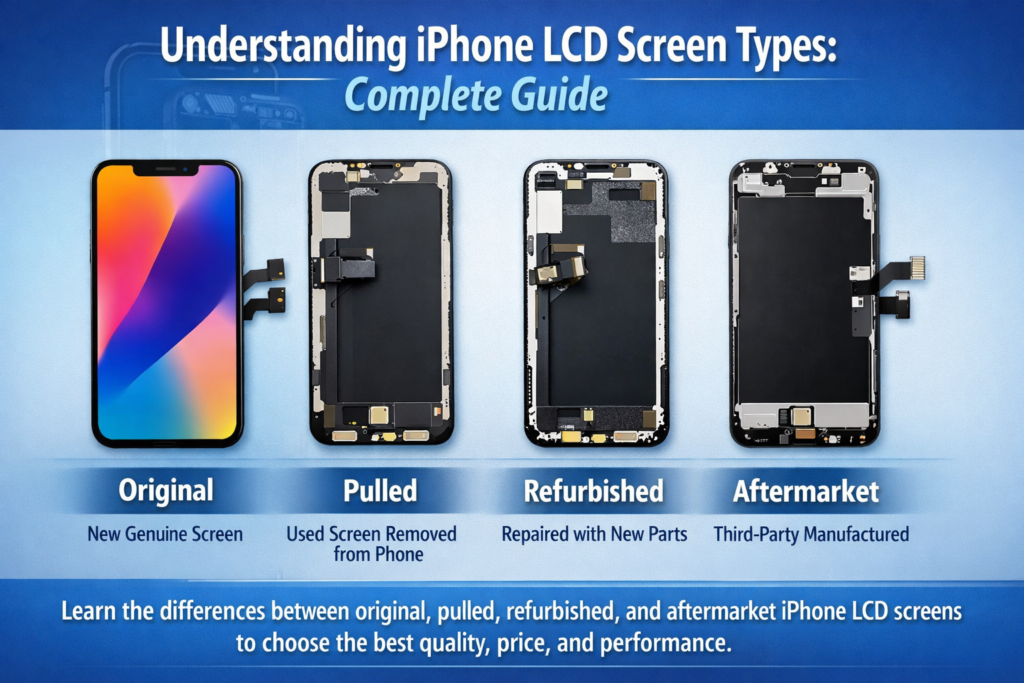
Quand les gens parlent du meilleur écran LCD iPhone possible, ils font généralement référence à ce qu'on appelle un nouvel écran d'origine. Il s’agit essentiellement d’un écran qui répond aux normes d’usine Apple en termes de matériaux., étalonnage, et performances. Cependant, voici la réalité que la plupart des acheteurs ne réalisent pas: les véritables écrans d'origine flambant neufs sont rarement disponibles sur le marché libre car ils sont étroitement contrôlés par les circuits de réparation officiels.
Ainsi, ce que vous voyez comme « original nouveau » sur les marchés de gros fait souvent référence à Écrans de qualité OEM fabriqués selon les mêmes spécifications, pas nécessairement expédié directement d'Apple. Ces écrans offrent une précision des couleurs presque parfaite, niveaux de luminosité élevés, et une réactivité tactile fluide. En fait, Les écrans haut de gamme de qualité OEM peuvent atteindre jusqu'à 95–100 % de la qualité d’affichage d’origine selon la provenance.
Pensez-y comme si vous achetiez une montre de luxe: la version authentique est rarement vendue en dehors des magasins agréés, mais les équivalents d'usine de haute qualité peuvent toujours offrir des performances exceptionnelles. Pour les entreprises de réparation et les distributeurs, cette catégorie se situe au sommet de la pyramide de la qualité : prix élevé, faible taux de défauts, et une satisfaction client maximale.
Qu'est-ce qu'un original tiré (Démonté) Écran
Un écran tiré d'origine (aussi appelé écran démonté) vient directement d'un iPhone usagé. L'appareil peut être cassé ou recyclé, mais l'écran lui-même reste intact et fonctionnel. Ces écrans sont considérés 100% composants d'origine parce qu'ils ont été fabriqués par Apple ou ses fournisseurs officiels.
Ce qui rend les écrans tirés attrayants, c'est leur performance authentique. Vous obtenez un calibrage parfait des couleurs, luminosité d'origine, et compatibilité totale avec des fonctionnalités telles que True Tone et Face ID. C'est essentiellement la même expérience qu'un téléphone tout neuf, juste réutilisé.
Cependant, il y a un compromis. L'offre est limitée, et la qualité peut varier en fonction du soin avec lequel l'écran a été retiré. Même des dommages microscopiques lors du démontage peuvent entraîner des problèmes plus tard. C'est pourquoi les acheteurs expérimentés demandent toujours: Cet écran a-t-il été retiré et testé professionnellement?
À bien des égards, les écrans tirés sont comme des voitures de luxe d'occasion : ils peuvent représenter une affaire incroyable s'ils sont achetés correctement, mais risqué si on ne connaît pas le fournisseur.
Qu'est-ce qu'un écran remis à neuf (Verre remplacé)
UN écran remis à neuf-souvent appelé « écran LCD d'origine avec verre remplacé » -est l'un des choix les plus populaires sur le marché aujourd'hui. Le principe est simple: le le panneau d'affichage d'origine est conservé, mais la vitre extérieure cassée est remplacée par une neuve.
Ce procédé permet aux fournisseurs de réutiliser des composants de grande valeur tout en restaurant l’apparence de l’écran.. Le résultat? Un produit qui livre une qualité d'affichage quasi originale à moindre coût. Dans de nombreux cas, les utilisateurs ne peuvent même pas faire la différence dans l’utilisation quotidienne.
Mais c'est ici que les choses se compliquent. La qualité finale dépend fortement du processus de rénovation. Les usines de rénovation haut de gamme utilisent des machines de contrecollage avancées et du verre de qualité supérieure., assurant une excellente réponse tactile et une excellente durabilité. Les rénovateurs bas de gamme peuvent utiliser du verre moins cher ou de mauvaises techniques de collage, entraînant des problèmes tels que le décalage tactile ou une clarté réduite.
Vous pouvez considérer les moustiquaires remises à neuf comme une « fenêtre réparée avec le moteur d’origine intact ». Si c'est bien fait, c'est une solution intelligente et rentable.
Qu'est-ce que l'écran LCD du marché secondaire
Les écrans de rechange sont écrans entièrement fabriqués par des tiers conçu pour imiter l'écran d'origine de l'iPhone. Il s’agit de l’option la plus largement disponible et se décline en plusieurs niveaux de qualité, du budget à la prime.
Le plus gros avantage? Prix. Certains écrans LCD d'entrée de gamme ne coûtent que 20–30% du prix de l’écran d’origine, ce qui les rend très attractifs pour les réparations à petit budget.
Cependant, l'inconvénient est l'incohérence. Les écrans de qualité inférieure souffrent souvent de:
- Mauvaise précision des couleurs (70–85% de l'original)
- Luminosité inférieure
- Des taux d'échec plus élevés (jusqu'à 12%)
Les écrans de rechange haut de gamme se sont considérablement améliorés ces dernières années, mais ils égalent encore rarement la précision et la longévité des composants d'origine.
En termes simples, les écrans du marché secondaire sont comme une mode rapide : ils ont l'air bien au début, mais la longévité et la cohérence peuvent être discutables.
Différences fondamentales entre les types d'écran
Qualité d'affichage (Couleur, Luminosité)
C'est dans la qualité d'affichage que la différence devient instantanément perceptible. Les écrans originaux subissent calibrage des couleurs en usine, assurer une reproduction des couleurs cohérente et précise sur tous les appareils.
Écrans de rechange, surtout les bas de gamme, apparaissent souvent légèrement bleutés ou ternes. La luminosité peut également être considérablement inférieure, faire de la visibilité extérieure un défi.
Écrans remis à neuf et tirés, d'autre part, conserver une qualité d'affichage proche de l'original car ils conservent le panneau d'origine.
Sensibilité tactile & Performance
Les performances tactiles sont un autre différenciateur majeur. Offre écrans originaux précis, rapide, et réponse tactile stable, alors que les alternatives moins chères peuvent connaître un décalage, touches fantômes, ou entrées manquées.
Les écrans remis à neuf fonctionnent bien si du verre de haute qualité est utilisé. Cependant, une mauvaise remise à neuf peut affecter négativement la sensibilité tactile.
Durabilité & Durée de vie
La durabilité dépend fortement des matériaux et des normes de fabrication. Utilisation d'écrans reconditionnés d'origine et de haute qualité verre haut de gamme et techniques de liaison solides, les rendant plus résistants aux dommages.
Les écrans de rechange bon marché ont tendance à se fissurer plus facilement et peuvent se dégrader en quelques mois.
Compatibilité des fonctionnalités (Ton vrai, Identification du visage)
L'une des plus grandes différences cachées est la compatibilité des fonctionnalités. Les écrans originaux et de haute qualité prennent entièrement en charge des fonctionnalités telles que True Tone et Face ID, alors que de nombreux écrans de rechange ne le font pas.
Cela peut avoir un impact significatif sur l'expérience utilisateur, surtout pour les modèles d'iPhone haut de gamme.
Tableau de comparaison détaillé
Comparaison prix/performance
| Type d'écran | Niveau de qualité | Gamme de prix | Durée de vie | Prise en charge des fonctionnalités |
|---|---|---|---|---|
| Original Nouveau | ⭐⭐⭐⭐⭐ | Le plus haut | Le plus long | Complet |
| Original tiré | ⭐⭐⭐⭐⭐ | Haut | Long | Complet |
| Remis à neuf (Verre remplacé) | ⭐⭐⭐⭐ | Moyen | Moyen-Long | Surtout plein |
| Prime de rechange | ⭐⭐⭐ | Moyen-Faible | Moyen | Partiel |
| Budget du marché secondaire | ⭐⭐ | Faible | Court | Limité |
Pour les avantages et les inconvénients de chaque type d'écran
Nouveaux écrans originaux
Les nouveaux écrans originaux offrent des performances et une fiabilité inégalées. Ils sont idéaux pour les réparations haut de gamme où la qualité ne peut être compromise. L'inconvénient est leur coût élevé et leur disponibilité limitée..
Écrans tirés
Les écrans tirés offrent de véritables performances à un coût légèrement inférieur. Cependant, ils nécessitent un approvisionnement et des tests minutieux pour éviter les vices cachés.
Écrans remis à neuf
Les écrans reconditionnés trouvent un équilibre entre prix et qualité. Ils sont largement utilisés dans les achats en gros en raison de leur rentabilité.. Toujours, la cohérence dépend fortement de la qualité du fournisseur.
Écrans de rechange
Les écrans de rechange sont économiques et largement disponibles. Cependant, la qualité varie considérablement, rendre la sélection des fournisseurs cruciale.
Malentendus sur le marché commun
La vérité sur l’étiquette « originale »
Le terme « original » est souvent utilisé à mauvais escient sur le marché. De nombreux vendeurs qualifient les produits d'originaux même lorsqu'ils sont remis à neuf ou après-vente..
Understanding the exact category is crucial to avoid overpaying for lower-quality products.
How Suppliers Mislead Buyers
Some suppliers use vague terms like:
- “AAA quality”
- “OEM equivalent”
- “Premium original”
These terms are not standardized and can be misleading. Always request detailed specifications and testing reports.
Bulk Purchasing Guide for Buyers
How to Evaluate Suppliers
Choosing the right supplier is the most important step in bulk purchasing. Look for suppliers with:
- Stable quality consistency
- Clear product classification
- Verified customer feedback
Key Quality Inspection Methods
Avant de passer des commandes importantes, always test samples. Se concentrer sur:
- Comparaison de la luminosité et des couleurs
- Réactivité tactile
- Sensor compatibility
Pricing Strategy and Risk Control
Never choose solely based on price. A cheaper screen with high defect rates will cost more in returns and reputation damage.
Considérations logistiques et après-vente
Les fournisseurs fiables devraient offrir:
- Politiques de garantie
- Garanties de remplacement
- Délais d'expédition stables
Conclusion
Choisir le bon écran LCD pour iPhone n’est pas seulement une question de prix, c’est aussi une question de prix. qualité d'équilibrage, fiabilité, et valeur à long terme. Les écrans originaux neufs et retirés offrent les meilleures performances, tandis que les écrans remis à neuf offrent un juste milieu. Les écrans de rechange peuvent fonctionner pour les marchés économiques, mais ils nécessitent une sélection minutieuse.
Pour les acheteurs en gros, la clé réside dans vérification du fournisseur, test d'échantillon, et une classification claire des produits. Prendre des décisions éclairées, et vous réduirez non seulement les coûts, mais vous bâtirez également une structure plus solide., entreprise plus fiable.
FAQ
1. Quel est le meilleur type d’écran LCD pour iPhone?
Les écrans originaux neufs ou retirés offrent la meilleure qualité et performance.
2. Les écrans reconditionnés sont-ils fiables?
Oui, s'ils proviennent d'usines de remise à neuf de haute qualité.
3. Pourquoi les écrans de rechange sont-ils moins chers?
Ils utilisent des matériaux moins coûteux et des processus de fabrication simplifiés.
4. Comment puis-je vérifier la qualité de l'écran?
Tester des échantillons et vérifier les certifications des fournisseurs avant les commandes groupées.
5. Quel type d'écran est le meilleur pour la vente en gros?
Les écrans reconditionnés offrent généralement le meilleur équilibre entre coût et qualité.