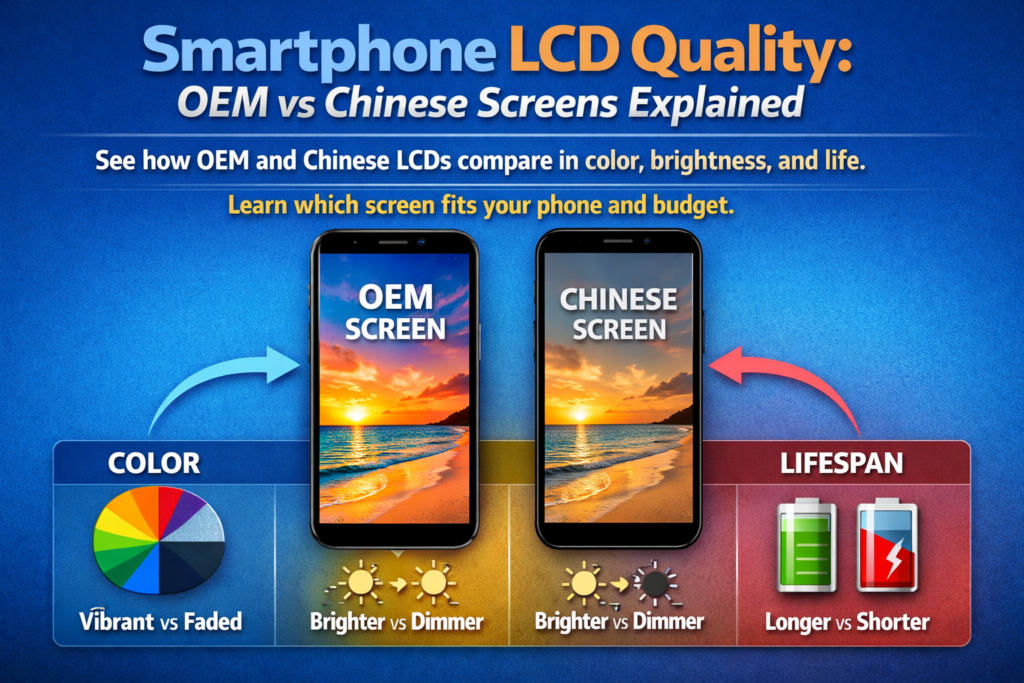
Introduktion til Smartphone LCD-skærmkvalitet
Hvis din telefons skærm revner, falmer, eller begynder at opføre sig mærkeligt, den første ting du vil indse er dette: ikke alle LCD-skærme er skabt lige. Nogle ser fantastiske ud, føles smørblød, og holder i årevis. Andre … ja, lad os bare sige, at de får din telefon til at føles som et billigt legetøj.
I smartphone reparation og engros verden, den virkelige kamp står imellem officielle OEM eftersalgsskærme og Kinesiske indenlandske LCD-skærme. Mærker som Æble, Xiaomi (Redmi), Huawei, og Samsung alle bruger ekstremt høj standard skærmpaneler - men hvad sker der, når de udskiftes? Det er der, tingene bliver interessante.
Lad os bryde det hele ned, uden den tekniske jargon-hovedpine.
Hvad gør én LCD-skærm bedre end en anden?
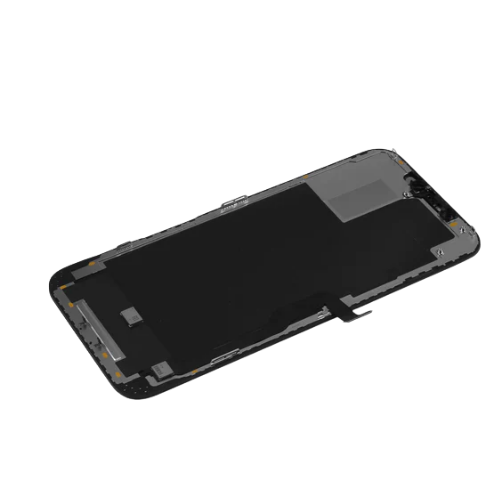
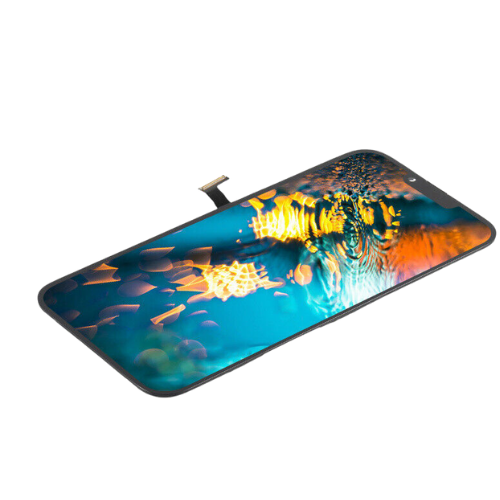
En LCD-skærm er ikke bare "glas med pixels." Det er en sandwich af komplekse lag:
- Baggrundsbelysning
- Flydende krystallag
- Farvefiltre
- Polarisatorer
- Berøringssensor
- Display driver IC
Skift et lag og bom — lysstyrken falder, farver skifter, berøring bliver laggy, eller batteriforbruget stiger. Brug af skærme af høj kvalitet bedre materialer, bedre kalibrering, og snævrere fremstillingstolerancer.
Tænk på det som kaffe: to kopper ser ens ud, men man bruger premium bønner og man bruger instant pulver. Samme idé.
Forstå LCD-kvaliteter og specifikationer
Lysstyrke og Nits
OEM-skærme når ofte 600-1000 nits, mens mange kinesiske LCD-skærme topper kl 350-500 nits. Det betyder udendørs synlighed falder kraftigt med billigere paneler.
Farveskala og nøjagtighed
Brug af officielle skærme DCI-P3 eller sRGB kalibrering med fabriksjustering. De fleste eftermarkedsskærme er overmættet eller udvasket.
Opløsning og pixeltæthed
OEM-skærme matcher telefonens native opløsning perfekt. Nogle kopiskærme snyder - samme størrelse, men færre pixels.
Berøringsfølsomhed
Officielle skærme understøtter 240Hz+ touch-sampling. Billige LCD'er kan føles forsinket, især for gamere.
Hvad er officielle eftersalgsskærme (OEM skærme)?
OEM-skærme er produceret af de samme fabrikker, som lavede den originale telefonskærm. For eksempel:
- Apple bruger LG Display, Boe, Skarp
- Samsung bruger Samsung skærm
- Xiaomi bruger TCL CSOT, Tianma, Boe
- Huawei bruger Boe, Visionox
Disse skærme:
✔ Har identisk lysstyrke
✔ Samme farvekalibrering
✔ Samme touch IC
✔ Samme strømforbrug
De er bogstaveligt talt, hvad der kom på telefonen fra dag ét.
Hvordan Apple definerer LCD- og skærmkvalitet
Apple spiller ikke rundt.
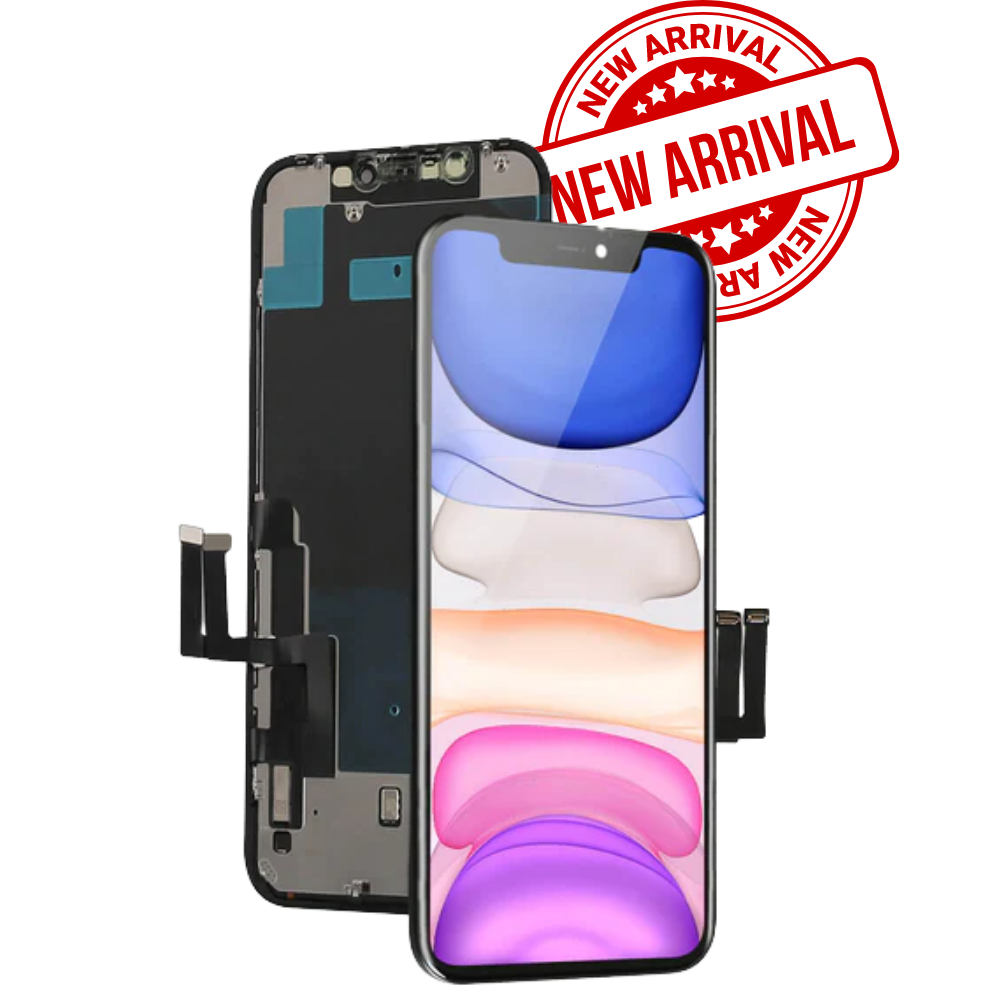
Apple LCD'er (iPhone XR, iPhone 11, SE) og OLED'er bruger:
- True Tone kalibrering
- Fabrikstilpasset display IC
- Originale polarisatorer
- Baggrundsbelysningsmoduler med høj lysstyrke
Det er derfor, når du udskifter en iPhone-skærm med en kopi-LCD, True Tone forsvinder, farver skifter, og batteriet aflades hurtigere.
Xiaomi & Redmi officielle skærme forklaret
Xiaomi og Redmi bruger kinesiske panelproducenter i topklasse:
- Boe
- TCL CSOT
- Tianma
Officielle eftersalgsskærme:
- Høj lysstyrke (550-800 nits)
- Nøjagtig farve
- Lang levetid for baggrundsbelysning
- Glat berøringsrespons
Eftermarkedsskærme? De ser ofte okay ud i starten, men falmer hurtigt og brænder strøm.
Huaweis officielle skærmstandarder
Huawei er ekstremt kræsen med farver og kontrast.
Deres officielle LCD-skærme bruger:
- Brugerdefineret gamma tuning
- Højeffektiv baggrundsbelysning
- Præcis touch IC-parring
Kinesiske kopiskærme har ofte:
- Blå nuance
- Vasket hvide
- Lavere betragtningsvinkler
Samsung Display vs Aftermarket Displays
Samsung er kongen af displayteknologi.
Officielle Samsung paneler:
- AMOLED eller PLS LCD
- 1000+ nits
- Ultrahøj kontrast
- Strømoptimeret
Eftermarkedet LCD'er til Samsung-telefoner er normalt nedgraderinger, især ved udskiftning af OLED med LCD.
Karakterer af kinesiske indenlandske skærme
Original renoveret
Det er rigtige OEM-skærme, repareret med nyt glas.
✔ Bedste kvalitet
❌ Begrænset udbud
A Grade Copy-skærme
Avancerede kopier med gode materialer.
✔ God lysstyrke
✔ Anstændig farve
B klasse- og økonomiskærme
Billige erstatninger.
❌ Lav lysstyrke
❌ Dårlig berøring
❌ Kort levetid
Præstationssammenligning: OEM vs kinesisk LCD
| Feature | OEM skærm | Kinesisk kopi |
|---|---|---|
| Lysstyrke | Høj | Mellem til lav |
| Farve | Nøjagtig | Overmættet eller kedelig |
| Røre | Ultra-glat | Lidt forsinkelse |
| Strømforbrug | Optimeret | Dræner hurtigere |
| Holdbarhed | 2–4 år | 6–18 måneder |
Holdbarhed og levetidsforskelle
Brug af OEM skærme LED-baggrundsbelysning af højere kvalitet og bedre polarisatorer. Det betyder:
- Ingen gulning
- Ingen dæmpning
- Ingen flimren
Billige LCD'er begynder typisk at svigte efter et par hundrede opladningscyklusser.
Pris vs præstationsanalyse
OEM skærm:
💰 Dyrt
🏆 Bedste oplevelse
Kinesisk A-klasse:
💰 40–60 % billigere
👍 70–80 % af OEM-kvalitet
Billige eksemplarer:
💰 Meget billig
❌ Du får hvad du betaler for
Hvilken skal du vælge?
Hvis telefonen er:
- Ny
- Præmie
- Bruges til forretning eller spil
→ Vælg OEM
Hvis telefonen er:
- Gammel
- Sekundær
- Budget enhed
→ Kinesisk LCD af høj kvalitet er fint
Sådan undgår du LCD-fælder af lav kvalitet
Tjek altid:
- Lysstyrke spec
- Touch IC-model
- Baggrundsbelysning spænding
- Polarisator klarhed
- Leverandørens omdømme
Hvis prisen føles for god til at være sand... er den det.
Fremtidige tendenser inden for smartphone LCD-fremstilling
Kinesiske fabrikker indhenter hurtigt det. I 5 år, høj kvalitet indenlandske LCD'er vil nå 90% af OEM-kvalitet til halvdelen af prisen.
Men for nu, OEM regerer stadig tronen.
Konklusion
Officielle eftersalgsskærme fra Apple, Xiaomi, Huawei, og Samsung er guldstandarden - lysere, glattere, mere præcis, og længerevarende. Kinesiske indenlandske LCD'er giver enorme omkostningsbesparelser, men kvaliteten varierer vildt alt efter karakter.
Hvis du forstår forskellen, du bliver ikke brændt. Køb smart, ikke billigt.
FAQS
1. Er kinesiske LCD-skærme falske?
Ingen, de er rigtige udstillinger, bare ikke autoriserede OEM dele.
2. Forbedrer OEM-skærme batteriets levetid?
Ja. De bruger strømoptimeret baggrundsbelysning og IC'er.
3. Kan kinesiske skærme se godt ud?
De af høj kvalitet kan se meget tæt på OEM.
4. Hvorfor mangler iPhone True Tone på kopiskærme?
Fordi display-IC'en ikke er original.
5. Er en renoveret OEM bedre end en kopi?
Ja, 100%. Renoveret OEM slår stadig enhver kopi.