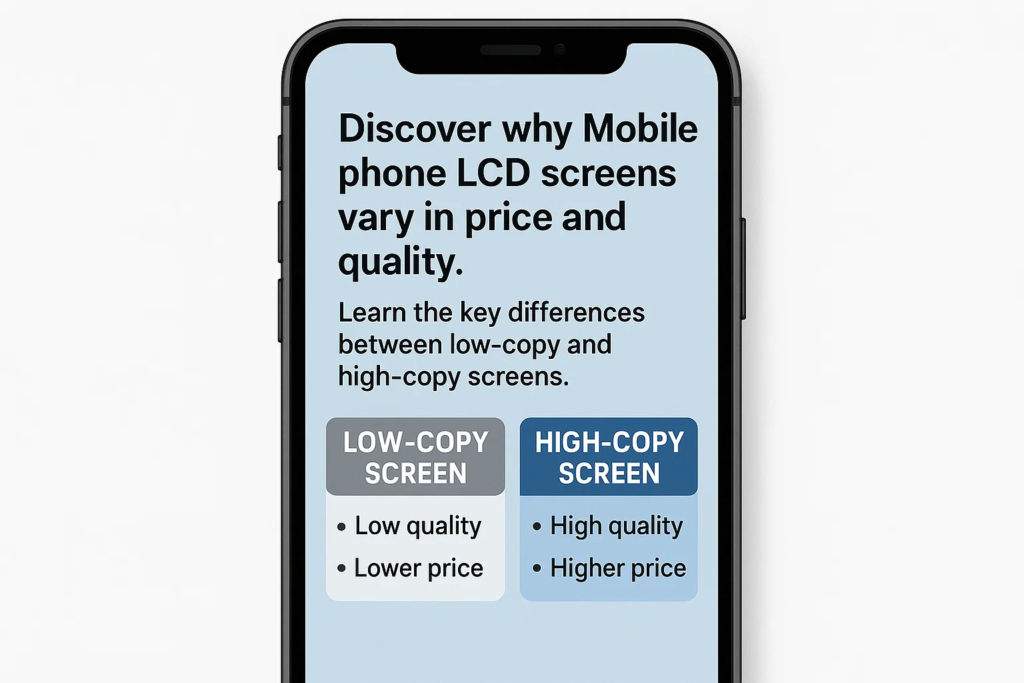
Zavedenie
Už ste niekedy vstúpili na trh s mobilnými dielmi a všimli ste si, že dve „domáce“ LCD obrazovky pre ten istý model telefónu sa môžu líšiť v cene 3x alebo viac? Jeden stojí niekoľko desiatok juanov, druhý vyše sto. Pre netrénované oko, vyzerajú takmer identicky. Ale pod povrchom, rozdiel je obrovský. Rozoberme si to jednoduchými pojmami.
Pochopenie základov obrazovky LCD telefónu
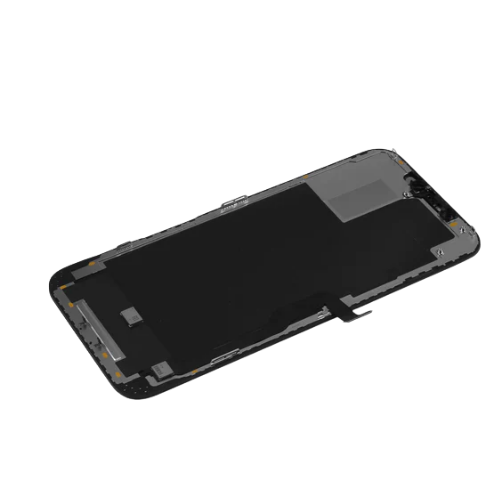
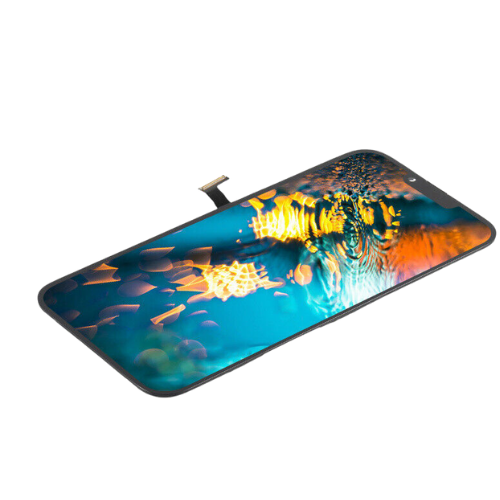
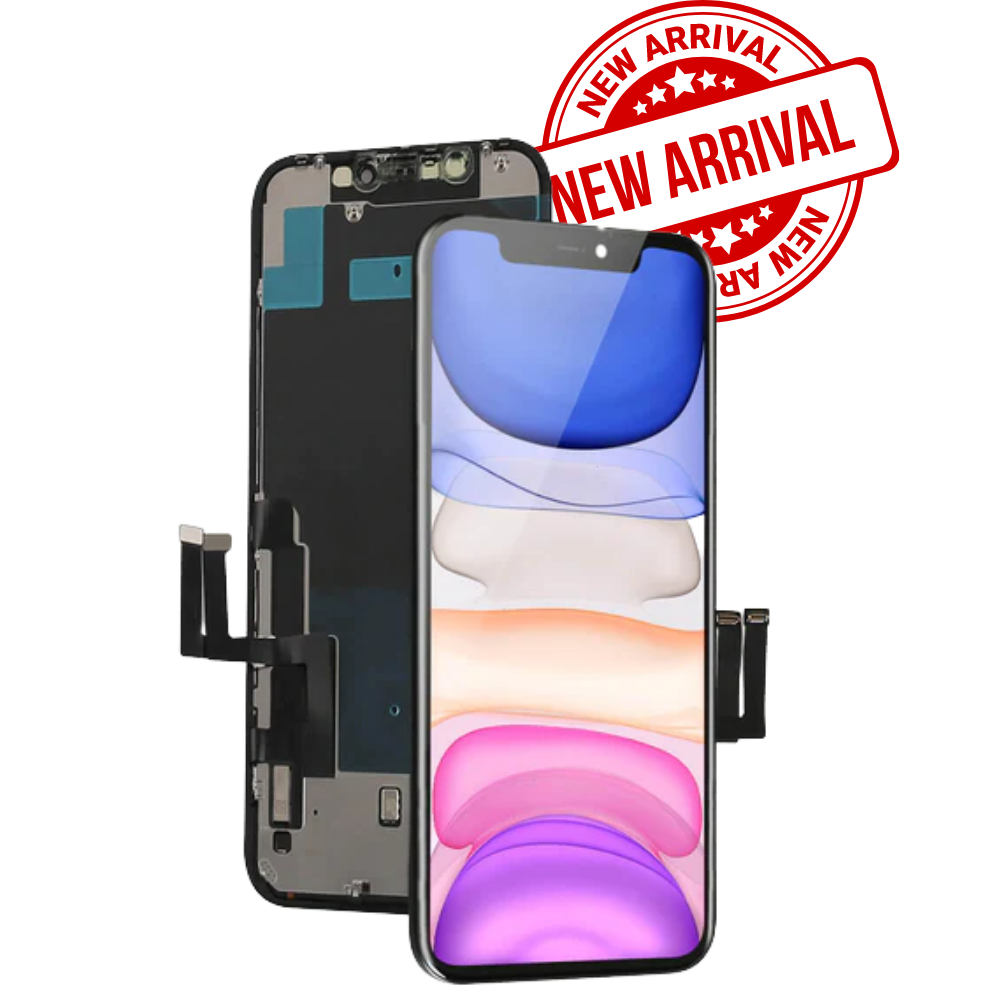
LCD obrazovka nie je len jeden kus skla. Je to malý ekosystém častí, ktoré spolupracujú:
- Pohár: ochranný povrch, ktorého sa dotknete
- Podsvietenie: zdroj svetla za panelom
- IC čipy ovládača: „mozgy“, ktoré riadia výstup obrazu
Keď výrobcovia znížia náklady na niektorý z nich, konečný produkt trpí.
Typy domácich obrazoviek
- Obrazovky s nízkym počtom kópií ("lacné kópie"): Vyrobené z najlacnejších materiálov, minimálne testovanie, a často zlá montáž. Sú navrhnuté tak, aby vyzerali ako originál, ale to je asi tak všetko.
- Obrazovky s vysokým počtom kópií („prémiové kópie“): Postavené z kvalitnejších komponentov, prísnejšie procesy, a často blízko výkonu OEM. Stále sú popredajné, ale svety okrem nízkej kópie.
Materiálové rozdiely
Kvalita skla
Lacné sklo sa ľahko poškriabe, praskne rýchlejšie, a nemusí mať povrchovú úpravu proti odtlačkom prstov. Obrazovky s vysokým počtom kópií používajú hrubšie, upravené sklo, niekedy takmer také silné ako pôvodné sklo Gorilla Glass.
Moduly podsvietenia
Malá kópia: slabý jas, nerovnomerné miesta, vybíja batériu.
Vysoká kópia: rovnomerný jas, energeticky efektívne, lepšie na vonkajšie použitie.
IC čipy vodiča
Predstavte si IC ako „prekladač“ medzi telefónom a displejom.
- Malá kópia: lacné čipy spôsobujú oneskorenie, Duch sa dotýka, a vyššiu spotrebu energie.
- Vysoká kópia: Značkové integrované obvody zaisťujú plynulú odozvu a stabilné zobrazenie.
Výrobný proces
V továrňach s malým počtom kópií, ručná montáž je bežná, skratky sú časté, a málo pozornosti sa venuje bezprašnému prostrediu. Výroba veľkých kópií často využíva automatizované linky, čisté priestory, a pokročilé techniky spájania ako OCA/LOCA, ktoré priamo ovplyvňujú čistotu a životnosť obrazovky.
Kontrola kvality a testovanie
Lacné obrazovky: náhodné kontroly šarží, veľa defektov prekĺzne.
Obrazovky s vysokým počtom kópií: 100% funkčné testovanie, vyhorenia kontroly, dotyková kalibrácia.
Je to rozdiel medzi hádzaním kociek a zaručením konzistencie.
Rozdelenie nákladov
Prečo teda stojí jedna obrazovka 40 RMB a ďalšie 120 RMB?
- Malá kópia: najlacnejšie sklo, podsvietenie, a IC; minimálna prácnosť.
- Vysoká kópia: značkové materiály, prísnejšie QC, dlhšie skúšobné časy.
Neplatíte len za „rovnaký produkt“ – platíte za neviditeľnú kvalitu vo vnútri.
Rozdiely v používateľskej skúsenosti
Používatelia s malým počtom kópií sa často sťažujú:
- Oneskorenie dotyku
- Vyblednuté farby
- Zlá viditeľnosť vonku
Obrazovky s vysokým počtom kópií sú hladké, vibrujúce, a blízko k originálu. Je to ako rozdiel medzi sledovaním filmu na rozmazanom DVD a streamovaním v HD.
Dlhá životnosť a spoľahlivosť
Lacné obrazovky často vydržia len mesiace. Problémy ako žlté podsvietenie, Duch sa dotýka, alebo prasknuté sklo sa objaví rýchlo. Verzie s vysokým počtom kópií, ak sa s ním dobre zaobchádza, môže vydržať takmer rovnako dlho ako originály.
Riziká výberu najlacnejšej obrazovky
Najprv, máte pocit, že šetríte peniaze. Ale keď sa zákazníci vrátia nahnevaní kvôli chybám – alebo keď vymeníte obrazovku dvakrát – nakoniec miniete viac, ako keby ste si od začiatku vybrali možnosť vysokej kópie.
Prečo sú obrazovky s vysokým počtom kópií drahšie
Nie je to len „zisk“. Vyššia cena pokrýva:
- Prémiové materiály
- Profesionálna montáž
- Nižšie miery defektov
- Záručná podpora
Bežné mýty o domácich obrazovkách
- Mýtus 1: "Všetky domáce obrazovky sú rovnaké." Nesprávne – kvalita sa veľmi líši.
- Mýtus 2: „Ak je to drahé, musí byť dovezený." Nie je to pravda – mnohé domáce obrazovky s vysokou kópiou sú vynikajúce a stoja za cenu.
Praktické rady pre nových kupujúcich
Chcete rýchlo zistiť rozdiel?
- Porovnajte jas pri maximálnom nastavení
- Skontrolujte hrúbku a hmotnosť skla
- Test odozvy na dotyk (lag = lacný čip)
- Opýtajte sa dodávateľov, či sú integrované obvody značkové
Jeden cent za jednu kvalitu: Staré pravidlo stále funguje
Skrátka, ak je obrazovka neuveriteľne lacná, vždy sa nájde dôvod. Rovnako ako rýchle občerstvenie verzus správne jedlo – dostanete to, za čo zaplatíte.
Záver
Nie všetky domáce LCD obrazovky sú rovnaké. Veľký rozdiel v cene sa týka materiálov, proces, a testovanie. Obrazovky s nízkym počtom kópií sú v poriadku, ak chcete najlacnejšiu opravu, ale nesú so sebou riziká. Obrazovky s vysokým počtom kópií, zatiaľ čo drahšie, poskytujú lepší výkon a spoľahlivosť. Nakoniec, „jeden cent za jednu kvalitu“ je stále tým najlepším pravidlom, ktoré treba dodržiavať.
Časté otázky
1. Aký je hlavný rozdiel medzi obrazovkami s nízkym a vysokým počtom kópií?
Low-copy používa lacnejšie materiály s minimálnym testovaním, zatiaľ čo vysoká kópia používa lepšie sklo, čipsy, a prísna kontrola kvality.
2. Môžu lacné LCD poškodiť môj telefón?
Áno. Nekvalitné integrované obvody môžu spôsobiť prehriatie, Duch sa dotýka, alebo dokonca problémy so základnou doskou.
3. Stoja obrazovky s vysokým počtom kópií za príplatok?
Absolútne. Poskytujú lepšiu odolnosť, zobrazenie, a spokojnosť zákazníkov.
4. Ako môžem skontrolovať kvalitu obrazovky pred nákupom?
Skontrolujte jas, odozva na dotyk, a opýtajte sa na značku IC vodiča.
5. Všetci dodávatelia ponúkajú oba typy obrazoviek?
Nie vždy. Niektorí sa špecializujú na lacné šarže, zatiaľ čo spoľahliví dodávatelia zvyčajne skladujú aj vysoko kópie.