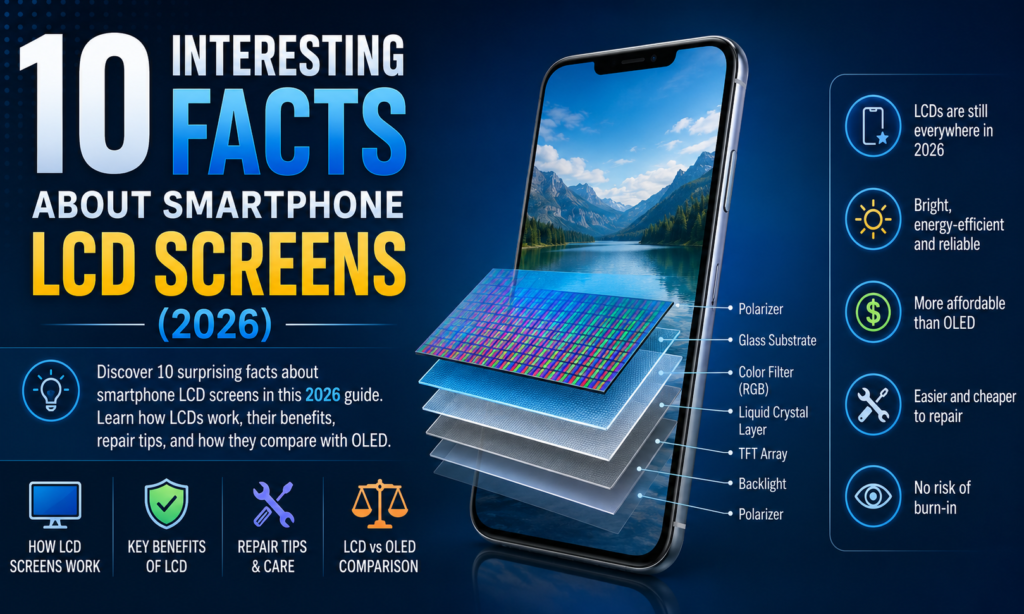
Nganong Importante ang Pagsabot sa mga LCD Screen
Kung ang mga tawo mopalit ug smartphone, kasagaran sila magtagad sa processor, kamera, baterya, o kapasidad sa pagtipig. Katingalahan, usa sa labing importante nga mga bahin—ang display—kasagarang mataligam-an. Bisan pa ang screen mao ang bahin nga imong nakig-uban matag adlaw. Kung nagbasa ka sa mga email, pagtan-aw og mga video, pag-browse sa social media, o magdula, ang imong display nagtino kung unsa ka makalipay ug komportable ang imong kasinatian.
Bisan kung ang mga pagpakita sa OLED nahimong labi ka sikat sa mga punoan nga smartphone, Ang mga LCD screen nagpadayon sa pagdominar sa daghang mga barato ug mid-range nga mga himan tungod kay naghatag sila kasaligan nga pasundayag, ubos nga gasto sa paggama, ug maayo kaayo nga durability. Ang mga analista sa industriya nagtaho nga ang OLED milabaw 60% sa mga pagpadala sa smartphone, apan ang LCn budget phones ug ang global repair market.
Atong susihon 10 Makaiikag nga mga kamatuoran bahin sa mga screen sa LCD sa smartphone nga kinahanglan mahibal-an sa matag tiggamit.
Kamatuoran #1 – Ang LCD Dili Makapatunghag Kahayag sa Iyang Kaugalingon
Daghang mga tawo ang nagtuo nga ang mabulukon nga mga imahe sa usa ka LCD screen gikan mismo sa mga pixel. Sa tinuod lang, dili kana tinuod.
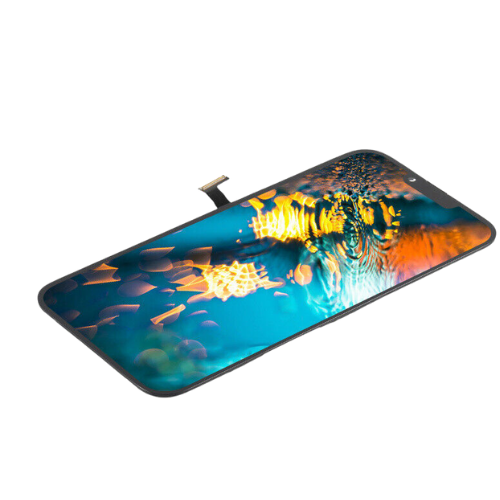
Nagbarug ang LCD Likido nga crystal display. Dili sama sa teknolohiya sa OLED, Ang mga pixel sa LCD dili makapagawas sa kahayag nga independente. Inay, ang usa ka gamhanan nga LED backlight naglingkod sa luyo sa display ug nagdan-ag sa minilyon nga likido nga kristal nga mga selula. Kini nga mga kristal nagtuyok ug nagtuyok aron makontrol kung pila ang kahayag nga moagi sa matag pixel, paghimo sa mga imahe nga imong nakita.
Giunsa Naglihok ang Backlight
Hunahunaa ang LCD isip usa ka bintana nga adunay mga bulag nga mapaigoigo. Ang backlight naglihok sama sa kahayag sa adlaw sa gawas, samtang ang mga likido nga kristal naglihok sama sa gagmay nga mga blind sa bintana nga nagbukas ug nagsira aron makontrol ang kahayag ug kolor.
Tungod kay ang LCD kanunay nagsalig sa usa ka backlight, itom nga mga dapit dili gayud hingpit nga itom. Kini usa ka hinungdan nga ang OLED naghatud sa lawom nga kahayag ug mubu nga gasto sa produksiyon.
Kamatuoran #2 - Ang IPS LCD Mas Maayo Kay sa Tradisyonal nga TFT LCD
Dili tanan nga mga screen sa LCD gihimo nga managsama.
Ang mga tigulang nga smartphone kasagarang gigamit TFT LCD panel, nga dili mahal apan nag-antus sa pig-ot nga mga anggulo sa pagtan-aw ug nahugasan nga mga kolor. Ang mga modernong smartphone kasagarang gigamit IPS LCD (In-Plane Pagbalhin) teknolohiya, nga makapauswag sa kalidad sa imahe.
Ang mga Anggulo sa Pagtan-aw ug Katukma sa Kolor
Ang mga panel sa IPS LCD nagtugot sa mga tiggamit sa pagtan-aw sa screen gikan sa halos bisan unsang anggulo nga wala’y hinungdan nga pagtuis sa kolor. Naghatag usab sila og mas tukma nga pagkopya sa kolor, paghimo og mga litrato, mga video, ug ang mga website makita nga mas natural.
Karon, Ang IPS LCD nahimong sumbanan nga teknolohiya sa LCD alang sa pagkamasaligan sa mga smartphone, ug affordability hilabihan ka maayo.
Kamatuoran #3 - Ang Mas Taas nga Resolusyon Dili Kanunay Nagpasabut nga Mas Maayo nga Pagpakita
Daghang pumapalit awtomatik nga nagtuo nga ang mas taas nga resolusyon katumbas sa mas maayong screen.
Samtang Full HD+, 2K, ug bisan ang 4K nga mga resolusyon nindot kaayo, Pixel Density (Ppi) kasagaran mas importante kay sa hilaw nga resolusyon. Sa higayon nga ang usa ka smartphone moabut sa halos 400-500 ka pixel kada pulgada, Ang indibidwal nga mga pixel halos imposible nga mailhan sa mata sa tawo panahon sa normal nga paggamit.
Inay maggukod sa labing taas nga resolusyon, ang mga konsumidor kinahanglan usab nga magtimbang-timbang:
| Kalidad | Nganong Importante Kini |
|---|---|
| Kahayag | Mas maayo nga makita sa gawas |
| Pagkatukma sa kolor | Mas natural nga mga hulagway |
| Kalainan | Gipauswag nga kasinatian sa pagtan-aw |
| Refresh rate | Hapsay nga pag-scroll |
| Touch Response | Mas maayo nga kasinatian sa pagdula |
Usa ka balanse nga pagpasundayag usld nga kasinatian kay sa pagbaton lamang og daghang mga pixel. citeturn0search5turn0search2
Kamatuoran #4 – Ang Kahayag Mas Importante Kay sa Naamgohan sa Daghang Tawo
Nakasulay ka na ba sa pagbasa sa imong telepono ubos sa hayag nga kahayag sa adlaw?
Ang problema sa kasagaran dili ang resolusyon-kini kahayag sa screen.
Pagsabot sa Nits
Ang kahayag gisukod sa nits.
Sa kinatibuk-an:
- 400–500 nits = madawat sulod sa balay
- 500–700 nits = maayong pagkakita sa gawas
- 800+ nits = maayo kaayo nga performance sa kahayag sa adlaw
Ang modernong IPS LCD nga mga pasundayag mahimong makab-ot ang impresibong sustenido nga kahayag, paghimo kanila ilabi na nga praktikal alang sa mga trabahante sa gawas, ang delivery driveequently naggamit sa ilang telepono sa direkta nga kahayag sa adlaw.
Kamatuoran #5 - Ang mga LCD Screen Dili Makasinati og Permanenteng Burn-in
Usa sa pinakadako nga bentaha sa LCD mao ang pagbatok niini pagsunog sa screen.
Nahitabo ang Burn-in kung ang mga static nga imahe nagpabilin nga makita pagkahuman gipakita sa taas nga panahon. Tungod kay ang mga pixel sa LCD nagsalig sa usa ka gipaambit nga backlight kaysa sa kahayag nga nagpagawas sa kaugalingon, Ang permanente nga pagkasunog talagsa ra.
Kini naghimo sa LCD nga nagpakita nga usa ka maayo kaayo nga kapilian alang sa mga tiggamit nga kanunay nga magpakita:
- GPS nabigasyon
- Mga static nga dashboard
- Mga aplikasyon sa negosyo
- Pag-monitor sa seguridad
- Point-of-sale nga mga sistema
Ang mga OLED nga mga pasundayag naghatag labi ka maayo nga co sa pagpadayon sa imahe sa ilawom sa pipila nga mga kondisyon.
Kamatuoran #6 – Ang Nabuak nga Salamin Dili Kanunay Nagpasabot nga Nabuak ang LCD
Daghang mga tag-iya sa smartphone nataranta human gihulog ang ilang mga telepono.
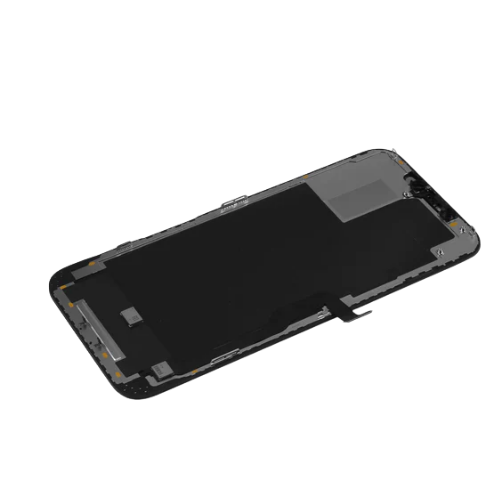
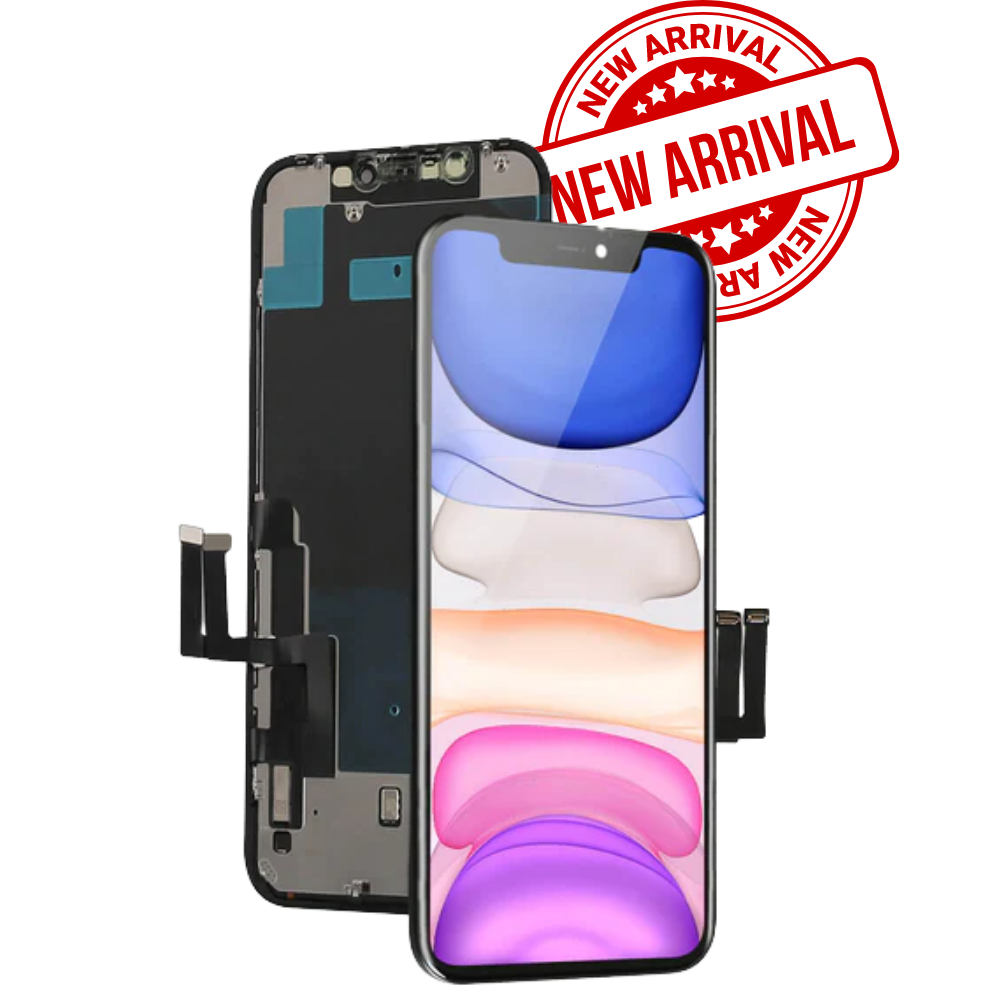
Maayo na lang, ang atubangan nga bildo, paghikap digitizer, ug LCD panel lain-laing mga component.
Glass vs LCD vs Touch Panel
Mahimong adunay usa ka nadaot nga telepono:
| Component | Sintomas |
|---|---|
| Salamin sa atubangan | Mga liki lang |
| Pindota ang Digitizer | Ang paghikap mihunong sa pagtrabaho |
| LCD Panel | Black spots, kolor nga mga linya, walay display |
Kung nabuak lang ang baso samtang ang display ug paghikap nagpabilin nga normal, Ang mga pag-ayo mahimong mas ubos ang gasto kay sa pag-ilis sa kompleto nga display assembly.
Ang mga propesyonal nga teknisyan kanunay nga nagsusi kung unsang layer ang napakyas sa wala pa magrekomenda sa pag-ayo.
Kamatuoran #7 – Barato nga Kapuli nga LCD Screens Mahimong Lahi kaayo sa Kalidad
Dili tanan nga kapuli nga screen nagtanyag sa parehas nga pasundayag.
Ang mubu nga mga pasundayag sa aftermarket mahimong mag-antos:
- Ubos nga kahayag
- Dili maayo nga pag-calibrate sa kolor
- Mas hinay nga tubag sa paghikap
- Mas taas nga pagkonsumo sa kuryente
- Mubo nga kinabuhi
Ang premium nga aftermarket o OEM-kalidad nga kapuli nga mga screen sa kasagaran naghatag og mas maayo nga kalig-on ug usa ka kasinatian sa user nga mas duol sa orihinal nga display. Ang mga propesyonal sa pag-ayo kanunay nga nagrekomenda sa pag-focus lamang sa presyo.
Kamatuoran #8 – Ang Kadaot sa Tubig Mahimong Dili Makapatay Diha-diha dayon sa LCD
Daghang mga tiggamit ang nagtuo nga kung ang usa ka telepono nagtrabaho gihapon pagkahuman nabasa, maayo ang tanan.
Sa tinuod lang, umog mahimong hinay-hinay corrode display connectors, integrated circuits, ug mga sangkap sa backlight sa mga adlaw o bisan mga semana.
Ang kasagarang mga timailhan sa pasidaan naglakip:
- Nagkidlap-kidlap nga display
- Random nga itom nga mga spots
- Bertikal nga mga linya
- Dili parehas nga kahayag
- Kapakyasan sa paghikap
Ang gilayon nga pagpauga ug propesyonal nga pag-inspeksyon labi nga nagdugang sa higayon nga mapugngan ang permanente nga kadaot.
Kamatuoran #9 - Ang mga tigpanalipod sa screen nag-una nga nagpugong sa mga garas
Ang usa ka tempered glass nga tigpanalipod labi ka mapuslanon-apan kini adunay mga limitasyon.
Kini nanalipod batok sa:
- Mga yawe
- Mga sensilyo
- Mga partikulo sa balas
- Adlaw-adlaw nga mga garas
Hinoon, kini dili makagarantiya sa proteksyon batok sa kusog nga mga epekto. Ang usa ka grabe nga pagtulo mahimo gihapon nga mabuak ang internal nga panel sa LCD bisan kung ang tigpanalipod sa screen nagpabilin nga wala’y labot.
Ang labing kaayo nga proteksyon naghiusa:
- Tempered nga bildo
- Shock-resistant nga kaso sa telepono
- Mainampingon nga pagdumala
Kamatuoran #10 – Ang Maayong Adlaw-adlaw nga Kinaiya Makapalugway sa Kinabuhi sa LCD
Ang mga screen sa LCD katingad-an nga lig-on kung gipadayon sa husto.
Ang yano nga mga batasan naglakip:
- Likayi nga iladlad ang telepono sa grabeng kainit.
- Hupti nga uga ang charging port.
- Limpyohi ang display gamit ang microfiber nga panapton.
- Likayi ang paglingkod sa telepono.
- Gamit ug dekalidad nga mga charger para malikayan ang kawalay kalig-on sa kuryente.
- Ibutang ang device sa usa ka protective case.
Kining gagmay nga mga batasan makapakunhod pag-ayo sa aksidenteng kadaot ug makapalugway sa kinabuhi sa display sa imong smartphone.
LCD vs roled: Dali nga Pagtandi
| Kalidad | IPS LCD | Pormel |
|---|---|---|
| Kahayag nga Tinubdan | LED Backlight | Nagpagawas sa kaugalingon nga mga Pixel |
| Itom nga Level | Maayo | Maayo kaayo |
| Kahayag sa gawas | Maayo kaayo | Maayo kaayo |
| Risgo sa Pagsunog | Wala | Posible |
| Gasto sa Pag-ayo | Mas ubos | Taas |
| Gasto sa Paggama | Mas ubos | Taas |
| Episyente sa Baterya | Stable | Depende sa Content |
| Gibag-on | Mas baga | Nipis |
Samtang ang OLED nagdominar sa mga premium nga smartphone, Ang IPS LCD nagpabilin nga usa ka talagsaon nga pasundayag matag adlaw. citeturn0search0turn0search1turn0search3
Kataposan
Ang teknolohiya sa LCD sa Smartphone miuswag pag-ayo sa miaging duha ka dekada. Ang karon nga mga IPS LCD nga mga pasundayag nagtanyag mga buhi nga kolor, lapad nga mga anggulo sa pagtan-aw, maayo kaayo nga kahayag, ug kasaligan nga pasundayag nga nakatagbaw sa milyon-milyon nga tiggamit sa tibuuk kalibutan. Bisan kung ang OLED nagpadayon sa pagpalapad sa mga punoan nga aparato, Ang LCD nagpabilin nga usa ka hinungdanon nga teknolohiya alang sa mga smartphone sa badyet, mga kagamitan sa edukasyon, kagamitan sa negosyo, ug ang industriya sa pag-ayo sa kalibutan.
Ang pagsabot niining napulo ka kamatuoran makatabang sa mga konsumidor sa paghimog mas maalamong mga desisyon sa pagpalit, pagpili sa mas taas nga kalidad nga kapuli nga mga screen, ug mas maayong panalipdan ang ilang mga gamit. Kung nagpalit ka bag-ong telepono o nag-ayo sa daan, Ang pagkahibalo kung giunsa ang paglihok sa teknolohiya sa LCD nagtugot kanimo nga balansehon ang pasundayag, kalig-on, ug gasto uban ang pagsalig.
Kanunay nga Gipangutana nga mga Pangutana
1. Mas maayo ba ang IPS LCD kaysa TFT LCD?
Oo. Ang IPS LCD naghatag og mas lapad nga mga anggulo sa pagtan-aw, mas maayo nga color accuracy, ug gipaayo nga kalidad sa imahe kumpara sa tradisyonal nga TFT LCD.
2. Mahimo bang masunog ang mga LCD screen?
Ang permanente nga pagsunog dili kasagaran sa mga display sa LCD tungod kay naggamit sila usa ka bulag nga backlight imbis nga mga pixel nga nagpagawas sa kaugalingon..
3. Ngano nga mas barato ang LCD replacement screens kaysa OLED?
Ang paghimo sa LCD mas hamtong ug dili kaayo mahal, paghimo sa pag-ayo kamahinungdanon mas barato.
4. Mahimo ba nga ang usa ka liki nga screen adunay usa ka nagtrabaho nga LCD?
Oo. Usahay ang atubangan lang nga bildo ang mabuak samtang ang LCD ug touch function nagpabilin nga hingpit nga naglihok.
5. Unsaon nako paghimo sa akong LCD screen nga molungtad og dugay?
Gamit ug dekalidad nga phone case, i-install ang tempered glass nga proteksyon, likayi ang pagkaladlad sa tubig ug grabeng temperatura, ug limpyo kanunay ang display gamit ang microfiber nga panapton.