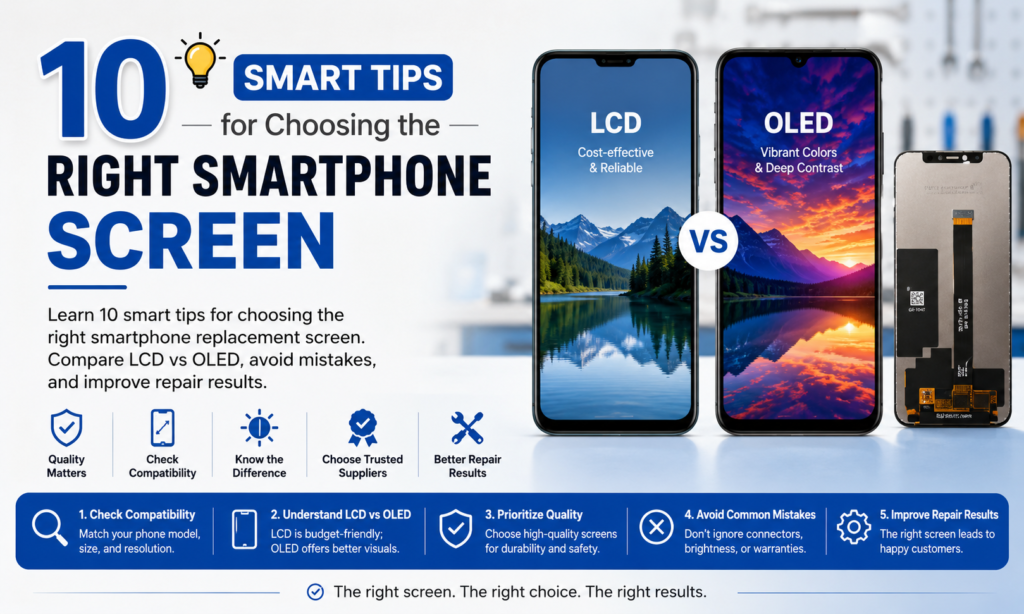
Ang mga screen sa smartphone usa sa labing kanunay nga nadaot nga mga sangkap sa modernong mga mobile device. Kung ang usa ka telepono nahulog nga aksidente, nadugmok ubos sa pressure, o nadaot sa epekto, ang display kasagaran ang unang bahin nga mag-antos. Gipakita kana sa bag-ong mga taho sa industriya Ang pagpuli sa screen nagpabilin nga pinakadako nga bahin sa merkado sa pag-ayo sa mobile, accounting alang sa labaw pa kay sa 30% sa kita sa pag-ayo sa tibuok kalibutan. Sa samang higayon, Ang mga tag-iya sa smartphone nagtipig sa ilang mga aparato nga mas dugay kaysa kaniadto, paghimo sa taas nga kalidad nga pag-ayo nga labi ka hinungdanon.
Ang pagpili sa husto nga kapuli nga screen dili na yano sama sa pagpili sa labing barato nga kapilian nga magamit online. Ang mga smartphone karon naggamit sa daghang mga teknolohiya sa pagpakita, lakip ang LCD, Pormel, Mulo, LTPO KA, ug flexible OLED panel. Ang dili maayo nga kalidad nga pag-ilis mahimong mosangpot sa pagkunhod sa kahayag, dili tukma nga mga kolor, dili maayo nga tubag sa paghikap, pagkahubas sa baterya, o bisan mga problema sa pagkaangay. Mao nga ang pagsabut kung giunsa ang pagpili sa husto nga tipo sa screen makatipig salapi, pagpalambo sa performance sa device, ug pagdugang sa katagbawan sa kustomer.
Kini nga giya nagsusi sa napulo ka praktikal nga mga tip nga nag-ayo sa mga teknisyan, mga wholesaler, Pag-ayo sa mga tindahan, ug ang mga tiggamit sa smartphone mahimong magamit sa pagpalit sa mga puli nga screen.
Ngano nga ang Pagpili sa Screen Mas Hinungdanon kaysa Kaniadto
Ang industriya sa pag-ayo sa smartphone nagpadayon sa pagtubo samtang gipili sa mga konsumedor ang pag-ayo kaysa pag-ilis. Gipakita sa panukiduki sa industriya nga ang tibuuk kalibutan nga merkado sa mga serbisyo sa pag-ayo sa smartphone gipabilhan sa gibanabana $7.55 bilyon sa 2025 ug gipaabot nga magpadayon sa padayon nga pagpalapad sa sunod nga dekada. Ang pag-ilis sa screen nagpabilin nga labing gihangyo nga serbisyo sa pag-ayo tungod kay ang kadaot sa display usa sa labing kasagaran nga pagkapakyas sa smartphone.
Sa samang higayon, Ang teknolohiya sa pagpakita nahimong labi ka sopistikado. Ang mga pasundayag sa OLED karon nagdominar sa mga premium nga smartphone, ug ang mga analista sa industriya nagbanabana niana labaw pa sa 60% sa mga smartphone nga gipadala 2025 gigamit ang teknolohiya sa OLED. Kini nga pagbalhin nagpasabut nga ang mga propesyonal sa pag-ayo kinahanglan nga makasabut sa lainlaing mga kategorya sa screen ug ang ilang mga kinaiya sa pasundayag sa wala pa maghimo mga desisyon sa pagpalit.
Ang usa ka puli nga screen direkta nga makaapekto sa kasinatian sa tiggamit. Ang display mao ang nag-unang interface tali sa user ug sa device. Kung ang mga kolor tan-awon nahugasan, dili maayo ang pagkasensitibo sa paghikap, o ang kahayag dili managsama, namatikdan dayon sa mga tiggamit ang kalainan. Ang pagpili sa husto nga screen makatabang sa pagpadayon sa orihinal nga pasundayag samtang gipamubu ang umaabot nga mga isyu sa pag-ayo.
Pagsabut sa Mga Uri sa Screen sa Smartphone
Sa wala pa maghisgot sa mga tip, importante nga masabtan ang mga nag-unang mga kategoriya sa screen nga anaa sa merkado sa pag-ayo karon.
Gipatin-aw ang mga LCD Screen
LCD (Likido nga crystal display) Ang teknolohiya nagpabilin nga kaylap nga gigamit sa badyet ug mid-range nga mga smartphone. Ang mga LCD screen nagsalig sa usa ka backlight aron sa pagdan-ag sa mga pixel. Sila sa kasagaran naghatag og maayo nga kalig-on, ubos nga gasto sa paggama, ug barato nga kapuli nga presyo.
Ang mga modernong IPS LCD nga mga display naghatag og maayo kaayo nga mga anggulo sa pagtan-aw ug gipaayo ang pagkasibu sa kolor kumpara sa mas daan nga mga teknolohiya sa LCD. Daghang mga technician sa pag-ayo ang nagpabili sa mga panel sa LCD tungod kay kini sa kasagaran dili kaayo mahal ug kanunay nga dali makuha. Para sa mga kustomer nga naka-focus sa affordability kaysa sa premium nga kalidad sa imahe, Ang mga pagpuli sa LCD nagpabilin nga praktikal nga solusyon.
Ang OLED ug AMOLED Screens Gipasabut
Ang mga pasundayag sa OLED nagpatunghag kahayag sa lebel sa pixel, Pagwagtang sa panginahanglan alang sa usa ka backlight. Kini nagtugot sa mas lawom nga mga itom, mas taas nga contrast ratios, gipaayo nga kahusayan sa enerhiya, ug nipis nga mga disenyo sa device.
Ang teknolohiya sa AMOLED nagrepresentar sa usa ka advanced nga pagpatuman sa OLED nga sagad gigamit sa Samsung, Xiaomi, Google Pixel, Usa ka, ug uban pang flagship smartphone brands. Ang flexible nga OLED nga mga display nahimong mas komon tungod sa ilang abilidad sa pagsuporta sa mga curved edges ug slimmer device profiles. Ang datos sa industriya nagsugyot nga ang pagsagop sa OLED nagpadayon nga paspas nga nagtubo sa tibuuk nga merkado sa smartphone.
Orihinal, Om, ug Aftermarket Screens
Ang mga kapuli nga mga screen sa kasagaran nahulog sa tulo nga mga kategorya:
| Type sa Screen | Kalidad | Presyo | Kasaligan |
|---|---|---|---|
| Orihinal/OEM Orihinal | Pinakataas | Pinakataas | Maayo kaayo |
| Katumbas sa OEM | Maayo kaayo | Kasarangan | Maayo |
| Aftermarket | Variable | Kinaubsan | Depende sa supplier |
Ang pagsabut niini nga mga kalainan makatabang sa mga pumapalit sa paghimo og nahibal-an nga mga desisyon base sa badyet ug mga kinahanglanon sa performance.
Tip #1 – Kanunay pamatud-i ang Orihinal nga Display Technology
Usa sa labing kasagaran nga mga sayup sa panahon sa pag-ayo sa smartphone mao ang pag-ilis sa usa ka OLED nga display sa usa ka barato nga alternatibo sa LCD nga wala gikonsiderar ang mga kalainan sa pasundayag.. Samtang kini nga pamaagi makapakunhod sa gasto sa pag-ayo, makabag-o kini pag-ayo sa kasinatian sa tiggamit.
Pananglitan, daghang mga punoan nga aparato ang gidisenyo sa palibot sa teknolohiya sa OLED. Ang ilang software, sistema sa pagdumala sa kuryente, ug ang display calibration espesipikong gi-optimize alang sa mga OLED panel. Ang pag-instalar og LCD nga kapuli mahimong moresulta sa mas baga nga mga asembliya, pagkunhod sa kahayag, mas hinay nga fingerprint sensor performance, ug ubos nga kinatibuk-ang kalidad sa display.
Sa dili pa mopalit ug bisan unsang kapuli nga screen, pamatud-i ang orihinal nga teknolohiya sa pagpakita nga gigamit sa tiggama sa aparato. Ang pagpares sa orihinal nga espesipikasyon sa kasagaran naghatag sa labing maayo nga resulta sa pag-ayo ug gipakunhod ang mga kabalaka sa pagkaangay.
Tip #2 - Susihon ang pagkaangay sa imong modelo sa telepono
Dili tanan nga mga screen nga parehas ang hitsura sa tinuud nga magkatugma. Ang mga tiggama sa smartphone kanunay nga nagpagawas sa daghang mga bersyon sa parehas nga modelo alang sa lainlaing mga merkado. Mga internal nga konektor, mga drayber sa pagpakita, ug ang mga touch IC mahimong magkalahi tali sa mga bersyon.
Ang mga propesyonal sa pag-ayo kinahanglan kanunay nga mag-verify:
- Numero sa modelo
- Rehiyonal nga bersyon
- Type sa connector
- Pagkaangay sa frame
- Paghiusa sa fingerprint sensor
Ang pagpalit og dili compatible nga screen mahimong moresulta sa mausik nga panahon, pagbalik sa mga gasto sa pagpadala, ug dili malipayon nga mga kustomer. Ang mabinantayon nga pag-verify sa dili pa mag-order makapakunhod pag-ayo niini nga mga risgo.
Tip #3 - Sabta ang Kalainan Tali sa OEM ug Aftermarket Screens
Daghang mga pumapalit ang nagtuo nga ang tanan nga kapuli nga mga screen gihimo sa parehas nga mga sumbanan. Sa tinuod, lahi kaayo ang kalidad.
Ang mga screen sa OEM kasagarang gihimo gamit ang mga detalye nga duol kaayo sa mga sumbanan sa orihinal nga tiggama. Kini nga mga pasundayag sa kasagaran nagtanyag labaw nga kahayag, pagkamakanunayon sa kolor, tubag sa paghikap, ug durability.
Ang mga screen sa aftermarket mahimong gikan sa maayo hangtod sa dili maayo nga kalidad depende sa supplier. Ang pipila ka mga high-grade nga aftermarket nga mga pasundayag halos parehas sa mga bersyon sa OEM, samtang ang uban nag-antos sa mga isyu sama sa dead pixels, dili patas nga backlighting, huyang nga mga papilit, o dili tukma nga pagkopya sa kolor.
Ang labing ubos nga presyo nga kapilian dili kanunay ang labing ekonomikanhon nga kapilian. A slightly higher upfront investment in a better-quality screen often reduces warranty claims and customer complaints.
Tip #4 – Evaluate Display Quality Before Buying
Display quality directly impacts user satisfaction. Two screens may look identical in product photos but perform very differently in real-world use.
Kahayag ug Katukma sa Kolor
A high-quality replacement should closely match the original display’s brightness levels and color reproduction. Poor-quality screens often appear dim outdoors and may display inaccurate color tones.
Sa pagtimbang-timbang sa mga suppliers, request detailed specifications, lakip:
- Brightness ratings
- Pagsakop sa kolor gamut
- Resolution specifications
- Refresh rate support
These technical details provide valuable insight into actual screen performance.
Touch Sensitivity Performance
Touch response is equally important. Ang usa ka display nga adunay dili maayo nga pagkasensitibo sa paghikap makahimo sa usa ka aparato nga mobati nga hinay bisan kung ang internal nga hardware sa telepono hingpit nga naglihok..
Ang eksperyensiyadong mga technician sa pag-ayo kanunay nga nagsulay sa katukma sa paghikap sa tibuuk nga sulud sa screen sa wala pa makompleto ang pag-ayo. Ang makanunayon nga pagtubag makatabang sa pagsiguro sa usa ka hapsay nga kasinatian sa gumagamit ug makunhuran ang mga reklamo pagkahuman sa pag-ayo.
Tip #5 - Hunahunaa ang Kalig-on sa Screen
Ang kalig-on dili gayod makalimtan. Ang mga smartphone gidala bisan asa ug naladlad sa adlaw-adlaw nga mga epekto, nagtulo, ug pressure.
Ang taas nga kalidad nga kapuli nga mga screen kanunay nga adunay bahin:
- Gipalig-on nga bildo
- Mas maayo nga adhesive bonding
- Mas lig-on nga mga istruktura sa frame
- Gipalambo nga resistensya sa epekto
Ang usa ka lig-on nga display makapakunhod sa posibilidad sa pag-usab sa pag-ayo ug makapauswag sa dugay nga katagbawan sa kustomer. Para sa mga repair shop, gamay nga pag-angkon sa warranty direkta nga gihubad ngadto sa mas taas nga ganansya.
Tip #6 - Ribyuha ang Garantiya ug Mga Patakaran sa Pagbalik
Ang polisiya sa warranty sa usa ka supplier kasagarang nagpadayag sa pagsalig sa kalidad sa produkto. Ang kasaligan nga mga supplier kasagarang nagtanyag ug klaro nga mga termino sa warranty nga naglangkob sa mga depekto sa paggama ug mga isyu sa kalidad.
Sa dili pa mopalit, verify:
- Gidugayon sa warranty
- Patay nga pixel nga palisiya
- Mga pamaagi sa pagbalik
- Anaa sa teknikal nga suporta
- Pagpuli sa mga oras sa pagproseso
Ang usa ka lig-on nga garantiya mahimo nga makunhuran ang peligro kung mopalit ug daghang mga puli nga screen alang sa mga negosyo sa pag-ayo.
Tip #7 – Itandi ang Presyo Kumpara sa Long-Term Value
Importante ang presyo, apan ang pagtutok lamang sa gasto mahimong mahal sa kadugayan.
Hunahunaa ang pagpalit sa usa ka barato kaayo nga screen nga napakyas pagkahuman sa daghang mga bulan. Ang repair shop tingali kinahanglan nga mohatag og kapuli, pagtabon sa mga gasto sa pagtrabaho, ug posibleng mawad-an og kustomer. Kung unsa ang una nga ingon usa ka desisyon nga makadaginot sa gasto mahimo’g sa katapusan makunhuran ang ganansya.
Ang usa ka balanse nga pamaagi nagtimbang-timbang sa presyo ug gipaabot nga pasundayag. Ang taas nga kalidad nga mga screen sa kasagaran naghatag og mas maayo nga kasaligan, mitultol sa ubos nga gasto sa warranty ug mas lig-on nga pagsalig sa kustomer.
Tip #8 – Hatagig pagtagad ang Frame ug Assembly Options
Ang kapuli nga mga screen kanunay nga magamit sa duha nga mga format:
- Screen lang
- Screen nga adunay frame assembly
Ang usa ka screen nga adunay pre-installed nga bayanan kasagaran nagpasimple sa pag-instalar ug nagpamenos sa oras sa pag-ayo. Gipamenos usab niini ang risgo sa kadaot sa panahon sa asembliya.
Ang mga opsyon sa screen-only mahimong mas mubu sa sinugdanan apan kasagaran nagkinahanglan og dugang nga trabaho ug espesyal nga kagamitan. Ang mga tindahan sa pag-ayo kinahanglan nga tagdon ang kasinatian sa teknisyan ug kahusayan sa pag-agos sa trabaho kung nagpili tali sa kini nga mga kapilian.
Tip #9 – Pagpalit gikan sa kasaligan nga mga supplier lamang
Ang pagpili sa supplier mahimo nga labing hinungdanon nga hinungdan sa pagpalit sa screen.
Ang kasaligan nga mga supplier kasagarang naghatag:
- Ang makanunayon nga pagkontrol sa kalidad
- Detalyado nga mga detalye sa produkto
- Suporta sa warranty
- Tabang sa teknikal
- Lig-on nga pagkaanaa sa imbentaryo
Ang nagkadako nga panginahanglan alang sa pag-ayo sa smartphone nagdasig sa daghang bag-ong mga supplier sa piyesa nga mosulod sa merkado. Gipakita sa mga taho sa industriya ang pagtaas sa panginahanglan alang sa mga sangkap sa pag-ilis sa screen samtang ang mga lifecycle sa smartphone nagpadayon nga lapas sa upat ka tuig.
Ang pagtrabaho kauban ang mga inila nga supplier makatabang sa pagsiguro sa pagkamakanunayon sa produkto ug pagpanalipod sa reputasyon sa negosyo.
Tip #10 – Hunahunaa ang Mahitungod sa Umaabut nga Pag-ayo ug Pagbaligya Pag-usab
Ang usa ka kalidad nga pagpuli sa screen makatabang sa pagpreserbar sa kinatibuk-ang kantidad sa usa ka smartphone. Ang mga aparato nga giayo nga adunay taas nga kalidad nga mga sangkap mas madanihon sa umaabot nga mga pumapalit ug kanunay nga nagmando sa mas taas nga presyo sa pagbaligya.
Kini labi ka hinungdanon alang sa mga premium nga smartphone gikan sa Apple, Samsung, Google, ug Xiaomi. Ang mga kostumer labi nga nagtan-aw sa mga smartphone ingon mga dugay nga pamuhunan kaysa mga magamit nga produkto. Ang nagtubo nga mga inisyatibo sa katungod sa pag-ayo sa tibuuk kalibutan nagdasig usab sa mga konsumedor sa pag-ayo sa mga aparato kaysa ilisan kini.
Ang pagpili sa usa ka kalidad nga screen karon makahatag mga benepisyo nga labi pa sa diha-diha nga pag-ayo.
Kasagarang mga Sayop nga Likayan Kung Mopalit ug Mga Kapuli nga Screen
Daghang nagbalikbalik nga mga kasaypanan nagpadayon sa paghimo og mga problema alang sa mga tindahan sa pag-ayo ug mga konsumedor:
| Sayop | Potensyal nga Sangputanan |
| Ang pagpalit base lamang sa presyo | Ang pagkunhod sa kalidad ug mas taas nga rate sa kapakyasan |
| Pagbaliwala sa mga pagsusi sa pagkaangay | Mga kapakyasan sa pag-instalar |
| Pagpili sa wala mailhi nga mga supplier | Dugang nga pag-angkon sa warranty |
| Paglaktaw sa kalidad nga pagsulay | Mga reklamo sa kustomer |
| Paggamit sa dili husto nga teknolohiya sa pagpakita | Gipakunhod ang performance sa device |
Ang paglikay niini nga mga kasaypanan mahinuklugong nagpauswag sa mga rate sa kalampusan sa pag-ayo ug katagbawan sa kustomer.
Talaan sa Pagtandi sa Uri sa Screen
| Kalidad | LCD | Pormel | Mulo |
| Presyohan | Ubos | Medium | Taas |
| Kalainan | Maayo | Maayo kaayo | Maayo kaayo |
| Kahusayan sa Power | Kasarangan | Taas | Taas kaayo |
| Itom nga lebel | Kasagaran | Hingpit | Hingpit |
| Gibag-on | Mas baga | Nipis | Nipis kaayo |
| Gasto sa Pag-ayo | Mas ubos | Taas | Taas |
| Makita sa gawas | Maayo | Maayo kaayo | Maayo kaayo |
Kini nga pagtandi makatabang sa mga pumapalit nga mahibal-an dayon kung unsang klase sa screen ang labing katugma sa ilang mga katuyoan ug badyet sa pag-ayo.
Kataposan
Ang pagpili sa husto nga kapuli nga screen usa sa labing hinungdanon nga mga desisyon sa pag-ayo sa smartphone. Samtang ang teknolohiya sa pagpakita nagpadayon sa pag-uswag ug ang pagsagop sa OLED nagkalapad sa tibuuk nga industriya, Ang pagsabot sa mga matang sa screen nahimong mas bililhon. Gipakita sa panukiduki sa industriya nga ang pagpuli sa screen nagpabilin nga pinakadako nga bahin sa mga serbisyo sa pag-ayo sa smartphone, nga nagpasiugda sa kamahinungdanon sa paghimo sa nahibal-an nga mga desisyon sa pagpalit.
Pinaagi sa pagmatuod sa pagkaangay, pagsabut sa teknolohiya sa pagpakita, pagtimbang-timbang sa reputasyon sa supplier, ug pagtutok sa taas nga bili kay sa presyo lamang, ang mga propesyonal sa pag-ayo ug mga konsumedor makakab-ot sa mas maayo nga mga resulta sa pag-ayo. Ang usa ka kalidad nga screen dili lamang ibalik ang pagpaandar apan gipreserbar usab ang pasundayag sa aparato, katagbawan sa kustomer, ug resale value.
FAQS
1. Ang usa ka kapuli nga OLED kanunay nga mas maayo kaysa usa ka kapuli sa LCD?
Dili kinahanglan. Ang OLED sa kasagaran nagtanyag og mas maayo nga kalainan ug kalidad sa kolor, apan ang usa ka taas nga kalidad nga LCD makahatag gihapon og maayo nga performance sa mas ubos nga gasto.
2. Unsa ang kalainan tali sa OEM ug aftermarket nga mga screen?
Ang mga screen sa OEM hugot nga nagsunod sa orihinal nga mga detalye sa tiggama, samtang ang mga screen sa aftermarket lainlain ang kalidad depende sa supplier.
3. Giunsa nako pag-ila ang usa ka taas nga kalidad nga kapuli nga screen?
Susiha ang mga detalye sa kahayag, paghikap pagtubag, coverage sa warranty, reputasyon sa supplier, ug mga review sa kustomer.
4. Ang mga screen assemblies ba nga adunay mga frame nga nagkantidad sa dugang nga gasto?
Alang sa daghang pag-ayo, oo. Gipakunhod nila ang oras sa pag-instalar, pasimpleha ang asembliya, ug ipaubos ang risgo sa aksidenteng kadaot.
5. Ngano nga mas mahal ang mga kapuli nga screen sa OLED?
Ang paghimo sa OLED mas komplikado, ug kini nga mga pasundayag nagtanyag labaw nga kalainan, nipis nga mga disenyo, ug mas maayo nga energy efficiency itandi sa tradisyonal nga LCD panels.