Zavedení
Proč je Evropa pro Xiaomi důležitá
Evropa není pro Xiaomi jen dalším zámořským trhem – je to závěrečná zkouška. Pokud je Asie místem, kde se buduje rozsah, a rozvíjející se trhy jsou místem, kde objem roste, pak je Evropa místem, kde jsou značky skutečně testovány. Zralí spotřebitelé, přísné předpisy, silný vliv dopravce, a hluboce zakořeněná věrnost značce dělají z Evropy jednu z nejnáročnějších arén pro chytré telefony na planetě.
Od Challengeru po Top-Tier Contender
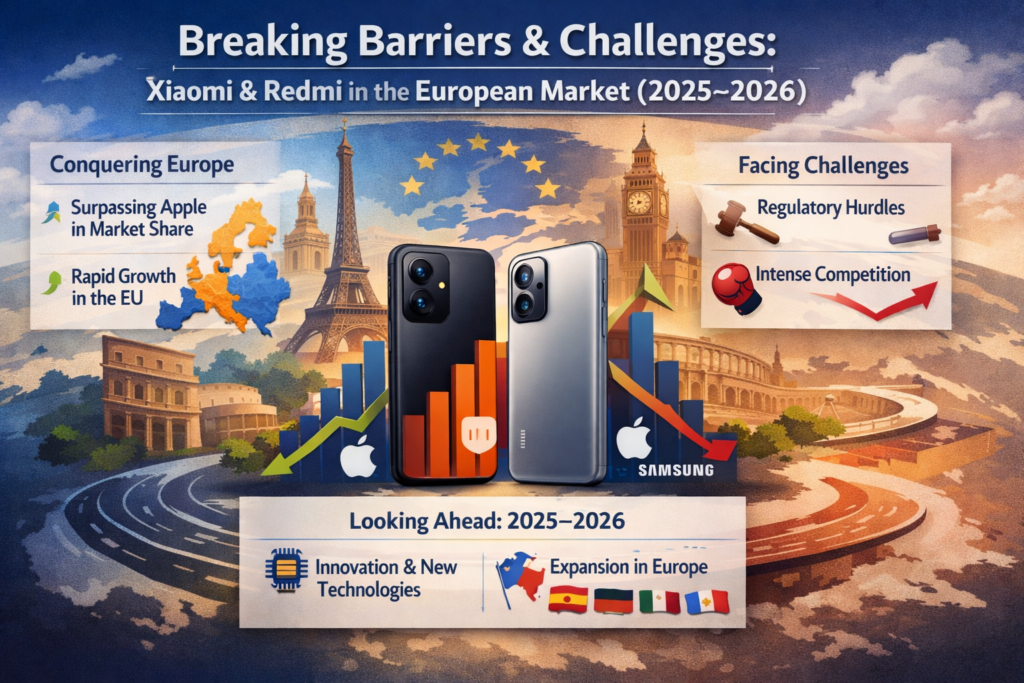
V 2025, Xiaomi se jen tak neobjevilo – udělalo hluk. Tím, že během druhého čtvrtletí předstihl Apple v podílu na trhu, Xiaomi naznačilo, že už není tou „levnou alternativou“. Chce to místo u prémiového stolu, i když se ta židle stále mírně kývá.
Shrnutí
Historický průlom ve 2. čtvrtletí 2025
Druhé čtvrtletí roku 2025 označil milník. Xiaomi zachytil přibližně 23% evropského trhu smartphonů, poprvé v historii překonal Apple a zajistil si druhé místo za Samsungem. Tohle nebylo šťastné čtvrtletí – byl to výsledek let příprav.
Co tento posun skutečně znamená
Tento úspěch odráží více než jen čísla zásilek. Ukazuje to, že čínské značky, v čele s Xiaomi, přecházejí od agresivní expanze k soutěži založené na hodnotách. Teď velká otázka: může Xiaomi proměnit dynamiku v dlouhodobou hodnotu značky?
Přehled evropského trhu chytrých telefonů
Zralost a saturace trhu
Evropský trh s chytrými telefony je jako přeplněné metro ve špičce – všichni už jsou uvnitř. Růst nepřichází od nových uživatelů, ale z přesvědčování lidí, aby změnili značku nebo upgradovali rychleji.
Trendy spotřebitelského chování (2025–2026)
Evropští spotřebitelé jsou pragmatičtí. Inflace a ekonomická nejistota způsobily, že kupující si více uvědomují cenu, ale ne na úkor kvality.
Citlivost rozpočtu vs. Věrnost značce
Zde je ten paradox: spotřebitelé chtějí lepší nabídky, přesto zůstávají citově spjati s Apple a Samsung. Výzvou společnosti Xiaomi je zbavit se návyků, aniž byste narušili důvěru.
Výkonnost Xiaomi na evropském trhu
Vysvětlení růstu podílu na trhu
S meziročním růstem kolem 11%, Xiaomi bylo jedinou ze tří nejlepších značek, která ve 2. čtvrtletí rostla 2025. Samsung i Apple odmítli, otevírá vzácné okno příležitosti.
Údaje o zásilce vs. Data aktivního uživatele
Zprávy založené na zásilkách ukazují, že Xiaomi je velmoc. Však, data založená na použití vyprávějí konzervativnější příběh.
Pochopení mezery v datech
Tato mezera naznačuje, že Xiaomi prodává spoustu telefonů, ale mnoho z nich jsou zařízení střední nebo střední třídy. Přítomnost na trhu je silná, ale prémiový mindshare stále zaostává.
Analýza konkurenční krajiny
Obranná pozice Samsungu
Samsung zůstává evropským lídrem díky svému širokému portfoliu a vztahům s operátory. Přesto klesající dodávky naznačují únavu.
Prémiová pevnost Apple
Apple možná klesl na třetí místo, ale jeho sevření v segmentu vyšší třídy zůstává pevné. Věrnost je jeho tajnou zbraní.
Vznikající rivalové: Motorola a realme
Úpadek Motoroly a vzestup realme ukazují, že bitevní pole středního dosahu není zdaleka vyřešeno. Xiaomi si nemůže dovolit sebeuspokojení.
Strategie dvou značek: Xiaomi + Redmi
Redmi jako Volume Engine
Redmi se daří tam, kde jsou peněženky těsné. Poskytuje specifikace, které působí jako výhodná koupě, zejména v době hospodářského poklesu.
Značka Xiaomi jako tvůrce obrazu
Zatímco Redmi přináší provoz, Vlajkové lodě značky Xiaomi mají budovat prestiž.
Jasná segmentace nebo zmatení značky?
Hranice mezi Redmi a Xiaomi se občas stírá. Jasnější diferenciace je nezbytná, aby se zabránilo sebekanibalizaci.
Produktová strategie a optimalizace portfolia
Vlajkové série a skládací zařízení
Digitální série a skládací telefony Xiaomi jsou technologickými ukázkami. Dokazují, že Xiaomi umí inovovat, nejen konkurovat cenou.
Dominance středního rozsahu
Toto je komfortní zóna Xiaomi. Silné specifikace, agresivní ceny, a rychlé obnovovací cykly udržují konkurenty ve střehu.
Cenová strategie v inflační Evropě
Flexibilní ceny Xiaomi fungují jako tlumiče nárazů, pomáhá jí překonávat ekonomické nerovnosti lépe než rigidní prémiové značky.
Inovace a lokalizace kanálů
Strategické partnerství s AliExpress
Spolupráce s AliExpress mění hru. Nejde jen o prodej telefonů – jde o vlastnictví vztahu se zákazníkem.
Operátorské kanály vs. Přímo ke spotřebiteli
Zatímco dopravci nabízejí měřítko, přímé kanály nabízejí kontrolu. Xiaomi moudře vyvažuje obojí.
Budování lokalizovaného zážitku se značkou
Lokalizovaný obsah, logistiky, a poprodejní podpora mění Xiaomi ze zahraniční značky na známé jméno.
Výhoda ekosystému „člověk – auto – dům“.
Smartphony jako Control Hub
Ve světě Xiaomi, telefon je mozek, ne tělo. Všechno se s tím zpětně spojuje.
Růst AIoT v Evropě
S nárůstem příjmů z AIoT 60%, Xiaomi se tiše začleňuje do evropských domácností.
Efekt uzamčení ekosystému
Jakmile uživatelé nakoupí do ekosystému, odchod je jako stěhování – možné, ale bolestivé.
Vnímání značky a prémiové dilema
Štítek „Value-for-Money“.
Tento štítek vytvořil Xiaomi – ale může ho také zabalit.
Může být Xiaomi skutečně prémiové?
Premium není jen hardware. Je to vyprávění, konzistence, a emocionální spojení.
Lekce od Applu a Samsungu
Obě značky prodávají pocity stejně jako vlastnosti. Xiaomi se učí – ale je to maratón, ne sprint.
Finanční ukazatele a výzvy ASP
ASP Decline Vysvětleno
Vyšší podíl rozpočtových modelů stáhl průměrné prodejní ceny ve 2. čtvrtletí dolů 2025.
Měřítko vs. Ziskovost
Více jednotek nemusí vždy znamenat vyšší zisk. Xiaomi musí vyvážit ambice a marže.
Je růst udržitelný?
Ano, ale pouze v případě, že prémiová zařízení získají skutečnou trakci.
Klíčová rizika a výzvy před námi
Zesílení konkurence
Cenové války jsou brutální, a inovační cykly se zkracují.
Ekonomická a geopolitická rizika
Inflace, obchodní politiky, a geopolitické napětí přidávají vrstvy nejistoty.
Regulační a obchodní nejistota
Náklady na dodržování předpisů a změny politik mohou rychle narušit výhody.
Strategický výhled na roky 2025–2026
Vstup do 200 Milionový klub
Xiaomi se chce připojit k Samsungu a Applu jako prodejce s 200 miliony kusů ročně.
Evropa jako dlouhodobé bojiště
Úspěch v Evropě není volitelný – je existenční.
Strategická doporučení
Priority budování značky
Zaměřte se vlajkovou lodí marketingu na vyprávění příběhů, ne specifikace.
Integrace produktu a ekosystému
Spojte chytré telefony s produkty AIoT a vytvořte řešení životního stylu.
Optimalizace kanálů a maloobchodu
Proměňte offline obchody v pohlcující ekosystémová zážitková centra.
Závěr
Od proražení k odtržení
Vzestup Xiaomi v Evropě je působivý, ale skutečná výzva je teprve před námi. Podíl na trhu lze získat cenou a rychlostí; Hodnota značky vyžaduje trpělivost a víru. Další kapitola není o pronásledování Apple – jde o to stát se nezaměnitelně Xiaomi. Pokud se to podaří, nebude to jen firemní vítězství, ale plán pro čínské značky mířící globálně.
Časté časté
1. Proč Xiaomi předstihlo Apple v Evropě v 2025?
Kvůli silným prodejům střední třídy, flexibilní ceny, a zásilka konkurence klesá.
2. Je Xiaomi považováno za prémiovou značku v Evropě?
Ještě ne úplně. Je respektován pro hodnotu, ale prémiové vnímání se stále vyvíjí.
3. Jakou roli hraje Redmi ve strategii Xiaomi??
Redmi řídí objem a pronikání na trh, zejména mezi kupujícími, kteří dbají na rozpočet.
4. Jak důležitý je pro Xiaomi ekosystém AIoT?
Je to klíčový prvek, který zvyšuje loajalitu uživatelů a dlouhodobou hodnotu.
5. Dokáže Xiaomi udržet svůj růst 2026?
Ano, ale pouze v případě, že úspěšně vyvažuje rozsah a budování prémiové značky.