Εισαγωγή
Γιατί η Ευρώπη έχει σημασία για τη Xiaomi
Η Ευρώπη δεν είναι απλώς μια άλλη αγορά στο εξωτερικό για τη Xiaomi - είναι η τελική εξέταση. Εάν η Ασία είναι εκεί όπου χτίζεται η κλίμακα και οι αναδυόμενες αγορές είναι εκεί όπου αυξάνεται ο όγκος, τότε η Ευρώπη είναι όπου οι μάρκες δοκιμάζονται πραγματικά. Ώριμοι καταναλωτές, αυστηρούς κανονισμούς, ισχυρή επιρροή φορέα, και η βαθιά ριζωμένη αφοσίωση στην επωνυμία καθιστούν την Ευρώπη μία από τις πιο δύσκολες αρένες smartphone στον πλανήτη.
Από Challenger σε υποψήφιους κορυφαίας κατηγορίας
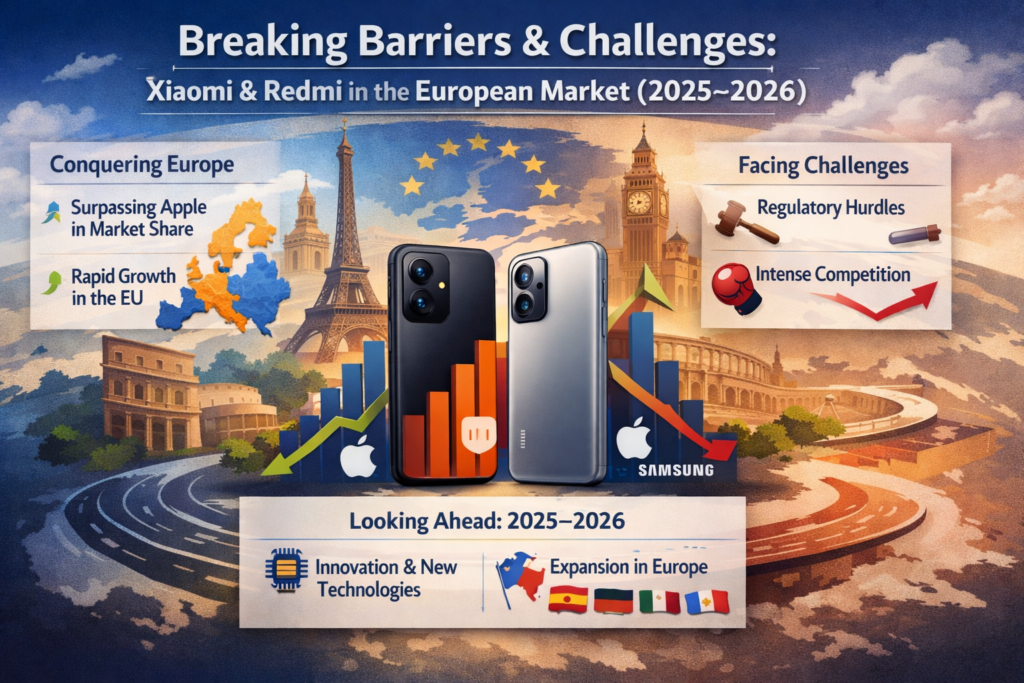
Σε 2025, Η Xiaomi δεν εμφανίστηκε απλώς - έκανε θόρυβο. Ξεπερνώντας την Apple σε μερίδιο αγοράς κατά το δεύτερο τρίμηνο, Η Xiaomi σηματοδότησε ότι δεν είναι πλέον ικανοποιημένη ως η «φθηνή εναλλακτική». Θέλει θέση στο premium τραπέζι, ακόμα κι αν αυτή η καρέκλα είναι ακόμα ελαφρώς ταλαντευόμενη.
Εκτελεστική Περίληψη
Μια ιστορική ανακάλυψη στο 2ο τρίμηνο 2025
Το δεύτερο τρίμηνο του 2025 σημείωσε ένα ορόσημο. Η Xiaomi καταγράφηκε περίπου 23% της ευρωπαϊκής αγοράς smartphone, ξεπερνώντας την Apple για πρώτη φορά στην ιστορία και κατέχοντας τη δεύτερη θέση πίσω από τη Samsung. Αυτό δεν ήταν ένα τυχερό τρίμηνο - ήταν το αποτέλεσμα πολλών ετών.
Τι σημαίνει πραγματικά αυτή η αλλαγή
Αυτό το επίτευγμα αντικατοπτρίζει περισσότερα από τους αριθμούς αποστολών. Δείχνει ότι κινεζικές μάρκες, με επικεφαλής την Xiaomi, μεταβαίνουν από την επιθετική επέκταση στον ανταγωνισμό με γνώμονα την αξία. Το μεγάλο ερώτημα τώρα: μπορεί η Xiaomi να μετατρέψει τη δυναμική σε μακροπρόθεσμη αξία επωνυμίας?
Επισκόπηση της ευρωπαϊκής αγοράς smartphone
Ωριμότητα και κορεσμός της αγοράς
Η αγορά smartphone της Ευρώπης είναι σαν ένα γεμάτο μετρό σε ώρα αιχμής - όλοι είναι ήδη μέσα. Η ανάπτυξη δεν προέρχεται από νέους χρήστες, αλλά από το να πειστούν οι άνθρωποι να αλλάξουν επωνυμίες ή να αναβαθμιστούν γρηγορότερα.
Τάσεις Συμπεριφοράς Καταναλωτή (2025–2026)
Οι ευρωπαίοι καταναλωτές είναι πραγματιστές. Ο πληθωρισμός και η οικονομική αβεβαιότητα έχουν κάνει τους αγοραστές να προσέχουν περισσότερο τις τιμές, αλλά όχι σε βάρος της ποιότητας.
Ευαισθησία προϋπολογισμού vs. Πιστότητα επωνυμίας
Εδώ βρίσκεται το παράδοξο: οι καταναλωτές θέλουν καλύτερες προσφορές, παραμένετε όμως συναισθηματικά δεμένοι με την Apple και τη Samsung. Η πρόκληση της Xiaomi είναι να κόψει συνήθειες χωρίς να σπάσει την εμπιστοσύνη.
Οι επιδόσεις της Xiaomi στην αγορά στην Ευρώπη
Επεξήγηση της αύξησης του μεριδίου αγοράς
Με ετήσια αύξηση περίπου 11%, Η Xiaomi ήταν η μόνη μάρκα στην κορυφή των τριών που αναπτύχθηκε το δεύτερο τρίμηνο 2025. Η Samsung και η Apple αρνήθηκαν και οι δύο, ανοίγοντας ένα σπάνιο παράθυρο ευκαιρίας.
Δεδομένα Αποστολής vs. Ενεργά δεδομένα χρήστη
Οι αναφορές που βασίζονται σε αποστολές δείχνουν ότι η Xiaomi είναι μια ισχυρή εταιρεία. Ωστόσο, Τα δεδομένα που βασίζονται στη χρήση λένε μια πιο συντηρητική ιστορία.
Κατανόηση του κενού δεδομένων
Αυτό το κενό υποδηλώνει ότι η Xiaomi πουλάει πολλά τηλέφωνα — αλλά πολλά είναι συσκευές εισόδου ή μεσαίας κατηγορίας. Η παρουσία στην αγορά είναι ισχυρή, αλλά το premium mindshare εξακολουθεί να υστερεί.
Ανταγωνιστική Ανάλυση Τοπίου
Η αμυντική θέση της Samsung
Η Samsung παραμένει ηγέτης της Ευρώπης χάρη στο ευρύ χαρτοφυλάκιο και τις σχέσεις της με τους παρόχους. Ωστόσο, η μείωση των αποστολών υποδηλώνει κόπωση.
Το Premium Stronghold της Apple
Η Apple μπορεί να έχει υποχωρήσει στην τρίτη θέση, αλλά η πρόσφυσή του στο high-end τμήμα παραμένει σιδερένια. Η πίστη είναι το μυστικό της όπλο.
Αναδυόμενοι αντίπαλοι: Motorola και realme
Η παρακμή της Motorola και η άνοδος του realme δείχνουν ότι το πεδίο μάχης μεσαίας εμβέλειας απέχει πολύ από το να έχει διευθετηθεί. Η Xiaomi δεν μπορεί να αντέξει τον εφησυχασμό.
Στρατηγική διπλής επωνυμίας: Xiaomi + Redmi
Το Redmi ως κινητήρας όγκου
Το Redmi ευδοκιμεί όπου τα πορτοφόλια είναι σφιχτά. Παρέχει προδιαγραφές που φαίνονται σαν μια ευκαιρία, ιδιαίτερα σε περιόδους οικονομικής ύφεσης.
Η επωνυμία Xiaomi ως Εργαλείο δημιουργίας εικόνων
Ενώ το Redmi φέρνει κίνηση, Οι ναυαρχίδες με το σήμα Xiaomi έχουν σκοπό να δημιουργήσουν κύρος.
Σαφής τμηματοποίηση ή σύγχυση επωνυμίας?
Η γραμμή μεταξύ Redmi και Xiaomi μερικές φορές θολώνει. Η σαφέστερη διαφοροποίηση είναι απαραίτητη για την αποφυγή αυτο-κανιβαλισμού.
Στρατηγική προϊόντων και βελτιστοποίηση χαρτοφυλακίου
Εμβληματικές σειρές και πτυσσόμενα
Η ψηφιακή σειρά και τα αναδιπλούμενα τηλέφωνα της Xiaomi είναι τεχνολογικές προθήκες. Αποδεικνύουν ότι η Xiaomi μπορεί να καινοτομήσει, όχι μόνο να ανταγωνίζονται στην τιμή.
Κυριαρχία μεσαίου εύρους
Αυτή είναι η ζώνη άνεσης της Xiaomi. Ισχυρές προδιαγραφές, επιθετική τιμολόγηση, και οι γρήγοροι κύκλοι ανανέωσης κρατούν τους ανταγωνιστές σε εγρήγορση.
Στρατηγική Τιμολόγησης στην Πληθωριστική Ευρώπη
Η ευέλικτη τιμολόγηση της Xiaomi λειτουργεί σαν αμορτισέρ, βοηθώντας το να πλοηγηθεί καλύτερα στις οικονομικές προσκρούσεις από τις άκαμπτες μάρκες premium.
Καινοτομία και τοπική προσαρμογή καναλιών
Στρατηγική συνεργασία με την AliExpress
Η συνεργασία με το AliExpress αλλάζει το παιχνίδι. Δεν πρόκειται μόνο για την πώληση τηλεφώνων - είναι για την ιδιοκτησία της σχέσης με τον πελάτη.
Κανάλια χειριστή vs. Απευθείας στον Καταναλωτή
Ενώ οι μεταφορείς προσφέρουν κλίμακα, Τα απευθείας κανάλια προσφέρουν έλεγχο. Η Xiaomi εξισορροπεί σοφά και τα δύο.
Δημιουργία τοπικής εμπειρίας επωνυμίας
Τοπικό περιεχόμενο, επιμελητεία, και η υποστήριξη μετά την πώληση μετατρέπουν τη Xiaomi από ξένη μάρκα σε γνώριμο όνομα.
Το πλεονέκτημα του οικοσυστήματος «Human–Car–Home».
Τα smartphone ως το κέντρο ελέγχου
Στον κόσμο της Xiaomi, το τηλέφωνο είναι ο εγκέφαλος, όχι το σώμα. Όλα συνδέονται ξανά με αυτό.
Ανάπτυξη AIoT στην Ευρώπη
Με τα έσοδα AIoT να αυξάνονται 60%, Η Xiaomi ενσωματώνεται αθόρυβα στα ευρωπαϊκά σπίτια.
Ecosystem Lock-In Effect
Μόλις οι χρήστες αγοράσουν το οικοσύστημα, Το να φεύγεις μοιάζει σαν να μετακομίζεις σπίτια—πιθανό, αλλά επώδυνο.
Η αντίληψη της επωνυμίας και το δίλημμα Premium
Η ετικέτα "Value-for-Money".
Αυτή η ετικέτα δημιούργησε το Xiaomi — αλλά μπορεί επίσης να το συσκευάσει.
Μπορεί η Xiaomi να είναι πραγματικά Premium?
Το Premium δεν είναι μόνο υλικό. Είναι αφήγηση, συνοχή, και συναισθηματική σύνδεση.
Μαθήματα από την Apple και τη Samsung
Και οι δύο μάρκες πωλούν συναισθήματα όσο και χαρακτηριστικά. Η Xiaomi μαθαίνει - αλλά είναι μαραθώνιος, όχι ένα σπριντ.
Οικονομικοί δείκτες και προκλήσεις ASP
Επεξήγηση απόρριψης ASP
Ένα υψηλότερο μερίδιο μοντέλων προϋπολογισμού έσυρε προς τα κάτω τις μέσες τιμές πώλησης το δεύτερο τρίμηνο 2025.
Κλίμακα vs. Κερδοφορία
Περισσότερες μονάδες δεν σημαίνουν πάντα περισσότερο κέρδος. Η Xiaomi πρέπει να εξισορροπήσει τη φιλοδοξία με τα περιθώρια.
Είναι η Αειφόρος Ανάπτυξη?
Ναι, αλλά μόνο εάν οι συσκευές premium αποκτήσουν πραγματική έλξη.
Βασικοί κίνδυνοι και προκλήσεις στο μέλλον
Εντατικοποίηση του ανταγωνισμού
Οι πόλεμοι τιμών είναι βάναυσοι, και οι κύκλοι καινοτομίας συντομεύονται.
Οικονομικοί και Γεωπολιτικοί Κίνδυνοι
Πληθωρισμός, εμπορικές πολιτικές, και οι γεωπολιτικές εντάσεις προσθέτουν στρώματα αβεβαιότητας.
Ρυθμιστική και εμπορική αβεβαιότητα
Το κόστος συμμόρφωσης και οι αλλαγές πολιτικής μπορούν γρήγορα να διαβρώσουν τα πλεονεκτήματα.
Στρατηγικές Προοπτικές για το 2025–2026
Μπαίνοντας στο 200 Million Club
Η Xiaomi σκοπεύει να συμμετάσχει στη Samsung και την Apple ως πωλητής 200 εκατομμυρίων μονάδων ετησίως.
Η Ευρώπη ως μακροπρόθεσμο πεδίο μάχης
Η επιτυχία στην Ευρώπη δεν είναι προαιρετική - είναι υπαρξιακή.
Στρατηγικές Συστάσεις
Προτεραιότητες οικοδόμησης επωνυμίας
Εστιάστε το εμβληματικό μάρκετινγκ στην αφήγηση, όχι προδιαγραφές.
Ενοποίηση προϊόντων και οικοσυστημάτων
Συνδυάστε smartphone με προϊόντα AIoT για να δημιουργήσετε λύσεις τρόπου ζωής.
Βελτιστοποίηση καναλιών και λιανικής
Μετατρέψτε τα καταστήματα εκτός σύνδεσης σε καθηλωτικά κέντρα εμπειρίας οικοσυστήματος.
Σύναψη
Από το Breaking Through στο Breaking Away
Η άνοδος της Xiaomi στην Ευρώπη είναι εντυπωσιακή, αλλά η πραγματική πρόκληση βρίσκεται μπροστά. Το μερίδιο αγοράς μπορεί να κερδίσει με τιμολόγηση και ταχύτητα; Η αξία της επωνυμίας απαιτεί υπομονή και πίστη. Το επόμενο κεφάλαιο δεν είναι να κυνηγήσουμε την Apple - είναι να γίνουμε αναμφισβήτητα Xiaomi. Αν πετύχει, αυτό δεν θα είναι απλώς μια εταιρική νίκη, αλλά ένα σχέδιο για τις κινεζικές μάρκες που στοχεύουν σε παγκόσμιο επίπεδο.
Συχνές ερωτήσεις
1. Γιατί η Xiaomi ξεπέρασε την Apple στην Ευρώπη 2025?
Λόγω των ισχυρών πωλήσεων μεσαίας κατηγορίας, ευέλικτη τιμολόγηση, και η αποστολή των ανταγωνιστών μειώνεται.
2. Θεωρείται η Xiaomi premium μάρκα στην Ευρώπη?
Όχι πλήρως ακόμα. Είναι σεβαστό για την αξία, αλλά η premium αντίληψη εξακολουθεί να εξελίσσεται.
3. Τι ρόλο παίζει το Redmi στη στρατηγική της Xiaomi?
Το Redmi αυξάνει τον όγκο και τη διείσδυση στην αγορά, ειδικά μεταξύ αγοραστών που γνωρίζουν τον προϋπολογισμό.
4. Πόσο σημαντικό είναι το οικοσύστημα AIoT για την Xiaomi?
Είναι ένας βασικός παράγοντας διαφοροποίησης που αυξάνει την αφοσίωση των χρηστών και τη μακροπρόθεσμη αξία.
5. Μπορεί η Xiaomi να διατηρήσει την ανάπτυξή της 2026?
Ναί, αλλά μόνο εάν εξισορροπεί επιτυχώς την κλίμακα με την κατασκευή κορυφαίας επωνυμίας.