Κατανόηση της Εφοδιαστικής Αλυσίδας Οθόνης Κινητού
Βασικά στοιχεία σε μια οθόνη smartphone
Εάν έχετε δοκιμάσει ποτέ να προμηθευτείτε οθόνες κινητών τηλεφώνων, πιθανώς προσέξατε πόσο μπερδεμένη μπορεί να γίνει η ορολογία. Ένας προμηθευτής λέει «Μονάδα LCD,Ένας άλλος λέει «συναρμολόγηση αφής,» και κάποιος άλλος ρίχνει μέσα «εξωτερικό ποτήρι» ή «ψηφιοποιητή». Είναι σαν να μιλούν όλοι την ίδια γλώσσα — αλλά με εντελώς διαφορετικές διαλέκτους.
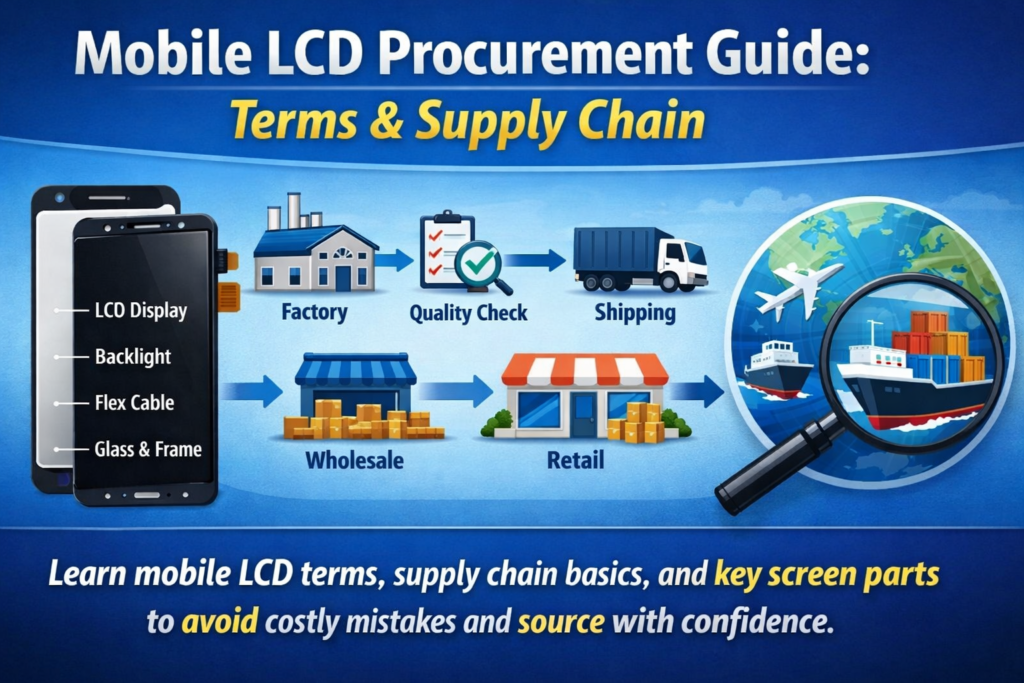
Στον πυρήνα του, μια οθόνη smartphone δεν είναι απλώς ένα κομμάτι. Είναι μια προσεκτικά σχεδιασμένη στοίβα εξαρτημάτων που συνεργάζονται για να προσφέρουν γραφικά και απόκριση αφής. Ο Οθόνη LCD παράγει την εικόνα, ο στρώμα αφής ανιχνεύει τις κινήσεις των δακτύλων σας, και το γυαλί καλύμματος προστατεύει τα πάντα από κάτω. Αυτά τα στοιχεία μπορούν είτε να πωληθούν χωριστά είτε ως πλήρως ενσωματωμένη μονάδα, ανάλογα με τον τύπο του προϊόντος και τις απαιτήσεις επισκευής.
Η κατανόηση του τρόπου με τον οποίο αυτά τα μέρη αλληλεπιδρούν είναι απαραίτητη, ειδικά αν είστε σε προμήθειες. Μια μικρή παρεξήγηση—όπως η σύγχυση μιας πλήρους συναρμολόγησης με έναν γυάλινο φακό—μπορεί να οδηγήσει σε δαπανηρά λάθη, καθυστερήσεις, ή παράπονα πελατών. Γι' αυτό η εξοικείωση με αυτούς τους όρους δεν είναι απλώς χρήσιμη - είναι απολύτως απαραίτητη εάν θέλετε να δραστηριοποιηθείτε αποτελεσματικά σε αυτόν τον κλάδο.
Γιατί η ορολογία έχει σημασία στις προμήθειες
Ας είμαστε ειλικρινείς: στην επιχείρηση ανταλλακτικών κινητής τηλεφωνίας, η σαφήνεια ισούται με κέρδος. Εάν δεν προσδιορίζετε με σαφήνεια τι αγοράζετε, μπορεί να καταλήξετε να πληρώσετε για κάτι που δεν είχατε σκοπό να αγοράσετε—ή χειρότερα, λήψη μη συμβατών εξαρτημάτων.
Για παράδειγμα, παραγγέλνοντας μια «οθόνη» χωρίς να προσδιορίσετε αν είναι α πλήρης μονάδα LCD ή απλώς το εξωτερικό γυαλί μπορεί να οδηγήσει σε μεγάλη σύγχυση. Οι προμηθευτές μπορεί να υποθέσουν διαφορετικά πράγματα με βάση τα δικά τους πρότυπα. Και επειδή εμπλέκεται το διεθνές εμπόριο, Τα γλωσσικά εμπόδια απλώς ενισχύουν το ζήτημα.
Η ακριβής ορολογία βοηθά στον εξορθολογισμό της επικοινωνίας, μειώνει τις διαφωνίες, και διασφαλίζει τη συνέπεια μεταξύ των παραγγελιών. Διευκολύνει επίσης τη σύγκριση τιμών από διαφορετικούς προμηθευτές. Όταν όλοι ευθυγραμμίζονται με τους ορισμούς, η τιμολόγηση γίνεται διαφανής, και η διαπραγμάτευση γίνεται πολύ πιο ομαλή.
Εν συντομία, Η γνώση αυτών των όρων δεν είναι απλώς τεχνική γνώση - είναι ένα στρατηγικό πλεονέκτημα.
Τι είναι μια φορητή μονάδα οθόνης LCD?
Ορισμός της μονάδας LCD (LCM)
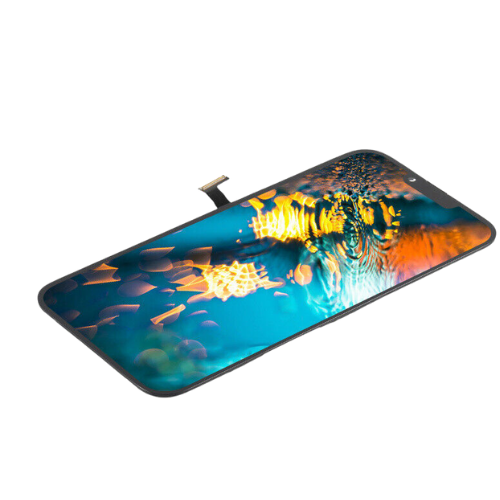
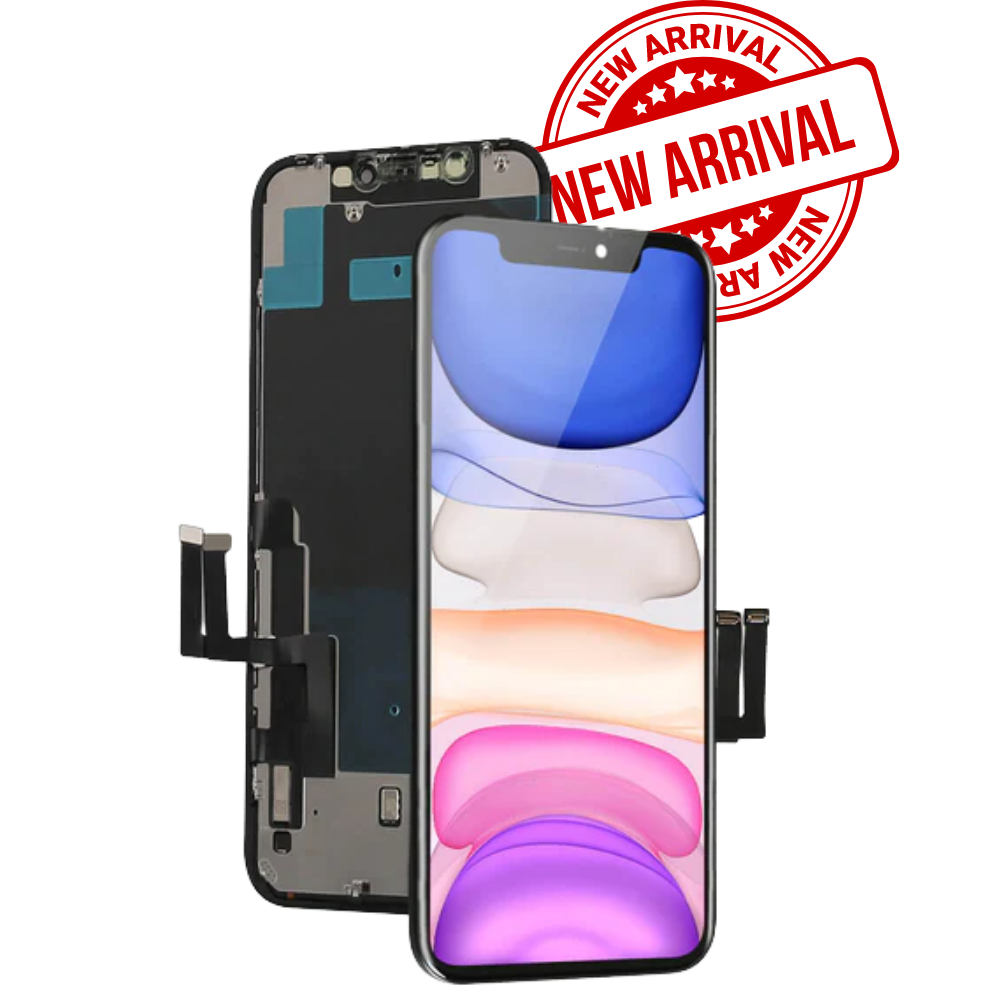
Ο όρος Μονάδα LCD (LCM) είναι μια από τις πιο συχνά χρησιμοποιούμενες φράσεις στον κλάδο των οθονών για κινητά. Με απλά λόγια, ένα LCM είναι α πλήρης μονάδα προβολής που περιλαμβάνει την οθόνη LCD και συνήθως τη λειτουργία αφής, όλα προσυναρμολογημένα σε ένα μόνο εξάρτημα.
Σκεφτείτε το σαν ένα έτοιμο προς εγκατάσταση πακέτο. Αντί να ασχολούμαστε με πολλαπλά επίπεδα χωριστά, τα συνδυάζεις όλα. Αυτό μειώνει τον χρόνο εγκατάστασης και ελαχιστοποιεί τον κίνδυνο ζημιάς κατά την επισκευή ή τη συναρμολόγηση.
Στις προμήθειες, καθορίζοντας "LCM" συνήθως σημαίνει ότι θέλετε α πλήρως λειτουργική μονάδα οθόνης, όχι μόνο μεμονωμένα μέρη. Ωστόσο, εξακολουθεί να είναι σημαντικό να διευκρινιστεί εάν η μονάδα περιλαμβάνει πρόσθετα στοιχεία όπως το πλαίσιο, οπίσθιο φωτισμό, ή τσιπ IC.
Βασικά εξαρτήματα μέσα σε ένα LCM
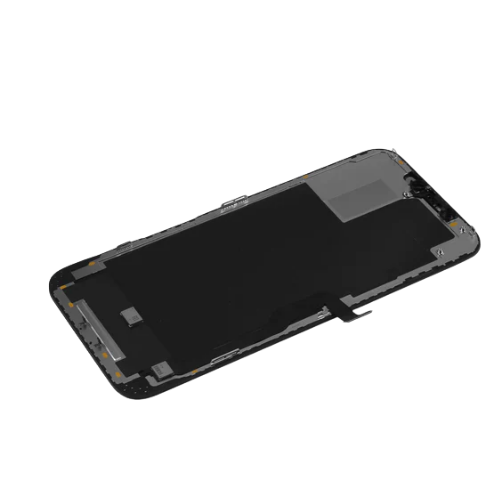
Μια τυπική μονάδα LCD συνήθως αποτελείται από πολλά στρώματα:
- Οθόνη οθόνης (Οθόνη υγρού κρυστάλλου) – υπεύθυνος για τη δημιουργία εικόνων
- Μονάδα οπίσθιου φωτισμού – παρέχει φωτισμό
- Ψηφιοποιητής αφής – ανιχνεύει την είσοδο αφής
- Γυαλί κάλυψης – προστατεύει την οθόνη
- FPC (Ευέλικτο τυπωμένο κύκλωμα) – συνδέει τη μονάδα με τη μητρική πλακέτα
Αυτά τα στρώματα συνδέονται συχνά χρησιμοποιώντας προηγμένες τεχνικές πλαστικοποίησης όπως OCA (Οπτικά διαυγής κόλλα). Η ενσωμάτωση βελτιώνει τη σαφήνεια της οθόνης και την ευαισθησία αφής, ενώ μειώνει τις αντανακλάσεις.
Για αγοραστές, Η κατανόηση αυτών των στοιχείων σάς βοηθά να αξιολογήσετε την ποιότητα και την τιμή του προϊόντος. Μια μονάδα με καλύτερη πλαστικοποίηση και υλικά υψηλότερης ποιότητας θα κοστίσει φυσικά περισσότερο—αλλά και θα προσφέρει καλύτερη απόδοση και ανθεκτικότητα.
Επεξήγηση τεχνολογίας αφής οθόνης κινητού
Capacitive Touch vs Resistive Touch
Η τεχνολογία αφής είναι η αόρατη μαγεία πίσω από κάθε κτύπημα, παρακέντηση, και τσιμπήστε. Σήμερα, χρησιμοποιούν σχεδόν όλα τα smartphone χωρητικές οθόνες αφής, αλλά παλαιότερες ή εξειδικευμένες συσκευές μπορεί να εξακολουθούν να βασίζονται σε τεχνολογία αντίστασης αφής.
Οι χωρητικές οθόνες αφής ανιχνεύουν ηλεκτρικά σήματα από το δάχτυλό σας, προσφέροντας ταχύτερους χρόνους απόκρισης και δυνατότητες πολλαπλής αφής. Γι' αυτό κυριαρχούν στην καταναλωτική αγορά. Οθόνες αντίστασης, από την άλλη, βασίζονται στην πίεση και είναι λιγότερο ευαίσθητα αλλά πιο ανθεκτικά σε ορισμένα βιομηχανικά περιβάλλοντα.
Από πλευράς προμηθειών, Τα χωρητικά πάνελ αφής είναι το πρότυπο. Ωστόσο, δεν είναι όλες οι χωρητικές οθόνες ίσες. Διακυμάνσεις στην ευαισθησία, αντοχή, και τα IC ελεγκτών μπορούν να επηρεάσουν σημαντικά την εμπειρία του χρήστη.
Ο ρόλος της οθόνης αφής στα σύγχρονα smartphone
Ο πάνελ αφής, επίσης γνωστό ως το ψηφιοποιητής, κάθεται πάνω από το επίπεδο οθόνης και μεταφράζει τη φυσική αφή σε ψηφιακά σήματα. Σε μοντέρνα σχέδια, αυτό το στρώμα συχνά ενσωματώνεται απευθείας στην οθόνη LCD ή στο γυαλί χρησιμοποιώντας τεχνολογίες όπως Incell ή Oncell.
Αυτή η ενσωμάτωση μειώνει το πάχος και βελτιώνει την απόκριση. Απλοποιεί επίσης την αλυσίδα εφοδιασμού, καθώς χρειάζονται λιγότερα ξεχωριστά εξαρτήματα. Ωστόσο, μπορεί να κάνει τις επισκευές πιο ακριβές, καθώς ολόκληρη η μονάδα μπορεί να χρειαστεί αντικατάσταση εάν ένα στρώμα αποτύχει.
Για αγοραστές, Η επιλογή μεταξύ ξεχωριστών πάνελ αφής και ολοκληρωμένων λύσεων εξαρτάται από την αγορά-στόχο—είτε πρόκειται για προϊόντα επισκευής είτε για προϊόντα τελικού χρήστη.
Εξωτερική οθόνη (Ποτήρι) εναντίον εσωτερικής οθόνης (Επίδειξη)
Τι είναι η εξωτερική οθόνη (Γυαλί κάλυψης)?
Ο εξωτερική οθόνη, συχνά αναφέρεται ως γυαλί καλύμματος, είναι το ανώτερο επίπεδο που αγγίζουν οι χρήστες. Ο πρωταρχικός του ρόλος είναι η προστασία. Προστατεύει τα ευαίσθητα εσωτερικά εξαρτήματα από γρατσουνιές, επιπτώσεις, και περιβαλλοντική ζημιά.
Το γυαλί κάλυψης υψηλής ποιότητας κατασκευάζεται συνήθως από ενισχυμένα υλικά όπως το σκληρυμένο γυαλί. Ορισμένα διαθέτουν ακόμη και επιστρώσεις για κατά των δακτυλικών αποτυπωμάτων ή αντιθαμβωτικό σκηνικά θέατρου.
Στις προμήθειες, Το εξωτερικό γυαλί πωλείται συχνά χωριστά για λόγους επισκευής. Είναι φθηνότερο από μια πλήρη μονάδα, αλλά απαιτεί εξειδικευμένους τεχνικούς για την εγκατάσταση. Αυτή η επιλογή είναι δημοφιλής σε αγορές όπου προτιμώνται οι επισκευές με εξοικονόμηση κόστους.
Τι είναι η εσωτερική οθόνη (Οθόνη οθόνης)?
Ο εσωτερική οθόνη αναφέρεται στο πραγματικό πλαίσιο οθόνης—το τμήμα που δημιουργεί εικόνες. Αυτό περιλαμβάνει το στρώμα υγρών κρυστάλλων, έγχρωμα φίλτρα, και σύστημα οπίσθιου φωτισμού.
Σε αντίθεση με το εξωτερικό γυαλί, η εσωτερική οθόνη είναι πολύ ευαίσθητη και ακριβή. Η ζημιά σε αυτό το στοιχείο συνήθως οδηγεί σε ζητήματα εμφάνισης όπως νεκρά pixel, γραμμές, ή καθόλου εικόνα.
Ο διαχωρισμός της εσωτερικής οθόνης από το εξωτερικό γυαλί είναι δυνατός αλλά τεχνικά δύσκολος. Αυτός είναι ο λόγος για τον οποίο πολλοί αγοραστές επιλέγουν αντ' αυτού πλήρεις ενότητες—είναι απλούστερο και πιο αξιόπιστο.
Διαφορές μεταξύ πλήρους συναρμολόγησης και χωριστών εξαρτημάτων
Πλήρης πλαστικοποίηση vs διαχωρισμός πλαισίου
ΕΝΑ πλήρης συναρμολόγηση (ονομάζεται επίσης πλήρης πλαστικοποίηση) σημαίνει όλα τα στρώματα — γυαλί, επαφή, και οθόνη—ενώνονται σε μια ενιαία μονάδα. Αυτό παρέχει καλύτερη οπτική διαύγεια και ανθεκτικότητα.
Αντίθετα, ξεχωριστά μέρη Αφήστε κάθε στρώση να αντικατασταθεί ξεχωριστά. Ενώ αυτό μειώνει το κόστος υλικών, αυξάνει την πολυπλοκότητα και τον κίνδυνο εργασίας κατά την εγκατάσταση.
Πλεονεκτήματα και μειονεκτήματα για αγοραστές
| Επιλογή | Φόντα | Μειονεκτήματα |
|---|---|---|
| Πλήρης Συνέλευση | εύκολη εγκατάσταση, καλύτερη ποιότητα | Υψηλότερο κόστος |
| Ξεχωριστά μέρη | Χαμηλότερο κόστος, ευέλικτη επισκευή | Υψηλότερος εργασιακός κίνδυνος |
Η επιλογή της σωστής επιλογής εξαρτάται από το επιχειρηματικό σας μοντέλο. Εάν δίνετε προτεραιότητα στην ταχύτητα και την αξιοπιστία, Οι πλήρεις συναρμολογήσεις είναι ο καλύτερος τρόπος. Εάν η εξοικονόμηση κόστους είναι ο κύριος στόχος σας, χωριστά μέρη μπορεί να είναι πιο κατάλληλα.
Κοινοί όροι του κλάδου που πρέπει να γνωρίζετε
OEM, Aftermarket, Ανακαινισμένο Επεξήγηση
- OEM (Κατασκευαστής πρωτότυπου εξοπλισμού): Γνήσια εργοστασιακά ανταλλακτικά
- Aftermarket: Εξαρτήματα κατασκευασμένα από τρίτους
- Ανακαινισμένο: Μεταχειρισμένα ανταλλακτικά αποκαταστάθηκαν σε κατάσταση λειτουργίας
Κάθε κατηγορία έχει το δικό της επίπεδο τιμολόγησης και ποιότητας. Τα εξαρτήματα OEM είναι τα πιο ακριβά αλλά προσφέρουν την υψηλότερη αξιοπιστία.
Incell, Oncell, και TFT Technologies
- Incell: Το άγγιγμα ενσωματώνεται στο στρώμα LCD
- Oncell: Στρώμα αφής πάνω από την οθόνη LCD
- TFT: Παραδοσιακή τεχνολογία LCD
Η κατανόηση αυτών των όρων σάς βοηθά να συγκρίνετε τα προϊόντα πιο αποτελεσματικά.
Βαθμοί ποιότητας και πρότυπα δοκιμών
Οθόνες A Grade vs B Grade
Η διαβάθμιση ποιότητας είναι ζωτικής σημασίας στις προμήθειες. Οθόνες Α-βαθμού είναι σχεδόν τέλεια, ενώ Οθόνες Β-βαθμού μπορεί να έχει μικρά ελαττώματα.
Βασικές διαδικασίες δοκιμής πριν από την αποστολή
Οι προμηθευτές συνήθως αποδίδουν:
- Δοκιμή φωτεινότητας
- Δοκιμή ευαισθησίας αφής
- Επιθεώρηση νεκρών pixel
Αυτές οι δοκιμές διασφαλίζουν την αξιοπιστία του προϊόντος πριν από την παράδοση.
Παράγοντες τιμολόγησης στην προμήθεια οθόνης LCD
Κόστος υλικών και επιπτώσεις τεχνολογίας
Οι προηγμένες τεχνολογίες όπως το Incell αυξάνουν το κόστος παραγωγής αλλά βελτιώνουν την απόδοση.
Θέματα MOQ και Εφοδιαστικής Αλυσίδας
Ελάχιστη ποσότητα παραγγελίας (MOQ) μπορεί να επηρεάσει σημαντικά την τιμολόγηση. Οι μαζικές παραγγελίες συνήθως συνοδεύονται από εκπτώσεις.
Επιλέγοντας τον σωστό προμηθευτή
Βασικά Κριτήρια Αξιολόγησης
Αναζητώ:
- Σταθερή ποιότητα
- Διαφανής επικοινωνία
- Αξιόπιστη παράδοση
Κόκκινες σημαίες προς αποφυγή
Αποφύγετε τους προμηθευτές που:
- Έλλειψη πιστοποιητικών
- Παρέχετε ασαφείς προδιαγραφές
- Προσφέρετε ασυνήθιστα χαμηλές τιμές
Μελλοντικές τάσεις στις προμήθειες προβολής για κινητά
Μετακίνηση προς OLED και ευέλικτες οθόνες
Ενώ η LCD εξακολουθεί να κυριαρχεί στις συσκευές προϋπολογισμού, Η OLED κερδίζει δημοτικότητα λόγω του καλύτερου χρώματος και της ευελιξίας.
Αυξάνοντας τη ζήτηση για ολοκληρωμένες ενότητες
Οι ολοκληρωμένες λύσεις θα συνεχίσουν να αναπτύσσονται, απλοποίηση της κατασκευής και των επισκευών.
Σύναψη
Η πλοήγηση στον κόσμο των προμηθειών οθονών LCD για φορητές συσκευές μπορεί να είναι συντριπτική στην αρχή, αλλά μόλις καταλάβετε την ορολογία, όλα αρχίζουν να βγάζουν νόημα. Από Μονάδες LCD να πάνελ αφής, από εξωτερικό γυαλί να εσωτερικές οθόνες, κάθε όρος αντιπροσωπεύει ένα συγκεκριμένο στοιχείο με το δικό του ρόλο στη μεγαλύτερη εικόνα.
Όταν καταλαβαίνεις ξεκάθαρα τι αγοράζεις, μειώνεις τους κινδύνους, βελτίωση της επικοινωνίας με τους προμηθευτές, και τελικά να λάβει πιο έξυπνες αποφάσεις αγοράς. Είτε προμηθεύεστε συνεργεία επισκευής, χονδρική διανομή, ή κατασκευή, Η γνώση αυτών των εννοιών σας δίνει ένα πραγματικό ανταγωνιστικό πλεονέκτημα.
Συχνές ερωτήσεις
1. Ποια είναι η διαφορά μεταξύ της μονάδας LCD και της οθόνης αφής?
Μια μονάδα LCD περιλαμβάνει τόσο την οθόνη όσο και τα στοιχεία αφής, ενώ η οθόνη αφής αναφέρεται μόνο στο ευαίσθητο στην αφή στρώμα.
2. Μπορώ να αντικαταστήσω μόνο το εξωτερικό γυαλί μιας οθόνης τηλεφώνου?
Ναί, αλλά απαιτεί εξειδικευμένο εξοπλισμό και εξειδικευμένους τεχνικούς.
3. Τι σημαίνει τεχνολογία Incell?
Το Incell ενσωματώνει τη λειτουργία αφής απευθείας στο στρώμα LCD, κάνοντας τις οθόνες πιο λεπτές και με μεγαλύτερη απόκριση.
4. Είναι αξιόπιστες οι οθόνες aftermarket?
Μπορούν να είναι, αλλά η ποιότητα ποικίλλει ανάλογα με τον κατασκευαστή.
5. Γιατί τα πλήρη συγκροτήματα είναι πιο ακριβά?
Επειδή συνδυάζουν πολλαπλά στοιχεία σε μια μονάδα, προσφέροντας καλύτερη απόδοση και ευκολότερη εγκατάσταση.