Indledning
At vælge det rigtige iPhone erstatningsskærm er ikke længere så simpelt som at vælge den billigste løsning. I løbet af de sidste mange år, eftermarkedet har udviklet sig hurtigt, tilbyder flere skærmteknologier designet til at tilfredsstille forskellige kundeforventninger og forretningsmodeller. Reparationsværksteder, grossister, renovatører, og distributører står nu over for en vigtig beslutning mellem Fleksibel OLED (Blød OLED) og Hård OLED, to produkter, der ved første øjekast kan se ens ud, men som yder helt anderledes i hverdagen.
Hvis du driver en reparationsvirksomhed, dit omdømme afhænger i høj grad af kvaliteten af hver erstatningsskærm, du installerer. Kunder forventer levende farver, responsiv berøringsfølsomhed, høj lysstyrke, og langtidsholdbarhed. Installation af en dårligere skærm kan spare penge i starten, men det kan føre til garantikrav, kundeklager, og mistede forretninger. På den anden side, kun at købe premium-skærme kan reducere avancerne, hvis dine kunder primært søger overkommelige reparationer.
At forstå styrkerne og svaghederne ved hver OLED-teknologi giver købere mulighed for at træffe smartere købsbeslutninger. Denne guide forklarer alt fra produktionsteknologi og displayydelse til valg af leverandør, kvalitetskontrol, og engrosindkøbsstrategier, hjælper dig med at maksimere både kundetilfredshed og rentabilitet.
Forstå iPhone-udskiftningsskærmmarkedet
Apple introducerede OLED-teknologi begyndende med iPhone X, fundamentalt ændrer smartphone-skærmindustrien. Siden da, Næsten alle iPhones flagskib har taget OLED-paneler til sig, fordi de tilbyder enestående kontrast, ægte sorte, enestående strømeffektivitet, og tyndere konstruktion sammenlignet med traditionelle LCD-skærme. Efterhånden som efterspørgslen efter udskiftningsskærme er steget, eftermarkedsindustrien har udviklet flere alternativer, der balancerer kvalitet og overkommelighed.
I dag, erstatningsmarkedet består generelt af fem kategorier:
| Skærmtype | Kvalitet | Pris | Bedst til |
|---|---|---|---|
| Original OEM | Fremragende | Højest | Premium reparationer |
| Renoveret original | Fremragende | Høj | Professionelle værksteder |
| Fleksibel (Blød) OLED | Meget høj | Medium-Høj | Eftermarkedsreparationer af høj kvalitet |
| Hård OLED | God | Medium | Budgetbevidste kunder |
| Incell LCD | Grundlæggende | Laveste | Økonomi reparationer |
Hver kategori betjener et andet kundesegment. Premium-brugere foretrækker normalt OEM eller renoverede originale skærme, mens de fleste uafhængige værksteder i høj grad er afhængige af Soft OLED, fordi det tæt replikerer Apples originale seeroplevelse til en meget lavere pris. Hård OLED er blevet populær blandt grossister, der betjener udviklingsmarkeder, hvor overkommelighed ofte er vigtigere end at opnå ydeevne på fabriksniveau.
Hvad er fleksibelt (Blød) OLED?
Fleksibel OLED, almindeligvis kaldet Blød OLED, bruger en plastsubstrat frem for glas. Dette fleksible fundament gør, at displaypanelet kan bøjes lidt, hvilket gør det bemærkelsesværdigt lig de OLED-paneler, der oprindeligt blev installeret af Apple. På grund af dens konstruktion, Blød OLED giver tyndere dimensioner, forbedret stødmodstand, og lettere installation sammenlignet med stive alternativer.
En af de største fordele er dens skærmydeevne. Farverne fremstår levende og naturlige, sorte niveauer forbliver perfekt dybe, og lysstyrken er typisk meget tæt på de originale Apple-specifikationer. Betragtningsvinkler forbliver konsekvente, lave videoer, spil, og fotos ser næsten identiske ud med dem, der vises på fabriksinstallerede skærme.
Professionelle teknikere sætter også pris på Soft OLED, fordi installationen er mindre stressende. Det fleksible panel er mere tilgivende under montering, reducerer risikoen for utilsigtet revnedannelse, mens skærmen sættes ind i telefonrammen. Dette udmønter sig i lavere installationsrisici og færre garantiafkast.
Selvom Soft OLED koster mere end Hard OLED, mange grossister finder den ekstra investering værd, fordi kundetilfredsheden forbliver markant højere. Premium-værksteder annoncerer ofte Soft OLED som deres standardudskiftningsmulighed, da det giver en fremragende balance mellem pris og ydeevne. Branchekøbsvejledninger identificerer konsekvent Soft OLED som det nærmeste eftermarkedsalternativ til originale Apple-skærme, med cirka 90-95 % af den oprindelige visuelle oplevelse.
Hvad er hård OLED?
Hard OLED er en anden udbredt skærmteknologi i eftermarkedets iPhone reparationsindustri. I modsætning til fleksibel OLED, Hård OLED er fremstillet ved hjælp af en stift glasunderlag, hvilket giver panelet en solid struktur, men reducerer dets fleksibilitet markant. Denne fremstillingsproces gør Hard OLED billigere at producere, giver grossister og værksteder mulighed for at tilbyde mere overkommelige skærmudskiftninger til kunder, der prioriterer pris frem for premium skærmydelse.
En af de primære årsager til, at Hard OLED har vundet popularitet, er dets fremragende omkostnings-ydelsesforhold. Sammenlignet med traditionelle Incell LCD-skærme, Hård OLED leverer dybere sorte farver, højere kontrastforhold, og mere levende farver, fordi hver OLED-pixel udsender sit eget lys. Brugere, der opgraderer fra LCD, bemærker normalt en dramatisk forbedring af billedkvaliteten. Til reparationsvirksomheder, der opererer på stærkt konkurrenceprægede markeder, Hard OLED giver en attraktiv løsning, der bygger bro mellem budget-LCD'er og premium Soft OLED-paneler.
Der er, imidlertid, flere afvejninger, som købere bør forstå, før de afgiver bulkordrer. Da glasunderlaget ikke kan bøjes, Hårde OLED-paneler er generelt tykkere end fleksible OLED-skærme. Under installationen, teknikere skal udvise større forsigtighed, fordi for stort tryk rundt om kanterne kan knække skærmen. Den stive konstruktion gør også skærmen lidt mindre modstandsdygtig over for utilsigtede fald og stød efter installation. Mens nutidens fremstillingsprocesser er forbedret betydeligt, Hårde OLED-paneler kopierer stadig ikke perfekt den tynde profil og fleksibilitet af Apples originale skærme.
På trods af disse begrænsninger, Hård OLED er fortsat en af de bedst sælgende eftermarkedsmuligheder på verdensplan. Mange grossister leverer hårde OLED-skærme til reparation af kæder, distributører, og online-forhandlere, fordi de tilbyder pålidelig kvalitet til en konkurrencedygtig engrospris. For kunder, der søger en overkommelig reparation uden at vende tilbage til LCD-teknologi, Hård OLED repræsenterer et fremragende kompromis mellem omkostninger og visuel ydeevne.
Fleksibel OLED vs hård OLED sammenligning
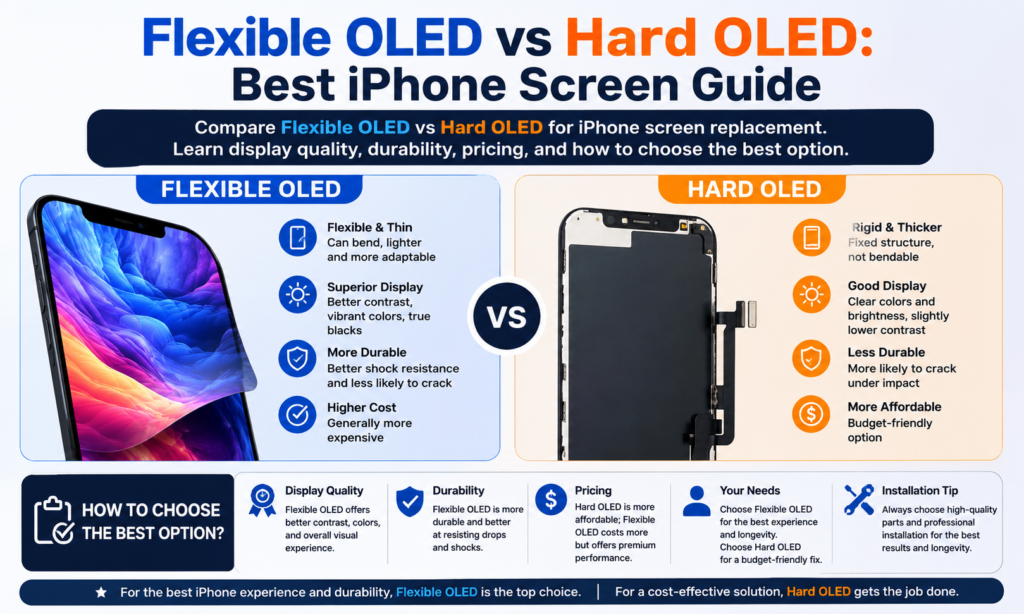
Valget mellem fleksibel OLED og hård OLED afhænger i sidste ende af dine målkunder, reparationsstandarder, og forretningsstrategi. Begge teknologier bruger OLED-pixel, der er i stand til at producere enestående kontrast og ægte sort, alligevel skaber deres fremstillingsmetoder mærkbare forskelle i holdbarhed, installation, og den overordnede brugeroplevelse.
Displaykvalitet
Fleksibel OLED giver generelt den visuelle oplevelse, der er tættest på en original Apple-skærm. Lysstyrkeniveauerne er højere, farvegengivelse er mere nøjagtig, og betragtningsvinklerne forbliver konsistente fra næsten alle retninger. Det hvide virker renere, sorte forbliver helt dybe, og HDR-indhold ser rigere ud. Professionelle værksteder, der fokuserer på førsteklasses service, anbefaler ofte Soft OLED, fordi kunderne er mindre tilbøjelige til at bemærke en forskel sammenlignet med den fabriksinstallerede skærm.
Hård OLED producerer også fremragende billedkvalitet, især sammenlignet med Incell LCD-alternativer. Farverne forbliver levende, og kontrasten er væsentligt bedre end LCD-teknologi. Imidlertid, små forskelle i maksimal lysstyrke, farvekalibrering, og skærmens ensartethed kan blive mærkbar, når den sammenlignes side om side med en original Apple-skærm eller et fleksibelt OLED-panel af høj kvalitet.
Holdbarhed
Fleksibel OLED har en klar fordel i holdbarhed takket være sit plastiske substrat. Skærmen kan absorbere mindre stød mere effektivt, reducerer risikoen for revner under installation og daglig brug. Denne fleksibilitet giver også producenterne mulighed for at bygge tyndere skærme, der matcher Apples originale design.
Hard OLEDs stive glaskonstruktion gør den mere modtagelig for brud under overdreven belastning. Mens moderne beskyttelsesglas har forbedret holdbarheden, teknikere rapporterer generelt en højere brudrate under installation sammenlignet med fleksibel OLED.
Installationssvær
Installation er en anden vigtig overvejelse for grossister, der leverer reparationsvirksomheder. Fleksible OLED-paneler passer naturligt ind i iPhone-rammen, gør installationen lettere og reducerer muligheden for utilsigtet skade. Denne lavere installationsrisiko udmønter sig ofte i reducerede arbejdsomkostninger og færre garantikrav.
Hårde OLED-paneler kræver ekstra pleje under installationen. Fordi panelet ikke kan bøje, teknikere skal undgå at vride eller påføre ujævnt tryk. Butikker med erfarne teknikere kan stadig opnå fremragende resultater, men uerfarne installatører kan støde på en højere risiko for utilsigtet skade.
Prissammenligning
Den største fordel ved Hard OLED er uden tvivl dens overkommelighed. Engrospriser varierer typisk mellem 20% og 40% sænke end sammenlignelige fleksible OLED-skærme, selvom de faktiske priser varierer afhængigt af model, kvalitetsklasse, ordremængde, og leverandør.
| Feature | Fleksibel OLED | Hård OLED |
|---|---|---|
| Displaykvalitet | ★★★★★ | ★★★★☆ |
| Lysstyrke | Fremragende | Meget god |
| Farvenøjagtighed | Fremragende | God |
| Installation | Nemmere | Moderat |
| Tykkelse | Tyndere | Lidt tykkere |
| Holdbarhed | Bedre | God |
| Engrospris | Højere | Sænke |
| Kundetilfredshed | Meget høj | Høj |
Til værksteder, der betjener premium-kunder, Fleksibel OLED leverer ofte den bedste langsigtede værdi gennem reducerede garantikrav og stærkere kundetilfredshed. Virksomheder fokuserede på højvolumen, prisfølsomme markeder kan finde Hard OLED for at være den mere rentable løsning.
Hvilke iPhone-modeller bruger OLED?
At forstå, hvilke iPhone-modeller der er udstyret med OLED-skærme, hjælper grossister med at administrere lageret mere effektivt og anbefale kompatible erstatningsskærme til kunder. Apple begyndte at gå over til OLED-teknologi med iPhone X i 2017, og i dag har næsten alle flagskibs iPhone-modeller OLED-skærme.
Følgende tabel opsummerer de skærmteknologier, der er brugt på tværs af de seneste iPhone-generationer:
| iPhone model | Original skærmteknologi | Anbefalet eftermarkedsudskiftning |
| iPhone X | OLED | Fleksibel OLED |
| iPhone XS / XS Max | OLED | Fleksibel OLED |
| iPhone 11 Pro / Pro Max | OLED | Fleksibel OLED |
| iPhone 12 Serie | OLED | Fleksibel eller hård OLED |
| iPhone 13 Serie | OLED | Fleksibel eller hård OLED |
| iPhone 14 Serie | OLED | Fleksibel eller hård OLED |
| iPhone 15 Serie | OLED | Premium fleksibel OLED |
| iPhone 16 Serie | OLED | Premium fleksibel OLED |
Værksteder bør også overveje kundernes forventninger, når de anbefaler udskiftning af skærme. Ejere af nyere flagskibsmodeller forventer generelt skærmkvalitet meget tæt på originalen, gør fleksibel OLED til den foretrukne mulighed. Ældre enheder eller budgetreparationer kan være bedre egnet til hård OLED, hvor omkostningsbesparelser ofte er den afgørende faktor.
Mens Apple fortsætter med at forfine OLED-teknologien med lysere paneler, forbedret effektivitet, og øget holdbarhed, eftermarkedet forventes at følge tæt. Producenter investerer kraftigt i at producere bløde OLED-skærme af højere kvalitet, der gentager den originale brugeroplevelse, mens de forbliver overkommelige for grossister og reparationsvirksomheder.
Sådan evaluerer du skærmkvalitet før køb
At vælge den rigtige leverandør er kun halvdelen af ligningen. Lige så vigtigt er det at evaluere kvaliteten af hver erstatningsskærm, før den når dine kunder. Erfarne grossister og professionelle værksteder forstår, at ikke alle OLED-skærme er fremstillet efter de samme standarder. Selv skærme, der ser identiske ud på papir, kan variere betydeligt i lysstyrke, berøringsfølsomhed, holdbarhed, og den overordnede brugeroplevelse.
Lysstyrke og skærmydelse
Lysstyrke er en af de første indikatorer for en højkvalitets OLED-skærm. En førsteklasses erstatningsskærm skal forblive klar og læsbar under direkte sollys, samtidig med at den bevarer ensartet belysning over hele panelet. Ujævn lysstyrke, synlige mørke pletter, eller for store farveskift er almindelige tegn på fremstilling af lavere kvalitet.
Når du tester en skærm, undersøge:
- Maksimal lysstyrke
- Ensartet farvefordeling
- Sort niveau konsistens
- Nøjagtighed i hvidbalance
- Visning af vinkler
Fleksible OLED-paneler af høj kvalitet leverer normalt lysstyrkeniveauer meget tæt på Apples originale skærme, hvilket gør dem ideelle til kunder, der forventer en førsteklasses visuel oplevelse.
Berøringsfølsomhed og lydhørhed
En iPhone-skærm er mere end blot en skærm – den er den primære grænseflade mellem brugeren og enheden. Hvert swipe, tryk, og gestus skal føles glat og præcis. Dårlig berøringsydelse resulterer ofte i forsinkede svar, spøgelsesberøringer, eller døde zoner, fører til kundetilfredshed og øgede garantikrav.
Før du køber i løs vægt, leverandører bør teste:
- Multi-touch funktionalitet
- Swipe-nøjagtighed
- Face ID-kompatibilitet
- Nærhedssensor ydeevne
- Omgivende lyssensor funktionalitet
- Berøringsforsinkelse
Professionelle fabrikker udfører generelt flere berøringstest gennem hele produktionen for at sikre, at hvert panel opfylder strenge kvalitetsstandarder.
Farvenøjagtighed
Farvenøjagtighed er en anden væsentlig faktor, især for kunder, der ofte ser videoer, redigere billeder, eller spil mobilspil. Premium OLED-skærme bør producere rige, livlige farver uden at virke overmættede eller udvaskede.
Se efter skærme, der giver:
- Naturlige hudtoner
- Nøjagtig hvidbalance
- Bredt farveskala
- Stabil farvekonsistens ved forskellige lysstyrkeniveauer
At anmode om prøveenheder, før du afgiver store ordrer, er en af de bedste måder at evaluere farveydeevne på under virkelige forhold.
Valg af en pålidelig engrosleverandør
At finde en pålidelig leverandør kan have en større indflydelse på din virksomhed end at vælge mellem fleksibel OLED og hård OLED. En pålidelig leverandør leverer ikke kun kvalitetsprodukter, men sikrer også ensartet lagerbeholdning, konkurrencedygtige priser, responsiv eftersalgssupport, og effektiv logistik.
Ved vurdering af potentielle partnere, overveje følgende faktorer:
| Evalueringskriterier | Hvorfor det betyder noget |
|---|---|
| Produktionserfaring | Angiver teknisk ekspertise og produktionsstabilitet |
| Kvalitetskontrolproces | Reducerer defekte produkter og garantikrav |
| Produkt certificeringer | Demonstrerer overholdelse af industristandarder |
| Garantipolitik | Afspejler leverandørens tillid til produktkvalitet |
| Lagerkapacitet | Sikrer stabil forsyning under spidsbelastning |
| Forsendelseshastighed | Minimerer nedetid for reparationsvirksomheder |
| Teknisk support | Hjælper med at løse installations- og kompatibilitetsproblemer |
Til grossister og reparationskæder, opbygning af et langsigtet forhold med en betroet producent resulterer ofte i bedre priser, prioriterede produktionsplaner, og adgang til de nyeste skærmteknologier.
Fabrikscertificeringer
En professionel skærmproducent bør operere under internationalt anerkendte kvalitetsstyringssystemer. Certificeringer hjælper købere med at verificere, at produktionsprocesserne følger etablerede standarder, og at produkterne gennemgår konsekvente tests.
Fælles certificeringer omfatter:
- ISO 9001 til kvalitetsstyring
- RoHS overholdelse af restriktioner for farlige stoffer
- CE certificering til europæiske markeder
- FCC overholdelse, hvor det er relevant
Mens certificeringer ikke garanterer perfekte produkter, de giver yderligere tillid til, at leverandøren følger standardiserede fremstillings- og kvalitetssikringsprocedurer.
Kvalitetsinspektionsstandarder
Førende fabrikker implementerer omfattende inspektionsprocedurer gennem hele fremstillingsprocessen. I stedet for kun at teste det færdige produkt, de evaluerer komponenter på flere stadier for at identificere defekter tidligt og opretholde ensartet kvalitet.
En typisk kvalitetskontrolproces omfatter:
- Råvarekontrol
- Test af skærmpaneler
- Driver IC-bekræftelse
- Berøringsfunktionstest
- Lysstyrke kalibrering
- Test af farvenøjagtighed
- Inspektion af døde pixel
- Afsluttende udseendekontrol
- Funktionstest
- Verifikation af emballage
Nogle premium-producenter yder mere end 30 individuelle inspektionstrin før afsendelse af hver skærm, reducere antallet af defekter betydeligt og forbedre kundetilfredsheden.
Almindelige købsfejl
Even experienced buyers occasionally make purchasing decisions based solely on price. While reducing costs is important, focusing exclusively on the lowest quotation often leads to higher expenses later through warranty replacements, kundeklager, og skadet virksomhedens omdømme.
One common mistake is failing to request samples before placing a large order. Testing a small batch allows buyers to evaluate display quality, installation difficulty, and compatibility before committing significant capital.
Another frequent error is ignoring warranty policies. A supplier offering extremely low prices but no warranty may expose your business to considerable financial risk if defects appear after installation.
Buyers should also avoid assuming that all “OLED” screens are identical. Fleksibel OLED, Hård OLED, renoverede originale displays, and OEM panels each serve different market segments. Understanding your customers’ forventninger giver dig mulighed for at vælge det mest passende produkt og maksimere rentabiliteten.
Endelig, overveje logistik og lagerplanlægning. At arbejde med leverandører, der opretholder stabile lagerniveauer og tilbyder effektiv international forsendelse, kan hjælpe med at forhindre forsinkelser i perioder med stor efterspørgsel.
Konklusion
At vælge imellem Fleksibel OLED og Hård OLED i sidste ende handler om at afbalancere ydeevne, holdbarhed, og budget. Fleksibel OLED giver den oplevelse, der er tættest på Apples originale skærm, med overlegen lysstyrke, livlige farver, lettere installation, og øget holdbarhed. Det er det foretrukne valg til premium reparationstjenester, hvor kundetilfredshed og langsigtet pålidelighed er topprioriteter.
Hård OLED, på den anden side, giver en fremragende balance mellem kvalitet og overkommelighed. Dens lavere produktionsomkostninger gør den til en attraktiv løsning for værksteder, der betjener prisfølsomme kunder, mens den stadig leverer en betydelig opgradering i forhold til traditionelle LCD-udskiftningsskærme.
Til grossister og distributører, succes afhænger ikke kun af at vælge den rigtige skærmteknologi, men også af partnerskab med en velrenommeret producent, der opretholder streng kvalitetskontrol, pålidelig opgørelse, og lydhør kundesupport. Investering i produkter af høj kvalitet og pålidelige forsyningskæder hjælper med at reducere garantikrav, styrke kunderelationer, og opbygge en bæredygtig forretning i den stadig mere konkurrenceprægede smartphonereparationsindustri.
Ofte stillede spørgsmål
1. Er fleksibel OLED bedre end hård OLED?
Ja. Fleksibel OLED giver generelt bedre skærmkvalitet, højere holdbarhed, lettere installation, og en brugeroplevelse, der er meget tættere på Apples originale OLED-skærme.
2. Hvorfor er Hard OLED billigere?
Hård OLED bruger et stift glassubstrat, der er enklere og billigere at fremstille end det fleksible plastiksubstrat, der bruges i bløde OLED-skærme.
3. Hvilken OLED-skærm skal værkstederne vælge?
Værksteder med fokus på premium service bør vælge fleksibel OLED. Virksomheder, der retter sig mod budgetbevidste kunder, kan finde hård OLED som den bedste værdi.
4. Kan Hard OLED erstatte en original iPhone OLED-skærm?
Ja. Hard OLED er fuldt ud kompatibel med mange OLED-udstyrede iPhone-modeller, selvom dens ydeevne og holdbarhed måske ikke helt matcher den originale skærm.
5. Hvad skal grossister kigge efter hos en OLED-leverandør?
Grossister bør prioritere producenter med stærke kvalitetskontrolsystemer, anerkendte certificeringer, omfattende garantipolitikker, stabil beholdning, konkurrencedygtige priser, og responsiv eftersalgssupport.