Indledning
OLED-smartphone-skærme er meget brugt i premium-smartphones på grund af deres livlige farver, dybe sorte, høje kontrastforhold, og energieffektivitet. Populære enheder fra Apple, Samsung, Google, Xiaomi, Huawei, og OnePlus er alle afhængige af OLED-teknologi for overlegen visuel ydeevne.
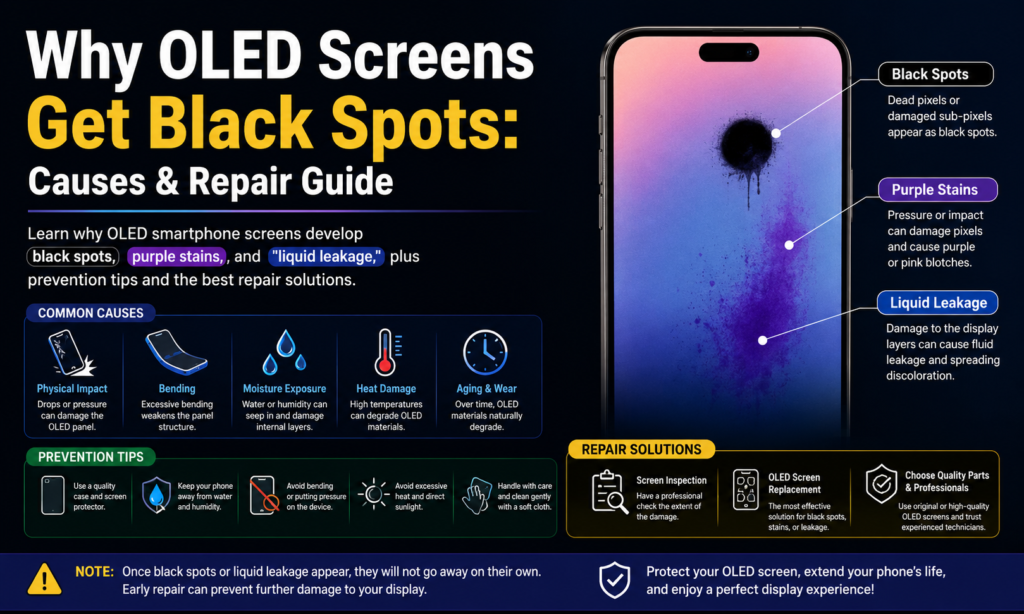
Imidlertid, mange brugere bemærker et problem, der almindeligvis beskrives som “OLED-skærm væskelækage.” De kan se sorte pletter, lilla pletter, farverige linjer, eller sprede mørke områder efter at have tabt deres telefon eller lagt pres på skærmen.
Sandheden er den OLED-skærme lækker faktisk ikke væske. I modsætning til LCD-skærme, der indeholder flydende krystalmateriale, OLED-paneler bruger organiske lysdioder. Hvad brugerne kalder “væskelækage” er faktisk fysisk skade på OLED-skærmlagene, hvilket får pixels til permanent at stoppe med at udsende lys.
Denne artikel forklarer, hvorfor OLED-skærme udvikler disse symptomer, hvad der forårsager skaden, hvordan man forhindrer det, og når udskiftning af skærm er den eneste effektive løsning.
Hvad er OLED-skærm “Væskelækage”?
Udtrykket OLED væskelækage er en almindelig, men teknisk ukorrekt beskrivelse, der bruges af smartphonebrugere.
Typiske symptomer inkluderer:
- Sorte pletter opstår, efter at en telefon er tabt
- Lilla eller blå blæk-lignende pletter spredes hen over skærmen
- Sorte områder bliver gradvist større
- Lodrette eller vandrette farvede linjer
- Flimrende display
- Delvis eller fuldstændig tab af berøringsrespons
- Skærmen bliver helt sort, mens telefonen stadig fungerer
Disse symptomer opstår, fordi OLED-panelet er blevet fysisk beskadiget, ikke fordi der lækker væske inde i skærmen.
Hvorfor udvikler en OLED-skærm sorte pletter?
Flere faktorer kan beskadige de sarte OLED-lag.
1. Tilfældige dråber
Den mest almindelige årsag er at tabe smartphonen.
Selv hvis:
- Frontglasset forbliver intakt
- Der er ingen synlige revner
- Touchskærmen virker stadig
Den interne OLED-skærm kan være knækket.
Det organiske emitterende lag er ekstremt tyndt og skrøbeligt. Et stærkt stød kan bryde mikroskopiske kredsløb inde i panelet, forårsager permanente døde pixels, der vises som sorte pletter.
2. For højt tryk
OLED-paneler er følsomme over for tryk.
Eksempler omfatter:
- Sidder ved en telefon
- Bærer telefonen i en stram baglomme
- Tunge genstande, der presser mod displayet
- Lukning af en bærbar computer med telefonen indeni
- Stærkt fingertryk under installation eller reparation
Tryk beskadiger OLED-pixelmatrixen under beskyttelsesglasset.
3. Bukket eller snoet telefonramme
Moderne smartphones bliver tyndere for hvert år.
Når aluminium eller titanium rammen bøjer, OLED-panelet bøjer med.
Gentagen bøjning kan i sidste ende knække OLED-laget selv uden et større fald.
4. Forkert skærminstallation
Dårlig reparationspraksis kan også beskadige OLED-skærme.
Eksempler omfatter:
- Ujævnt klæbemiddel
- For stor klemkraft
- Forkert rammejustering
- Overspændte skruer
- Overdreven varme under reparation
Professionelle reparationsteknikere bruger altid kontrolleret tryk under installationen.
5. Fremstillingsfejl (Sjælden)
Selvom det er ualmindeligt, produktionsproblemer kan bidrage.
Mulige mangler er bl.a:
- Svag binding mellem skærmlag
- Intern stress under produktion
- Defekte fleksible kabler
- Pixel-driverfejl
Disse problemer opstår normalt kort efter købet og er generelt dækket af producentens garanti.
Hvorfor fortsætter sorte pletter med at sprede sig?
Mange brugere bemærker, at en lille sort prik langsomt bliver til et stort mørkt område over flere timer eller dage.
Dette sker pga:
- beskadigede OLED-pixel påvirker tilstødende pixels,
- elektriske kredsløb inde i skærmen bliver ustabile,
- fugt og luft kan trænge ind i beskadigede lag,
- fortsat tryk forværrer den indre skade.
I modsætning til softwareproblemer, OLED-pixelskade er permanent og kan ikke heles.
Kan OLED-skærmlækage repareres?
Desværre, ingen.
Når OLED-laget er fysisk beskadiget:
- Sorte pletter kan ikke forsvinde.
- Lilla pletter kan ikke renses.
- Døde pixels kan ikke gendannes.
- Softwareopdateringer kan ikke løse problemet.
- Fabriksindstilling hjælper ikke.
Den eneste permanente løsning er at udskifte hele OLED-skærmenheden.
Midlertidige foranstaltninger før udskiftning
Hvis skærmen stadig er delvist brugbar, brugere kan reducere risikoen for yderligere skade ved:
- Sikkerhedskopierer vigtige data med det samme.
- Undgå yderligere fald eller tryk.
- Fjernelse af ethvert tæt beskyttende etui, hvis det belaster rammen.
- Reducerer skærmens lysstyrke for at minimere varmeudvikling.
- Undgå at bøje telefonen.
- Planlægning af en professionel skærmudskiftning så hurtigt som muligt.
Disse foranstaltninger kan ikke reparere skærmen, men kan forsinke yderligere forringelse.
Sådan forhindrer du OLED-skærmskader
Forebyggelse er langt billigere end at erstatte en premium OLED-skærm.
Brug et kvalitetsbeskyttelsesetui
Stødabsorberende etuier hjælper med at reducere stødenergien under utilsigtede fald.
Installer hærdet glas
Mens hærdet glas ikke kan beskytte OLED-laget mod enhver påvirkning, det hjælper med at reducere ridser og fordeler slagkraften mere jævnt.
Undgå for højt tryk
Aldrig:
- Sid på din telefon.
- Bær den i en overfyldt baglomme.
- Placer tunge genstande oven på den.
Hold telefonen væk fra ekstreme temperaturer
Meget høje temperaturer kan svække klæbemidler og interne displaymaterialer over tid.
Vælg professionelle reparationstjenester
Hvis udskiftning af skærm er nødvendig, vælg erfarne teknikere, der bruger udskiftningsskærme af høj kvalitet og korrekt installationsværktøj.
OEM OLED vs Aftermarket OLED-udskiftning
Ved udskiftning af en beskadiget skærm, brugere har generelt to muligheder.
| Feature | OEM OLED | Eftermarked OLED af høj kvalitet |
|---|---|---|
| Displaykvalitet | Fremragende | Meget god |
| Lysstyrke | Original | Lidt lavere (varierer fra leverandør til) |
| Farvenøjagtighed | Fremragende | God til fremragende |
| Tryk på Ydelse | Original | Normalt fremragende |
| Holdbarhed | Fremragende | Afhænger af producent |
| Pris | Højere | Mere overkommelig |
At vælge en velrenommeret leverandør sikrer bedre pålidelighed og længere levetid.
Ofte stillede spørgsmål
Lækker OLED virkelig væske?
Ingen.
OLED-skærme indeholder ingen flydende krystal som LCD-skærme. De “flydende” udseendet er simpelthen beskadiget OLED-pixel, der skaber udvidende mørke eller lilla områder.
Kan sorte pletter fjernes?
Ingen.
Sorte pletter indikerer permanent pixelfejl.
Vil skærmen fortsætte med at sprede sig?
Normalt ja.
De fleste beskadigede OLED-paneler forringes gradvist efter det første stød.
Er data stadig sikre?
I de fleste tilfælde, ja.
Displayet kan svigte, mens selve telefonen fortsætter med at fungere normalt. Brugere bør sikkerhedskopiere vigtige data så hurtigt som muligt.
Skal jeg kun udskifte glasset?
Hvis selve OLED-panelet har sorte pletter, lilla pletter, eller vise linjer, Udskiftning af frontglasset løser ikke problemet.
Hele OLED-skærmenheden skal udskiftes.
Konklusion
Selvom mange brugere beskriver problemet som OLED-skærm væskelækage, problemet er faktisk fysisk skade på OLED-skærmpanelet. Dråber, for stort tryk, rammebøjning, og ukorrekte reparationer er de mest almindelige årsager til sorte pletter, lilla pletter, og udvidede mørke områder.
Fordi OLED-pixel ikke kan regenereres, der er ingen softwarefix eller reparationsmetode, der kan gendanne et beskadiget panel. Udskiftning af hele displayet er fortsat den eneste pålidelige løsning.
For at forlænge levetiden på en OLED-smartphoneskærm, brugere bør beskytte deres enheder med et kvalitetsetui og hærdet glas, undgå for stort pres, håndtere reparationer professionelt, og udskift beskadigede skærme med det samme, før problemet forværres. At forstå de reelle årsager bag OLED-skærmskader hjælper forbrugerne med at træffe informerede reparationsbeslutninger og bevare den bedst mulige ydeevne fra deres smartphones.