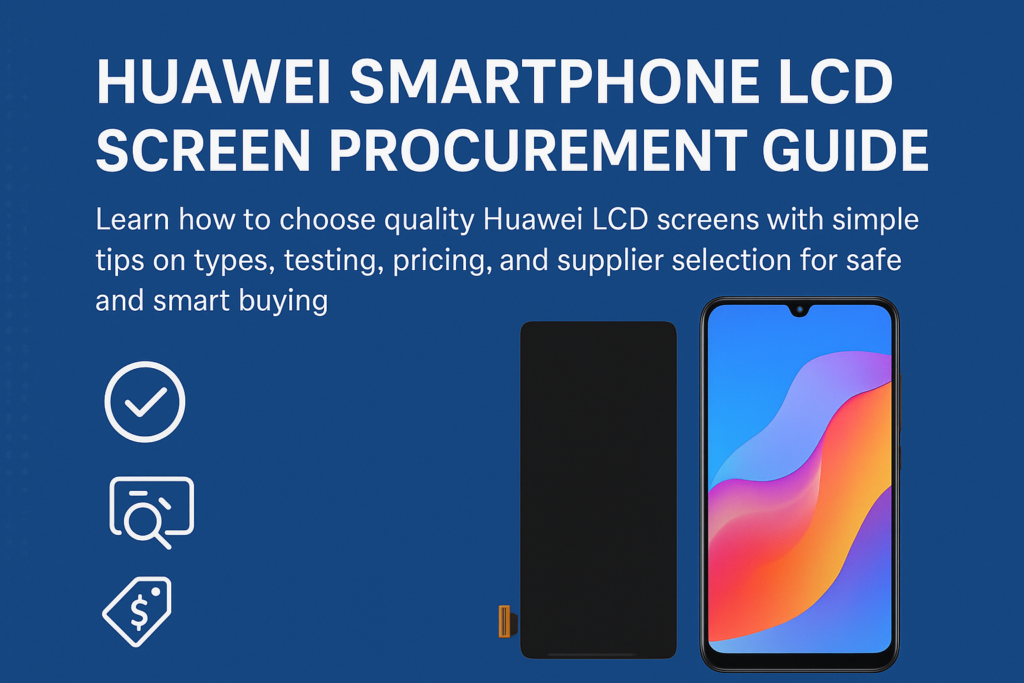
Introduktion till att köpa Huawei LCD-skärmar
Huaweis smartphones är kända för sina högkvalitativa skärmar, vilket gör inköp av LCD-skärmar till en uppgift som kräver extra uppmärksamhet och expertis. Oavsett om du är en verkstadsägare, delar distributör, eller bulkköpare, Att förstå hur man väljer pålitliga Huawei LCD-skärmar kommer att spara pengar, minska avkastningen, och förbättra kundnöjdheten.
Varför Huawei-skärmar är unika
Huawei satsar hårt på skärmteknik. Många modeller använder avancerade OLED-paneler, exakta beröringssensorer, och anpassade skärmdrivrutiner. Detta innebär att ersättningsskärmar kan variera kraftigt i prestanda beroende på leverantör.
Vikten av att välja rätt leverantör
En bra leverantör ger dig stabil kvalitet, rimliga priser, och konsekvent lager. En dålig leverantör ger huvudvärk – höga defekter, omatchade färger, och bortkastad tid. Rätt partner är allt inom LCD-upphandling.
Förstå Huawei LCD-skärmtyper
Original vs. renoverade
- Original (OEM) skärmar kommer direkt från Huaweis tillverkande partners.
- Renoverad skärmar använder en originaldisplaypanel men byter ut ramen eller glaset.
Renoverade skärmar kan fortfarande vara av hög kvalitet om de görs på rätt sätt, men enkla renoveringar är vanliga.
Mjuk OLED vs. Hård OLED vs. TFT LCD
- Mjuk OLED: Flexibel, tunn, utmärkt färgprestanda.
- Hård OLED: Mer prisvärt alternativ med bra prestanda.
- TFT LCD: Lägsta kostnad men sämre än OLED i ljusstyrka och färg.
Att välja rätt typ beror på din marknads behov och kundernas förväntningar.
Hur modellvariationer påverkar kompatibiliteten
Huawei-telefoner använder flera versioner för olika regioner. Även små skillnader i kontakter eller programvarukompatibilitet kan orsaka skärmproblem. Bekräfta alltid exakt modellnummer, inte bara serienamnet.
Viktiga faktorer att tänka på när du köper Huawei LCD-skärmar
Visningskvalitet
Söka efter:
- Hög ljusstyrka
- Konsekvent färg
- Inga döda pixlar
Beröringskänslighet
Billiga skärmar släpar ofta efter, missa beröringspunkter, eller frys. Att testa lyhördhet är viktigt.
Ljusstyrka och färgnoggrannhet
Bra skärmar ska matcha originalet. Skärmar av låg kvalitet verkar mörka eller tonade.
Ram vs. skärmar utan ram
- Med ram: Enklare installation, färre defekter.
- Utan ram: Billigare, men större risk för felställning.
Hur man identifierar äkta eller högkvalitativa Huawei LCD-skärmar
Förpackning och märkning
OEM-leverantörer använder ren, konsekvent förpackning. Dålig utskrift eller slumpmässiga etiketter är röda flaggor.
Serienummer och QR-koder
Skanna koden kan visa tillverkningsdata. Falska skärmar använder ofta upprepade eller ogiltiga serier.
Testar utseende och byggkvalitet
Kontrollera:
- Flex kabelinriktning
- Anslutningsprecision
- Ramlimkvalitet
Högkvalitativa skärmar visar alltid rent utförande.
Val av leverantörsguide
Att välja mellan fabriker, grossister, och handelsbolag
- Fabriker: Bäst för bulkköpare men kräver högre MOQ.
- Grossister: Mer flexibel, bra för blandade modeller.
- Handelsbolag: Enklare kommunikation, bredare produktförsörjning.
Hur man utvärderar leverantörens trovärdighet
Söka efter:
- Svarshastighet
- Professionell produktkunskap
- Långsiktiga kunder
- Garantipolicyer
Certifieringar och kvalitetskontrollsystem
Leverantörer som följer QC-standarder (TILL EXEMPEL., IQ-test) leverera mer stabil kvalitet.
Provbeställning och testning
Varför prover spelar roll
Lita aldrig på en leverantör utan att testa prover först. Prover avslöjar verklig kvalitet bättre än bilder eller löften.
Steg för att testa Huawei-skärmar
- Visuell inspektion
- Testning på enheten
- Jämförelse av ljusstyrka och färg
- Beröringskänslighetstest
- Omstart och stresstestning
Vanliga defekter att leta efter
- Spökberöring
- Svag bakgrundsbelysning
- Färgfläckar
- Displayen flimrar
- Döda beröringszoner
Prisinsikter
Varför Huawei-skärmar ofta kostar mer
Huawei använder avancerad skärmteknik, och utbudet är mer begränsat än Apple eller Samsung. Detta håller priserna högre.
Prisskillnader mellan versioner
Mjuk OLED > Hård OLED > TFT LCD
OEM-skärmar kan kosta 2-3x mer än tredjepartsversioner.
Undviker lågprisfällor
Ultrabilliga skärmar följer nästan alltid med:
- Höga defekter
- Dålig färg
- Snabbt misslyckande
Låga priser = hög risk.
Förpackning, Frakt, och förvaringstips
Hur man packar LCD-skärmar säkert
Använda:
- Bubbelplast
- Hårda fall
- Antistatiska väskor
Bästa fraktmetoderna för ömtåliga varor
För massbeställningar, flygfrakt med förstärkt förpackning är säkrare än vanliga kurirer.
Lagringsförhållanden för att undvika skador
Undvika:
- Hög luftfuktighet
- Hög temperatur
- Tryck på skärmen
Förvara skärmarna plant för att förhindra böjningar och tryckmärken.
Massinköpstips
Förhandla om prissättning
Bättre priser kommer från:
- Stabilt långsiktigt samarbete
- Större månadsvolym
- Inköp under lågsäsong
Att sätta upp långsiktig leverans
Bygg förtroende hos leverantörer genom konsekvent kommunikation och snabba betalningar.
Kvalitetsinspektionsstrategier
Inspektera varje försändelse. Dokumentera defekter och kommunicera snabbt.
Vanliga misstag att undvika
Köp baserat enbart på pris
Billiga skärmar kan kosta dig mer i returer och dåliga kundrecensioner.
Ignorerar modellkompatibilitet
Fel modell = omedelbart fel.
Hoppa över testprocedurer
Även pålitliga leverantörer kan ibland skicka defekta enheter.
Slutsats
Att köpa Huawei-smarttelefon LCD-skärmar kräver noggrann uppmärksamhet på kvalitet, kompatibilitet, leverantörsval, och testning. Med rätt strategi, du kan säkra en stabil försörjning, minimera defekter, och erbjuda dina kunder utmärkta reparationsresultat. Oavsett om du är en liten verkstad eller en stor distributör, Att förstå dessa upphandlingsprinciper hjälper dig att fatta smartare och mer lönsamma köpbeslut.
Vanliga frågor
1. Är renoverade Huawei-skärmar pålitliga?
Ja – om de renoveras av proffs med högkvalitativa material.
2. Varför kostar Huawei OLED-skärmar mer?
De använder avancerade komponenter och har begränsat utbud.
3. Hur kan jag undvika att köpa falska skärmar?
Testa prover, kontrollera förpackningen, och verifiera serienummer.
4. Är det bättre att köpa skärmar med ramar?
Ja, de minskar installationssvårigheterna och minskar antalet defekter.
5. Kan jag blanda leverantörer för olika modeller?
Ja, men upprätthåll strikta tester för att säkerställa jämn kvalitet.