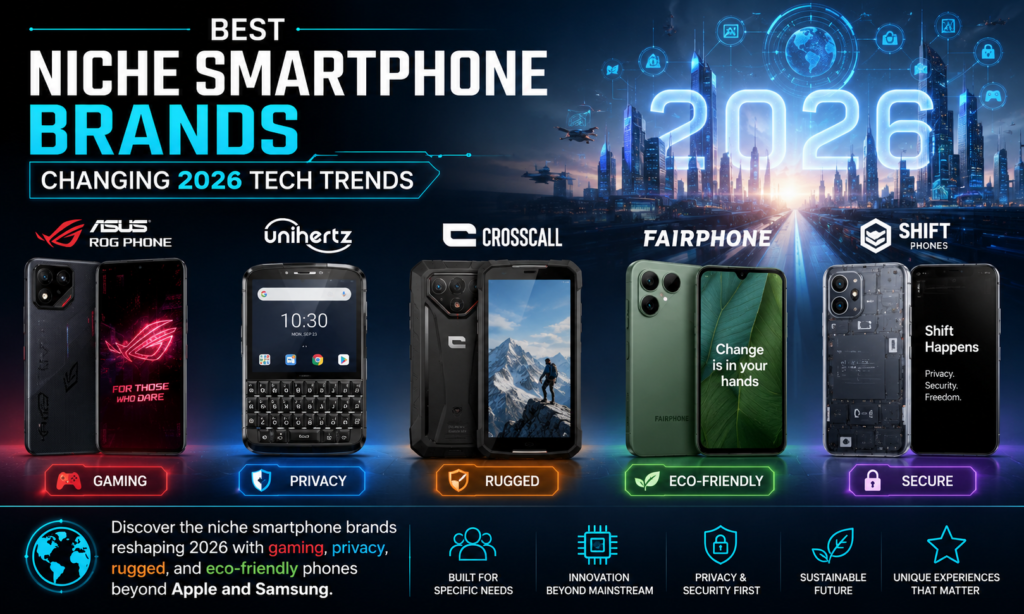
Ang kalibutan sa smartphone kanunay nga gibati sama sa usa ka higanteng natad sa panggubatan nga gimandoan sa pipila ka dagkong mga ngalan. Mansanas, Samsung, Xiaomi, ug ang Google nag-okupar sa kadaghanan sa mga ulohan, mga paanunsiyo, ug mga estante sa tindahan. Bisan pa sa ilawom sa sinaw nga nawong adunay usa ka lahi nga ekosistema nga puno sa pagkamamugnaon, eksperimento, ug katingad-an nga bag-o nga gagmay nga mga tatak sa smartphone. Kini nga mga kompanya mahimong dili makabaligya sa gatusan ka milyon nga mga aparato matag tuig, apan nagpadayon sila sa paghulma sa industriya sa mobile sa mga paagi nga daghang mga konsumedor ang wala makamatikod.
Sa 2026, Ang mga niche nga mga tatak sa smartphone nahimong labi ka hinungdanon kaysa kaniadto. Ang pagtaas sa mga presyo sa smartphone, nagkadako nga kasagmuyo sa nagbalikbalik nga mga disenyo sa punoan nga punoan, ug nagkadako nga interes sa pribasiya, pagkamalahutayon, doling, ug ang pagkaayo nag-abli sa mga pultahan alang sa gagmay nga mga tiggama. Samtang ang mga mainstream nga tatak naggukod sa mass-market appeal, kining gagmay nga mga kompanya nagpunting sa piho nga mga grupo sa tiggamit. Ang uban nagmugna og mga monster sa pagdula nga adunay mga cooling fans, ang uban nagdesinyo ug eco-friendly nga mga telepono nga mahimong ayohon sa balay, ug pipila pa gani ang nagpabuhi sa pisikal nga mga keyboard nga nawala mga tuig na ang milabay.
Sumala sa bag-o nga mga taho sa industriya, ang global nga merkado sa smartphone nakasinati sa usa sa labing lisud nga mga panahon sa sobra sa usa ka dekada tungod sa kakulang sa memory chip ug pagtaas sa gasto sa paghimo. Ang gagmay nga mga tatak gipislit pag-ayo, bisan pa ang mga kompanya sama sa Nothing ug Fairphone nagrekord gihapon sa impresibo nga pagtubo tungod kay ang mga konsumedor aktibo nga nangita alang sa mga alternatibo.
Ang makaiikag nga bahin? Kini nga mga tatak dili na "barato nga mga alternatibo." Daghan karon ang nagtanyag mga bahin sa mainstream nga mga kompanya nga gibiyaan kaniadto. Mga jack sa headphone, matangtang nga mga bahin, ultra-compact nga mga disenyo, gaming triggers, pisikal nga mga keyboard, ug ang mga operating system nga naka-focus sa pribasiya nagbalik tungod sa gagmay nga mga innovator. Kini hapit sama sa industriya sa smartphone nga nabahin sa duha ka kalibutan: higanteng mga korporasyon nga naggukod sa sukdanan, ug mas gagmay nga mga tatak nga naggukod sa pagkatawo.
Ngano nga ang Gagmay nga Mga Brand sa Smartphone Importante gihapon 2026
Ang Pagtaas sa Niche Consumer Demand
Ang mga modernong tiggamit sa smartphone wala na matagbaw sa usa ka gidak-on nga mohaum sa tanan nga mga himan. Napulo ka tuig ang milabay, halos tanan gusto sa samang butang: dako nga screen, usa ka maayo nga camera, ug popular nga mga app. Karon, ang mga tiggamit nagpaabut sa mga himan nga gipahaum sa ilang mga estilo sa kinabuhi. Gusto sa usa ka gamer ang mga cooling system ug shoulder trigger. Ang usa ka propesyonal sa negosyo mahimong masipyat sa pisikal nga mga keyboard. Ang mga adventurer sa gawas nanginahanglan ug gahi nga mga telepono nga adunay daghang mga baterya. Gipalabi sa mga tiggamit nga naka-focus sa privacy ang mga operating system nga nagpamenos sa pagsubay. Kini nga pagbalhin nakamugna og tabunok nga yuta alang sa niche nga mga kompanya sa smartphone.
Ang makapainteres nga butang mao nga ang mga mainstream nga tatak panagsa ra nga mag-risgo. Kadaghanan sa mga punoan nga telepono karon halos parehas. Ang nipis nga mga rektanggulo nga adunay daghang mga bumps sa camera ang nagdominar sa merkado. Ang mga incremental nga pag-upgrade mipuli sa radikal nga kabag-ohan. Ang gagmay nga mga tatak nakamatikod niini nga gintang ug nahimo kini nga usa ka oportunidad. Ang mga kompanya sama sa Unihertz karon naghimo ug gagmay nga mga smartphone ug mga gamit sa keyboard nga istilo sa BlackBerry, samtang ang Fairphone nagtutok pag-ayo sa pagkaayo ug ethical sourcing.
Ang mga konsumedor nahimo usab nga emosyonal nga gilakip sa pagkatalagsaon pag-usab. Ang pagdala sa usa ka niche nga smartphone sama sa pagmaneho sa usa ka kostumbre nga motorsiklo imbis nga usa ka sedan nga gihimo sa kadaghanan. Kini nagpakita sa personalidad. Sa usa ka panahon diin halos tanan nga aparato parehas ang hitsura, ang pagkalahi nahimong bililhon. Ang mga batan-on nga pumapalit labi nga nalingaw sa mga tatak nga adunay dili naandan nga mga identidad, nga nagpatin-aw sa paspas nga pagtubo sa mga kompanya sama sa Wala. Ang Counterpoint Research nagtaho nga Walay nakab-ot a 25% pagdugang sa mga kargamento sa panahon sa Q1 2026 bisan pa sa mga pakigbisog sa merkado sa kalibutan.
Ang laing dakong hinungdan mao ang kakapoy sa pagpresyo. Ang mga premium nga punoan nga telepono karon kanunay nga milapas $1,000, ug daghang mga konsumidor ang nagdumili sa paggasto og ingon niana ka daghan. Ang mga niche nga tatak kanunay nga naghatud sa mga katingad-an nga makahimo nga mga aparato sa labi ka mubu nga presyo. Mahimo nilang isakripisyo ang kalidad sa camera o software polish, apan gibayran nila ang mga espesyal nga bahin nga gibalewala sa mga mainstream brand.
Ngano nga ang mga Konsyumer Gikapoy sa Mainstream nga mga Telepono
Daghang mga tiggamit sa smartphone ang mibati nga natanggong sa usa ka walay katapusan nga siklo sa balik-balik nga pag-upgrade. Matag tuig nagsaad "ang labing kaayo nga camera sukad" o "mas paspas nga mga bahin sa AI,” apan ang tinuod nga kalibotan nga kasinatian halos dili mausab. Ang mga konsumedor nagsugod sa pagmatikod. Ang kahinam nga naglibot sa paglansad sa smartphone nawala kung itandi sa explosive innovation nga panahon sa taliwala 2010 ug 2020.
Kini nga kalaay nakabenepisyo pag-ayo sa mga tatak nga niche. Ang gagmay nga mga tiggama nag-eksperimento sa mga ideya nga giisip sa mga higanteng kompanya nga peligro kaayo. Gidugang sa RedMagic ang mga built-in nga cooling fans sa mga gaming phone. Gipagawas sa Unihertz ang gagmay nga mga smartphone nga gamay ra aron mawala sa usa ka bulsa. Naghimo ang Fairphone og mga modular nga aparato nga ang mga tiggamit makaayo sa ilang kaugalingon gamit ang yano nga mga himan. Gipunting ni Jolla ang pagkapribado ug kagawasan gikan sa mga ekosistema sa software sa Amerika ug China.
Ang laing isyu nga nakadaot sa mga mainstream nga tatak mao ang pagkawala sa mga minahal nga bahin. Daghang mga konsumedor gusto gihapon ang mga headphone jack, mapalapad nga pagtipig, ug mga compact phone. Ang Apple ug Samsung kadaghanan mibiya niini nga mga bahin sa pagpangita sa nipis nga mga disenyo ug wireless nga ekosistema. Ang gagmay nga mga tatak misulud sa kana nga gintang sama sa mga independente nga tindahan sa libro nga nabuhi tupad sa higanteng mga kadena sa tingi. Nag-alagad sila sa mga madasigon nga komunidad imbes sa mga mamiminaw.
Adunay usab nagkadako nga pagduhaduha sa dagkong mga ekosistema sa teknolohiya. Ang ubang mga tiggamit dili ganahan kon unsa ka bug-at nga integrated mainstream nga mga himan nahimo uban sa advertising, mga suskrisyon sa panganod, ug pagsubay sa datos. Ang mga tatak nga nakapunting sa pagkapribado sama sa Jolla nagdani sa mga tiggamit nga gusto og dugang nga kontrol sa ilang digital nga kinabuhi. Samtang kini nga mga tumatan-aw nagpabilin nga medyo gamay, sila hilabihan ka maunongon.
Katingad-an, ang mas standardized mainstream nga mga smartphone mahimong, ang mas bililhon nga niche diversity gibati. Ang mga smartphone usa ka personal nga butang nga gigamit sa mga tawo matag adlaw. Mas gusto sa mga tiggamit ang mga aparato nga nagpakita sa ilang mga kantidad, mga kalingawan, ug mga identidad kay sa generic nga mga uso sa disenyo sa korporasyon.
Ang Global Smartphone Market sa 2026
Nagtaas nga Presyo ug Mga Hagit sa Supply Chain
Ang industriya sa smartphone sa 2026 nag-atubang og seryoso nga kaguliyang. Sumala sa IDC ug Counterpoint Research, Ang mga global nga pagpadala sa smartphone gilauman nga moigo sa ilang labing ubos nga lebel sa kapin sa usa ka dekada tungod sa grabe nga kakulang sa memory chip ug pagtaas sa gasto sa produksiyon.. Gilauman sa mga analista nga ang average nga presyo sa pagbaligya sa smartphone motaas pag-ayo sa tuig.
Alang sa gagmay nga mga tatak sa smartphone, kini nga palibot kay delikado ug katingad-an nga mapuslanon. Sa usa ka bahin, Ang pagtaas sa gasto sa sangkap naghulga sa pagkaluwas tungod kay ang mga tatak sa niche kulang sa daghang gahum sa kadena sa suplay sa Apple o Samsung. Ang mas dagkong mga korporasyon mahimong makigsabot sa mas maayong mga presyo ug mas dali nga masiguro ang mga suplay sa chip. Ang gagmay nga mga tiggama kanunay nga nanlimbasug nga makigkompetensya alang sa mga sangkap sa panahon sa kakulang.
Sa laing bahin, ang pagkaguba sa merkado nagmugna og mga oportunidad alang sa mga mamugnaon nga magdudula. Ang mga konsumedor nga nag-atubang sa mas taas nga presyo sa punoan nga punoan mahimong mas andam nga mag-usisa sa mga alternatibo. Daghang mga tatak nga niche ang nakalahutay pinaagi sa pag-target sa labi ka piho nga mga komunidad kaysa pagsulay nga dominahan ang tibuuk nga merkado. Ang usa ka kompanya nga nagbaligya pipila ka gatos ka libo nga mga aparato sa maunongon nga mga tagahanga mahimong magpabilin nga ganansya nga wala direkta nga nakigkompetensya batok sa dako nga sukod sa Apple.
Ang merkado sa smartphone nakasinati usab og hinay nga pagpuli nga mga siklo. Gipadayon sa mga konsumedor ang mga telepono nga mas dugay tungod kay ang tinuig nga pag-uswag gibati nga dili kaayo makahuluganon. Kini nga uso sa tinuud gipaboran ang mga tatak nga niche nga naka-focus sa kalig-on ug pagkaayo. Fairphone, pananglitan, nagtukod sa tibuok nga modelo sa negosyo sa palibot sa dugay nga pagpanag-iya. Mahimong ilisan sa mga tiggamit ang mga baterya, kamera, ug mga screen imbes nga mopalit ug bag-ong mga himan. Kana nga pamaagi kalit nga gibati nga labi ka hinungdanon sa panahon sa kawalay kasiguruhan sa ekonomiya.
Sa Unsang Paagi Nabuhi ang Mas Gagmay nga mga Brand
Ang mga kompanya sa niche nga smartphone mabuhi pinaagi sa espesyalisasyon. Imbes maningkamot sa pagpahimuot sa tanan, nagtutok sila pag-ayo sa gagmay nga mga tumatan-aw nga adunay piho nga mga panginahanglan. Kini nga estratehiya nahisama sa mga boutique coffee shop nga nakigkompetensya batok sa higanteng mga kadena pinaagi sa pagtanyag og talagsaon nga mga kasinatian imbes sa mass-market nga kasayon.
Ang labing kaayo nga pananglitan mao ang bahin sa gaming smartphone. Ang mga brand sama sa RedMagic nagbag-o sa mga gaming phone ngadto sa tibuok subculture. Kini nga mga himan adunay agresibo nga mga disenyo, advanced nga mga sistema sa pagpabugnaw, napasadya nga RGB nga suga, ug touch-sensitive shoulder triggers. Ang mga mainstream nga kompanya panagsa ra nga mopasalig sa hingpit sa gaming hardware tungod kay ang mga mamiminaw nagpabilin nga medyo niche. Gidawat kini sa RedMagic sa hingpit ug nagtukod usa ka maunongon nga global nga fanbase.
Ang laing estratehiya sa pagkaluwas naglakip sa mga online nga komunidad. Ang gagmay nga mga tatak sa smartphone kanunay nga nag-ugmad sa mga madasigon nga fanbase pinaagi sa mga forum, Mga grupo sa panagsumpaki, ug social media. Kini nga mga komunidad nahimong walay bayad nga mga tigpamaligya. Ang mga mahiligon ganahan nga maghisgot sa talagsaon nga mga himan tungod kay sila lahi sa mga mainstream nga produkto. Ang pagpamaligya sa pulong sa baba nagtabang sa gagmay nga mga kompanya nga mabayran ang limitado nga mga badyet sa advertising.
Importante usab ang pagtutok sa rehiyon. Ang ubang mga niche brand kusog nga naghimo sa piho nga mga nasud kaysa sa tibuuk kalibutan. Natagamtam sa Fairphone ang partikular nga kalampusan sa Europe diin ang mga kabalaka sa pagpadayon kusog nga nadungog sa mga konsumedor. Ang mga merkado sa smartphone sa India naglangkob gihapon daghang gagmay nga mga tatak nga nakapunting sa online nga nakigkompetensya sa mga bahin sa badyet. Ang mga tiggama sa niche sa China nagdominar sa mga kategorya sa mga dula ug mga gahi nga aparato.
Sa katapusan, ang pagkaluwas nagdepende sa kalainan. Ang gagmay nga mga tatak sa smartphone dili makadaog pinaagi sa pagkopya sa Apple o Samsung. Nagmalampuson lang sila kung nagtanyag sila og mga kasinatian nga nagdumili ang mga kakompetensya sa paghatag.
Popular nga Niche Smartphone Brands sa Europe
Fairphone ug ang Sustainability Movement
Ang Fairphone nahimong usa sa labing makaiikag nga mga tatak sa smartphone sa Europe tungod kay gihagit niini ang kultura sa paglabay sa industriya.. Imbis nga dasigon ang kanunay nga pag-upgrade, Ang Fairphone nagpasiugda sa taas nga kinabuhi, etikal nga gigikanan, ug pagkaayo. Sa daghang paagi, ang kompanya mibati nga dili kaayo sama sa usa ka tech manufacturer ug mas sama sa usa ka sustainability nga kalihukan nga giputos sulod sa usa ka smartphone nga negosyo.
Ang Fairphone 6 nakakuha ug dakong atensyon sa 2026 salamat sa modular nga disenyo ug taas nga software nga suporta nga mga saad. Sumala sa Android Central, Ang Fairphone nagrekord og usa ka katingad-an 116% pagtaas sa pagpadala bisan pa sa mas lapad nga pagkunhod sa merkado sa smartphone. Kana nga pag-uswag nagpasiugda kung giunsa ang pagbag-o sa mga prayoridad sa mga konsumedor. Ang mga pumapalit labi nga nagpakabana sa epekto sa kalikopan, katungod sa pag-ayo nga mga palisiya, ug transparent nga mga gawi sa paggama.
Usa sa pinakadako nga bentaha sa Fairphone mao ang emosyonal nga pagsalig. Daghang mga konsumedor ang dili komportable nga ilisan ang mga mahal nga aparato matag duha ka tuig tungod lang kay ang mga baterya nahuyang o ang mga screen naliki.. Gihatagan usab sa Fairphone ang kontrol sa mga tiggamit. Ang mga sangkap mahimong pulihan sa tinagsa gamit ang sukaranan nga mga himan, paghimo sa telepono nga mobati nga mas sama sa usa ka long-term investment kay sa disposable teknolohiya.
Nakabenepisyo usab ang kompanya gikan sa nagkadako nga presyur sa regulasyon sa Europe nga naglibot sa pagkaayo ug pagpadayon. Ang mga gobyerno labi nga nag-awhag sa mga tiggama sa pagpalawig sa kinabuhi sa produkto ug pagpakunhod sa elektronik nga basura. Hingpit nga gipahimutang sa Fairphone ang kaugalingon alang sa kini nga pagbalhin sa kultura mga tuig sa wala pa nagsugod ang mga dagkong kompanya nga seryoso nga naghisgot sa pagpadayon.
Jolla ug Mga Smartphone nga Naka-focus sa Privacy
Ang Jolla nagrepresentar sa laing makaiikag nga suok sa niche nga kalibutan sa smartphone. Nagbase sa Finland, ang kompanya nagpalambo sa Sailfish OS, usa ka alternatibo nga mobile operating system nga nagpasiugda sa pribasiya ug kagawasan. Dili sama sa Android o iOS, Gilikayan sa Sailfish ang lawom nga panagsama sa mga dagkong ekosistema sa teknolohiya sa Amerika.
Gipabilhan sa mga tiggamit sa pagkapribado ang Jolla tungod kay nagtanyag kini usa ka butang nga labi ka talagsaon: digital nga awtonomiya. Gipunting sa kompanya ang mga tiggamit nga dili komportable sa daghang mga pamaagi sa pagkolekta sa datos gikan sa mga mainstream platform. Samtang nagpabiling gamay ang market share ni Jolla, ang pilosopiya niini kusog nga naglanog sa mga mahiligon sa cybersecurity, mga developers, ug mga tigpasiugda sa pagkapribado.
Ang nakapaikag kaayo sa Jolla mao ang pagdumili niini nga makigkompetensya direkta batok sa mga higante nga mainstream. Inay gukdon ang masa nga pagsagop, ang kompanya nagpunting sa usa ka labi ka maunongon nga tigpaminaw sa niche. Kini nga estratehiya susama sa artisan craftsmanship kon itandi sa factory-scale manufacturing. Ang mga aparato sa Jolla mahimong dili gyud mopatigbabaw sa mga tsart sa pagbaligya, apan gipadayon nila ang importansya sa kultura pinaagi sa pagmatuod nga ang mga alternatibong ekosistema mahimo pa nga maglungtad.
Ang pagtaas sa mga diskusyon sa teknolohiya nga nakapunting sa privacy sa Europe makatabang usab sa mga tatak sama sa Jolla. Sama sa mga kabalaka sa palibot nga pagbantay, pag-ani sa datos, ug ang digital monopolyo motubo, ang gagmay nga mga kompanya nga nakatuon sa pagkapribado kalit nga makita nga labi ka hinungdanon kaysa kaniadto.
Talagsaon nga Mga Brand sa Smartphone sa China
RedMagic ug ang Gaming Smartphone Boom
Ang China nagpabilin nga sentro sa kalibutan alang sa eksperimento sa smartphone, ug ang RedMagic hingpit nga nagpakita kung ngano. Orihinal nga gimugna isip sub-brand nga naka-focus sa dula, Ang RedMagic nahimong usa sa labing nailhan nga mga kompanya sa smartphone sa tibuuk kalibutan.
Ang mga gaming smartphone nag-okupar sa usa ka katingad-an apan makaiikag nga suok sa industriya. Sa pipila ka mga konsumidor, sila makita nga sobra o bata. Sa mga mobile gamers, sila nagrepresentar sa seryoso nga performance himan. Ang mga RedMagic nga telepono adunay mga aktibo nga makapabugnaw nga mga fans, ultra-taas nga refresh rate display, mga hinungdan sa abaga, RGB suga, ug dagkong mga baterya nga gidisenyo alang sa kompetisyon nga mga sesyon sa pagdula.
Ang industriya sa mobile gaming mismo mibuto sa tibuok kalibutan, gimaneho sa mga titulo sa esports sama sa PUBG Mobile, Tawag sa Katungdanan Mobile, ug Kadungganan sa mga Hari. Naghimo kini nga panginahanglan alang sa mga aparato nga na-optimize alang sa pasundayag sa dula. Ang mga punoan nga punoan nga telepono sa mainstream siguradong makapadagan sa mga dula, apan ang mga device nga naka-focus sa dula nag-una sa pagpadayon sa performance ug thermal management sa mga paagi nga panagsa ra buhaton sa mga standard phone.
Nakabenepisyo usab ang RedMagic gikan sa maisog nga pagkatawo. Ang brand naglakip sa futuristic aesthetics imbes nga itago kini. Ang mga himan niini tan-awon nga agresibo kaayo, halos sama sa science-fiction gadgets. Sa usa ka merkado nga puno sa mga minimalist nga bildo nga mga slab, kana nga biswal nga personalidad makatabang sa kompanya nga makabarug dayon.
Unihertz ug Compact Keyboard Phones
Ang Unihertz mahimo nga ang katapusang panig-ingnan sa usa ka kompanya nga nakalahutay pinaagi sa pagkatalagsaon. Naghimo ang brand sa mga aparato nga mainstream nga mga tiggama nga gibiyaan mga tuig na ang milabay: gagmay nga mga smartphone ug pisikal nga keyboard phone. Ang serye sa Titan niini nahisama sa klasiko nga mga aparato sa BlackBerry, samtang ang Jelly nga linya nagtanyag sa makapatingala nga makahimo sa ultra-compact nga mga smartphone.
Alang sa daghang tiggamit, kini nga mga disenyo nagpahinabog nostalgia. Ang pisikal nga mga keyboard kaniadto nagdominar sa propesyonal nga komunikasyon sa wala pa hingpit nga mipuli ang mga touchscreen nga smartphone. Nahibal-an ni Unihertz nga ang pipila ka mga tawo wala gihapon makasinati sa mga kasinatian sa pag-type sa tactile. Imbes nga trataron ang mga keyboard isip mga outdated relics, gihimo kini sa kompanya nga mga premium nga bahin sa niche.
Ang compact nga bahin sa telepono nagsulti sa parehas nga istorya. Ang modernong mga smartphone nahimong mas dako, makapahigawad nga mga tiggamit nga gusto nga madala. Gibiyaan sa mga mainstream nga tiggama ang gagmay nga mga telepono tungod kay ang dagkong mga pasundayag nagdominar sa pagbaligya. Nakita sa Unihertz ang oportunidad kung diin ang mga dagkong kompanya nakakita nga wala’y kalabotan.
Kini nga pamaagi nagpakita usa ka hinungdanon nga leksyon bahin sa mga merkado sa niche: ang gagmay nga mga tumatan-aw makapadayon gihapon sa mga negosyo kung mawala ang kompetisyon. Wala kinahanglana sa Unihertz ang mga volume sa pagbaligya sa lebel sa Apple. Nagkinahanglan lamang kini og igo nga maunongon nga mga tiggamit nga nangita og mga kasinatian nga wala'y gihatag sa uban.
Ang Pagbalik ni Meizu sa Premium nga Segment
Ang Meizu nakasinati og usa ka gubot nga kasaysayan nga puno sa mga reinventions, pagbag-o sa pagpanag-iya, ug nag-usab-usab nga kalabutan sa merkado. Bisan pa ang tatak nagpadayon sa pagdani sa atensyon sa mga mahiligon sa smartphone tungod sa elegante nga pilosopiya sa software ug mga ambisyon sa premium nga hardware..
Dili sama sa agresibo nga eksperimento nga mga kompanya sama sa RedMagic, Ang Meizu nagtutok sa paghashas. Ang kompanya kanunay nga nagpasiugda sa disenyo sa industriya, limpyo nga user interface, ug balanse nga pasundayag imbes nga grabe nga mga detalye. Kini nga pagkapino makadani sa mga tiggamit nga gikapoy sa flashy marketing ug gipasobrahan nga mga aesthetics sa pagdula.
Ang mga merkado sa smartphone sa China brutal nga kompetisyon, naghimo sa padayon nga paglungtad sa Meizu nga impresibo sa iyang kaugalingon. Ang pagkaluwas nanginahanglan kanunay nga pagpahiangay tungod kay ang mga konsumedor nagpaabut sa kabag-ohan sa walay hunong nga katulin. Samtang ang Meizu wala na magdominar sa mga ulohan sama sa Xiaomi o Oppo, kini nagpabilin sa kultural nga kahulogan taliwala sa mga mahiligon sa tech nga nagpabili sa alternatibong mga kasinatian sa Android.
Nag-uswag nga Mga Brand sa Smartphone sa India
Ang Pagsulay ni Lava sa Pagbuhi sa Indian Manufacturing
Ang India nagpabilin nga usa sa pinakadako nga merkado sa smartphone sa kalibutan, bisan pa ang mga domestic nga tatak sa smartphone nakigbisog batok sa kompetisyon sa China. Ang mga kompanya sama sa Lava nagrepresentar sa nagpadayon nga pagsulay sa pagtukod pag-usab sa lokal nga paggama sa smartphone sa India.
Ang Lava nagtutok pag-ayo sa affordability ug mga asoy sa lokal nga produksyon. Kini nga estratehiya nahiuyon sa mga konsumedor nga interesado sa pagsuporta sa mga inisyatibo sa paggama sa India. Hinoon, Ang pagpakigkompetensya batok sa dagkong mga kadena sa suplay sa China nagpabilin nga labi ka lisud. Ang mga tatak nga gigikanan sa China nagpadayon sa pagdominar sa merkado sa smartphone sa India pinaagi sa agresibo nga pagpresyo ug daghang mga offline nga retail network..
Sa gihapon, Ang pagpadayon sa Lava hinungdanon tungod kay kini nagrepresentar sa mas lapad nga mga ambisyon sa ekonomiya nga labaw pa sa pagbaligya sa smartphone lamang. Ang mga gobyerno labi nga nagdasig sa paghimo sa domestic nga elektroniko aron makunhuran ang pagsalig sa mga import ug pagpalig-on sa mga lokal nga industriya. Ang gagmay nga mga tatak sa smartphone usahay mabuhi tungod kay sila nahiuyon sa nasudnon nga mga estratehiya sa industriya.
Ang mga konsumedor sa India nagpabilin usab nga sensitibo sa presyo, paghimo og mga oportunidad alang sa mas gagmay nga mga tatak nga naka-focus sa online nga nagtanyag mga aparato nga nakabase sa kantidad. Ang mga bahin sa badyet nagpabilin nga grabe nga kompetisyon, apan ang pagkalahi sa niche pinaagi sa mga kasinatian sa software o mga lokal nga serbisyo mahimo gihapon nga makadani sa maunongon nga mga tumatan-aw.
Mga Brand sa Niche Budget nga Nakigsangka sa Online
Ang online nga merkado sa smartphone sa India naglihok halos sama sa usa ka digital battlefield diin ang gagmay nga mga tatak padayon nga nagpakita ug nawala. Ang mga kompanya nga naka-focus sa badyet mabuhi pinaagi sa flash sales, marketing sa influencer, ug agresibo nga mga detalye kay sa tradisyonal nga pagdominar sa tingi.
Kini nga palibot nagganti sa katulin ug pagkamapasiboon. Ang gagmay nga mga tatak usahay mahimong mas paspas nga molihok sa mga uso kaysa sa mga higanteng korporasyon nga nabug-atan sa dagkong mga istruktura sa organisasyon. Ang pagpamaligya sa social media nag-level usab gamay sa dulaanan tungod kay ang atensyon sa viral mahimo’g temporaryo nga mapadako ang dili mailhan nga mga kompanya sa mainstream visibility.
Makapainteres, daghang mga global nga niche brand ang nagsulay sa mga produkto sa India tungod kay ang dako nga base sa tiggamit sa nasud naghatag dali nga hinungdanon nga feedback. Ang mga konsumedor didto kanunay nga nag-una sa kinabuhi sa baterya, kalig-on, ug affordability sa luxury branding, naghimo sa India nga usa ka sulundon nga lugar sa pagsulay alang sa mga eksperimento nga aparato.
Mga Gahi nga Brand sa Smartphone Nakakuha ug Atensyon
Blackview ug Outdoor Devices
Ang mga gahi nga smartphone nagpabilin nga usa sa labing ubos nga mga bahin sa tibuuk nga industriya. Ang mga brand sama sa Blackview design device nga gihimo alang sa grabeng mga kondisyon kaysa kaanindot. Daghang mga baterya, gipalig-on nga mga bayanan, waterproofing, ug ang kainit nga pagsukol nagpaila niini nga mga produkto.
Para sa mga construction worker, mga magpapanaw, mga hiker, ug mga mahiligon sa gawas, Ang gahi nga mga telepono adunay praktikal nga kahulugan. Ang panguna nga punoan nga mga aparato nag-una sa pagkanipis ug aesthetics, kasagaran mahimong mahuyang isip resulta. Ang gahi nga mga telepono nagdawat sa kalig-on nga wala’y pasaylo.
Nakuha sa Blackview ang atensyon sa usa ka bahin tungod kay agresibo kini nga nag-eksperimento sa dili kasagaran nga mga bahin. Ang ubang mga modelo naglakip sa higanteng mga baterya, mga projector, mga night vision camera, o kamping-oriented nga mga himan. Kini nga mga aparato gibati nga hapit sama sa mga kagamitan sa pagkaluwas nga nagtakuban ingon mga smartphone.
Gipakita sa lig-on nga merkado sa smartphone kung giunsa ang pag-espesyalisasyon nagmugna mga oportunidad. Samtang ang mga nag-una nga mga konsumedor dili gyud makapalit sa ingon nga mga aparato, Ang mga niche audience nagpasalamat sa mga produkto nga gidisenyo ilabina alang sa lisud nga mga palibot.
Doogee ug Daghang Mga Telepono sa Baterya
Ang Doogee nag-okupar sa usa ka susama nga niche nga naka-focus pag-ayo sa battery endurance ug rugged utility. Ang ubang mga telepono sa Doogee adunay daghang mga baterya nga makahimo sa paglungtad sa daghang mga adlaw. Sa usa ka kalibutan nga nahingangha sa nipis nga mga disenyo, Ang dako nga baterya nga mga telepono gibati nga makapalagsik nga praktikal.
Ang pagkabalaka sa baterya nagpabilin nga usa sa labing unibersal nga mga kapakyasan sa smartphone. Ang mga nag-una nga tiggama nagpauswag sa katulin sa pag-charge, apan ang kinabuhi sa baterya mismo kanunay nagpabilin nga kasarangan tungod kay ang mga slim nga disenyo naglimite sa kapasidad. Ang mga bastos nga tatak wala lang magtagad sa mga uso sa uso ug nag-una sa paglahutay.
Para sa mga magpapanaw, hilit nga mga trabahante, o mga tiggamit sa gawas, kini nga pamaagi adunay hingpit nga kahulugan. Ang usa ka telepono nga molungtad og tulo o upat ka adlaw nagbag-o pag-ayo sa pamatasan kung itandi sa adlaw-adlaw nga mga rutina sa pag-charge. Kini nga mga himan nagsakripisyo sa kaanindot alang sa pagkakasaligan, nga gidawat sa daghang mga tiggamit.
Ang Kaugmaon sa Gagmay nga Mga Brand sa Smartphone
Makalahutay ba Sila Batok sa Tech Giants?
Ang kaugmaon sa niche nga mga tatak sa smartphone nagpabilin nga dili sigurado apan katingad-an nga paglaum. Sa papel, ang pagkabuhi daw halos imposible. Ang Apple ug Samsung nagdominar sa tibuok kalibutan nga pag-apod-apod, pagpamaligya, software nga ekosistema, ug component sourcing. Ang pagtaas sa gasto sa paggama naghulga kanunay sa gagmay nga mga kakompetensya.
Bisan pa ang mga tatak nga niche nagpadayon nga naluwas tungod kay ang mga merkado sa teknolohiya nahimo nga pagkabahinbahin sa kultura. Ang mga konsumedor labi nga nangita og mga himan nga nagpakita sa personal nga pagkatawo kaysa sa mga generic nga simbolo sa status. Kini nga fragmentation nakabenepisyo pag-ayo sa mga espesyalista nga kompanya.
Mga gaming phone, mga device nga naka-focus sa privacy, ayohon nga mga smartphone, compact nga mga telepono, gahi nga mga himan, ug ang mga eksperimento nga foldable ang tanan nagrepresentar sa mga mamiminaw nga dili hingpit nga matagbaw sa mga kompanya nga dungan. Ang gagmay nga mga tatak molambo pinaagi sa pagserbisyo sa mga kal-ang.
Ang industriya sa smartphone makita usab nga mosulod sa usa ka yugto sa pagkahamtong nga susama sa mga awto o uso. Sa higayon nga mohamtong na ang mga industriya, ang pagkalain-lain kanunay nga modaghan tungod kay ang emosyonal nga pagmarka ug pagkilala sa estilo sa kinabuhi nahimong labi ka hinungdanon kaysa hilaw nga pag-uswag sa teknikal lamang.
Walay bag-o nga pag-uswag nga nagpakita niini nga hingpit. Gitukod sa kompanya ang pagkapopular sa kadaghanan pinaagi sa lahi nga disenyo ug branding nga gimaneho sa komunidad kaysa sa sobra nga pagkalabaw sa hardware. Ang mga konsumedor labi nga namalit sa mga istorya ug pilosopiya, dili lang specifications.
Ang gagmay nga mga tatak sa smartphone lagmit dili na makadominar pag-usab sa bahin sa merkado sa kalibutan. Apan mahimong dili na importante ang pagdominar. Kaluwasan, pagkatawo, ug ang maunongong mga komunidad mahimong mas bililhon kay sa sukdanan lamang.
Kataposan
Ang global nga merkado sa smartphone sa 2026 gibati nga katingad-an nga nabahin tali sa pagkonsolida ug pagkamamugnaon. Ang mga higanteng korporasyon nagdominar sa kinatibuk-ang pagbaligya samtang ang gagmay nga mga tatak nga niche hilom nga nag-eksperimento sa mga ideya nga giabandonar sa mga mainstream nga tiggama sa dugay na nga panahon. Kini nga kalainan naghimo sa industriya sa smartphone nga labi ka makapaikag kaysa gisugyot nga mga numero sa pagpadala.
Mga kompanya sama sa Fairphone, RedMagic, Unihertz, Blackview, Jolla, ug Walay makapamatuod nga aduna pay luna alang sa indibidwalidad sa mobile nga teknolohiya. Nagmalampuson sila dili pinaagi sa pagkopya sa Apple o Samsung, apan pinaagi sa pagserbisyo sa mga tumatan-aw nga adunay piho nga mga panginahanglan ug mga hilig. Ang ubang mga tiggamit gusto sa pagpadayon. Ang uban nangandoy sa pasundayag sa pagdula, pribasiya, kalig-on, compact nga mga disenyo, o pisikal nga mga keyboard.
Samtang ang kabag-ohan sa smartphone hinay sa mainstream nga lebel, Ang mga tatak nga niche nahimong labi ka hinungdanon tungod kay gipadayon nila ang pag-eksperimento nga buhi. Gipahinumdoman nila ang mga konsumedor nga ang mga smartphone mahimo pa nga mobati nga personal, talagsaon, ug kulbahinam kay sa mabaylo-baylo nga bildo rectangles.
Ang umaabot mahimong iya sa higanteng ekosistema sa pinansyal, apan sa kultura, ang gagmay nga mga tatak sa smartphone nagpadayon sa paghulma sa kalag sa industriya.
FAQS
1. Unsa ang niche nga mga tatak sa smartphone?
Ang mga tatak sa niche nga smartphone mas gagmay nga mga kompanya sa mobile phone nga nagpunting sa piho nga mga grupo sa tiggamit imbis sa mga mamiminaw sa merkado. Ang mga pananglitan naglakip sa mga tighimo og gaming phone, mga tatak nga naka-focus sa privacy, mabangis nga mga kompanya sa telepono, ug malungtaron nga mga tiggama sa smartphone.
2. Unsa nga niche nga brand sa smartphone ang labing paspas nga nagtubo 2026?
Ang mga bag-ong taho nagsugyot nga ang mga tatak sama sa Wala ug Fairphone nakasinati og kusog nga pagtubo tungod sa talagsaon nga pagmarka, mga paningkamot sa pagpadayon, ug panginahanglan sa mga konsumidor alang sa mga alternatibo sa mainstream nga mga smartphone.
3. Ang mga gaming smartphone angayan ba paliton?
Ang mga gaming smartphone mahimong maayo kaayo alang sa mga tiggamit nga nagdula og mga mobile nga dula. Kanunay nilang gilakip ang mga advanced cooling system, dagkong mga baterya, mga hinungdan sa abaga, ug taas nga refresh rate nga mga pasundayag nga makapauswag sa pasundayag sa dula.
4. Ngano nga ang mga tawo mopalit ug gahi nga mga smartphone?
Ang gahi nga mga smartphone makadani sa mga tiggamit nga nagtrabaho sa gawas o kanunay nga nagbiyahe tungod kay naghatag kini og mas lig-on nga kalig-on, pagsukol sa tubig, ug mas taas nga kinabuhi sa baterya kay sa kasagarang mga flagship phone.
5. Mahimo bang mabuhi ang gagmay nga mga tatak sa smartphone sa taas nga termino?
Daghang gagmay nga mga tatak ang mabuhi pinaagi sa pag-focus sa maunongon nga mga komunidad sa niche kaysa direktang makigkompetensya batok sa Apple o Samsung. Ang espesyalisasyon ug lig-on nga identidad sa tatak makatabang sa kini nga mga kompanya nga magpabilin nga may kalabotan.