Co je mobilní LCD displej?
Definice a základní koncept
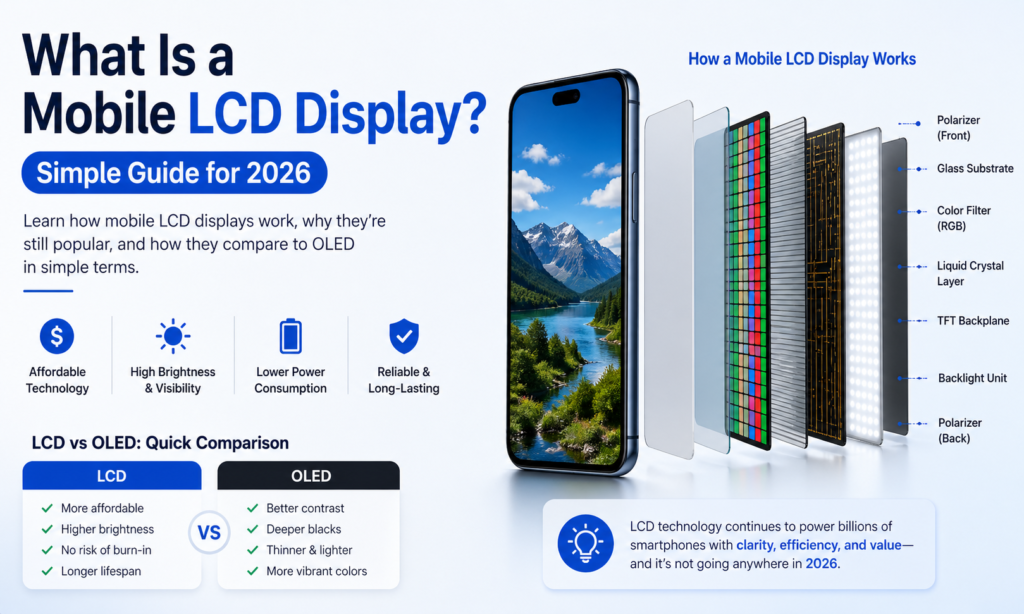
Pokud jste někdy zírali na svůj telefon celé hodiny – rolování, sledování videí, nebo odpovídání na zprávy – interagovali jste s jednou z nejdůležitějších technologií ve vašem zařízení: a LCD displej. LCD znamená Displej z tekutých krystalů, a je to páteř mobilních obrazovek po celá desetiletí. Představte si to jako pečlivě navržený sendvič vrstev, kde tekuté krystaly sedí mezi skleněnými panely a řídí, jak světlo prochází, aby se vytvořily obrazy.
Ale tady je zajímavá část – LCD obrazovky samy o sobě světlo nevytvářejí. Místo toho, spoléhají na a podsvícení. Představte si divadelní scénu: podsvícení je reflektor, a tekuté krystaly jsou umělci, kteří formují to, co vidíte. Bez toho zdroje světla, obrazovka by zůstala zcela tmavá.
Dokonce i v 2026, Technologie LCD nezmizela do neznáma. Stále pohání obrovskou část smartphonů, zejména ve středních a levných zařízeních. Je to proto, že vytváří rovnováhu mezi náklady, spolehlivost, a výkon, který mnoho výrobců prostě nemůže ignorovat.
Proč je LCD stále široce používán
Možná se divíte: s novějšími technologiemi, jako je OLED, které dominují titulkům, proč na LCD stále záleží? Odpověď je překvapivě praktická –nákladovou efektivitu a škálovatelnost. Podle posledních údajů z trhu, LCD stále odpovídá nad 43% zásilek mobilních displejů po celém světě, přesahující 1.28 miliard jednotek v 2026 .
To není malé číslo – je to obrovské. Ukazuje to, že zatímco prémiové telefony se pohybují směrem k OLED, většina světové populace stále spoléhá na zařízení založená na LCD. Výrobci upřednostňují LCD, protože je levnější na výrobu, snadněji měřítko, a za určitých podmínek odolnější.
Jednoduše řečeno, LCD není zastaralé – je strategicky zásadní. Je to jako spolehlivé rodinné auto: možná ne okázalý, ale spolehlivý, cenově dostupné, a všude.
Jak fungují LCD obrazovky v chytrých telefonech
Role tekutých krystalů
Pojďme si to rozebrat způsobem, který skutečně dává smysl. Uvnitř LCD obrazovky, najdete miliony malých buněk naplněných tekutými krystaly. Tyto krystaly jsou speciální – při použití elektřiny se mohou kroutit a zarovnávat. Tento pohyb řídí, kolik světla prochází každým pixelem.
Představte si každý pixel jako malou okenní roletu. Když se krystal kroutí, světlo buď propouští, nebo ho blokuje. Vynásobte to miliony, a najednou máte celý obrázek – videa, Fotografie, text – vše vykresleno v reálném čase.
Tento proces probíhá neuvěřitelně rychle, proto při posouvání nebo sledování videí nezaznamenáte žádné zpoždění. Je to bezproblémová iluze poháněná fyzikou a přesným inženýrstvím.
Vysvětlení filtrů podsvícení a barev
Protože tekuté krystaly nevyzařují světlo, LCD obrazovky potřebují a podsvícení, obvykle vyrobeny z LED diod. Toto podsvícení prosvítá skrz krystalovou vrstvu a pak projde skrz barevné filtry-červený, zelený, a modrá.
Úpravou množství světla, které každý subpixel propustí, displej vytváří miliony barev. Je to podobné jako při míchání barev, ale místo pigmentů, vše je o intenzitě světla.
Výsledek? Jasný, barevná obrazovka, která dobře funguje i ve venkovním prostředí. Toto je jedna oblast, kde LCD často funguje lépe než OLED – zejména na přímém slunečním světle.
Typy LCD displejů v mobilních telefonech
TFT LCD
TFT (Tenkovrstvý tranzistor) LCD je jedním z prvních a nejzákladnějších typů technologie LCD používaných v chytrých telefonech. Používá matici tranzistorů k ovládání každého pixelu samostatně, umožňuje rychlejší odezvu ve srovnání se staršími technologiemi.
Však, TFT obrazovky obvykle trpí užšími pozorovacími úhly a méně přesnou reprodukcí barev. Často se vyskytují v zařízeních základní úrovně, kde je hlavní prioritou cena.
IPS LCD
IPS (Přepínání v rovině) LCD je místo, kde věci začínají být zajímavé. Tato technologie zlepšuje pozorovací úhly a přesnost barev tím, že tekuté krystaly zarovnává různým způsobem. Pokud jste někdy naklonili telefon a všimli jste si, že obrazovka vypadá stále čistě, pravděpodobně používáte IPS displej.
IPS LCD se stal průmyslový standard pro smartphony střední třídy, protože nabízí skvělou rovnováhu mezi kvalitou a cenovou dostupností. Barvy vypadají přirozeněji, a úrovně jasu jsou obecně vyšší.
LTPS LCD
LTPS (Nízkoteplotní polykrystalický křemík) LCD posouvá věci ještě dále. Umožňuje vyšší pixel LCD posouvá věci ještě dále. Umožňuje vyšší hustotu pixelů a lepší energetickou účinnost. Tento typ se běžně používá u LCD panelů vyšší třídy a v některých aspektech dokonce konkuruje OLED.
Je to jako přechod z běžného motoru na přeplňovaný – vyšší výkon bez drastického zvýšení nákladů.
LCD vs OLED: Jaký je rozdíl?
Klíčové technické rozdíly
| Funkce | LCD | OLED |
|---|---|---|
| Světelný zdroj | Požadováno podsvícení | Samoemisivní pixely |
| Kontrast | Mírný | Extrémně vysoká |
| Energetická účinnost | Stabilní | Lepší v tmavém režimu |
| Náklady | Spodní | Vyšší |
| Trvanlivost | Stabilnější | Nebezpečí popálení |
OLED obrazovky převzaly prémiový segment, protože nabízejí hlubší černou a lepší kontrast. Však, LCD stále dominuje v cenové dostupnosti a konzistenci.
Kterou byste si měli vybrat?
Volba mezi LCD a OLED je jako volba mezi spolehlivým sedanem a vysoce výkonným sportovním vozem. Pokud chcete živé vizuální prvky a nejmodernější technologie, OLED je lákavé. Ale pokud vám na tom záleží náklady, trvanlivost, a spolehlivost, LCD zůstává solidní volbou.
Zajímavě, LCD stále drží nad 70% tržní podíl skladnost a široké přijetí citeturn0search9. To samo o sobě říká, že to zdaleka není zastaralé.
Klíčové součásti mobilní LCD obrazovky
Zobrazovací panel
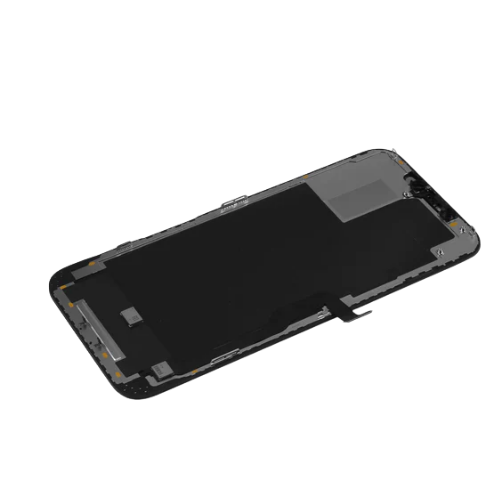
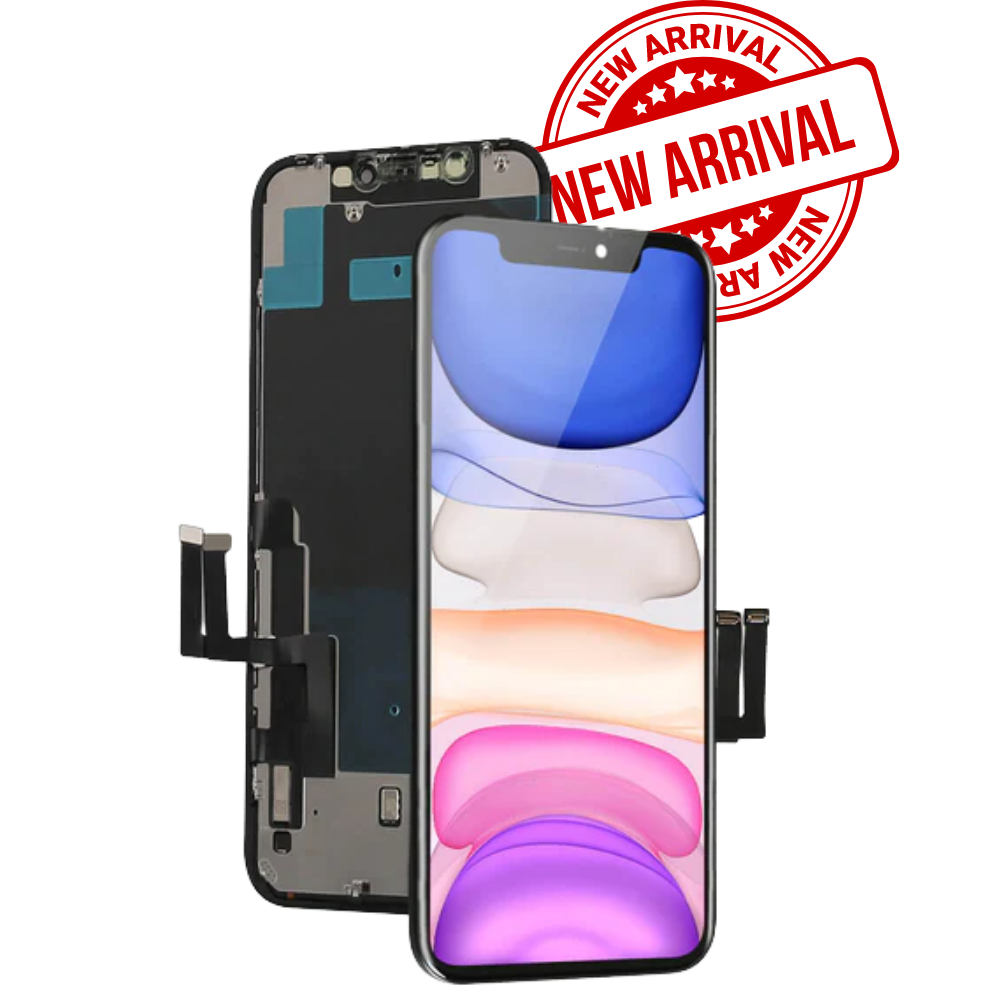
Zobrazovací panel je srdcem LCD. Obsahuje tekuté krystaly, barevné filtry, a matici pixelů. Zde se tvoří skutečný obraz.
Klepněte na Vrstva a sklo
Nad displejem se nachází dotyková vrstva, obvykle vyráběny kapacitní technologií. To vám umožňuje komunikovat s telefonem – klepněte, výpad, zoom.
Vnější vrstvu tvoří ochranné sklo, často zesílené, aby odolalo poškrábání a nárazům.
IC řidiče (DICK)
IC ovladače řídí chování pixelů. Zpracovává signály z procesoru telefonu a převádí je do vizuálního výstupu. Bez toho, vaše obrazovka nebude vědět, co má zobrazit.
Důležité specifikace LCD displeje
Rozlišení a hustota pixelů
Rozlišení udává, kolik pixelů je umístěno na obrazovce. Vyšší rozlišení znamená ostřejší snímky. Hustota pixelů (PPI) určuje, jak ostrý bude text a obrázky.
Jas a kontrast
Jas se měří v nitách. Vyšší jas znamená lepší viditelnost venku. Kontrast určuje rozdíl mezi světlými a tmavými oblastmi.
Obnovovací frekvence
Obnovovací frekvence (měřeno v Hz) udává, kolikrát se obrazovka aktualizuje za sekundu. Moderní LCD obrazovky mohou dosáhnout 120 Hz, poskytuje plynulejší posouvání a herní zážitky.
Výhody LCD obrazovek
LCD displeje mají několik silných stránek, díky kterým jsou relevantní:
- Nižší výrobní náklady
- Lepší viditelnost ve světlém prostředí
- Žádné riziko popálení
- Stabilní a dlouhotrvající výkon
Tyto výhody dělají z LCD vhodnou volbu pro miliardy zařízení po celém světě.
Nevýhody LCD obrazovek
Samozřejmě, žádná technologie není dokonalá. LCD obrazovky mají některé nevýhody:
- Nižší kontrast ve srovnání s OLED
- Silnější provedení díky podsvícení
- Méně energeticky účinné v určitých scénářích
Stále, pro mnoho uživatelů, tyto kompromisy jsou přijatelné.
Trendy na trhu LCD a statistiky odvětví
Trh LCD se spíše vyvíjí, než zaniká. Ve skutečnosti, Očekává se, že celosvětový trh s mobilními LCD bude v příštím desetiletí stabilně růst v hodnotě miliard citeturn0search1.
Fascinující je, že technologie LCD se přizpůsobuje – vyšší obnovovací frekvence, tenčí rámečky, a zlepšená energetická účinnost ji udržují konkurenceschopnou. I když se OLED rozšiřuje, LCD zůstává dominantní v zařízeních střední třídy díky své cenové dostupnosti a vyspělému dodavatelskému řetězci.
Budoucnost mobilní LCD technologie
Tak, co bude dál s LCD? Inovace stále probíhají. Nový vývoj jako oxidová TFT technologie dramaticky zlepšují energetickou účinnost, dokonce umožňuje displejům klesnout na extrémně nízkou obnovovací frekvenci, aby se šetřila baterie.
Výrobci se také zaměřují na ztenčení LCD panelů, jasnější, a barevně přesnější. Nejde o výměnu OLED – jde o to koexistovat a vyvíjet se.
LCD již není jen „rozpočtovou možností“. Stává se a rafinovaný, optimalizovaná technologie přizpůsobené pro použití v reálném světě.
Závěr
Mobilní LCD displeje nemusí zaujmout titulky jako OLED nebo skládací obrazovky, zůstávají však jednou z nejdůležitějších technologií ve světě chytrých telefonů. jsou spolehliví, nákladově efektivní, a neustále se zlepšovat. Od způsobu, jakým tekuté krystaly manipulují se světlem, až po složité vrstvy, které tvoří každý pixel, Technologie LCD je mistrovským dílem inženýrství skrytým na očích.
Pokud dnes používáte smartphone, existuje velká šance, že váš zážitek pohání obrazovka LCD – a dělá to pozoruhodně dobře. Pochopení toho, jak to funguje, z vás nejen udělá chytřejšího kupujícího, ale také vám poskytne hlubší ocenění pro technologii, kterou používáte každý den..
Časté časté
1. Je LCD lepší než OLED pro smartphony?
Záleží na vašich potřebách. LCD je cenově dostupnější a odolnější, zatímco OLED nabízí lepší kontrast a tenčí provedení.
2. Proč jsou LCD obrazovky levnější?
Výroba LCD je vyspělejší a škálovatelnější, výrazně snížit výrobní náklady.
3. Spotřebovávají LCD obrazovky více baterie?
V některých scénářích mohou spotřebovávat více energie, protože podsvícení je vždy zapnuté.
4. Mohou se LCD obrazovky vypálit?
Žádný, LCD obrazovky netrpí problémy s vypalováním jako OLED displeje.
5. Jsou stále používány LCD obrazovky? 2026?
Ano, jsou široce používány a stále tvoří velkou část globálních displejů smartphonů.