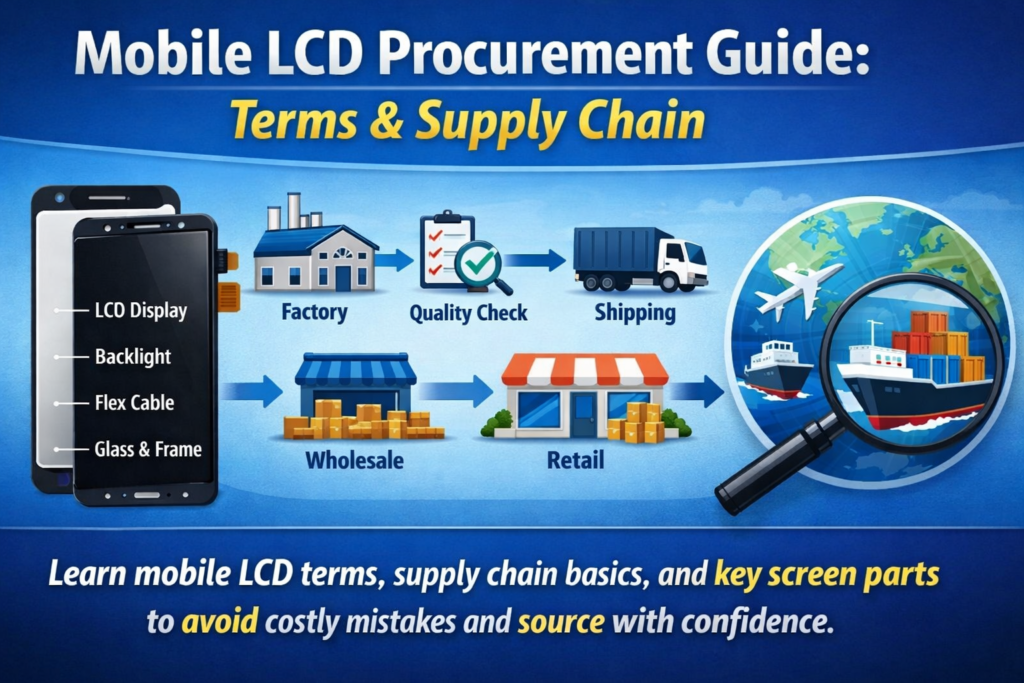
Pochopení dodavatelského řetězce mobilních displejů
Klíčové komponenty na obrazovce smartphonu
Pokud jste někdy zkusili získat obrazovky mobilních telefonů, pravděpodobně jste si všimli, jak matoucí může být terminologie. Jeden dodavatel říká „LCD modul,“ další říká „dotyková montáž,“ a někdo jiný hodí „vnější sklo“ nebo „digitizér“. Je to, jako by všichni mluvili stejným jazykem – ale úplně jinými dialekty.
Ve svém jádru, displej smartphonu není jen jeden kus. Jedná se o pečlivě navrženou sadu komponent, které spolupracují, aby poskytovaly vizuální a dotykovou odezvu. The LCD panel vytváří obraz, a dotyková vrstva detekuje pohyby vašich prstů, a krycí sklo chrání vše pod sebou. Tyto prvky lze prodávat buď samostatně, nebo jako plně integrovaný modul, v závislosti na typu produktu a požadavcích na opravu.
Pochopení toho, jak tyto části interagují, je nezbytné, zvláště pokud jste v zadávání zakázek. Malé nedorozumění – jako je záměna celé sestavy za pouhou skleněnou čočku – může vést k nákladným chybám, zpoždění, nebo stížnosti zákazníků. To je důvod, proč seznámení s těmito pojmy není jen užitečné – je naprosto nezbytné, pokud chcete v tomto odvětví efektivně fungovat.
Proč je při zadávání zakázek důležitá terminologie
Buďme upřímní: v obchodu s mobilními díly, přehlednost rovná se zisk. Pokud jasně nedefinujete, co kupujete, můžete nakonec zaplatit za něco, co jste neměli v úmyslu koupit – nebo ještě hůř, příjem nekompatibilních komponent.
Například, objednání „obrazovky“ bez uvedení, zda se jedná o a plný LCD modul nebo jen vnější sklo může vést k velkému zmatku. Dodavatelé mohou předpokládat různé věci na základě svých vlastních norem. A protože jde o mezinárodní obchod, jazykové bariéry problém jen umocňují.
Přesná terminologie pomáhá zefektivnit komunikaci, snižuje spory, a zajišťuje konzistenci napříč objednávkami. Usnadňuje také srovnání nabídek od různých dodavatelů. Když jsou všichni v souladu s definicemi, ceny se stanou transparentní, a vyjednávání bude mnohem hladší.
Stručně řečeno, zvládnutí těchto pojmů není jen technická znalost – je to strategická výhoda.
Co je modul mobilní LCD obrazovky?
Definice LCD modulu (LCM)
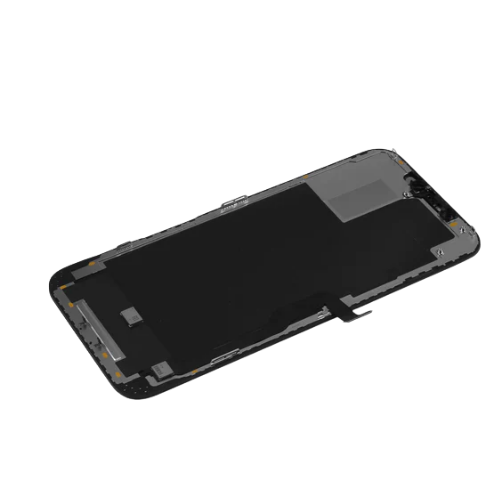
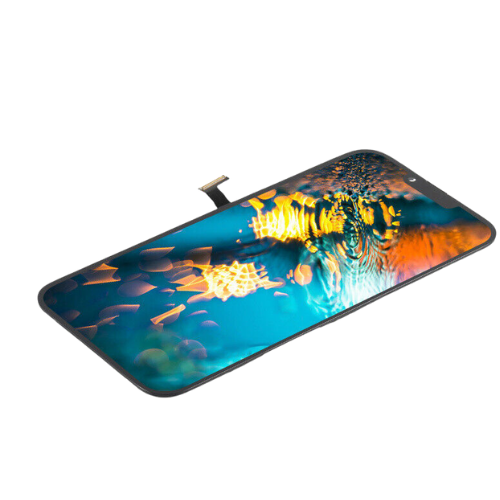
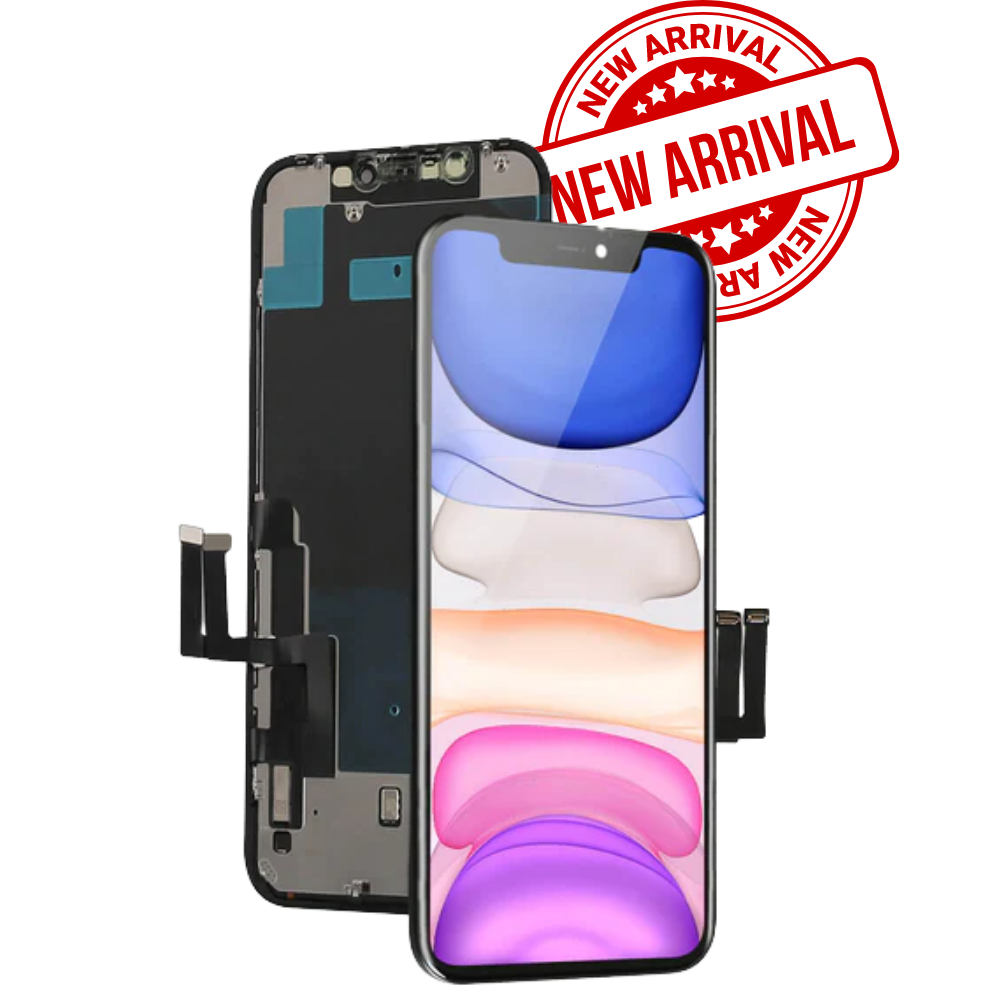
Termín LCD modul (LCM) je jednou z nejčastěji používaných frází v průmyslu mobilních displejů. Jednoduše řečeno, LCM je a kompletní zobrazovací jednotka který zahrnuje LCD panel a obvykle dotykovou funkci, vše předem smontované do jediné součásti.
Představte si to jako balíček připravený k instalaci. Místo toho, abyste se zabývali více vrstvami samostatně, vše spojíte dohromady. To zkracuje dobu instalace a minimalizuje riziko poškození během opravy nebo montáže.
V zadávání zakázek, zadání „LCM“ obvykle znamená, že chcete a plně funkční zobrazovací jednotka, nejen jednotlivé části. Však, stále je důležité objasnit, zda modul obsahuje další součásti, jako je rám, podsvícení, nebo IC čipy.
Základní komponenty uvnitř LCM
Standardní LCD modul se obvykle skládá z několika vrstev:
- Panel LCD (Displej z tekutých krystalů) – zodpovědný za vytváření obrazu
- Jednotka podsvícení - poskytuje osvětlení
- Touch Digitizer – detekuje dotykový vstup
- Krycí sklo - chrání obrazovku
- FPC (Flexibilní tištěný obvod) – připojuje modul k základní desce
Tyto vrstvy jsou často spojeny pomocí pokročilých technik laminace, jako je např OCA (Opticky čiré lepidlo). Integrace zlepšuje jasnost displeje a citlivost na dotyk a zároveň snižuje odrazy.
Pro kupující, porozumění těmto komponentám vám pomůže vyhodnotit kvalitu a cenu produktu. Modul s lepší laminací a materiály vyšší třídy bude přirozeně dražší – ale také poskytne lepší výkon a odolnost.
Vysvětlení dotykové technologie mobilní obrazovky
Kapacitní dotyk vs odporový dotyk
Dotyková technologie je neviditelným kouzlem za každým přejetím, klepnout, a štípnout. Dnes, téměř všechny smartphony používají kapacitní dotykové obrazovky, ale starší nebo specializovaná zařízení mohou stále spoléhat na odporovou dotykovou technologií.
Kapacitní dotykové obrazovky detekují elektrické signály z vašeho prstu, nabízí rychlejší dobu odezvy a vícedotykové funkce. Proto dominují spotřebitelskému trhu. Odporové obrazovky, na druhé straně, spoléhají na tlak a jsou méně citlivé, ale odolnější v určitých průmyslových prostředích.
Z hlediska nákupu, standardem jsou kapacitní dotykové panely. Však, ne všechny kapacitní obrazovky jsou stejné. Rozdíly v citlivosti, trvanlivost, a IC řadiče mohou výrazně ovlivnit uživatelskou zkušenost.
Role dotykového panelu v moderních smartphonech
The dotykový panel, také známý jako digitizér, sedí nad vrstvou displeje a převádí fyzický dotek na digitální signály. V moderních designech, tato vrstva je často integrována přímo do LCD nebo skla pomocí technologií jako Incell nebo Oncell.
Tato integrace snižuje tloušťku a zlepšuje odezvu. Také to zjednodušuje dodavatelský řetězec, protože je potřeba méně samostatných součástí. Však, může to prodražit opravy, protože v případě selhání jedné vrstvy může být nutné vyměnit celý modul.
Pro kupující, výběr mezi samostatnými dotykovými panely a integrovanými řešeními závisí na cílovém trhu – ať už jde o produkty zaměřené na opravy nebo produkty pro koncové uživatele.
Vnější obrazovka (Sklo) vs vnitřní obrazovka (Zobrazit)
Co je vnější obrazovka (Krycí sklo)?
The vnější obrazovka, často označované jako krycí sklo, je nejvyšší vrstva, které se uživatelé fyzicky dotýkají. Jeho primární úlohou je ochrana. Chrání jemné vnitřní součásti před poškrábáním, dopady, a poškození životního prostředí.
Vysoce kvalitní krycí sklo je obvykle vyrobeno z vyztužených materiálů, jako je tvrzené sklo. Některé dokonce obsahují povlaky pro proti otiskům prstů nebo antireflexní vlastnosti.
V zadávání zakázek, vnější sklo se často prodává samostatně pro účely opravy. Je to levnější než celý modul, ale vyžaduje instalaci zkušených techniků. Tato možnost je oblíbená na trzích, kde jsou preferovány úsporné opravy.
Co je vnitřní obrazovka (Panel LCD)?
The vnitřní obrazovka odkazuje na skutečný zobrazovací panel – část, která generuje obrázky. To zahrnuje vrstvu tekutých krystalů, barevné filtry, a systém podsvícení.
Na rozdíl od vnějšího skla, vnitřní obrazovka je vysoce citlivá a drahá. Poškození této součásti obvykle vede k problémům se zobrazením, jako jsou mrtvé pixely, linky, nebo žádný obrázek.
Oddělení vnitřní obrazovky od vnějšího skla je možné, ale technicky náročné. To je důvod, proč mnoho kupujících volí plné moduly – je to jednodušší a spolehlivější.
Rozdíly mezi úplnou sestavou a samostatnými díly
Plná laminace vs. oddělení rámu
A plná montáž (nazývá se také plná laminace) znamená všechny vrstvy – sklo, dotek, a displej – jsou spojeny do jediné jednotky. To zajišťuje lepší optickou čistotu a odolnost.
Na rozdíl od toho, samostatné části umožňují výměnu každé vrstvy jednotlivě. I když to snižuje náklady na materiál, zvyšuje složitost práce a riziko při instalaci.
Výhody a nevýhody pro kupující
| Volba | Výhody | Nevýhody |
|---|---|---|
| Kompletní shromáždění | snadná instalace, lepší kvalitu | Vyšší náklady |
| Samostatné díly | Nižší náklady, flexibilní opravy | Vyšší pracovní riziko |
Výběr správné možnosti závisí na vašem obchodním modelu. Pokud upřednostňujete rychlost a spolehlivost, plné sestavy jsou správnou cestou. Pokud je vaším hlavním cílem úspora nákladů, oddělené části mohou být vhodnější.
Běžné průmyslové termíny, které musíte znát
OEM, Aftermarket, Repasované Vysvětleno
- OEM (Výrobce originálního vybavení): Originální továrně vyrobené díly
- Aftermarket: Komponenty vyrobené třetí stranou
- Zrekonstruovaný: Použité díly obnoveny do funkčního stavu
Každá kategorie má svou vlastní cenu a úroveň kvality. OEM díly jsou nejdražší, ale nabízejí nejvyšší spolehlivost.
Incell, Oncell, a TFT Technologies
- Incell: Dotyk integrovaný do vrstvy LCD
- Oncell: Dotyková vrstva na horní straně LCD
- TFT: Tradiční LCD technologie
Pochopení těchto podmínek vám pomůže efektivněji porovnávat produkty.
Stupně kvality a zkušební standardy
Obrazovky třídy A vs třídy B
Při zadávání zakázek je rozhodující kvalitativní třídění. Obrazovky třídy A jsou téměř dokonalé, zatímco Obrazovky třídy B může mít drobné vady.
Klíčové testovací postupy před odesláním
Dodavatelé obvykle provádějí:
- Testování jasu
- Testování citlivosti na dotek
- Kontrola mrtvých pixelů
Tyto testy zajišťují spolehlivost produktu před dodáním.
Cenové faktory při nákupu LCD obrazovek
Náklady na materiál a dopad technologie
Pokročilé technologie jako Incell zvyšují výrobní náklady, ale zlepšují výkon.
MOQ a úvahy o dodavatelském řetězci
Minimální objednané množství (Moq) může výrazně ovlivnit cenu. Hromadné objednávky obvykle přicházejí se slevami.
Výběr správného dodavatele
Klíčová hodnotící kritéria
Hledat:
- Konzistentní kvalita
- Transparentní komunikace
- Spolehlivé doručení
Červené vlajky, kterým je třeba se vyhnout
Vyhněte se dodavatelům, kteří:
- Chybí certifikace
- Uveďte nejasné specifikace
- Nabídněte neobvykle nízké ceny
Budoucí trendy v nákupu mobilních displejů
Posun směrem k OLED a flexibilním obrazovkám
Zatímco LCD stále dominuje rozpočtovým zařízením, OLED si získává oblibu díky lepším barvám a flexibilitě.
Rostoucí poptávka po integrovaných modulech
Integrovaná řešení budou nadále růst, zjednodušení výroby a oprav.
Závěr
Orientace ve světě nákupu mobilních LCD obrazovek může být zpočátku ohromující, ale jakmile pochopíte terminologii, všechno začíná dávat smysl. Z LCD moduly na dotykové panely, z vnější sklo na vnitřní displeje, každý termín představuje specifickou složku se svou vlastní rolí v širším obrazu.
Když jasně rozumíte tomu, co kupujete, snížíte rizika, zlepšit komunikaci s dodavateli, a v konečném důsledku činit chytřejší nákupní rozhodnutí. Ať už nakupujete pro opravny, velkoobchodní distribuce, nebo výroba, zvládnutí těchto konceptů vám dává skutečnou konkurenční výhodu.
Časté časté
1. Jaký je rozdíl mezi LCD modulem a dotykovou obrazovkou?
LCD modul obsahuje jak zobrazovací, tak dotykové komponenty, zatímco dotyková obrazovka odkazuje pouze na vrstvu citlivou na dotyk.
2. Mohu vyměnit pouze vnější sklo obrazovky telefonu?
Ano, ale vyžaduje to specializované vybavení a zkušené techniky.
3. Co znamená technologie Incell?
Incell integruje dotykovou funkci přímo do vrstvy LCD, díky tomu jsou obrazovky tenčí a citlivější.
4. Jsou obrazovky s náhradními díly spolehlivé?
Mohou být, ale kvalita se liší v závislosti na výrobci.
5. Proč jsou celé sestavy dražší?
Protože spojují více komponent do jednoho celku, nabízí lepší výkon a snadnější instalaci.