Introduktion
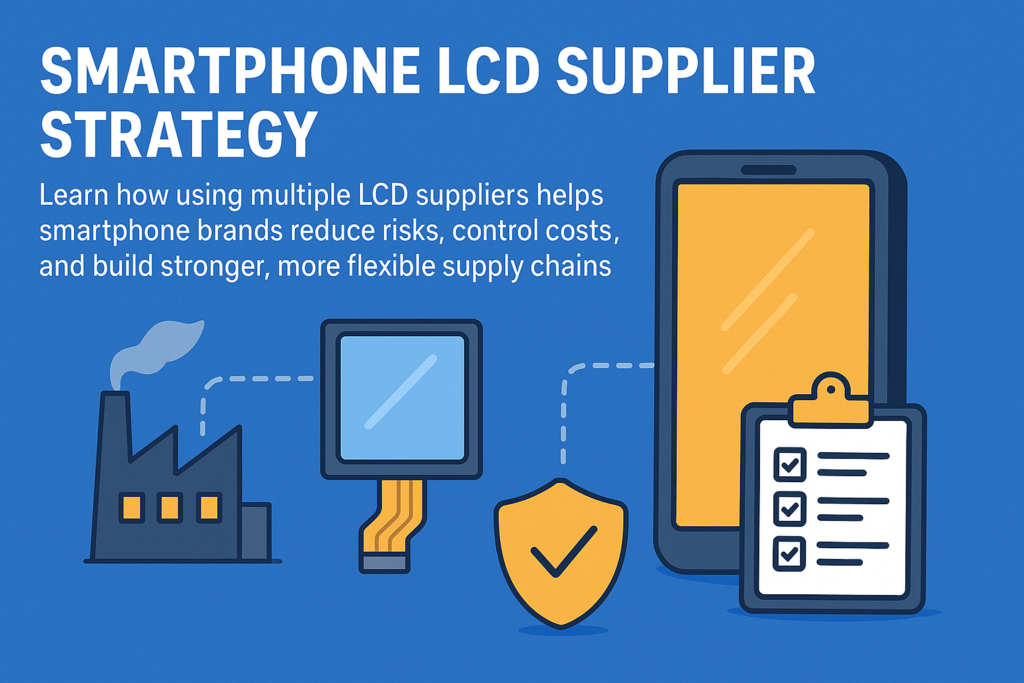
I smartphonebranschen, LCD-skärmar är en av de mest avgörande och kostnadskrävande komponenterna. En enda produktionshicka i skärmtillförselkedjan kan försena produktlanseringar, öka kostnaderna, och skadar varumärkets rykte. Det är därför fler smartphonetillverkare antar en strategi för flera leverantörer— Att arbeta med två eller flera skärmleverantörer för att säkerställa en stabil, flexibel, och kostnadseffektiv leveranskedja.
Förstå strategin för flera leverantörer
En strategi för flera leverantörer innebär att man skaffar samma komponent – som LCD-paneler – från mer än en tillverkare. Istället för att förlita sig på en enda leverantör, företag samarbetar med flera leverantörer som uppfyller deras specifikationer och kvalitetskrav. Denna diversifiering hjälper varumärken att balansera kostnaderna, kvalitet, och tillgänglighet.
Till skillnad från single sourcing, vilket kan förenkla logistiken men ökar beroendet, multi-sourcing builds motståndskraft och förhandlingsstyrka över hela försörjningskedjan.
Varför beroende av enskild leverantör är riskabelt
Beroende på en enskild LCD-leverantör kan det vara farligt. Här är varför:
- Produktionsstörningar: Fabriksavstängningar, naturkatastrofer, eller politisk instabilitet kan stoppa leveranserna.
- Prisvolatilitet: Utan konkurrens, en ensam leverantör kan höja priserna oväntat.
- Kvalitetsfrågor: Om defekter uppstår, hela produktionslinjen kan påverkas, leder till massiva återkallelser eller förseningar.
Kort sagt, Att lägga alla dina ägg i en korg kan äventyra hela din verksamhet.
Fördelar med att ha flera LCD-skärmsleverantörer
1. Leveranskontinuitet och tillförlitlighet
Med flera leverantörer, även om en leverantör upplever förseningar, andra kan fylla tomrummet. Detta säkerställer kontinuerlig produktion och leverans i tid.
2. Konkurrenskraftig prissättning
När flera leverantörer konkurrerar om dina beställningar, de erbjuder naturligtvis bättre priser och mervärdestjänster. Denna tävling leder till minskade upphandlingskostnader.
3. Starkare förhandlingskraft
Diversifierad inköp ger tillverkare mer hävstång under prisdiskussioner. Leverantörer är motiverade att hålla konkurrenskraftiga offerter för att behålla sin position.
Riskreducering genom diversifiering
Flera leverantörer fungerar som ett skyddsnät. Om en region står inför en strömbrist eller pandemi-relaterad låsning, produktionen kan flyttas till en annan leverantör någon annanstans. Detta minimerar stilleståndstiden och skyddar mot marknadschocker.
Kostnadskontroll och marknadskonkurrens
Kostnadseffektivitet är en annan stor fördel. När flera LCD-leverantörer konkurrerar, varumärken vinner bättre kostnadstransparens. Företag kan analysera prisstrukturer, jämför avkastningen, och förhandla fram rättvisa villkor – vilket resulterar i långsiktiga kostnadsbesparingar.
Förbättra flexibiliteten i försörjningskedjan
Smartphonemarknaden rör sig snabbt. Efterfrågan ökar under semester eller lanseringar av nya modeller. Att ha flera skärmleverantörer gör det möjligt för företag öka eller bromsa produktionen flexibelt utan att överbelasta en leverantör.
Det strategiska värdet av andra och tredje leverantörer
Backup sourcing strategi
Att ha en sekundär eller tertiär leverantör handlar inte bara om backup – det handlar om strategisk kontinuitet. Till exempel, en leverantör kan specialisera sig på avancerade OLED-skärmar, medan en annan fokuserar på budget-LCD-varianter. Tillsammans, de ger full marknadstäckning.
Exempel: Apples tillvägagångssätt för flera leverantörer
Apple hämtar sina skärmar från Samsung Display, LG -skärm, och BOE. Denna strategi säkerställer kontinuerlig produktion, bättre kostnadskontroll, och frihet från leverantörsmonopol.
Exempel: Xiaomi och Realmes dubbla leverantörsmodell
Märken som Xiaomi använder Tianma och Csot samtidigt. Detta låter dem förhandla fram bättre affärer och balansera mellan innovation och överkomliga priser.
Viktiga utmaningar vid implementering av strategier för flera leverantörer
Kvalitetskonsistens
Varje leverantör har unika material och kalibreringsmetoder. Bibehåller enhetlig färgnoggrannhet, ljusstyrka, och beröringskänslighet mellan olika leverantörer kan vara knepigt.
Logistik och koordinering
Fler leverantörer betyder mer samordning – transporter, tull, ledtider, och dokumentationen blir allt mer komplex.
Skydd av immateriella rättigheter
Att dela design och tekniska ritningar med flera leverantörer ökar risken för dataläckage eller imitation. NDA och revisioner är kritiska skyddsåtgärder.
Hantera leverantörsrelationer
Att bygga långsiktiga partnerskap kräver transparens och kommunikation. Regelbundna revisioner, delade kvalitetsdata, och tydliga prestanda-KPI:er håller alla i linje. Varumärken som behandlar leverantörer som samarbetspartners – inte bara leverantörer – uppnår de bästa resultaten.
Data och tekniska kompatibilitetsproblem
Varje leverantörs LCD-modul kan skilja sig något i drivrutins-IC eller gränssnittsdesign. Därför, varumärken måste investera i kompatibilitetstestning och firmware kalibrering för att säkerställa sömlös integration i den slutliga smartphoneprodukten.
Praktiska steg för att implementera en strategi för flera leverantörer
- Utvärdera aktuellt beroende: Identifiera var single-sourcing-risker finns.
- Forskning alternativa leverantörer: Lista kandidater med bevisad förmåga.
- Standardisera specifikationer: Se till att alla leverantörer uppfyller identiska prestandastandarder.
- Pilotproduktion: Kör småskaliga försök innan full integration.
- Kontinuerlig utvärdering: Övervaka prestanda och justera inköpsförhållanden regelbundet.
Lokala och globala leverantörers roll
Att balansera lokala och internationella leverantörer kan ytterligare förbättra motståndskraften. Lokala leverantörer erbjuder snabbare logistik och lättare kommunikation, medan globala tillhandahåller kostnadseffektivitet och tillgång till avancerad teknik.
Teknik och transparens i Supply Chain Management
Digitala verktyg som t.ex ERP-system och instrumentpaneler för leverantörer i realtid göra det enklare att följa produktionsutvecklingen, kvalitetsmått, och leveranstidlinjer. Datadrivna synlighetsbyggen tillit och smidighet över hela kedjan.
Framtida trender i leveranskedjor för smartphoneskärmar
- Regional diversifiering för att undvika geopolitiska risker
- Ökad automatisering i kvalitetskontroll
- Hållbar inköp genom återvinning och cirkulära ekonomiinitiativ
- Närmare samarbete mellan OEM-tillverkare och komponenttillverkare
Slutsats
En strategi för flera leverantörer är inte bara en reservplan – det är en kärnverksamhetens fördel. Genom att diversifiera LCD-skärmsleverantörer, smartphonetillverkare kan säkerställa stabilitet, hantera kostnader, och minska riskerna. Även om utmaningar som konsekvens och kommunikation finns, de långsiktiga vinsterna i motståndskraft och lönsamhet är värda ansträngningen.
Vanliga frågor
1. Varför ska smartphonemärken använda flera LCD-leverantörer?
För att minska risken, säkerställa en stabil försörjning, och få bättre kostnadskontroll.
2. Vilka är de största utmaningarna med att använda flera skärmleverantörer?
Upprätthålla jämn kvalitet och hantera logistikkomplexitet.
3. Hur minskar diversifiering av leverantörer kostnaderna?
Det uppmuntrar konkurrens mellan leverantörer, sänka komponentpriserna.
4. Kan små smartphonemärken också implementera denna strategi?
Ja, även mindre OEM-tillverkare kan samarbeta med två leverantörer för att balansera flexibilitet och kostnad.
5. Vad är framtiden för LCD-leverantörsstrategier?
En trend mot regional diversifiering, genomskinlighet, och hållbara inköp.