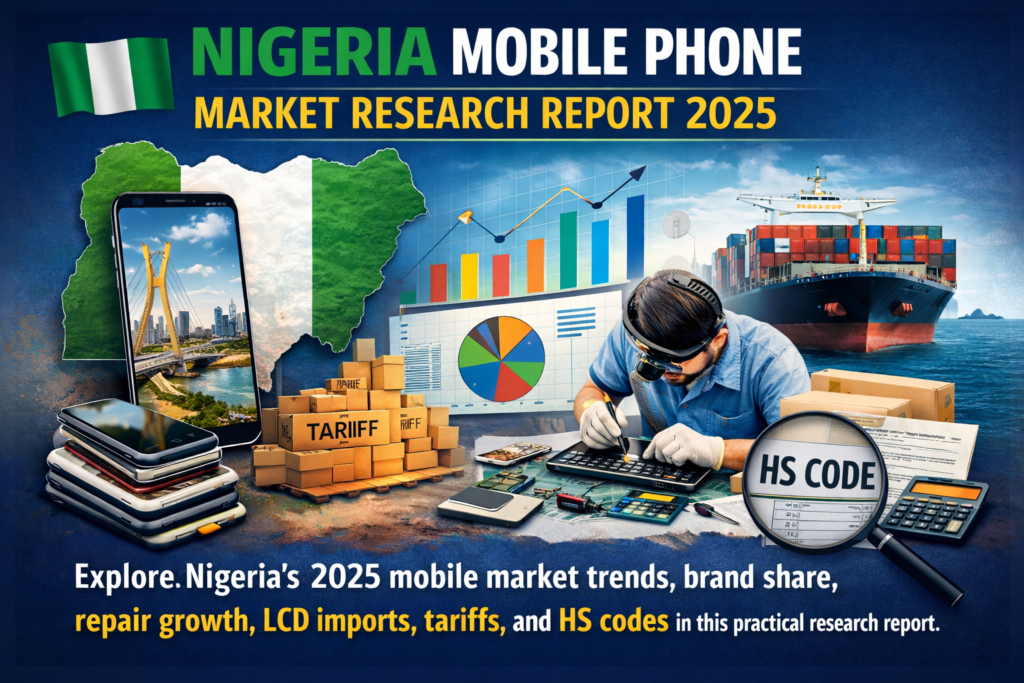
Petsa sa Pagreport: Deciembre 2025
Sakop sa Pagpanukiduki: Nigeria
Mga keyword: Bahin sa merkado sa mobile brand, merkado sa pag-ayo sa smartphone, mga tipo sa pag-ayo, Mga import sa LCD, mga taripa, Mga HS code
Executive Summary
Pagbawi sa Merkado Human sa Pag-usab-usab sa Currency
2025 nahimong usa ka tuig sa pagbalik alang sa industriya sa mobile phone sa Nigeria. Human sa masakit nga currency turbulence sa 2024, ang pagpalig-on sa naira naghatag sa mga importer ug mga konsumedor nga makaginhawa. Ug ambot unsa? Mibalik ang pagsalig.
Sa Q3 2025, Ang mga pagpadala sa smartphone miuswag sa 29% tuig-sa-tuig. Dili lang kana ang pagbawi-kana ang pagpadali.
Kompetisyon sa Brand ug Pagpangulo sa Market
Ang merkado sa kadaghanan gidominar gihapon sa mga tatak sa Transsion-Tecno, Infinix, ug itel. Magkauban, kontrolado nila ang hapit katunga sa luna sa smartphone sa Nigeria. Samtang, Ang Samsung ug Apple nagpadayon sa paghupot sa lig-on nga mga posisyon sa premium nga bahin.
Kini sama sa pagtan-aw sa duha ka lumba sa usa ka higayon: badyet nga mga himan nga nagdagan sa usa ka track ug mga punoan nga telepono nga nag-cruise sa lain.
Pag-ayo sa Pagpalapad sa Industriya
Uban sa ibabaw 140 milyon nga mga smartphone nga gigamit, Ang merkado sa pag-ayo sa Nigeria nag-uswag. Ang mga pag-ilis sa screen ug pagbag-o sa baterya mao ang adlaw-adlaw nga negosyo. Ang ekonomiya sa pag-ayo dili usa ka kilid nga istorya-kini usa ka sentro nga haligi.
Mga Hagit sa Pag-import ug Taripa sa LCD
Ania ang twist: samtang ang hingpit nga gitigum nga mga smartphone nalingaw 0% import nga katungdanan, spare parts sama sa LCD screens nag-atubang sa mga taripa tali sa 5% ug 20%, dugang 5% VAT. Kini nga dili balanse naghulma sa tibuuk nga ekosistema sa pag-ayo.
Overview sa Mobile Phone Market sa Nigeria
User Base ug Smartphone Penetration
Sa tunga-tunga sa 2025, Nigeria adunay 172 milyon nga mobile subscribers. Ang penetration sa Smartphone miabot sa gibanabana 87%. Kana nagpasabut nga hapit tanan nga gusto ang usa ka smartphone tingali adunay usa-o hapit na mopalit usa.
Pag-uswag sa Pagpadala sa 2025
Ang 29% pag-uswag sa kargamento sa Q3 2025 signal nga nabag-o ang pagkamalaumon sa ekonomiya. Ang panginahanglan sa lebel sa pagsulod mibuto, apan ang premium nga panginahanglan usab misaka pag-ayo.
Istruktura sa Merkado: Ang "Dumbbell" nga Sumbanan sa Pagtubo
Hunahunaa kini sama sa usa ka dumbbell. Ang gibug-aton bug-at sa duha ka tumoy:
- Ang sub-$100 nga mga himan mitubo 57%.
- Ang mga premium nga aparato sa taas $500 mitubo 52%.
Ang tunga nga bahin? Medyo hilom.
Gidak-on sa Merkado ug Mga Driver sa Pag-uswag
Epekto sa Pagpalig-on sa Exchange Rate
Sa diha nga ang naira mi-stabilize, import predictability milambo. Ang mga tigbaligya makapresyo sa mga produkto nga masaligon. Ang mga konsumedor mihunong sa paghulat-ug nagsugod sa pagpalit.
Pagdagsang sa Entry-Level Device Demand
Sub-$100 nga Pagganap sa Segment
Barato nga mga smartphone gikan sa Tecno, Infinix, ug gidominar ang itel. Alang sa daghang mga Nigerian, bili-sa-salapi dili opsyonal-kini importante.
Pagpalapad sa Premium nga Segment
Sa samang higayon, ang adunahang mga konsumidor sa Lagos ug Abuja nagpadako sa panginahanglan alang sa Apple ug Samsung flagships.
Duha ka kalibutan, usa ka merkado.
Mobile Brand Market Share sa 2025
- Tecno: 21.45%
- Infinix: 18.26%
- Samsung: 14%
- Mansanas: 10.06%
- Xiaomi: 7.89%
- Ang uban/Wala mailhi: 28.41%
Pagpangulo sa Market sa Tecno
Nanguna ang Tecno salamat sa localized innovation—mga algorithm sa camera nga na-optimize alang sa mas itom nga mga tono sa panit ug competitive nga presyo.
Infinix ug Youth Appeal
Ang Infinix nagsulti sa pinulongan sa mga batan-ong Nigerian—estilo nga disenyo, focus sa performance, online marketing.
Ang Dual-Segment Strategy sa Samsung
Gikan sa barato nga A-series hangtod sa high-end nga mga modelo sa Galaxy, Ang Samsung nagdula sa opensa ug depensa.
Ang Premium Market Growth sa Apple
Ang mga numero sa Apple mahimong mas gamay, apan ang pagtubo niini sa high-end nga bahin gamhanan.
Ang Kompetitibo nga Diskarte sa Pagpresyo sa Xiaomi
Ang Xiaomi nagpadayon sa pagduso sa agresibo nga presyo sa mga modelo sa Redmi ngadto sa mid-range.
Pag-analisar sa Market sa Pag-ayo sa Smartphone sa Nigeria
Bili sa Market ug Pagtagna sa CAGR
Sa 2024, Naabot ang merkado sa pag-ayo sa elektroniko sa Nigeria $785.84 milyon. Human 2030, kini gipaabot nga molapas $1.12 bilyon, nagtubo sa 6.02% CAGR.
Kana makanunayon, matag-an nga pagtubo.
Pag-ayo sa Hardware vs Software
Hardware nagdominar. Ang nabuak nga mga screen ug nagkatigulang nga mga baterya nagduso sa kadaghanan nga kita.
Pagkabungkag sa mga Uri sa Pag-ayo
Panginahanglan sa Pagpuli sa Screen
Kini mao ang hari. Tulo mahitabo. Nag-crack ang mga screen. Nagdagayday ang kita.
Mga Trend sa Pagpuli sa Baterya
Human sa 1-2 ka tuig, Ang pagkadaot sa baterya mahimong mamatikdan. Ang paspas nga pag-charge makapadali sa pagsul-ob.
Pag-charge nga Port & Pag-ayo sa Motherboard
Ang kadaot sa likido ug pagsul-ob sa pantalan nagmugna og mas taas nga margin nga pag-ayo.
Mga Serbisyo sa Software
Pag-abli, nagkidlap, ug ang mga update nagpabilin nga komon.
Istruktura sa Industriya sa Pag-ayo
Dili Pormal nga Pagdominar sa Sektor
Nagdominar gihapon ang mga street technician. Ang gagmay nga mga kiosk mas daghan kay sa pormal nga mga kadena sa pag-ayo.
Awtorisado nga mga Sentro sa Serbisyo
Ang mga tatak sama sa Carlcare nagkalapad, nagtanyag sa standardized nga mga serbisyo.
Mga Inisyatibo sa Pagsuporta sa Gobyerno
Ang ubang mga rehiyonal nga gobyerno naglunsad og mga pundo sa pagbansay aron mahimong propesyonal ang mga kahanas sa pag-ayo.
Mga Import sa LCD Screen ug Pagtuki sa Trade
Pagsalig sa Import
Ang Nigeria kulang sa lokal nga kapasidad sa paghimo sa LCD. Hapit tanan nga mga screen gi-import.
Mga Kodigo sa HS alang sa mga Mobile Parts
- Mga smartphone: HS 8517.12
- Mga bahin/screen sa telepono: HS 8517.70
- Lithium nga mga baterya: HS 8507.60
Panguna nga Exporting nga mga Bansa
Nanguna ang Vietnam, gisundan sa China ug South Korea.
Nigeria 2025 Patakaran sa Taripa ug Pag-import
Taripa sa Pag-import sa Smartphone (HS 8517.12)
0% katungdanan. Apan 5% Ang VAT magamit.
LCD Screen ug Taripa sa Parts (HS 8517.70)
5%-20% nga katungdanan, depende sa klasipikasyon. Dugangan 5% VAT.
Taripa sa Lithium Battery (HS 8507.60)
5%–20%, gikinahanglan nga mas estrikto nga sertipikasyon sa kaluwasan.
Ehemplo sa Pagkalkula sa VAT ug CIF
Pag-import $10,000 bili sa mga screen nga adunay 10% katungdanan:
- Katungdanan: $1,000
- VAT: 5% sa ($10,000 + $1,000)
- Ang kinatibuk-ang palas-anon sa buhis miuswag pag-ayo.
Porma M ug Sertipikasyon sa SONCAP
Ang pagparehistro sa Form M ug ang pagsunod sa SONCAP kay mandatory para sa regulated electronics.
Epekto sa mga Taripa sa Repair Market
Presyo sa Gasto sa Tinuod nga mga Piyesa
Ang orihinal nga mga piyesa nahimong mahal ug hinay sa pag-import.
Pagtaas sa Gray nga Mga Bahagi sa Market
Ang mubu nga mga screen sa aftermarket nagbaha sa merkado.
Mga Isyu sa Kalidad ug Pagsalig sa Konsyumer
Ang dili managsama nga kalidad makapawala sa pagsalig sa mga serbisyo sa pag-ayo.
Mga Oportunidad para sa mga Investor ug Negosyo
Pag-ayo sa Pagpalapad sa Kadena
Ang standardized nga mga kadena sa pag-ayo mahimong makuha ang bahin sa merkado.
Pag-apod-apod sa mga Spare Parts
Ang kasaligan nga suplay sa mga piyesa usa ka oportunidad sa pagmina sa bulawan.
Paghanas ug Pag-uswag sa Kahanas
Ang mga propesyonal nga sentro sa pagbansay mahimong makapataas sa mga sumbanan sa industriya.
Market Outlook alang sa 2026 ug Labaw pa
Pagtagna sa Pagpadala
Samtang ang Africa mahimong mag-atubang sa gamay nga pagkunhod, Ang dako nga base sa Nigeria nagtanyag og kalig-on.
Pag-ayo sa Market Projection
Ingon sa edad sa mga aparato, Ang panginahanglan sa pag-ayo magpabilin nga lig-on.
Mga Hagit sa Supply Chain
Ang mga reporma sa taripa ug ang standardisasyon sa mga bahin maoy maghulma sa umaabot.
Kataposan
Ang merkado sa mobile phone sa Nigeria sa 2025 nagbarog sa kinasang-an sa dalan. Mibalik ang pagtubo. Nagkataas ang pagsalig. Ang panginahanglan sa lebel sa pagsulod nag-uswag, ug ang mga premium nga pumapalit naggasto na usab. Bisan pa sa ilawom sa nawong, ang industriya sa pag-ayo nakigbugno sa mga imbalance sa taripa ug mga kakulangan sa supply chain.
Ang kahigayonan? Dako.
Bisan kinsa nga makasulbad sa mga spare parts puzzle—episyente nga import, tinuod nga mga sangkap, patas nga presyo—moabli sa sunod nga hugna sa malungtarong pagtubo sa smartphone ecosystem sa Nigeria.
FAQS
1. Unsa ang rate sa pagsulod sa smartphone sa Nigeria 2025?
Gibanabana 87%, uban sa ibabaw 140 milyon nga mga smartphone nga aktibo nga gigamit.
2. Unsang brand ang nanguna sa merkado sa smartphone sa Nigeria 2025?
Ang Tecno naghupot sa pinakadako nga indibidwal nga bahin sa merkado.
3. Ngano nga ang merkado sa pag-ayo kusog nga mitubo?
Ang usa ka dako nga na-install nga base ug mga tigulang nga aparato nagduso sa panginahanglan alang sa mga pagpuli sa screen ug baterya.
4. Unsa ang import nga katungdanan alang sa mga smartphone sa Nigeria?
Ang bug-os nga gitigum nga mga smartphone nagdala 0% import nga katungdanan apan gikinahanglan 5% VAT.
5. Nganong mahal ang pag-ayo sa LCD screen?
Tungod kay ang mga ekstrang screen nag-atubang sa 5%–20% nga mga katungdanan sa pag-import ug mga kinahanglanon sa VAT ug sertipikasyon.