Εισαγωγή
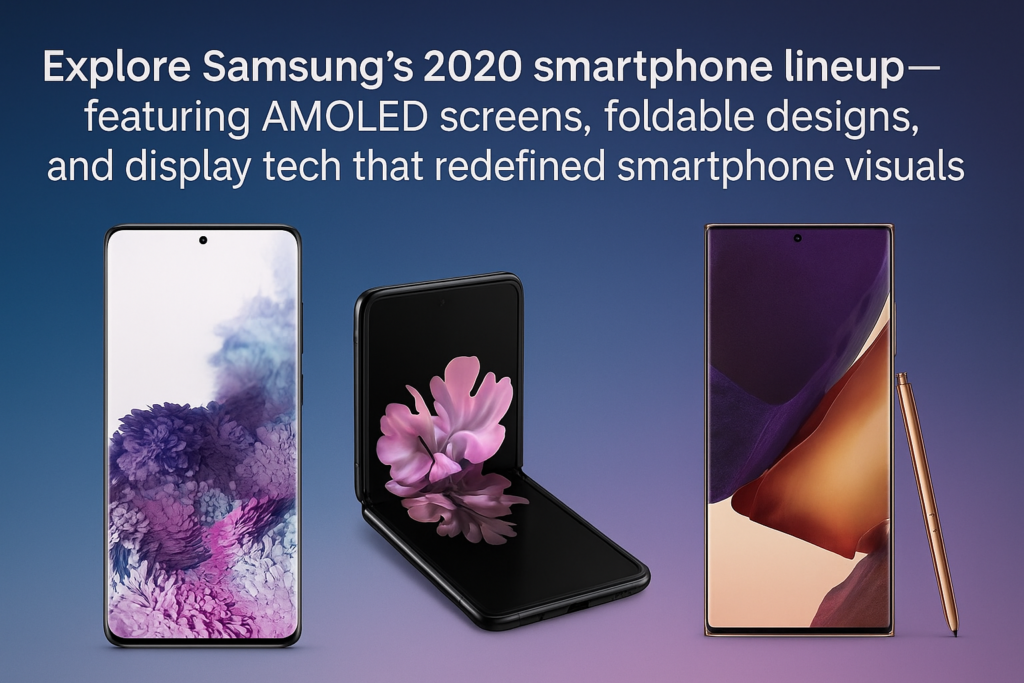
Σε 2020, Η Samsung επέδειξε την απαράμιλλη κυριαρχία της στην καινοτομία της οθόνης smartphone. Από αναδιπλούμενα ναυαρχίδες έως ήρωες μεσαίας κατηγορίας, Κάθε σειρά έδειχνε πόσο μακριά είχε φτάσει η τεχνολογία AMOLED. Η χρονιά ήταν κομβική — όχι μόνο η Samsung τη βελτίωσε Δυναμική AMOLED 2x πάνελ για τηλέφωνα κορυφαίας κατηγορίας, αλλά και επεκτάθηκε Super AMOLED οθόνες σε πιο προσιτές συσκευές, σηματοδοτώντας τη σχεδόν πλήρη κατάργηση των οθονών LCD στην παγκόσμια γκάμα της.
Εξέλιξη οθόνης της Samsung
Προτού 2020, Οι οθόνες LCD εξακολουθούσαν να είναι κοινές σε διάφορα επίπεδα smartphone. Αλλά μέχρι φέτος, Η Samsung ξεκαθάρισε ένα πράγμα - Η AMOLED ήταν το μέλλον. Με πιο πλούσια χρώματα, καλύτερη αντίθεση, και ανώτερη ενεργειακή απόδοση, Τα πάνελ AMOLED έγιναν ακρογωνιαίος λίθος της οπτικής εμπειρίας της Samsung.
Dynamic AMOLED 2X vs. Super AMOLED
- Δυναμική AMOLED 2x: Βρέθηκε σε ναυαρχικά μοντέλα, υποστηρίζει HDR10+, 120Προσαρμοστικοί ρυθμοί ανανέωσης Hz, και ανώτερη βαθμονόμηση φωτεινότητας.
- Super AMOLED: Χρησιμοποιείται για τα μέσα- και μοντέλα ανώτερης-μεσαίας κατηγορίας, εξακολουθεί να προσφέρει εξαιρετική αντίθεση, αλλά δεν διαθέτει ορισμένες προηγμένες δυνατότητες, όπως προσαρμοστικό ρυθμό ανανέωσης και υποστήριξη HDR10+.
Εν συντομία, Το Dynamic AMOLED 2X ήταν το statement κομμάτι της Samsung, ενώ η Super AMOLED ήταν η τεχνολογία που ώθησε την κυριαρχία της στη μαζική αγορά.
Αναδιπλούμενα Flagships – Η σειρά Z
Galaxy Z Fold2 5G
Το πτυσσόμενο δεύτερης γενιάς της Samsung, ο Με Fold2, παρουσίασε ένα ογκώδες 7.6-ιντσών Dynamic AMOLED 2X κύρια οθόνη με 120Προσαρμοστικός ρυθμός ανανέωσης Hz. Ο 6.23-οθόνη κάλυψης ιντσών διέθετε επίσης τεχνολογία AMOLED, καθιστώντας το ένα πλήρες smartphone ακόμα και όταν είναι κλειστό. Του Εξαιρετικά λεπτό γυαλί (ΔΗΜΟΣΙΕΥΣΗ) βελτιωμένη αντοχή και ευαισθησία στην αφή, καθιστώντας την μία από τις πιο προηγμένες αναδιπλούμενες οθόνες που έχουν κατασκευαστεί ποτέ.
Galaxy Z Flip
Σε αντίθεση με το Fold, ο Z flip υιοθέτησε ένα νοσταλγικό κάθετο σχέδιο clamshell. Του 6.7-ιντσών Dynamic AMOLED οθόνη διπλωμένο απρόσκοπτα, προσφέροντας α συμπαγής εμπειρία τσέπης χωρίς συμβιβασμούς στην ακρίβεια ή τη φωτεινότητα του χρώματος. Το μικρό 1.1-ιντσών Super AMOLED οθόνη καλύμματος προστέθηκε λειτουργικότητα για γρήγορες ειδοποιήσεις και selfies.
Σειρά Galaxy S – Το Flagship Standard
Galaxy S20 Ultra 5G
Στην κορυφή της σύνθεσης S, ο S20 Ultra παρουσίασε μια εκπληκτική 6.9-ιντσών WQHD+ Dynamic AMOLED 2X οθόνη. Υποστήριξε 120Ποσοστό ανανέωσης Hz, εξασφαλίζοντας εξαιρετικά ομαλά γραφικά για παιχνίδια και κύλιση. Ωστόσο, Οι πρώιμες εκδόσεις λογισμικού περιόρισαν τα 120 Hz σε πλήρη ανάλυση — μια συμφωνία που βελτιώθηκε αργότερα από τη Samsung.
Galaxy S20+ και S20
Και τα δύο μοντέλα αντικατοπτρίζουν τη λαμπρότητα του Ultra, προσφορά 6.7-πάνελ Dynamic AMOLED 2X ιντσών και 6,2 ιντσών αντίστοιχα. Κάθε παρέχεται ζωηρά χρώματα, βαθύ μαύροι, και Πιστοποίηση HDR10+, συνεχίζοντας την παράδοση της Samsung για αριστεία οθονών.
Galaxy S20 FE 5G
Ο Έκδοση ανεμιστήρα έφερε κορυφαίες επιδόσεις σε ένα ευρύτερο κοινό. Αν και χρησιμοποιούσε α Super AMOLED οθόνη αντί για Dynamic AMOLED, διατήρησε α 120Ποσοστό ανανέωσης Hz, προσφέροντας μια σχεδόν premium εμπειρία σε μεσαία τιμή.
The Business-Class Powerhouses – Galaxy Note Series
Galaxy Note20 Ultra 5G
Ο Note20 Ultra ήταν η πρώτη συσκευή της Samsung με α μεταβλητός ρυθμός ανανέωσης που κυμαίνονται από 10Hz έως 120 Hz, προσαρμόζεται έξυπνα για εξοικονόμηση ενέργειας. Του 6.9-ιντσών Dynamic AMOLED 2X οθόνη ήταν ένα αριστούργημα — αιχμηρό, ζωηρός, και μεταξένια λεία για χρήση S Pen.
Galaxy Note20
Αντίθετα, το τυπικό Note20 παρουσίαζε α 6.7-ιντσών οθόνη Super AMOLED Plus με α 60Ποσοστό ανανέωσης Hz. Παρέλειψε ορισμένα προνόμια υψηλής ποιότητας, αλλά παρέμεινε ιδανικό για επαγγελματίες που εκτιμούσαν την πρακτικότητα έναντι του φλας.
Πρωταθλητές μεσαίας κατηγορίας – The Galaxy A Series
της Samsung Σειρά Α έγινε ο ηγέτης όγκου της μάρκας σε 2020. Εξοπλισμένο κυρίως με Super AMOLED οθόνες, αυτά τα τηλέφωνα πέτυχαν μια ισορροπία μεταξύ της οικονομικής τιμής και της οπτικής υπεροχής.
- Galaxy A71 5G – Super AMOLED Plus 6,7 ιντσών, Σχέδιο Infinity-O, φωτεινό και ζωντανό.
- Galaxy A51 5G – Super AMOLED 6,5 ιντσών, ένα από τα τα τηλέφωνα Android με τις μεγαλύτερες πωλήσεις παγκοσμίως.
- Galaxy A41 & Α31 – Οθόνες Super AMOLED με ανάλυση Full HD+.
- Galaxy A21S & Α11 – Τα οικονομικά μοντέλα που χρησιμοποιούν PLS TFT LCD, μια σπάνια επιλογή χωρίς AMOLED στη Samsung 2020 σύνθεση.
Προσιτές επιδόσεις – Η σειρά Galaxy M
της Samsung Σειρά M, επικεντρώνεται σε ηλεκτρονικές αγορές και αγοραστές που γνωρίζουν τον προϋπολογισμό, παρείχε σταθερές εμπειρίες AMOLED.
- Galaxy M51 – Προτεινόμενο α 6.7-ιντσών Super AMOLED Plus οθόνη και μια τεράστια 7000μπαταρία MAH.
- Galaxy M31s & Μ21 – Και οι δύο αθλητικοί Super AMOLED εμφανίζει, προσφέροντας ζωντανά γραφικά σε ανταγωνιστικές τιμές.
Αυτά τα μοντέλα απέδειξαν ότι οι εξαιρετικές οθόνες δεν προορίζονταν μόνο για αγοραστές premium.
Βασικές τάσεις εμφάνισης του 2020
- Οι υψηλοί ρυθμοί ανανέωσης πηγαίνουν στο κύριο ρεύμα – Η Samsung κατασκεύασε οθόνες 120 Hz το νέο πρότυπο για ναυαρχίδες.
- Κυριαρχία AMOLED – Σχεδόν όλα τα μοντέλα διέθεταν τεχνολογία AMOLED, μείωση της εξάρτησης από τις οθόνες LCD.
- Αναδιπλούμενη καινοτομία – Τα Z Fold2 και Z Flip σημείωσαν ένα σημαντικό βήμα προς τα ευέλικτα μελλοντικά σχέδια.
- Προσαρμοστική φωτεινότητα & Αποδοτικότητα – Οι οθόνες έγιναν πιο έξυπνες, προσαρμόζοντας τους ρυθμούς ανανέωσης και τη φωτεινότητα για εξοικονόμηση ενέργειας.
Πώς η Samsung έθεσε το πρότυπο για οθόνες smartphone
Σε 2020, ανταγωνιστές όπως η Apple και η Huawei υστερούσαν σε σχέση με την τεχνογνωσία της Samsung για OLED. Ενώ άλλοι υιοθέτησαν τα πάνελ OLED αργότερα, Οθόνη Samsung παρέμεινε το κύριος προμηθευτής για πολλές μάρκες, συμπεριλαμβανομένων των αντιπάλων της. Αυτή η κυριαρχία δεν ήταν τύχη - ήταν χρόνια τελειοποίησης στον έλεγχο της αντίθεσης, ενσωμάτωση αφής, και διαχείριση ενέργειας.
Το μέλλον των οθονών της Samsung
Το όραμα της Samsung για την τεχνολογία οθόνης ξεπερνά 2020. Η εταιρεία συνεχίζει να αναπτύσσεται:
- Κάμερες κάτω από την οθόνη
- Κυλιόμενες και τρίδιπλες οθόνες
- Φιλικά προς το περιβάλλον υλικά OLED
Κάθε καινοτομία ωθεί τα smartphone σε μια εποχή όπου οι οθόνες δεν είναι απλώς εργαλεία, αλλά εμπειρίες.
Σύναψη
της Samsung 2020 Η σειρά ήταν κάτι περισσότερο από μια κυκλοφορία προϊόντος — ήταν μια βιτρίνα καινοτομίας. Από το αναδιπλούμενο Z Fold2 στο Οι σειρές Α και Μ που βασίζονται στην αξία, Η Samsung κατάφερε να κάνει το AMOLED το χρυσό πρότυπο. Είτε θέλατε κορυφαία απόδοση είτε καθημερινή αξιοπιστία, Η Samsung είχε μια οθόνη για εσάς — και πιθανότατα ήταν AMOLED.
Συχνές ερωτήσεις
1. Ποια είναι η διαφορά μεταξύ Dynamic AMOLED 2X και Super AMOLED?
Το Dynamic AMOLED 2X προσφέρει υψηλότερη φωτεινότητα, HDR10+, και προσαρμοστικούς ρυθμούς ανανέωσης έως και 120 Hz. Το Super AMOLED προσφέρει εξαιρετικά γραφικά, αλλά δεν διαθέτει αυτά τα προηγμένα χαρακτηριστικά.
2. Ο οποίος 2020 Το τηλέφωνο Samsung είχε την καλύτερη οθόνη?
Ο Galaxy Note20 Ultra 5G και Galaxy S20 Ultra βρέθηκε στην κορυφή της λίστας με ανάλυση WQHD+ και προσαρμοστική τεχνολογία ανανέωσης.
3. Γιατί η Samsung απομακρύνθηκε από τις οθόνες LCD?
Τα πάνελ AMOLED είναι πιο λεπτά, πιο ενεργειακά αποδοτική, και παρέχουν ανώτερη αντίθεση, καθιστώντας την οθόνη LCD λιγότερο ανταγωνιστική.
4. Υπάρχει μεγάλη διαφορά μεταξύ των οθονών της σειράς A και της σειράς M;?
Και οι δύο χρησιμοποιούν Super AMOLED, αλλά τα μοντέλα της σειράς Α συχνά διαθέτουν ελαφρώς καλύτερη βαθμονόμηση και ποιότητα κατασκευής.
5. Ποιες καινοτομίες στην οθόνη εισήγαγε η Samsung 2020?
Περιλαμβάνονται βασικές καινοτομίες αναδιπλούμενο εξαιρετικά λεπτό γυαλί, προσαρμοστικούς ρυθμούς ανανέωσης, και κάλυψη AMOLED πλήρους οθόνης στα περισσότερα μοντέλα.