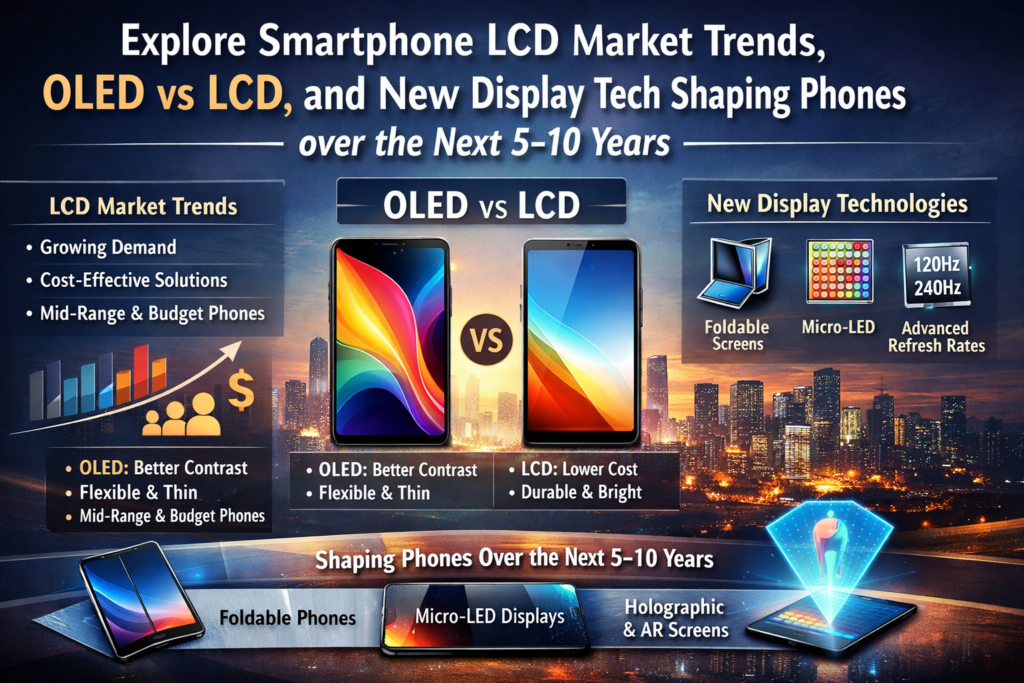
Introduktion till Smartphone Display Market
Varför smartphone-skärmar betyder mer än någonsin
Låt oss vara ärliga – din smartphoneskärm är i princip ditt fönster till den digitala världen. Från binge-watching-program till doom-scrolling sent på kvällen, allt flyter genom den glödande rektangeln. När användarnas förväntningar ökar, skärmkvalitet har blivit ett stort slagfält för smartphone-märken.
Utveckling från LCD till avancerad skärmteknik
En gång i tiden, LCD-skärmar styrde smartphones universum. De var överkomliga, pålitlig, och lätt att masstillverka. Men som efterfrågan på tunnare telefoner, djupare svarta, och bättre energieffektivitet växte, nya displaytekniker klev in i rampljuset.
Översikt över den globala smartphone LCD-marknaden
Aktuell marknadsstorlek och tillväxtfaktorer
Trots surret kring OLED, LCD-paneler dominerar fortfarande en stor del av smartphonemarknaden, speciellt i nybörjar- och mellanklassenheter. Deras lägre produktionskostnad och stabila avkastning håller LCD relevant, även när innovation accelererar på andra håll.
Viktiga tillverkningsregioner och trender i leveranskedjan
Porslin, Korea, och tillväxtmarknader
Kina är fortfarande världens största nav för LCD-produktion, medan Sydkorea leder inom OLED-innovation. Under tiden, tillväxtmarknader investerar mycket i bildskärmstillverkning för att minska beroendet och stärka leveranskedjorna.
Förstå LCD-teknik i smartphones
Hur LCD-skärmar fungerar
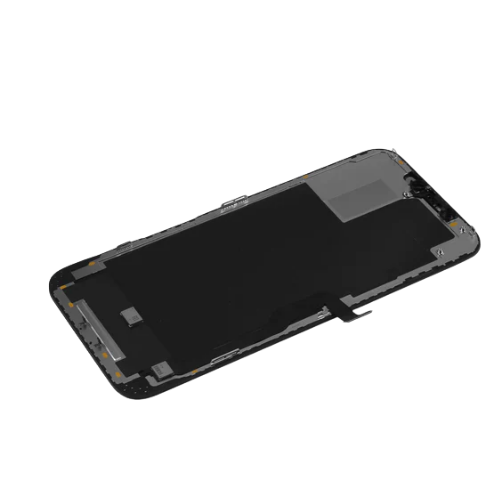
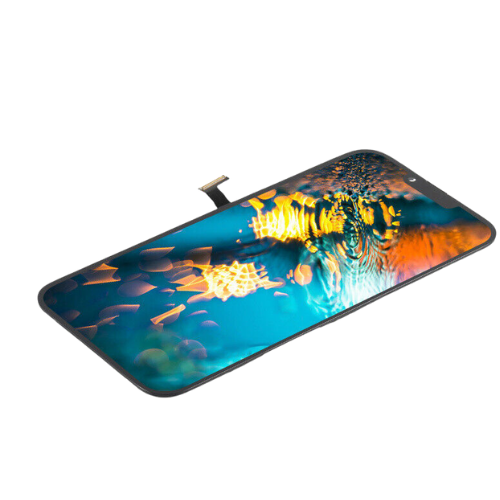
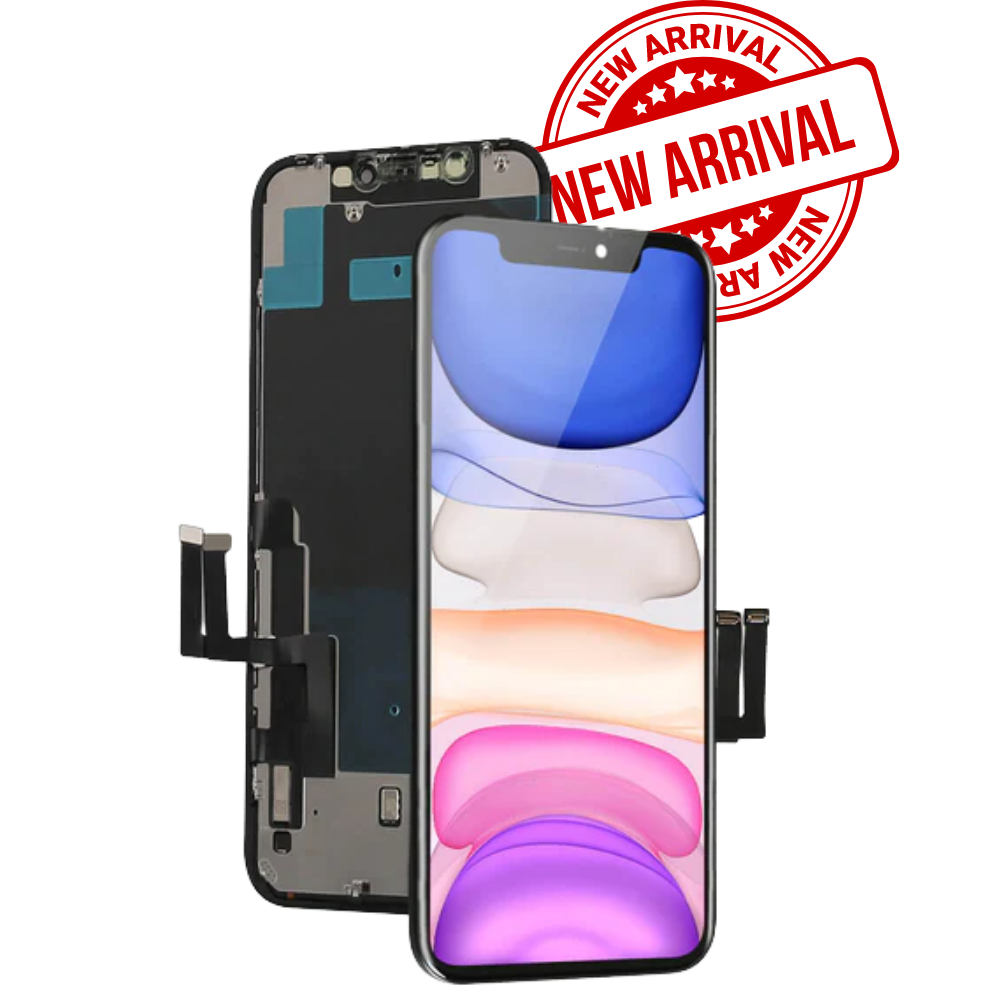
LCD-skärmar förlitar sig på en bakgrundsbelysning som lyser genom flytande kristaller för att skapa bilder. Enkel, effektiv, och beprövad – ungefär som en pålitlig gammal motor som fortfarande får jobbet gjort.
Styrkor och begränsningar för LCD-skärmar
Kostnadseffektivitet och massadoption
LCD:s största styrka är prisvärdhet. Dock, begränsade kontrastförhållanden och högre strömförbrukning jämfört med OLED håller tillbaka det i premiumenheter.
OLED-teknik förklaras
Vad skiljer OLED från LCD
OLED-pixlar avger sitt eget ljus, eliminerar behovet av bakgrundsbelysning. Detta möjliggör sanna svarta, tunnare mönster, och bättre energieffektivitet – särskilt när mörkt innehåll visas.
AMOLED vs Flexibel OLED
Effekteffektivitet och visuell prestanda
Flexibla OLED-paneler tillåter böjda och vikbara mönster, öppna dörrar till futuristiska telefonformfaktorer som LCD helt enkelt inte kan matcha.
LCD vs OLED Konkurrenslandskap
Kosta, Prestanda, och avkastningsjämförelse
LCD vinner på kostnad och produktionsstabilitet, medan OLED tar kronan i visuell prestanda. Det är en klassisk kompromiss mellan prisvärdhet och premiumupplevelse.
Strategier för varumärkesantagande
Mellanklass kontra flaggskeppssmartphones
De flesta flaggskeppssmarttelefoner har fullt ut anammat OLED, medan LCD fortfarande är populärt i budgetvänliga modeller.
Marknadskonkurrens mellan LCD och OLED
Priskrig och kapacitetsutbyggnad
Displaytillverkare är låsta i en prisschackmatch, utöka kapaciteten samtidigt som man försöker behålla marginalerna.
Inverkan på smartphonetillverkare
Leverantörsdiversifieringstrender
Varumärken hämtar nu skärmar från flera leverantörer för att minska risker och kontrollera kostnader.
Översikt över teknik för vikbar skärm
Vad är hopfällbara skärmar
Vikbara skärmar använder flexibel OLED-teknik, låter telefoner böjas utan att gå sönder – som ett digitalt origamimästerverk.
Tekniska utmaningar och hållbarhetsfrågor
Adoptionshinder för konsumenter
Öka sikten, varaktighet, och höga priser begränsar fortfarande massadoption.
Inverkan av vikbara skärmar på smartphonemarknaden
Nya formfaktorer och användningsfall
Vikbara enheter suddar ut gränsen mellan telefoner och surfplattor, erbjuder multitasking superkrafter.
Kostnadspåverkan på Display Supply Chain
Långsiktig marknadspotential
Allt eftersom avkastningen förbättras, hopfällbara kan gå från lyx till mainstream.
Mini-LED-teknik och dess roll
Mini-LED vs traditionell LCD
Mini-LED förbättrar LCD genom att använda tusentals små lysdioder för bättre lokal dimning.
Fördelar i ljusstyrka och kontrast
Varför Mini-LED fortfarande är nisch i smartphones
Utrymmesbegränsningar och kostnad begränsar användningen av Mini-LED i telefoner, även om det lyser i surfplattor och bärbara datorer.
Mikro-LED-teknik förklaras
Vad är Micro-LED
Micro-LED använder mikroskopiska lysdioder som avger ljus individuellt, kombinerar det bästa av OLED och LCD.
Viktiga fördelar jämfört med OLED och LCD
Tillverkningsutmaningar
Massproduktion är fortfarande det största hindret, håller Micro-LED mestadels i labb för tillfället.
Framtida inverkan av Micro-LED på smartphones
Tidslinje för kommersiell adoption
Utbredd smartphoneanvändning kan fortfarande vara år borta.
Möjlighet att störa displaymarknaden
Förväntningar på kostnadsreduktion
När kostnaderna sjunker, Micro-LED kan omdefiniera displaystandarder.
Innovationstrender som formar smartphoneskärmar
Högre uppdateringsfrekvens och LTPO
Jämnare rullning och adaptiva uppdateringsfrekvenser håller på att bli standard.
Under-Display kameror och sensorer
Energieffektivitetsförbättringar
Varje ny generation strävar efter att få ut mer batteritid från varje pixel.
Hållbarhet och miljöhänsyn
Energiförbrukning och koldioxidavtryck
Displaytillverkning är energikrävande, driva varumärken mot grönare lösningar.
Återvinning och materialinnovation
Green Manufacturing Initiatives
Hållbarhet är inte längre valfritt – det är en konkurrensfördel.
Framtidsutsikter för Smartphone Display Market
Teknikkonvergens
Framtiden tillhör sannolikt hybridlösningar som kombinerar flera teknologier.
Hur de kommande 5–10 åren ser ut
Möjligheter för tillverkare och varumärken
De som balanserar innovation, kosta, och hållbarhet kommer att leda nästa era.
Slutsats
Marknaden för smartphones står vid ett fascinerande vägskäl. LCD förblir ryggraden i överkomliga priser, OLED definierar premiumupplevelser, och framväxande teknologier som vikbara skärmar, Mini-LED, och Micro-LED lovar att omforma framtiden. Allt eftersom innovationen accelererar, Konkurrensen kommer att hårdna – men en sak är säker: skärmen kommer att fortsätta att vara hjärtat och själen i smartphoneupplevelsen.
Vanliga frågor
1. Kommer LCD-skärmar att försvinna från smartphones?
Inga. LCD kommer att förbli populär i budget- och mellanklassenheter på grund av dess kostnadsfördelar.
2. Varför är OLED att föredra för flaggskeppssmartphones?
OLED ger bättre kontrast, en tunnare design, och förbättrad energieffektivitet.
3. Är hopfällbara telefoner framtiden för smartphones?
De har en stark potential, men problem med höga kostnader och hållbarhet begränsar fortfarande användningen.
4. När kommer Micro-LED att användas i smartphones?
Kommersiell användning är sannolikt flera år bort på grund av tillverkningsutmaningar.
5. Vilken displayteknik är mest hållbar?
OLED och framtida Micro-LED-teknologier visar bättre långsiktig energieffektivitetspotential.