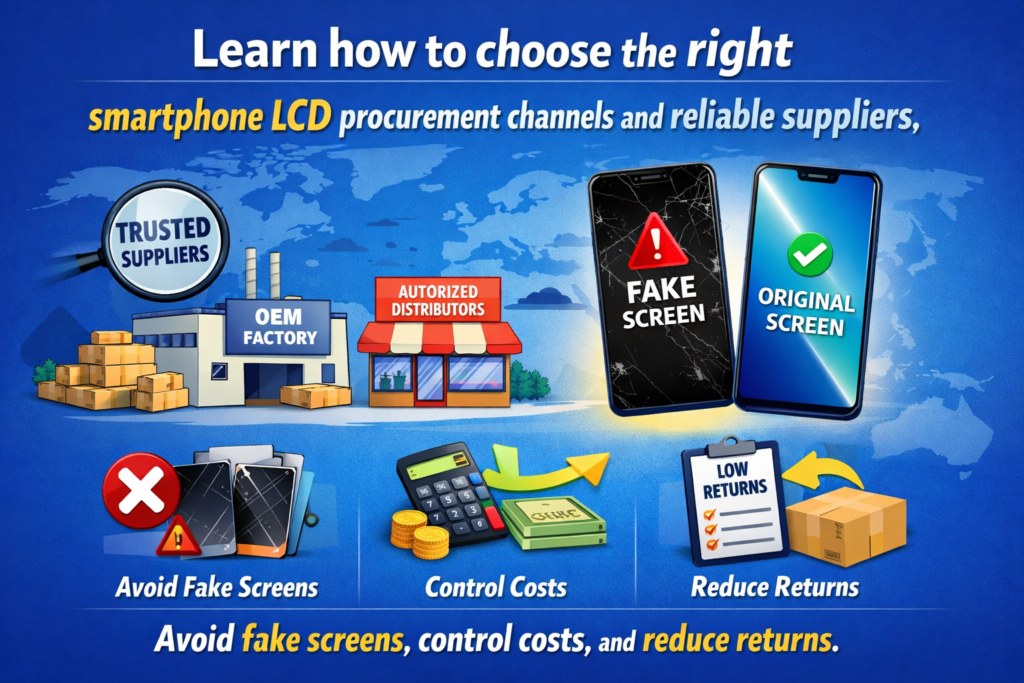
Introduktion till inköp av LCD-skärm för smartphones
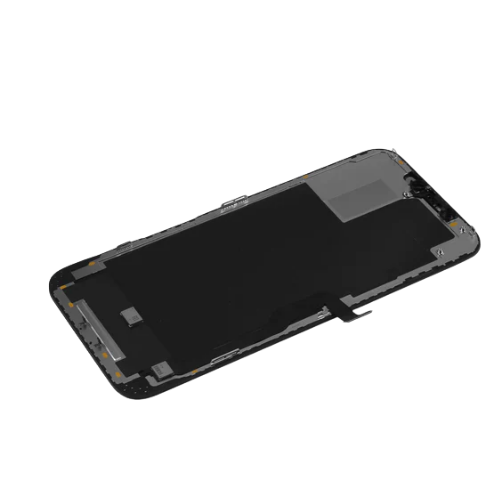
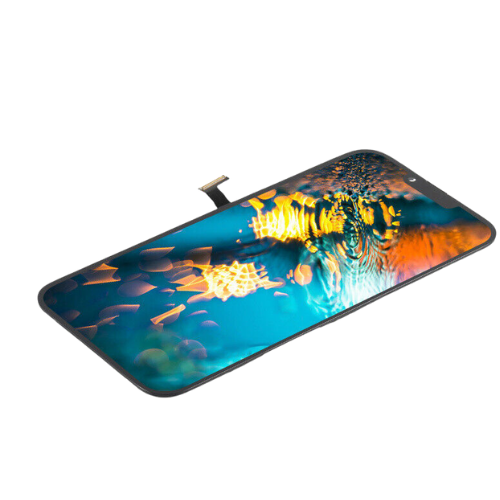
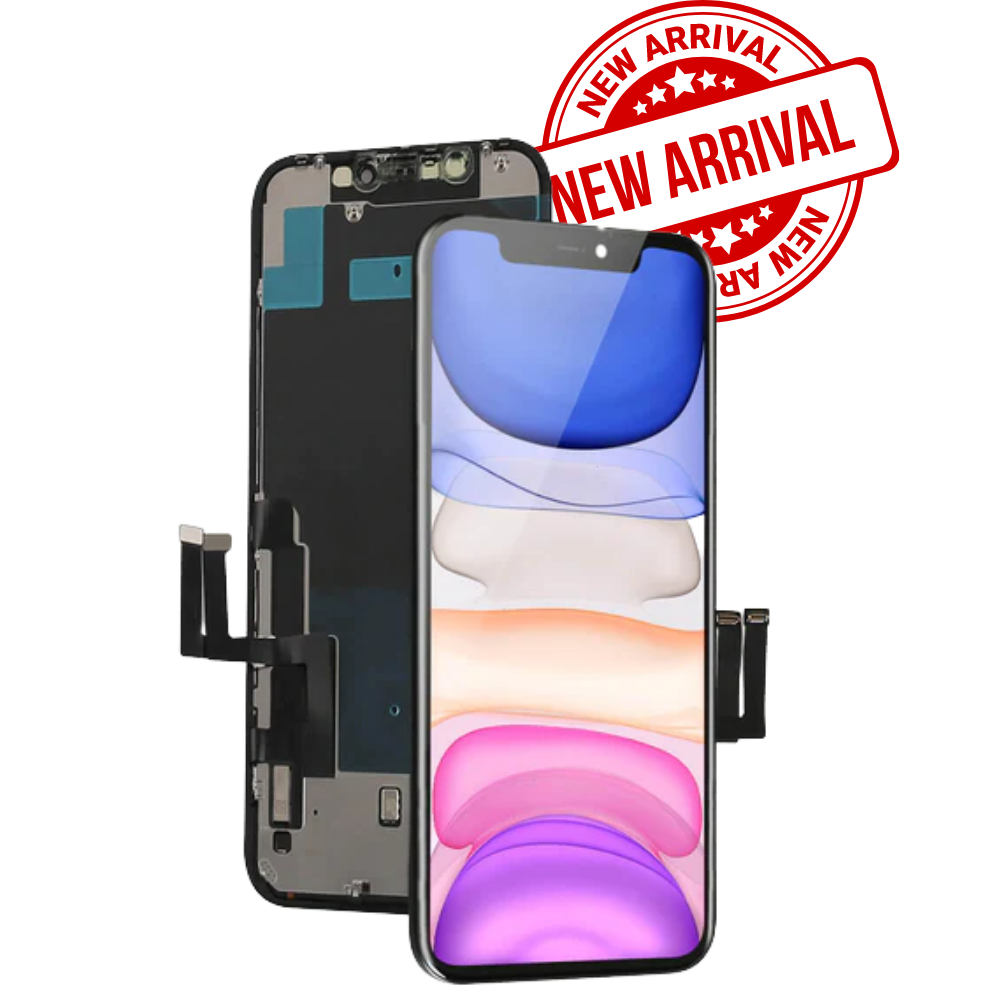
Smartphone LCD-skärmar är hjärtat i alla mobila enheter. Knäck en, och telefonen blir en pappersvikt. Det är därför att köpa rätt LCD-skärmar inte bara är en inköpsuppgift – det är ett affärskritiskt beslut.
Varför LCD-skärmupphandling är viktigt
Oavsett om du är en verkstadsägare, grossist, eller varumärkesdistributör, ditt rykte går på skärmkvalitet. En dålig LCD betyder missnöjda kunder, höga avkastningsgrader, och oändliga tvister. Att välja rätt upphandlingskanal kan kännas som att gå i linan mellan pris och tillförlitlighet.
Vanliga utmaningar som köpare står inför
Falska original, instabila partier, försenade leveranser – låter bekant? LCD-marknaden är konkurrensutsatt, fragmenterad, och ibland grumlig. Utan en tydlig strategi, köpare kan lätt bränna sig.
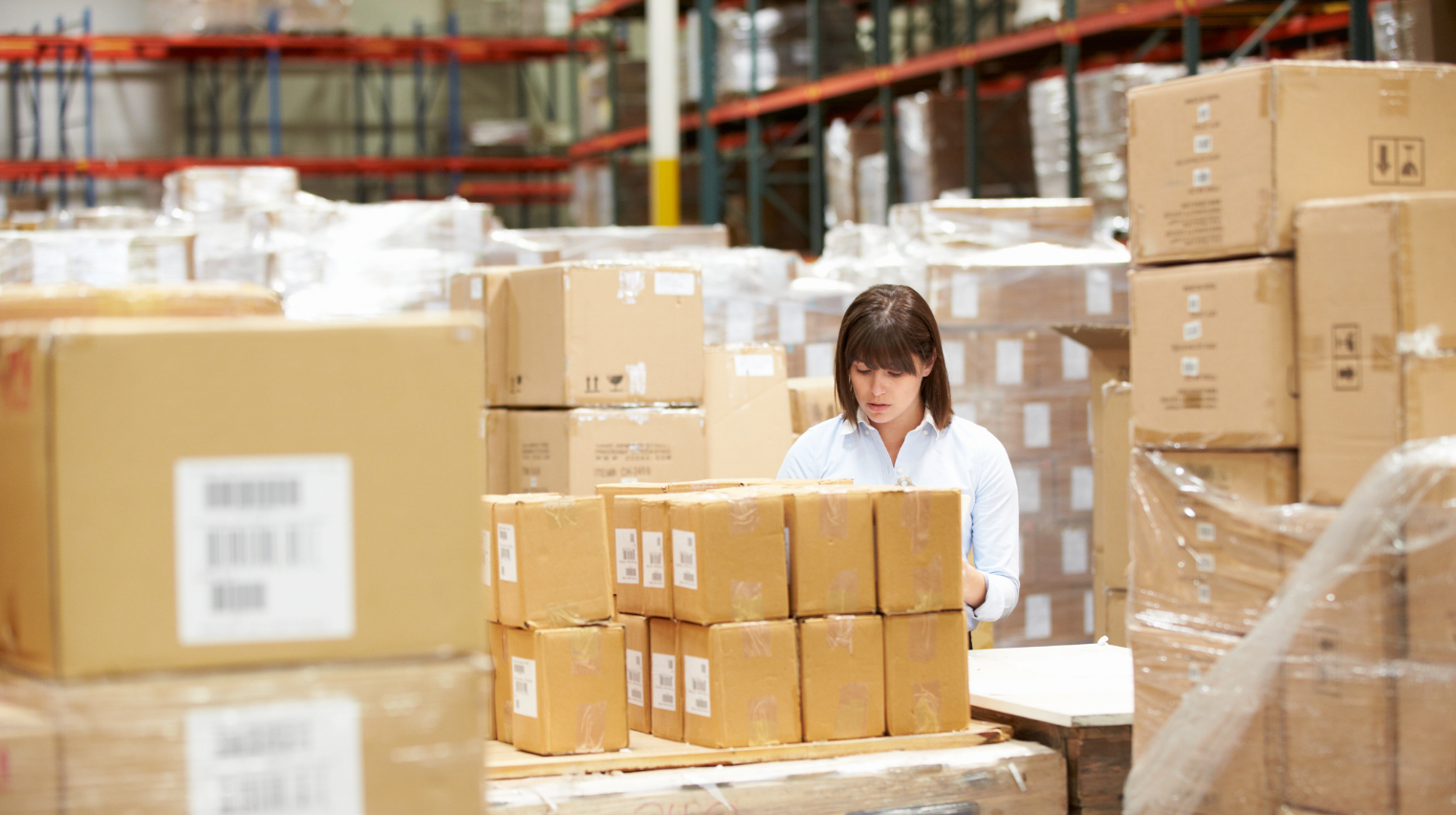
Översikt över leveranskedjor för smartphones med LCD-skärm
Från fabrik till slutanvändare
De flesta LCD-skärmar för smartphones kommer från paneltillverkare, gå igenom modulmontering, flöda sedan in i agenter, grossister, och slutligen köpare. Varje steg tillför värde – och kostnad.
Rollen för kvalitetskontroll i leverantörskedjan
Kvalitetskontroll fungerar som en grindvakt. Ju fler lager en produkt passerar genom, desto svårare blir det att spåra problem. Det är därför det är viktigt att förstå var din leverantör sitter i kedjan.
Inköp från originaltillverkare (OEM / ODM)
Vad är original fabriks LCD-skärmar
Original fabriksskärmar tillverkas av tillverkare som levererar märken direkt. Dessa skärmar uppfyller vanligtvis strikta specifikationer och kvalitetsstandarder.
Fördelar med att köpa direkt från tillverkare
Att köpa från OEM är som att köpa grönsaker direkt från gården – färska, äkta, och konsekvent. Du får stabil kvalitet, lägre defekter, och ofta bättre teknisk support.
Nackdelar och risker med OEM-upphandling
Men här är haken: höga minsta beställningskvantiteter (MOQs), längre ledtider, och begränsad flexibilitet. Små köpare kan hitta OEM-sourcing utom räckhåll.
Inköp via auktoriserade agenter och distributörer
Förstå auktoriserade distributionskanaler
Auktoriserade ombud fungerar som en bro mellan fabriker och marknad. De har vanligtvis officiella distributionsrättigheter och stabilt lager.
Fördelar med att arbeta med agenter
Lägre MOQs, snabbare leverans, och pålitlig kvalitet. Agenter är idealiska för medelstora köpare som vill ha balans utan huvudvärken av fabriksförhandlingar.
Nackdelar och kostnadsöverväganden
Du betalar en premie. Priserna är högre än direkt fabriksförsörjning, men du betalar för bekvämlighet och minskad risk.
Inköp från grossistmarknader
Elektronikmarknader och öppna försörjningskanaler
Grossistmarknader är som loppmarknader för LCD-skärmar – allt är tillgängligt om du vet var du ska leta.
Fördelar med marknadsbaserad upphandling
Flexibla mängder, konkurrenskraftig prissättning, och snabb tillgänglighet. Perfekt för brådskande beställningar eller testa nya modeller.
Risker för inkonsekvent kvalitet
Kvaliteten varierar enormt. Utan starka inspektionsprocesser, du kan få blandade partier, renoverade enheter, eller inkompatibla skärmar.
Jämföra olika inköpskanaler
Avvägningar mellan kostnad och kvalitet
Billiga skärmar kommer ofta med dolda kostnader – returer, reparationer, och tappade förtroendet. Högkvalitativa kanaler minskar de långsiktiga kostnaderna.
Volymflexibilitet och MOQ-skillnader
OEM-tillverkare gynnar bulkköpare, agenter erbjuder flexibilitet i mellanklassen, och marknader tillgodoser små och akuta behov.
Hur man utvärderar leverantörer av smartphone LCD-skärmar
Verifiera leverantörskvalifikationer
Ta aldrig påståenden till nominellt värde. En professionell leverantör bör välkomna verifiering.
Affärslicenser och certifieringar
Kontrollera företagsregistreringen, ISO-certifieringar, och exportlicenser. Dessa är grundläggande men viktiga.
Fabriksrevisioner och inspektioner på plats
Om volymen motiverar det, fabriksbesök avslöjar verklig produktionskapacitet och QC-processer.
Bedöma produktkvalitet och stabilitet
LCD-prestandaindikatorer
Kvalitet handlar inte bara om utseende – det handlar om prestanda.
Ljusstyrka, Beröringskänslighet, och färgnoggrannhet
Testa skärmar för enhetlig ljusstyrka, beröringssvar, och färgavvikelse. Små brister läggs snabbt upp.
Batchkonsistens och felfrekvenser
Stabila leverantörer levererar konsekventa partier. Be om data om defektfrekvens och testrapporter.
Utvärdera leverans- och leveransförmåga
Ledtid och produktionskapacitet
En leverantör som inte kan leverera i tid är ett ansvar. Bekräfta produktionsscheman och backupkapacitet.
Lagerhantering och logistikstöd
Starka leverantörer håller lager och stödjer flera leveransmetoder, minska förseningar.
Prisstrategier och betalningsvillkor
Förstå marknadsprissättning
Känn till marknadsutbudet innan du förhandlar. Om ett pris verkar för bra för att vara sant, det är det förmodligen.
Säkra betalningsmetoder
Använd säkra betalningar som deposition, handelsförsäkring, eller partiella insättningar för att minimera risken.
Eftermarknadssupport och garantipolicyer
Vikten av kundservice
Problem uppstår. Det viktiga är hur leverantörerna reagerar.
RMA och returpolicyer
Tydliga RMA-processer och rimliga returvillkor signalerar professionalism och förtroende för kvalitet.
Vanliga misstag att undvika när du väljer leverantörer
Jagar låga priser i blindo
Låga priser medför höga risker. Balansera alltid kostnad med tillförlitlighet.
Ignorera potentialen för långsiktigt samarbete
En bra leverantör är inte bara en leverantör – det är en partner.
Bygga långsiktiga leverantörsrelationer
Kommunikation och tillit
Transparent kommunikation skapar förtroende och smidigare samarbete.
Strategiska partnerskap
Långsiktiga partnerskap låser ofta upp bättre prissättning, prioriterad försörjning, och delad tillväxt.
Framtida trender inom smartphone LCD-upphandling
Marknadstransparens och digitala källor
Onlineplattformar och datadriven sourcing gör marknaderna mer transparenta.
Kvalitetsstandardiseringstrender
Räkna med strängare kvalitetskrav när konkurrensen hårdnar.
Slutsats
Choosing the right smartphone LCD screen procurement channel is like choosing the right road for a long journey. OEMs offer stability, agents provide balance, and wholesale markets deliver flexibility. The key lies in understanding your business needs, evaluating suppliers carefully, and focusing on long-term value rather than short-term savings. Get it right, and your supply chain becomes a competitive advantage instead of a constant headache.
Vanliga frågor
1. Which procurement channel is best for small buyers?
Authorized agents and wholesale markets are usually more suitable due to lower MOQs.
2. How can I avoid fake original LCD screens?
Verify supplier credentials, request samples, and perform batch testing.
3. Are OEM screens always better quality?
Generellt ja, but only if sourced directly from verified manufacturers.
4. Vad är en acceptabel defektfrekvens för LCD-skärmar?
Typiskt under 2–3 % för stabila leverantörer.
5. Hur viktig är eftermarknadsservice vid leverantörsval?
Extremt viktigt – det påverkar direkt din riskkontroll och kundnöjdhet.