Prečo na špecifikáciách obrazovky smartfónu záleží viac ako kedykoľvek predtým 2026 Na špecifikáciách obrazovky záleží viac ako kedykoľvek predtým 2026
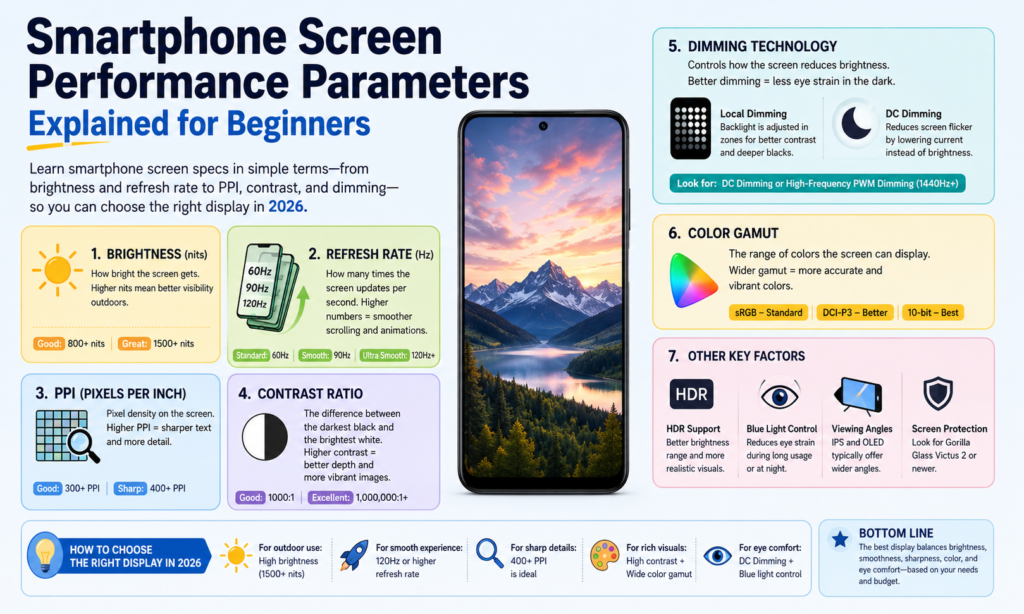
Ak sa nad tým zamyslíte, ten obrazovke je dušou smartfónu. Je to jedna časť, ktorej sa každý deň dotknete stokrát. Čítate na ňom správy, pozrite si na ňom videá, rolujte na ňom sociálne médiá, upravovať na ňom fotografie, a možno z toho aj pracovať. Bez ohľadu na to, aký výkonný je procesor alebo koľko megapixelov fotoaparát ponúka, ak je obrazovka matná, rozmazané, alebo nepríjemné na pohľad, celý zážitok z telefónu sa mi zdá slabší. Preto je pochopenie špecifikácií displeja smartfónov dôležitejšie, než si mnohí ľudia uvedomujú.
In 2026, technológia displeja sa neustále vyvíja rýchlo. Prémiové telefóny teraz pravidelne dosahujú 3,000+ jas hnid, zatiaľ čo 120Hz adaptívne obnovovacie frekvencie sa stali bežnými medzi zariadeniami vyššej strednej triedy. Vysokofrekvenčné stmievanie PWM vyššie 2,160Hz sa tiež stáva populárnejším, najmä v komforte vlajkovej lode OLEDe. citujteotočte0hľadajte0otočte0hľadajte2
Zložitá časť? Väčšina hárkov so špecifikáciami na vás hádže čísla bez vysvetlenia, čo vlastne znamenajú. PPI, kontrastný pomer, obnovovacia frekvencia, farebný gamut – môže to byť ako čítanie v inom jazyku. Táto príručka rozoberá všetko jednoduchou angličtinou, či už kupujete nový telefón, porovnanie LCD vs OLED, alebo len zvedavý na technológiu displeja, budete presne vedieť, čo hľadať.
Technológia stmievania
Čo je DC Dimming?
DC stmievanie upravuje jas priamou zmenou elektrického prúdu dodávaného do displeja. Predstavte si to ako pomalé otáčanie gombíka kohútika nadol – voda stále tečie, len s menšou silou. Svetlo zostáva nepretržité, ale jas klesá.
Pre LCD obrazovky, jas pochádza hlavne z podsvietenia, takže zníženie napätia alebo prúdu zníži jas. Pre OLED obrazovky, každý pixel vyžaruje svoje vlastné svetlo, takže jas sa mení znížením prúdu odosielaného do týchto jednotlivých pixelov.
Mnoho používateľov uprednostňuje DC stmievanie, pretože je vizuálne stabilné. Pretože svetlo sa rýchlo nezapína a nevypína, pre citlivé oči to môže byť jednoduchšie. To je dôležité najmä pre ľudí, ktorí trávia hodiny pozeraním na svoje telefóny v tmavom prostredí.
Kompromisom je, že DC stmievanie môže niekedy ovplyvniť konzistenciu farieb pri veľmi nízkom jase na OLED paneloch. Čierne môžu zostať vynikajúce, ale kalibrácia farieb sa môže mierne posunúť v závislosti od dizajnu panela. Výrobcovia sa tu často snažia vyvážiť pohodlie očí a presnosť farieb.
Čo je PWM stmievanie?
PWM znamená Modulácia šírky impulzu. Namiesto neustáleho znižovania výkonu, displej sa medzi nimi rýchlo prepína zapnuté → vypnuté → zapnuté → vypnuté pri vysokej rýchlosti.
Predstavte si, že prepnete vypínačom svetla stovky alebo tisíckrát za sekundu. Vaše oči zvyčajne nedokážu rozpoznať blikanie priamo, takže sa javí skôr slabšie ako blikajúce.
Čas, počas ktorého svetlo zostane zapnuté počas každého cyklu, určuje jas:
- Dlhší čas zapnutia = jasnejšia obrazovka
- Kratší čas zapnutia = stmievanie obrazovky
PWM je na smartfónoch OLED mimoriadne bežné.
In 2026, vlajková loď telefónov s Androidom čoraz viac inzeruje 2,160Hz až 3 840 Hz PWM stmievanie, čo je oveľa vyššie ako staršie implementácie 240 Hz – 480 Hz. Používatelia s vyššou frekvenciou PWM. citujteotočte0hľadajte8otočte0hľadajte6
Ktorý z nich je lepší pre pohodlie očí?
Neexistuje univerzálna odpoveď, pretože ľudské oči sú úžasne komplikované.
Niektorí používatelia si blikanie PWM vôbec nevšimnú. Iní pociťujú bolesti hlavy 10 minút.
Vo všeobecnosti:
| Technológia | Hlavná výhoda | Hlavná nevýhoda |
|---|---|---|
| DC stmievanie | Menej viditeľné blikanie, často ľahšie pre oči | Môže mierne ovplyvniť farebný výkon OLED |
| PWM stmievanie | Lepšie ovládanie jasu a konzistencia farieb | Citlivým používateľom môže spôsobiť únavu očí |
Ak ste citliví na blikanie obrazovky, DC stmievanie alebo vysokofrekvenčné PWM stojí za to uprednostniť.
Farebný výkon
Sýtosť
Sýtosť popisuje, ako sýta alebo čistá farba vyzerá.
Vysoko nasýtené farby pôsobia živo a pútavo. Nízka sýtosť vyzerá tlmene alebo vyblednutá.
Predstavte si zrelú červenú jahodu verzus vyblednutú ružovú košeľu ponechanú na slnku príliš dlho. Rovnaká skupina farieb – veľmi odlišná intenzita.
OLED panely sa často cítia viac nasýtené, pretože každý pixel vyžaruje svoje vlastné svetlo nezávisle.
Niektorí ľudia milujú tento „wow“ efekt. Iní preferujú na úpravu fotografií prirodzenejšie farby.
Farebný gamut
Farebná škála označuje celkový rozsah farieb, ktoré môže obrazovka zobraziť.
Širší gamut znamená, že displej dokáže reprodukovať viac odtieňov.
Spoločné normy zahŕňajú:
- sRGB
- DCI-P3
- Adobe RGB
- BT.2020
V smartfónoch, DCI-P3 je teraz veľmi bežný v prémiových displejoch.
Najnovšie koncepty displejov spoločnosti Samsung predstavené na SID Display Week 2026 preukázal až 96% Pokrytie BT.2020, whle displejoch. citujteotočte0novinky16otočte0novinky17
Presnosť farieb
Presnosť farieb meria, ako blízko je zobrazená farba k zamýšľanej pôvodnej farbe.
Na tomto veľmi záleží:
- fotografov
- video editory
- dizajnérov
- online predajcovia zobrazujúci farby produktov
Ak je biely obrázok žltkastý alebo červená fotografia produktu vyzerá oranžovo, presnosť farieb je slabá.
Tu je bežné meranie Delta E.
Nižšia Delta E = presnejšia reprodukcia farieb.
Šedá stupnica
Šedá stupnica označuje úrovne jasu medzi čiernou a bielou.
Dobrý výkon v odtieňoch šedej znamená plynulé prechody.
Slabá stupnica šedej vytvára viditeľné pruhy alebo nerovnomerné tieňovanie.
Toto je veľmi viditeľné pri sledovaní tmavých filmov alebo prezeraní fotografií pri slabom osvetlení.
Jas a kontrast
Jas vysvetlený
Jas sa meria v hnidy.
Vyššie nity = jasnejší displej.
Prečo na tom záleží?
Pretože existuje slnečné svetlo.
Telefón môže v interiéri vyzerať perfektne, no vonku sa stáva nečitateľným.
Vlajková loď smartfónov v 2026 bežne dosiahnuť 3,000– 3 500 nitov maximálny jas. Napríklad, OnePlus 15 sa hlási okolo 3,500 hnidy, zatiaľ čo Pixe okolo 3,300 hnidy. citujteotočte0hľadajte2
Vysvetlenie kontrastného pomeru
Kontrastný pomer je rozdiel medzi:
najjasnejšia biela ÷ najtmavšia čierna
Vyšší kontrast vytvára:
- hlbšie čierne
- silnejšie odlesky
- lepšie HDR
- bohatšia hĺbka obrazu
OLED tu dominuje, pretože pixely sa môžu úplne vypnúť.
To vytvára skutočnú čiernu.
LCD nedokáže úplne vypnúť podsvietenie rovnakým spôsobom.
To je dôvod, prečo majú OLED čierne často pocit, že sa pozerajú na tmavú nočnú oblohu.
Jasnosť a ostrosť
Rozlíšenie (DPI)
Rozlíšenie udáva, koľko pixelov existuje horizontálne a vertikálne.
Príklady:
- 1080 × 2400
- 1440 × 3200
Viac pixelov = viac detailov.
Aj keď za určitým bodom, rozdiel sa stáva ťažšie rozpoznateľným pri normálnej pozorovacej vzdialenosti.
Hustota pixelov (PPI)
PPI prostriedok pixelov na palec.
Hovorí vám, ako pevne sú pixely zbalené.
Vyššie PPI = ostrejší text a čistejšie okraje.
Príklady:
| Typ zobrazenia | Typické PPI |
|---|---|
| Lacný LCD | 300–400 |
| OLED strednej triedy | 400–460 |
| Vlajková loď OLED | 450-550+ |
Zhruba vyššie 450 PPI, text zvyčajne vyzerá ako britva ostrý.
Pixel Pitch
Rozstup pixelov je vzdialenosť medzi susednými pixelmi.
Menší rozstup pixelov = vyššia ostrosť.
Menšie medzery medzi pixelmi spôsobujú, že obrázky sú hladšie a uhladenejšie.
Pohyb a odozva
Čas odozvy
Čas odozvy meria, ako rýchlo sa pixel mení z jedného stavu do druhého.
Často popisované ako:
Čierna → Biela → Čierna
Nižší čas odozvy pomáha znižovať:
- ghosting
- rozostrenie
- rozmazanie
Viditeľné najmä pri hraní hier alebo rýchlom prehrávaní videa.
Obnovovacia frekvencia
Obnovovacia frekvencia = koľkokrát sa displej obnoví každú sekundu.
Merané v Hz.
Príklady:
- 60Hz
- 90Hz
- 120Hz
- 144Hz
A 120Hz displej obnovuje dvakrát tak často ako 60 Hz.
Vďaka tomu je posúvanie plynulejšie a animácie plynulejšie.
Akonáhle budete pravidelne používať 120 Hz, návrat na 60 Hz môže byť ako prechádzka mokrým pieskom.
Ďalšie dôležité zobrazovacie faktory
Pozorovací uhol
Pozorovací uhol znamená, ako dobre stále vidíte na displej zboku.
Zachovajú sa dobré pozorovacie uhly:
- jas
- farba
- kontrast
OLED tu zvyčajne funguje lepšie ako LCD.
Spotreba energie
Displeje spotrebujú veľkú časť životnosti batérie smartfónu.
OLED môže byť efektívnejší v tmavom režime, pretože čierne pixely sa môžu úplne vypnúť.
Podsvietenie LCD zostane nepretržite zapnuté.
To je dôvod, prečo môže tmavý režim šetriť batériu na zariadeniach OLED.
Elektromagnetické žiarenie
Displeje vyžarujú energiu prostredníctvom elektrických a magnetických polí, ako aj viditeľného svetla a tepla.
Na bežné používanie smartfónu, toto zostáva v rámci bezpečnostných noriem spotrebnej elektroniky.
To, čo si používatelia zvyčajne všimnú praktickejšie, je:
- vystavenie modrému svetlu
- únava očí
- tvorba tepla
skôr ako samotné elektromagnetické žiarenie.
Ako si vybrať správnu obrazovku smartfónu podľa vašich potrieb
Výber displeja smartfónu je ako výber okuliarov. Ten „najlepší“ závisí od vás.
Ak vám na tom najviac záleží pozeranie filmov, uprednostniť:
- OLED
- vysoký kontrast
- Hdr
- vysoký jas
Ak ste a mobilný hráč, zamerať sa na:
- 120Hz+
- rýchly čas odozvy
- vzorkovanie vysokého dotyku
Ak ste citliví na namáhanie očí:
- DC stmievanie
- vysokofrekvenčné PWM
- nastavenie pohodlia očí
Ak na batérii záleží najviac:
- LTPO SI
- adaptívna obnovovacia frekvencia
- efektívne riadenie jasu
Nenaháňajte každé číslo.
Naháňajte čísla, ktoré zodpovedajú tomu, ako skutočne používate svoj telefón.
Záver
Displeje smartfónov už nie sú len obdĺžniky, ktoré svietia. Sú vstupnými dverami do celého vášho digitálneho života.
Porozumenie DC stmievanie, PWM, nasýtenia, kontrastný pomer, rozlíšenie, PPI, obnovovacia frekvencia, čas odozvy, farebný gamut, a spotreba energie vám pomôže čítať nad rámec marketingu.
Jasnejšia obrazovka nie je vždy lepšia.
Vyššia obnovovacia frekvencia nie je vždy potrebná.
Širší farebný gamut nie je užitočný, ak je presnosť farieb nízka.
Najlepšia obrazovka smartfónu je tá, ktorá sa cíti bez námahy pri každom odomknutí telefónu.
A keď budete vedieť, čo tieto špecifikácie skutočne znamenajú, výber tejto obrazovky je oveľa jednoduchší.
Časté otázky
1. Čo je lepšie pre oči: DC stmievanie alebo PWM stmievanie?
Pre mnohých používateľov citlivých na blikanie, DC stmievanie sa cíti pohodlnejšie. Vysokofrekvenčné PWM môže byť tiež pohodlné v závislosti od citlivosti.
2. Vyššie PPI je vždy lepšie?
Nie vždy. Viac ako okolo 450 – 500 PPI, rozdiely sú pri bežnom používaní ťažšie rozpoznateľné.
3. Je OLED lepší ako LCD?
OLED zvyčajne ponúka lepší kontrast, hlbšie čierne, a sýtejšiu farbu. LCD môže stále ponúkať vynikajúci jas a často sa vyhýba obavám z blikania OLED.
4. Stojí za to 120 Hz na smartfóne?
Áno, najmä ak často hráte alebo rolujete. Hladší pohyb je veľmi zreteľný.
5. Na ktorej špecifikácii obrazovky záleží najviac?
Neexistuje jediná odpoveď. Pre väčšinu ľudí, najväčší denný vplyv pochádza z:
- jas
- obnovovacia frekvencia
- kontrast
- pohodlie očí