Rané začiatky: Monochromatické a STN displeje
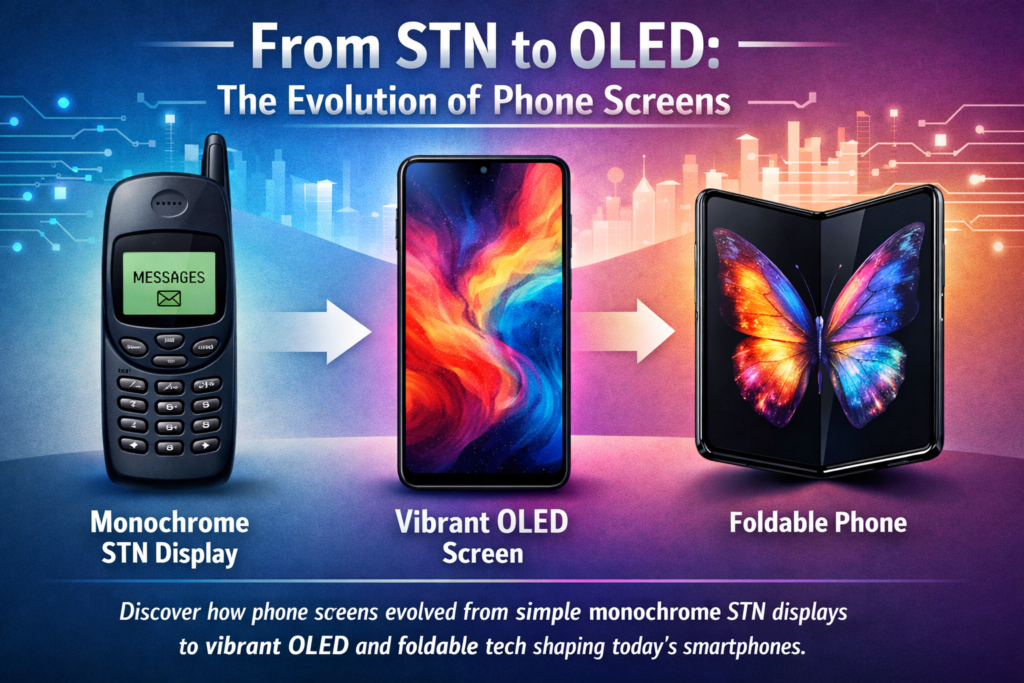
Vo veľmi raných dobách mobilných telefónov – premýšľajte pred farebnými obrazovkami a efektnými obrázkami — displeje boli monochromatické. Zobrazovali základný text a jednoduché ikony v čiernobielych alebo šedých odtieňoch. Tieto displeje využívali pasívnu maticu resp Super Twisted Nematic (STN) technológie, čo bolo lacné, ale pomalé, matná, a obmedzený v počte farieb, ktoré dokáže zobraziť. Mnoho prvých funkčných telefónov a PDA sa spoliehalo na displeje STN, pretože jednoducho spĺňali základnú potrebu: text, ktorý si mohol prečítať. Ale hneď ako výrobcovia začali experimentovať s farbou, Obmedzenia STN sa stali jasne zrejmými – pomalé obnovovacie frekvencie, efekty duchov, a slabé kontrasty ich urobili nepraktickými pre ďalšiu generáciu mobilných skúseností.
Úsvit farieb: Obrazovky CSTN
Zavedenie farby bez toho, aby ste museli preraziť, vyvinuli prví inžinieri Farba STN (CSTN) obrazovky. Toto pridalo filtrovanie farieb do základnej vrstvy STN, takže telefóny mohli reprezentovať základné odtiene – často obmedzené na tisíce farieb namiesto miliónov. Bol to dôležitý evolučný krok, ale nízka kvalita farieb a pomalá odozva znamenali, že CSTN zostalo skôr prechodné ako transformačné.
TFT a Rise of Color LCD
S rastúcim dopytom po bohatších vizuálnych zážitkoch, výrobcovia telefónov predstavili nový druh technológie obrazoviek: Tenkovrstvový tranzistor (TFT) LCD. Na rozdiel od pasívnych STN displejov, TFT integroval tranzistor pre každý pixel, umožňuje oveľa rýchlejšie časy odozvy, lepší kontrast, a oveľa stabilnejšie farby. Táto technológia sa stala mimoriadne populárnou začiatkom roku 2000 a poháňala mnoho skorých farebných telefónov.
Čo je TFT-LCD a prečo na tom záležalo
TFT je skratka pre Thin-Film Transistor liquid crystal display. Jeho krása spočíva v tom, ako rieši kľúčové slabiny predchádzajúcej technológie displeja. Každý pixel bol kontrolovaný presnejšie, zlepšenie čistoty a celkovej kvality obrazu. Tieto atribúty urobili z TFT chrbticu takmer každej obrazovky telefónov strednej a vyššej triedy po roku 2000 – v podstate prvý vizuálny skok smerom k živým obrazovkám, aké poznáme dnes..
Prvé vlajkové zariadenia s TFT
Zariadenia ako napr Samsung SGH‑T100 čoskoro prijali TFT LCD, sa stali ikonickými pre svoje prekvapivo ostré farebné obrazovky v čase, keď bol monochromatický ešte bežný. Tieto obrazovky premenili telefóny na schopnejšie multimediálne zariadenia, umožňujúci prezeranie fotografií, videoklipy, a lepšie hry.
Skok na IPS: Lepšie farby a širší výhľad
Keď sa telefóny stali stredobodom mediálnej spotreby, výrobcovia požadovali displeje, ktoré neboli len farebné, ale trvalo živé z akéhokoľvek uhla. to je miesto Prepínanie v rovine (IPS) vstúpil do hry – evolúcia stále založená na LCD, ale ponúka výrazne zlepšila presnosť farieb a pozorovacie uhly oproti štandardnému TFT.
Ako IPS zmenil používateľskú skúsenosť
IPS obrazovky to znamenali, keď ste sa na telefón pozreli zboku, obraz sa nevymyl – farby zostali verné a jas zostal vysoký. To bola obrovská výhoda pre prehliadanie webu, fotografie, a skupinové prezeranie. Zariadenia s IPS obrazovkami už neboli len funkčné; boli pohlcujúce. Prvé telefóny iPhone od spoločnosti Apple používali obrazovky IPS, a hoci ich Apple neskôr označil ako „Retina“ displeje, základnou technológiou bol prepracovaný LCD displej s cieľom maximalizovať jasnosť a detaily.
iPhone a revolúcia v kapacitnom dotyku
Ten 2007 Uvedenie prvého iPhonu nezmenilo len dotykové ovládanie – zmenilo aj rolu samotnej obrazovky. Prvýkrát, obrazovky boli nielen vizuálne výstupné zariadenia, ale aj primárne rozhrania pre interakciu. Kapacitná dotyková obrazovka bola zavedená plynule, viacdotykový vstup bez dotykového pera, vďaka čomu sú telefóny intuitívnejšie a všestrannejšie. Táto inovácia bola kľúčová pri predefinovaní toho, ako obrazovky prispeli k používateľskej skúsenosti.
Objaví sa OLED: Žiarivé farby a efektivita
Do roku 2010, objavil sa nový konkurent pre LCD: OLED (Organická dióda vyžarujúca svetlo). Na rozdiel od LCD, ktorý vyžaduje podsvietenie na osvetlenie pixelov, OLED pixely vyžarujú vlastné svetlo. To prinieslo transformačné výhody – skutoční černosi, vyšší kontrast, tenšie panely, a nižšia spotreba energie v mnohých scenároch.
AMOLED, Super AMOLED a ďalšie
Prijatie spoločnosťou Samsung AMOLED a je viac integrovaný Super AMOLED variant priniesol OLED do vlajkových telefónov Android. Tieto obrazovky znížili hrúbku a spotrebu energie a zároveň poskytli dramatický vizuálny dojem. OLED sa rýchlo stal zlatým štandardom pre žiarivosť, mobilné displeje s vysokým kontrastom – natoľko, že mnohé vlajkové lode LCD úplne opustili.
Mainstreaming OLED v moderných telefónoch
Dnes, Dominuje OLED prémiové a dokonca aj smartfóny strednej triedy na celom svete. iPhone od Apple 16 funkcie zostavy a Super Retina XDR OLED displej s výnimočným jasom, Podpora HDR a hlboké kontrastné pomery, ukazuje, ako ďaleko dozrela technológia zobrazovania. Obrazovka iPhonu 16 ponúka bohaté farby a vynikajúcu čitateľnosť vonku – na hony vzdialená od panelov podobných CRT zo začiatku 21. storočia..
OLED displej iPhone 16 stojí za zmienku
iPhone 16 a 16 Navyše sa môžete pochváliť celou obrazovkou OLED panely s až 2,000 nits špičkový jas a kontrastný pomer 2,000,000:1. Samovyžarovacie pixely OLED robia čiernu skutočne čiernou a farby vynikajú spôsobom, ktorému sa LCD jednoducho nevyrovná. Tieto vylepšenia odrážajú roky zdokonaľovania v technológii emisných displejov.
Flexibilné, Skladacie a viac
Ďalšou hranicou obrazoviek telefónov nie je len ploché sklo – sú to obrazovky, ktoré sa ohýbajú, zložiť, a rolovať. In 2018, ten Royole FlexPai sa stal prvým komerčne dostupným skladacím telefónom využívajúcim flexibilné OLED – odvážny experiment, ktorý pripravil cestu pre moderné skladacie telefóny.
Prvé skladacie
Nasledujte priekopníkov, ako je Royole's FlexPai, mnohí výrobcovia skúmali skladacie konštrukcie. Samsung Samsung Galaxy Z Flip séria priniesla véčkové skladacie do hlavného prúdu, spojenie vreckových tvarových faktorov s veľkými, flexibilné vnútorné obrazovky.
Budúce rolovateľné displeje
A skladacie sú len začiatok. Rolovacie obrazovky, niekedy nazývané „rolovateľné displeje,” sú prototypované – v podstate sitový materiál, ktorý sa môže váľať a vysúvať ako zvitok. Zatiaľ čo je dnes stále špecializované a experimentálne, rolovateľné zariadenia predstavujú vzrušujúci smer pre budúce zariadenia, umožnenie ultra veľké displeje bez zväčšenia veľkosti zariadenia. Povesti tiež naznačujú, že Apple by už mohol uviesť na trh svoj prvý skladací iPhone 2026, prináša ešte väčšiu flexibilitu dizajnu obrazovky.
Záver
Od skromných monochromatických panelov po žiarivé OLED a flexibilné skladacie povrchy, obrazovky mobilných telefónov prešli úchvatným vývojom. Každý skok — od STN k TFT, IPS na OLED, a teraz skladacie a rolovacie – zmenilo spôsob, akým interagujeme s digitálnym obsahom, médiá a navzájom. Obrazovky už nie sú len displeje; sú ústredným prvkom mobilného zážitku, formovanie spôsobu, akým sa učíme, práce, hrať, a spojiť sa v našom každodennom živote.
Často kladené otázky
Q1. Aká bola prvá technológia mobilných obrazoviek?
Prvé telefóny väčšinou používali monochromatické alebo pasívne STN sklo, zobrazenie jednoduchého textu a ikon bez bohatých farieb.
Q2. Prečo TFT nahradil staršie typy obrazoviek?
TFT LCD priniesol zvýšenú čistotu, rýchlejšiu odozvu, a žiarivá farba, vďaka čomu je ideálny pre telefóny novej generácie v roku 2000.
Q3. V čom je OLED lepší ako LCD?
OLED pixely produkujú svoje vlastné svetlo, umožňujúci vyšší kontrast, skutoční černosi, tenšie displeje, a často lepšiu energetickú účinnosť ako LCD.
Q4. Sú skladacie telefóny budúcnosťou mobilných obrazoviek?
Skladacie a rolovacie zariadenia predstavujú kľúčové budúce smery, s cieľom dosiahnuť rovnováhu medzi veľkosťou obrazovky a prenosnosťou.
Q5. Vydá Apple skladací iPhone?
Priemyselné povesti naznačujú, že Apple môže uviesť na trh skladací iPhone 2026, odráža trend smerom k flexibilným displejom.