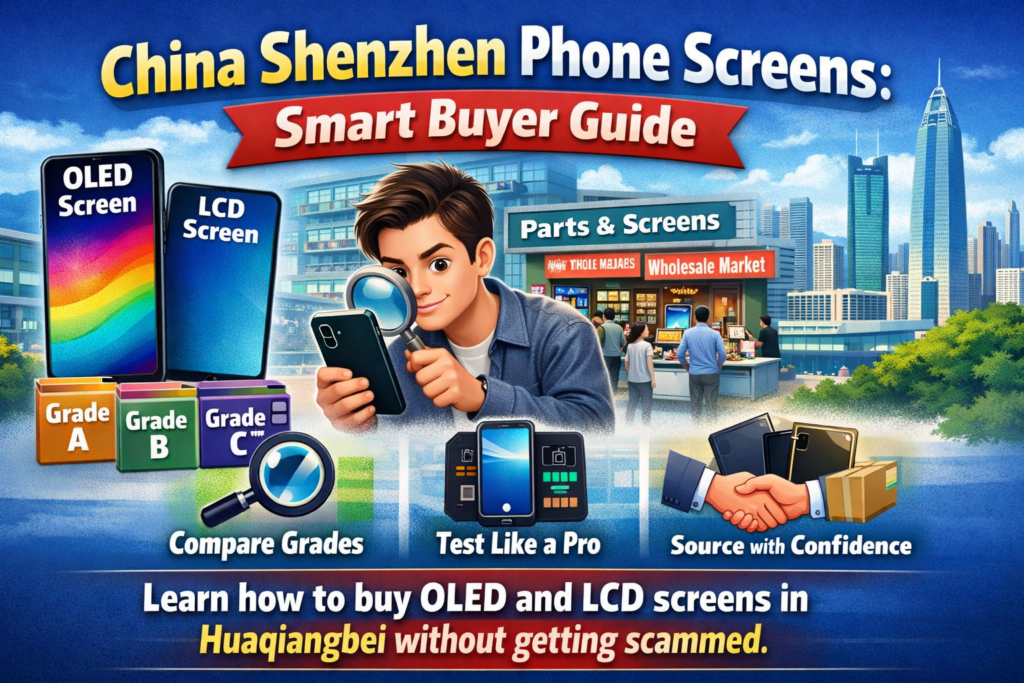
Predstavte si miesto, kde sú všetky mysliteľné časti mobilného telefónu, príslušenstvo, a displej, o ktorom by ste snívali, že si ho kúpite, existuje pod zhlukovanými strechami a nekonečnými uličkami. To je pre vás Huaqiangbei. Rozprestiera sa na viacerých rozľahlých nákupných centrách a na mnohých podlažiach plných miliónov produktov, toto je ten zdroj pre globálnu dodávku dielov pre telefóny – vrátane OLED a LCD obrazoviek s vysokým dopytom. Čo robí Huaqiangbei mimoriadne výnimočným, je to, že nejde o jediný obchod alebo vlajkový obchod: je to prepojený ekosystém veľkoobchodníkov, priamych dodávateľov, malé stánky, a opravárenské centrá, ktoré sa pripájajú do e-shopov a opravovní po celom svete.
Avšak, že rozmanitosť je požehnaním aj prekliatím. Zatiaľ čo vy môže nájsť skvelé ponuky, mnohí predajcovia sa jednoducho snažia posunúť lacné kópie maskované ako prémiové obrazovky nič netušiacim kupujúcim. Preto skutočné poznanie triedenie obrazoviek, čo testovať, a kde získať spoľahlivé diely, je rozhodujúce pre premenu vašej cesty do Huaqiangbei skôr na zisky než na sklamanie.
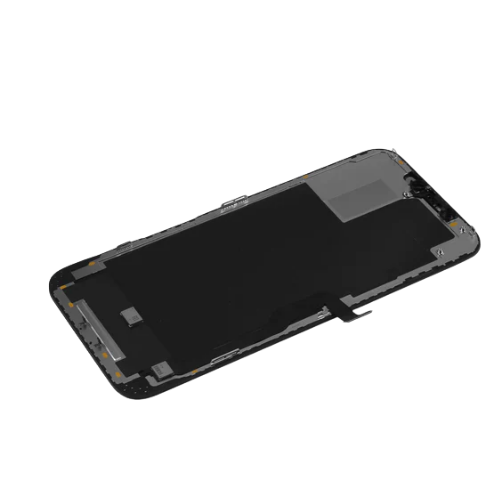
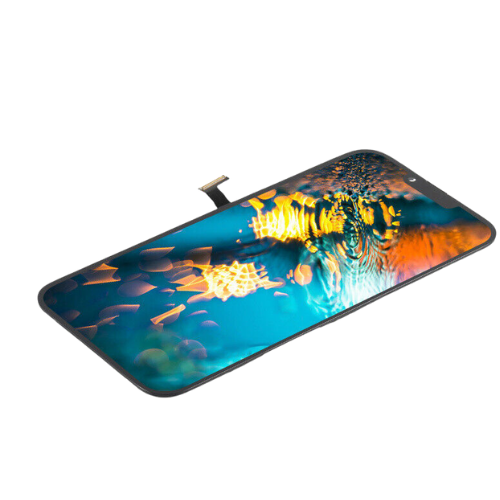
Pochopenie troch základných typov obrazoviek telefónov
V Huaqiangbei, obrazovky nie sú monolitické – sú výrazne odstupňované, a tieto triedy určujú kvalitu aj cenu.
Pôvodná továrenská obrazovka (Originál C)
Tieto obrazovky sú najbližšie, ku ktorým sa môžete dostať pravý – zvyčajne získané z perfektne fungujúcich telefónov, na ktoré sa však nevzťahuje záruka, alebo z oficiálnych popredajných dodávateľských reťazcov. Používajú oboje originálne LCD alebo OLED panely a originálne krycie sklo, význam presnosť farieb, jas, a odozva na dotyk zodpovedá pôvodným špecifikáciám telefónu. Toto je najvyššia úroveň kvality v Huaqiangbei, ale je tiež najdrahšie a najmenej dostupné možnosť, pretože ponuka je obmedzená. Obchodníci ich často získavajú z oficiálnych streamov alebo kvalitných rozobratých telefónov.
Pôvodná pretlaková clona (Originál B)
Táto trieda je v Huaqiangbei skutočným sladkým miestom pre pomer ceny a spoľahlivosti. Ten zobrazovací panel je pôvodný, ale vonkajšie sklo bolo vymenené kvôli poškodeniu. Prostredníctvom profesionálnych laminovacích a tlakových strojov, nalepí sa nová sklenená vrstva – často na nerozoznanie od originálu, keď sa urobí správne. Mnohí predajcovia a dokonca aj opravovne uprednostňujú túto možnosť, pretože ponúka vynikajúci výkon pri oveľa nižšie náklady. Avšak, kvalita úplne závisí od zručnosti technika, a nedbalá laminácia môže spôsobiť zachytenie prachu, nerovnomerné podsvietenie, alebo znížená trvanlivosť, ak sa kontrola vynechá.
Domáca zostavená obrazovka (Originál A / Vysoká kópia)
Toto sú možnosti rozpočtu – často označené ako „Original,“, ale nie z továrne výrobcu telefónu. Namiesto toho, pochádzajú z domácich tovární, ktoré montujú obrazovky s LCD alebo OLED panelmi a sklom z miestnych zdrojov. Postupom času, tieto sa výrazne zlepšili v presnosti farieb a dotyku, ale stále zaostávajú za pôvodnými a pretlakovými panelmi, čo sa týka dlhovekosť, jednotnosť, a presná kalibrácia. Preto veľa kupujúcich chcete ich na náhradné zariadenia, hromadný inventár, alebo projekty s nízkou maržou ale vyhnite sa im pri prémiových opravách.
Bod bolesti kupujúceho #1 — „Pôvodná obrazovka?"Nestačí."
Bežnou chybou začiatočníkov je, že vojdú do stánku a pýtajú sa, „Máte pôvodné továrenské obrazovky??“ Takmer každý predajca povie „Áno!” v predvolenom nastavení – ale pokiaľ nie ste klásť správne otázky (pôvodný typ? panelový zdroj? záruka?), dajú vám kópiu strednej triedy. Skutočným trikom kupujúceho je pochopiť to musíte rozlišovať medzi pôvodnou továrňou, pôvodný opätovný tlak, a domáca montáž. Značí obrovské cenové rozdiely, nedostatok záruky, alebo odmietnutie testu vám môže často povedať čo naozaj kupujete.
Ako zistiť, či sa obrazovka oplatí kúpiť
Aby sa predišlo nákladným chybám, pýtajte sa predajcov veľmi konkrétne otázky, ako napr:
- Je panel pôvodný alebo domáci?
- Je vymenené sklo (opätovný tlak) alebo nedotknuté?
- Môžem otestovať obrazovku pred zaplatením?
- Aká je záručná doba a krytie?
Dobrý predajca vám to rád umožní otestujte obrazovku na kompatibilnom zariadení pred transakciou. Toto nie je len odporúčané - je to nevyhnutné.
Osobné testovanie: 4 Nevyhnutné kroky
Nekvalitné obrazovky často vyzerajú dobre na prvý pohľad, ale zlyhávajú vo výkone. Tu je návod, ako testovať ako profesionál:
1. Test čistej bielej a čistých farieb
Zobrazte čisto biely obraz pri maximálnom jase, aby ste skontrolovali žltý odtieň alebo modré posuny na obrazovke. Potom prejdite na čisto čiernu, červená, zelený, a modrá na identifikáciu mŕtvych pixelov alebo abnormálnych farebných škvŕn.
2. Dotknite sa možnosti Odozva
Posúvajte ikony aplikácií po tapete a testujte okraje a rohy, aby ste sa uistili, že neexistujú žiadne mŕtve dotykové zóny. Lacné obrazovky často strácajú dotykovú vernosť na okrajoch.
3. Tlak a podsvietenie
Skontrolujte, či je podsvietenie rovnomerné – ak obrazovka vykazuje nerovnomerný jas alebo „škvrny,“je to znak nízkej kvality laminácie alebo panelu.
4. Kontrola rámu a rámu
Na pretlakové clony, preskúmať čierne lepidlo a obvodové prispôsobenie. Prebytočné lepidlo alebo nerovnomerné medzery naznačujú uponáhľanú prácu a pravdepodobné budúce vniknutie prachu alebo oddelenie.
Cenové pasce a čo odhaľujú
Ak je cena prémiovej obrazovky telefónu oveľa nižšia ako bežný trhový sortiment – povedzme o 30 – 40 % lacnejšie ako okolití predajcovia – nejde o zľavu: to je červená vlajka. Väčšina predajcov Huaqiangbei ceny konkurencieschopné, ale nereálne ponuky zvyčajne označujú nižšie známky, nesprávne prezentované panely, alebo dokonca chybné jednotky. Vyjednávanie je normálne a očakávané, ale najprv pochopte základné ceny porovnaním viacerých stánkov.
Prečo v Huaqiangbei záleží na zárukách
Predajca, ktorý si stojí za svojim produktom, ponúkne minimálne 3-mesačné krytie na funkcie ako displej a dotyk. Niektorí idú hore 1 rok pre vážnych záujemcov. Ak predajca povie: „Keď opustíte stánok, žiadne návraty,“, čo je zvyčajne znak toho, že neveria vlastným produktom – a vy by ste tiež nemali.
Výber medzi OLED a LCD — Čo potrebujete vedieť
OLED – prémiové vizuálne prvky, Citlivý výkon
OLED poskytuje živý kontrast, hlboké čierne, a tenké tvarové faktory, vďaka čomu je obľúbený pre špičkové obrazovky Android a iPhone. Dávajte si však pozor: môžu vystavovať kópie OLED nízkej kvality nechcené blikanie a spôsobiť únavu očí, najmä ak je kontrola obnovenia zle implementovaná. Vždy testujte jas, prechody, a odozva.
LCD — Cenovo výhodné a šetrné k očiam
LCD obrazovky sú hrubšie, pretože vyžadujú panely s podsvietením, ale zvyčajne sa ľahšie získavajú lacno a netrpia blikaním. Tu sú kľúčové kontroly rovnomernosť podsvietenia a absencia okrajových „únikov“, čo môže zhoršiť zážitok zo sledovania videa a hrania hier.
Pochopenie problémov so snímačom odtlačkov prstov s OLED
Niektoré lacné zostavy OLED môžu drasticky ovplyvniť výkon odomykania odtlačkom prsta pod displejom – buď je pomalší, alebo úplne nekonzistentný. Pokiaľ to výslovne neotestujete na skutočnom modeli telefónu, môžete skončiť s dokonale dobrým displejom, ktorý zabíja pohodlie.
Najlepšie trhové zóny pre obrazovky a diely
Huaqiangbei nie je len jedna budova, je to a sieť špecializovaných nákupných centier a poschodí:
- Veľké nákupné centrá ako SEG Electronics a Yuanwang Digital Mall ponúkajú rozmanitosť a spoľahlivosť.
- Špecializujú sa na ne menšie trhy ako Feiyang a Tongtiandi diely a komponenty na opravu.
- Pred nákupom vždy prejdite niekoľko poschodí, aby ste si porovnali ceny a kvalitu.
Jazyková bariéra a stratégia vyjednávania
Pretože väčšina predajcov hovorí predovšetkým mandarínsky, priniesť prekladateľské aplikácie (Prekladač WeChat, Prekladač Google) a naučte sa kľúčové frázy o kontrolách kvality. Vyjednávanie je súčasťou kultúry – začnite s nižšou ponukou a postupne zvyšujte svoju nákupnú cenu.
Hotovosť vs digitálna platba – čo si pripraviť
Mnoho stánkov teraz akceptuje WeChat Pay alebo Alipay, ale niektorí stále preferujú hotovosť (RMB), najmä v menších stánkoch. Plánujte dopredu a potvrďte možnosti platby pred dohodou o obchode.
Ako sa vyhnúť falzifikátom a obrazovkám s malým počtom kópií
Ak máte pochybnosti:
- Krížovo skontrolujte čísla dielov.
- Porovnajte s obrazovkou iného predajcu vedľa seba.
- Vyžiadajte si nálepky s politikou vrátenia alebo písomné záručné podmienky.
- Namiesto vizuálnej kontroly používajte testovacie zariadenia.
Tieto jednoduché návyky ušetria tisíce zbytočných nákupov.
Ako si vybudovať dôveru u opakujúcich sa predajcov
Keď nájdete spoľahlivého dodávateľa – najmä takého, ktorý ponúka záruku a dobrú komunikáciu – udržujte ho v kontakte (ID služby WeChat, číslo stánku). Opakovaní kupujúci zvyčajne získajú lepšie ceny, prioritný prístup k zásobám, a včasné upozornenia, keď prídu nové diely.
Prípadová štúdia: Typické ceny za obľúbené obrazovky telefónov
Skutočné ceny kolíšu podľa modelu a triedy, ale pozorná návšteva to väčšinou odhalí:
- Prémiové OLED originálne alebo pretlakové obrazovky prikázať vyššie ceny a prísnejšie dodávky.
- LCD obrazovky strednej triedy možno získať lacno.
- Hromadné objednávky často výrazne znižujú jednotkové náklady.
Tipy na prepravu a logistiku
Ak získavate zdroje na ďalší predaj alebo hromadne – dohodnite sa na preprave predtým nákup. DHL, FedEx, a iní expresní kuriéri sú široko využívaní od predajcov Huaqiangbei. Predajca môže často zabezpečiť balenie a odoslanie v ten istý deň.
Bežné podvody a červené vlajky
Pozor na:
- Produkty, ktoré vyzerajú príliš nové vzhľadom na cenu,
- Žiadna záruka ani zmluvné podmienky,
- Predajcovia, ktorí vás nútia zaplatiť bez testov,
- Ceny hlboko pod trhovým rozsahom.
Prečo skúsení kupujúci vždy kontrolujú, Vždy testujte
Skúsení kupujúci to vedia vzhľad môže klamať. Obrazovky, ktoré vyzerajú dobre, ale fungujú zle, zvyčajne pochádzajú zo zle zostavených dávok alebo dávok s malým počtom kópií. Váš čas na trhu by mal byť najskôr o testovaní, nákup ako druhý – a nakupujúci, ktorí to robia, len zriedka prídu o peniaze.
Záver — Staňte sa inteligentným kupujúcim obrazovky Huaqiangbei
Huaqiangbei ponúka jednu z najdynamickejších, rôznorodé, a prostredia bohaté na príležitosti pre získavanie zdrojov obrazovky smartfónov vo svete. Ale je to dvojsečná zbraň: môžete dosiahnuť obrovské úspory, ak viete, ako sa orientovať, test, vyjednávať, a vyhnúť sa podvodom. Naučte sa známkovanie obrazovky, trvať na testovaní, pochopiť silné stránky OLED vs LCD, a neklesnite na ceny, ktoré sa zdajú byť príliš dobré na to, aby to bola pravda. Táto stratégia vám pomôže ochrániť vašu peňaženku, budovať dôveru u predajcov, a premeňte každú návštevu Huaqiangbei na víťazný príbeh.
Často kladené otázky o nakupovaní na obrazovke Huaqiangbei
1. Aký je rozdiel medzi originálnymi továrenskými a pretlakovými clonami?
Originálne továrenské panely pochádzajú nedotknuté z legitímneho zdroja; pretlakové panely opätovne používajú pôvodné displeje spojené s novým sklom. Druhá možnosť je nákladovo efektívna, ale líši sa podľa kvality zručností.
2. Mal by som vždy pred nákupom vyskúšať obrazovku?
Absolútne — testovanie na dotyk, jas, mŕtve pixely, a jednotnosť farieb je rozhodujúca pred zaplatením.
3. Sú OLED obrazovky výrazne lepšie ako LCD?
OLED ponúka bohatší kontrast a hlbšiu čiernu, ale môže mať problémy s blikaním a vyššiu cenu. LCD je odolný a cenovo dostupný, ideálne na každodenné použitie.
4. Ako sa vyhnúť falzifikátom?
Porovnajte stánky, položiť podrobné otázky o zdroji panela, dôkladne otestovať, a vždy skontrolujte písomné záručné podmienky.
5. Ponúkajú predajcovia záruky?
Áno, renomovaní predajcovia často poskytujú záruky v rozsahu od 3 mesiacov až rok — spoľahlivý znak kvality.