Introduction
Have you ever wondered what really goes on inside your sleek smartphone? Currently, phones have become more than just communication tools—they’re portable computers, cameras, and entertainment hubs packed with cutting-edge technology. To truly appreciate your device, it helps to understand the building blocks that make it all possible.
The Heart of a Smartphone: Main Logic Board (Motherboard)
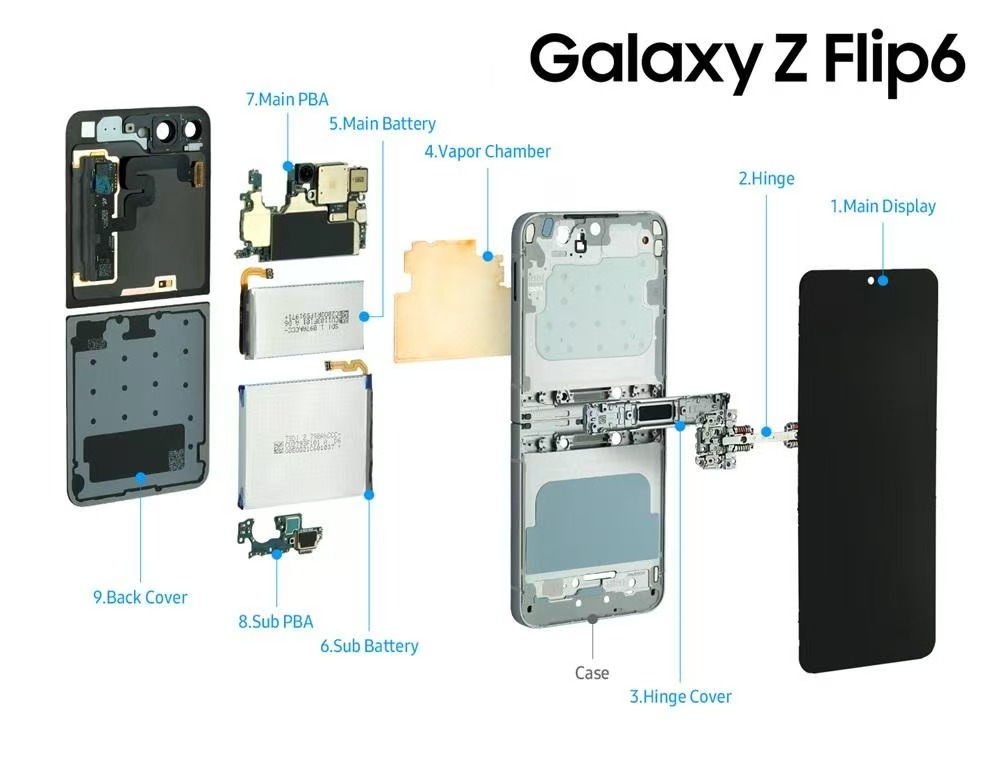
Think of the main logic board—also called the motherboard—as the central nervous system of your smartphone. It connects and integrates all critical parts of the phone into one compact circuit.
Processor / SoC (System on Chip)
The processor, often referred to as the SoC (System on Chip), acts as the brain. In 2024, flagship smartphones are powered by chips like Qualcomm Snapdragon 8 Gen 3 or Apple’s A17 Pro. These chips combine CPU, GPU, AI engines, and connectivity in one package, ensuring seamless performance.
RAM (Random Access Memory)
The RAM handles multitasking, keeping your apps running smoothly in the background. Current phones offer anywhere from 8GB to 24GB of RAM, depending on whether it’s a flagship or gaming phone.
Internal Storage / NAND Flash
Your photos, apps, and files live in the internal storage. With UFS 4.0 technology, storage has become faster than ever, reducing load times and boosting responsiveness. Options range from 128GB to a whopping 2TB.
Various Chips
Supporting chips manage different tasks:
- Power management chips ensure efficient energy use.
- Wireless communication chips handle Wi-Fi, Bluetooth, and cellular signals.
- AI accelerators speed up tasks like photo processing and voice recognition.
Battery
Without the battery, your smartphone is just a lifeless slab. Most modern phones use lithium-ion or lithium-polymer batteries, with capacities ranging between 4,500mAh and 6,000mAh. Fast charging (100W or more) and wireless charging are now common, while some brands push reverse wireless charging to power accessories.
Display / Screen
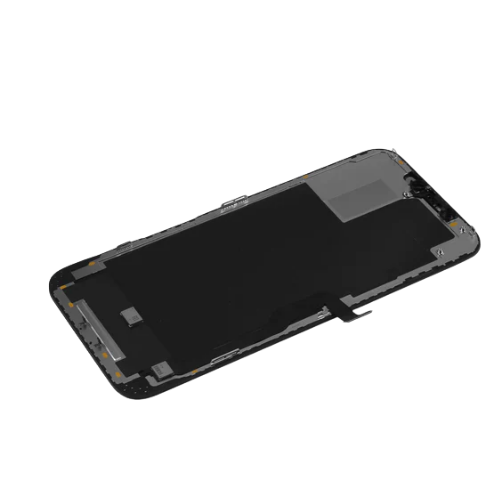
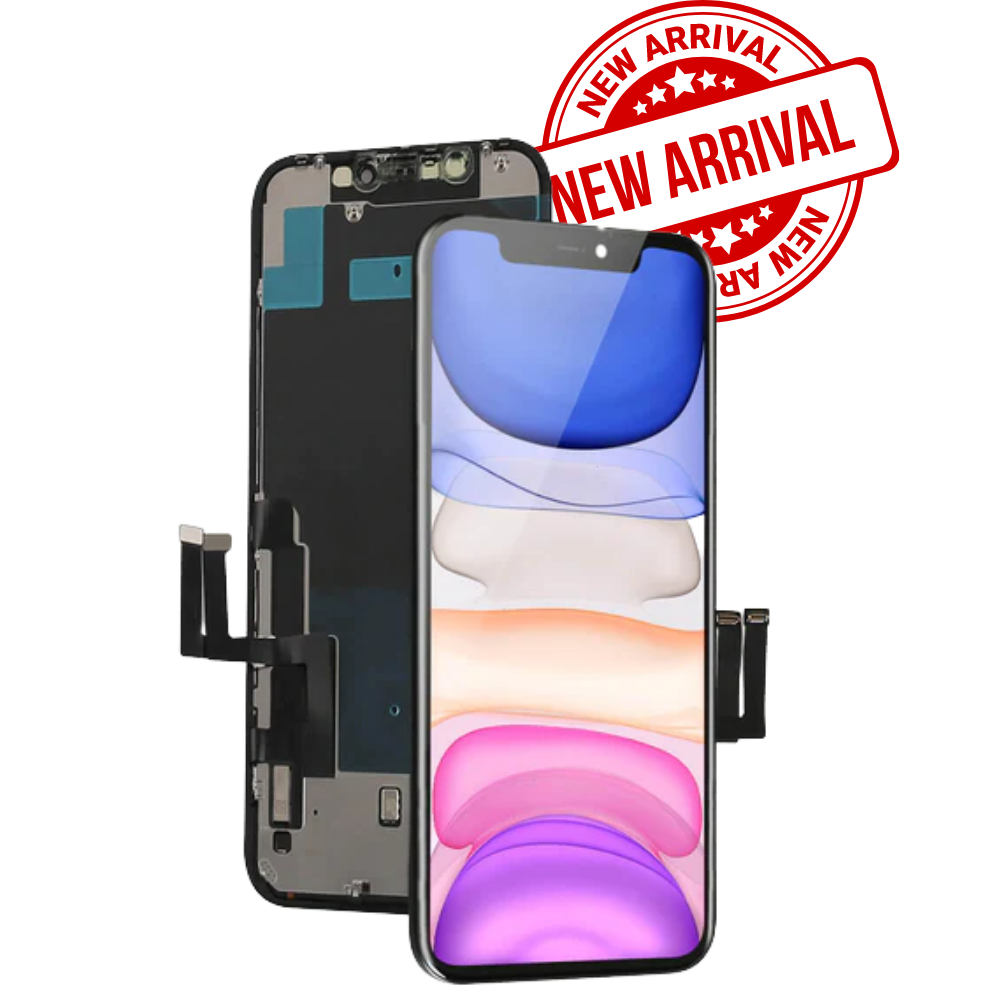
The display is the window into your smartphone world. In 2024, AMOLED and LTPO OLED dominate, offering bright colors, deep blacks, and adaptive refresh rates up to 144Hz. Integrated with the touch screen (digitizer), they allow smooth interaction.
Camera Module
Smartphone photography has evolved into a professional-grade experience.
- Rear Main Camera: High-resolution sensors (50MP–200MP).
- Ultra-Wide Camera: Perfect for landscapes.
- Telephoto Camera: Enables optical zoom without losing detail.
- Front-Facing Camera: AI-driven beauty filters and 4K video calls.
Chassis / Mid-Frame
The chassis, or mid-frame, is the skeleton of the phone, providing structure. Materials have evolved from plastic to premium options like aluminum, stainless steel, titanium, or even ceramic for durability and elegance.
Vibration Motor / Haptic Engine
The vibration motor, also called a haptic engine, brings tactile feedback. Modern smartphones provide nuanced vibrations—like different responses for typing, gaming, or receiving notifications.
Speakers
High-quality speakers are now essential for immersive entertainment. Many smartphones feature stereo speakers tuned by audio giants, with support for Dolby Atmos and spatial sound.
Microphones
Multiple microphones ensure crystal-clear calls, voice commands, and video recordings. Advanced noise-cancellation systems filter out background sounds, making your voice stand out.
Earpiece
The earpiece, sometimes combined with the speaker, ensures call clarity. Many modern designs balance this with stereo audio systems for a better overall sound experience.
Antennas
Your phone stays connected through multiple antennas handling 5G, Wi-Fi 7, Bluetooth 5.4, and GPS. Smart antenna switching ensures stable signals even in crowded areas.
Ports and Buttons
Despite the wireless era, ports and buttons remain important.
- USB-C Port: Now a global standard for fast charging and data transfer.
- Power and Volume Buttons: Still physical for reliability.
- SIM Card Tray: Slowly being replaced by eSIM in many regions.
Cooling System
To prevent overheating, smartphones rely on cooling systems.
- Graphite thermal pads spread heat evenly.
- Vapor chambers act like mini heat pipes.
- Gaming phones even experiment with liquid cooling fans for extended performance.
Sensors
Your smartphone is smarter thanks to sensors:
- Ambient light sensor: Adjusts screen brightness.
- Proximity sensor: Turns off the screen during calls.
- Accelerometer and gyroscope: Power motion detection in apps and games.
- Biometric sensors: Fingerprint scanners (under-display or side-mounted) and 3D face recognition.
Conclusion
Behind your phone’s sleek screen lies a symphony of engineering marvels. From the powerhouse SoC to the tiniest sensors, each part plays a role in making your smartphone fast, functional, and user-friendly. As we step into the future, expect even more integration, efficiency, and innovation.
FAQs
1. What is the most important part of a smartphone?
The processor (SoC) is often considered the most crucial, as it determines overall performance.
2. Why do phones need multiple cameras?
Different lenses (wide, ultra-wide, telephoto) give users flexibility for various photography styles.
3. How does a vapor chamber help in cooling?
It spreads heat across a wider area, keeping the processor cooler during heavy tasks.
4. What’s the difference between RAM and storage?
RAM is temporary memory for running apps, while storage is permanent memory for files and the system.
5. Will eSIM completely replace SIM card trays?
It’s likely, but not immediate—some regions still depend heavily on physical SIM cards.