Γιατί έχει σημασία η τεχνολογία οθόνης smartphone
Ένα smartphone χωρίς καλή οθόνη είναι σαν ένα σπορ αυτοκίνητο με μικροσκοπικά λάστιχα ποδηλάτου. Ανεξάρτητα από το πόσο ισχυρός είναι ο επεξεργαστής ή η κάμερα, η εμπειρία θα είναι πάντα περιορισμένη εάν η οθόνη είναι κακή. Οι άνθρωποι αγγίζουν, σουφρώνω, πάπυρος, και κοιτάζουν τις οθόνες τους για ώρες κάθε μέρα. Αυτό καθιστά την τεχνολογία οθόνης έναν από τους πιο σημαντικούς παράγοντες στο σχεδιασμό smartphone.
Τα τελευταία χρόνια, Οι εταιρείες smartphone έχουν ωθήσει την καινοτομία της οθόνης πιο σκληρά από σχεδόν οποιοδήποτε άλλο στοιχείο. Περάσαμε από την LCD στην OLED, από 60Hz έως 120Hz ρυθμούς ανανέωσης, και τώρα σε προηγμένες τεχνολογίες όπως LTPS και LTPO. Αυτές οι βελτιώσεις δεν αφορούν μόνο το να κάνουν τις οθόνες να φαίνονται όμορφες. Επηρεάζουν τη διάρκεια ζωής της μπαταρίας, ανταπόκριση στην αφή, ομαλότητα παιχνιδιού, ορατότητα σε εξωτερικούς χώρους, και ακόμη και το πάχος της συσκευής.
Σκεφτείτε πώς αισθάνεται ένα σύγχρονο τηλέφωνο όταν κάνετε κύλιση στα μέσα κοινωνικής δικτύωσης. Σε παλαιότερες οθόνες, η κύλιση φαινόταν ελαφρώς ασταθής, σχεδόν σαν να ξεφυλλίζεις σελίδες πολύ αργά σε ένα περιοδικό. Οι οθόνες υψηλού ρυθμού ανανέωσης το άλλαξαν εντελώς. Η κίνηση έγινε ρευστή και σχεδόν ομαλή. Αλλά υπήρχε μια σύλληψη: υψηλότεροι ρυθμοί ανανέωσης κατανάλωσαν περισσότερη μπαταρία. Αυτή η πρόκληση ώθησε τελικά τους κατασκευαστές προς την τεχνολογία LTPO.
Συγχρόνως, Οι καταναλωτές ζήτησαν επίσης λεπτότερα πλαίσια και πιο συμπαγή σχέδια. Κανείς δεν θέλει πλέον ένα παχύ μαύρο περίγραμμα γύρω από την οθόνη. Αυτή η ζήτηση οδήγησε σε καινοτομίες όπως Συσκευασία LIPO, που βοηθά στη δραματική μείωση των πλαισίων, ενώ βελτιώνει τη συνολική ενσωμάτωση της οθόνης. Σήμερα, Η μηχανική οθονών έχει γίνει πεδίο μάχης όπου οι εταιρείες ανταγωνίζονται όχι μόνο σε ανάλυση ή φωτεινότητα, αλλά στην αποτελεσματικότητα, ευκαμψία, και σχεδιαστική κομψότητα.
Η οθόνη είναι το πιο σημαντικό μέρος ενός τηλεφώνου
Οι περισσότεροι χρήστες smartphone αλληλεπιδρούν με τις οθόνες τους από πάνω 2,000 φορές την ημέρα σύμφωνα με πολλαπλές μελέτες χρήσης κινητών. Η οθόνη είναι βασικά το «πρόσωπο» του smartphone. Παρατηρείτε την οθόνη πριν από την κάμερα, επεξεργαστή, ή ταχύτητα φόρτισης. Αυτός είναι ο λόγος που οι επωνυμίες ξοδεύουν δισεκατομμύρια για τη βελτίωση της ποιότητας της οθόνης χρόνο με το χρόνο.
Οι σύγχρονες οθόνες smartphone είναι επίσης πολύ πιο περίπλοκες από ό,τι φαίνονται. Κάτω από το γυαλί υπάρχουν πολλαπλά στρώματα, συμπεριλαμβανομένων υλικών OLED, αισθητήρες αφής, backplanes τρανζίστορ, και προηγμένες τεχνολογίες συσκευασίας. Όροι όπως το LTPS και το LTPO αναφέρονται συγκεκριμένα στο στρώμα τρανζίστορ που ελέγχει τα εικονοστοιχεία στην οθόνη.
Χωρίς αποτελεσματική τεχνολογία τρανζίστορ, Οι σύγχρονες οθόνες OLED είτε καταναλώνουν υπερβολική ενέργεια είτε δεν υποστηρίζουν προηγμένες λειτουργίες ρυθμού ανανέωσης. Αυτός είναι ο λόγος για τον οποίο η κατανόηση των LTPS και LTPO έχει μεγαλύτερη σημασία από ό,τι πολλοί άνθρωποι αντιλαμβάνονται.
Τι είναι η τεχνολογία LTPS?
Πλήρης έννοια του LTPS
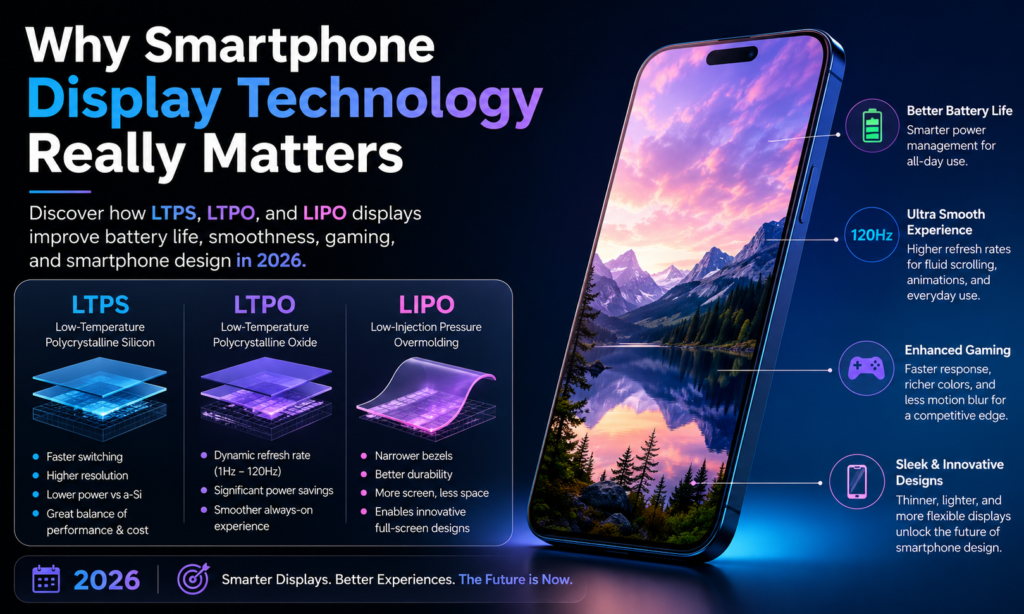
LTPS αντιπροσωπεύει Πολυκρυσταλλικό πυρίτιο χαμηλής θερμοκρασίας. Είναι ένας τύπος τεχνολογίας backplane οθόνης που χρησιμοποιείται ευρέως σε οθόνες OLED smartphone. Το backplane είναι ουσιαστικά το ηλεκτρονικό επίπεδο ελέγχου πίσω από την οθόνη που διαχειρίζεται τον τρόπο ενεργοποίησης και απενεργοποίησης των pixel.
Το LTPS έγινε εξαιρετικά δημοφιλές επειδή προσέφερε καλύτερη κινητικότητα ηλεκτρονίων σε σύγκριση με παλαιότερες τεχνολογίες οθόνης. Με πιο απλά λόγια, επιτρέπει στις οθόνες να λειτουργούν πιο γρήγορα και πιο αποτελεσματικά. Αυτό έκανε το LTPS ιδανικό για οθόνες smartphone υψηλής ανάλυσης με ευκρινή γραφικά και απόδοση αφής με απόκριση.
Σήμερα, πολλά smartphone μεσαίας και ναυαρχίδας εξακολουθούν να χρησιμοποιούν πάνελ LTPS OLED επειδή παρέχουν εξαιρετική ποιότητα εικόνας διατηρώντας το κόστος κατασκευής σχετικά λογικό.
Πώς λειτουργούν οι οθόνες LTPS
Φανταστείτε μια πόλη γεμάτη με εκατομμύρια μικροσκοπικά φώτα. Κάθε φως αντιπροσωπεύει ένα pixel στην οθόνη σας. Το πίσω επίπεδο τρανζίστορ λειτουργεί σαν ένα σύστημα ελέγχου κυκλοφορίας που λέει σε κάθε φως πότε πρέπει να ανάψει, κλείνω, ή αλλαγή φωτεινότητας.
Η τεχνολογία LTPS χρησιμοποιεί πολυκρυσταλλικά τρανζίστορ πυριτίου για τη διαχείριση αυτών των pixel. Σε σύγκριση με την παραδοσιακή τεχνολογία άμορφου πυριτίου, Το LTPS επιτρέπει μεγαλύτερες ταχύτητες εναλλαγής και μεγαλύτερη πυκνότητα pixel. Αυτό σημαίνει πιο ευκρινείς εικόνες, πιο ομαλά κινούμενα σχέδια, και πιο ζωντανές οθόνες OLED.
Ένας σημαντικός λόγος που το LTPS έγινε κυρίαρχο είναι ότι υποστηρίζει σύγχρονες αναλύσεις smartphone όπως το Full HD+, QHD+, και ακόμη και 4K χωρίς να θυσιάζεται η απόκριση. Λειτουργεί επίσης εξαιρετικά με πάνελ OLED, που αποτελούν πλέον το πρότυπο για premium smartphones.
Πλεονεκτήματα των οθονών LTPS
Οι οθόνες LTPS προσφέρουν πολλά ισχυρά πλεονεκτήματα:
| Χαρακτηριστικό | Πλεονέκτημα LTPS |
|---|---|
| Ποιότητα εικόνας | Αιχμηρά και λεπτομερή γραφικά |
| Ταχύτητα απόκρισης | Ταχύτερη απόκριση στην αφή |
| Κόστος Παραγωγής | Φθηνότερο από το LTPO |
| Συμβατότητα OLED | Εξαιρετική υποστήριξη |
| Λάμψη | Ισχυρή απόδοση φωτεινότητας |
Αυτά τα δυνατά σημεία εξηγούν γιατί πολλά smartphone εξακολουθούν να βασίζονται στο LTPS. Ακόμη και σε 2026, Το LTPS παραμένει κοινό σε τηλέφωνα ανώτερης μεσαίας κατηγορίας επειδή εξισορροπεί εξαιρετικά καλά την ποιότητα και την προσιτή τιμή.
Μειονεκτήματα των οθονών LTPS
Το LTPS δεν είναι τέλειο. Η μεγαλύτερη αδυναμία του είναι η απόδοση ισχύος όταν εκτελείτε υψηλούς ρυθμούς ανανέωσης. Τα παραδοσιακά πάνελ LTPS δυσκολεύονται με τη δυναμική προσαρμογή των ρυθμών ανανέωσης αποτελεσματικά. Μερικοί μπορούν να κάνουν εναλλαγή μεταξύ προκαθορισμένων ρυθμών ανανέωσης όπως 60Hz και 120Hz, αλλά είναι λιγότερο ευέλικτες από τις οθόνες LTPO.
Αυτό σημαίνει ότι ένα τηλέφωνο που χρησιμοποιεί LTPS μπορεί να καταναλώνει περισσότερη μπαταρία κατά τη διάρκεια έντονης κύλισης, τυχερό παιχνίδι, ή Always-on Display χρήση. Οι χρήστες που δίνουν προτεραιότητα στη διάρκεια ζωής της μπαταρίας συχνά προτιμούν συσκευές LTPO για αυτόν τον λόγο.
Τι είναι η τεχνολογία LTPO?
Πλήρης έννοια του LTPO
LTPO αντιπροσωπεύει Πολυκρυσταλλικό οξείδιο χαμηλής θερμοκρασίας. Συνδυάζει την τεχνολογία LTPS με ημιαγωγικά υλικά οξειδίου όπως το IGZO για να δημιουργήσει ένα πιο αποδοτικό σύστημα οθόνης.
Το μεγαλύτερο πλεονέκτημα του LTPO είναι η ικανότητά του να υποστηρίζει εξαιρετικά αποτελεσματικά μεταβλητούς ρυθμούς ανανέωσης. Αυτό επιτρέπει σε ένα smartphone να προσαρμόζει δυναμικά τους ρυθμούς ανανέωσης της οθόνης ανάλογα με το τι κάνει ο χρήστης.
Για παράδειγμα:
- Ανάγνωση στατικής ιστοσελίδας → 1Hz
- Παρακολούθηση βίντεο → 30Hz ή 60Hz
- Παιχνίδι → 120Hz
Αυτή η ευελιξία μειώνει δραματικά την περιττή κατανάλωση μπαταρίας.
Πώς το LTPO βελτιώνει την απόδοση της μπαταρίας
Σκεφτείτε το LTPO σαν έναν έξυπνο κινητήρα αυτοκινήτου που αλλάζει τη χρήση καυσίμου με βάση τις συνθήκες οδήγησης. Όταν ταξιδεύετε αργά, εξοικονομεί καύσιμα. Όταν επιταχύνεις, αποδίδει περισσότερη ισχύ.
Οι οθόνες LTPO λειτουργούν με τον ίδιο τρόπο. Αντί να τρέχει συνεχώς στα 120Hz, μειώνουν έξυπνα τους ρυθμούς ανανέωσης όποτε δεν είναι απαραίτητη η υψηλή απόδοση. Αυτό βοηθά στη διατήρηση της διάρκειας ζωής της μπαταρίας σημαντικά. Οι ειδικοί του κλάδου σημειώνουν ότι το LTPO μπορεί να βελτιώσει αισθητά την αντοχή, ειδικά με τις Always-On οθόνες και τη χρήση της οθόνης αδράνειας.
Αυτός είναι ο λόγος που τα περισσότερα premium ναυαρχίδες χρησιμοποιούν πλέον οθόνες LTPO.
Επεξήγηση μεταβλητού ρυθμού ανανέωσης
Ο ρυθμός ανανέωσης αναφέρεται στο πόσες φορές η οθόνη ενημερώνεται κάθε δευτερόλεπτο.
| Ρυθμός ανανέωσης | Εμπειρία |
|---|---|
| 60Hz | Τυπική ομαλότητα |
| 90Hz | Εμφανώς πιο ομαλή |
| 120Hz | Εξαιρετικά ρευστά κινούμενα σχέδια |
| 1Hz | Μέγιστη εξοικονόμηση μπαταρίας |
Οι παραδοσιακές οθόνες LTPS συνήθως αλλάζουν μόνο μεταξύ σταθερών επιπέδων ανανέωσης. LTPO, ωστόσο, μπορεί να κλιμακώσει δυναμικά τους ρυθμούς ανανέωσης με πολύ καλύτερο έλεγχο.
Αυτό έχει σημασία γιατί η συνεχής λειτουργία 120 Hz εξαντλεί την μπαταρία πολύ πιο γρήγορα. Το LTPO αποτρέπει τη σπατάλη ενέργειας μειώνοντας τον ρυθμό ανανέωσης όταν δεν είναι απαραίτητη η πλήρης ταχύτητα.
Γιατί τα Flagship Phones προτιμούν το LTPO
Τα premium smartphones χρησιμοποιούν όλο και περισσότερο LTPO, επειδή οι κορυφαίοι αγοραστές αναμένουν ομαλότητα και μεγάλη διάρκεια ζωής της μπαταρίας. Οι καταναλωτές δεν θέλουν πλέον να επιλέγουν μεταξύ απόδοσης υγρών και αντοχής.
Μάρκες όπως η Apple, Samsung, Xiaomi, OPPO, και η OnePlus εμπορεύεται σε μεγάλο βαθμό τις οθόνες LTPO ως premium χαρακτηριστικά. Η τεχνολογία ProMotion της Apple στα iPhone βασίζεται στις αρχές LTPO, επιτρέποντας δυναμικές ρυθμίσεις ανανέωσης από 1Hz έως 120Hz. Η Samsung χρησιμοποιεί επίσης προηγμένες παραλλαγές LTPO σε συσκευές Galaxy Ultra.
Αυτή η τάση αυξάνεται ραγδαία, και πολλοί αναλυτές αναμένουν ότι το LTPO θα γίνει στάνταρ σε πιο προσιτά τηλέφωνα τα επόμενα χρόνια.
LTPS εναντίον LTPO
Σημαντικές τεχνικές διαφορές
Η μεγαλύτερη διαφορά μεταξύ LTPS και LTPO είναι η προσαρμοστικότητα.
| Χαρακτηριστικό | LTPS | LTPO |
|---|---|---|
| Απόδοση ισχύος | Μέτριος | Εξοχος |
| Μεταβλητός ρυθμός ανανέωσης | Περιωρισμένος | Προχωρημένος |
| Κόστος | Χαμηλότερος | Πιο ψηλά |
| Εμβληματική χρήση | Μερικά μοντέλα | Τα περισσότερα premium τηλέφωνα |
| Πάντα ενεργή απόδοση οθόνης | Χαμηλότερος | Καλύτερα |
Το LTPO είναι βασικά μια εξέλιξη της τεχνολογίας LTPS που έχει σχεδιαστεί για πιο έξυπνη διαχείριση ενέργειας.
Σύγκριση κατανάλωσης μπαταρίας
Η διάρκεια ζωής της μπαταρίας είναι όπου το LTPO λάμπει πραγματικά. Επειδή το LTPO μπορεί να μειώσει τους ρυθμούς ανανέωσης έως και 1 Hz κατά τη διάρκεια στατικού περιεχομένου, εξοικονομεί σημαντική ενέργεια με την πάροδο του χρόνου.
Φανταστείτε να αφήνετε την οθόνη του τηλεφώνου σας ενεργοποιημένη ενώ διαβάζετε ένα άρθρο. Ένας κανονικός πίνακας LTPS μπορεί να ανανεώνεται επιθετικά, σπατάλη ενέργειας. Το LTPO επιβραδύνει έξυπνα τον κύκλο ανανέωσης επειδή το περιεχόμενο είναι ως επί το πλείστον στατικό.
Αυτό γίνεται ιδιαίτερα χρήσιμο για:
- Πάντα ενεργοποιημένες οθόνες
- Ανάγνωση
- Οθόνες κλειδώματος αδράνειας
- Προβολή ειδοποιήσεων
- Στατικές εφαρμογές
Παιχνίδι και εμπειρία χρήστη
Για gaming, τόσο το LTPS όσο και το LTPO μπορούν να προσφέρουν εξαιρετική ομαλότητα. Οι περισσότεροι χρήστες θα δυσκολευτούν να παρατηρήσουν σημαντικές οπτικές διαφορές κατά τη διάρκεια του ενεργού παιχνιδιού.
Η διαφορά εμφανίζεται κυρίως κατά τις μεταβάσεις μεταξύ δραστηριοτήτων. Το LTPO προσαρμόζεται δυναμικά, που κάνει ολόκληρο το τηλέφωνο να αισθάνεται πιο έξυπνο και αποτελεσματικό.
Ακόμη, Το LTPS δεν πρέπει να υποτιμάται. Πολλές οθόνες LTPS υψηλής ποιότητας παραμένουν εξαιρετικές για gaming και κατανάλωση πολυμέσων. Συχνά είναι φθηνότερα, ενώ εξακολουθούν να προσφέρουν όμορφα γραφικά OLED.
Τι είναι η τεχνολογία LIPO?
Πλήρης έννοια του LIPO
LIPO αντιπροσωπεύει Υπερκαλουπώματος χαμηλής πίεσης έγχυσης, αν και στα smartphone ο όρος συνδέεται συχνά με προηγμένες διαδικασίες συσκευασίας οθόνης που επιτρέπουν εξαιρετικά λεπτά πλαίσια και πιο σφιχτή ενσωμάτωση οθόνης.
Σε αντίθεση με το LTPS και το LTPO, που σχετίζονται με τεχνολογίες οπίσθιου επιπέδου τρανζίστορ, Το LIPO εστιάζει κυρίως στη φυσική συσκευασία της οθόνης και στη μείωση των περιγραμμάτων.
Αυτή η τεχνολογία συζητήθηκε ευρύτερα μετά από αναφορές ότι εταιρείες όπως η Apple χρησιμοποίησαν προηγμένες μεθόδους συσκευασίας LIPO για να συρρικνώσουν δραματικά τα πλαίσια του iPhone.
Γιατί τα σύγχρονα τηλέφωνα χρησιμοποιούν συσκευασία LIPO
Οι καταναλωτές λατρεύουν τις οθόνες από άκρη σε άκρη. Τα λεπτά πλαίσια κάνουν τα τηλέφωνα να αισθάνονται πιο φουτουριστικά, εμβυθιστικός, και premium.
Η τεχνολογία LIPO βοηθά τους κατασκευαστές:
- Μειώστε τα όρια της οθόνης
- Δημιουργήστε πιο λεπτές συσκευές
- Βελτιώστε την αναλογία οθόνης προς σώμα
- Τοποθετήστε μεγαλύτερες οθόνες σε συμπαγή σώματα
Είναι παρόμοιο με το συμπίεση μιας τεράστιας τηλεόρασης σε ένα μικρότερο πλαίσιο χωρίς να συρρικνωθεί το πραγματικό μέγεθος της οθόνης.
Εξαιρετικά λεπτές στεφάνες και premium σχεδιασμός
Ο σύγχρονος σχεδιασμός smartphone επηρεάζεται σε μεγάλο βαθμό από την οπτική συμμετρία. Τα λεπτά πλαίσια κάνουν τις συσκευές να φαίνονται κομψές και πολυτελείς. Το LIPO δίνει τη δυνατότητα στους κατασκευαστές να καμπυλώνουν και να συσκευάζουν εξαρτήματα προγράμματος οδήγησης οθόνης πιο αποτελεσματικά, μείωση του χαμένου χώρου γύρω από την οθόνη.
Αυτή η τάση σχεδίασης είναι ιδιαίτερα σημαντική για συσκευές ναυαρχίδα, επειδή η αισθητική παίζει πλέον τεράστιο ρόλο στις αποφάσεις αγοράς. Οι καταναλωτές περιμένουν τα ακριβά τηλέφωνα να φαίνονται μοντέρνα και καθηλωτικά.
Καθώς τα smartphone συνεχίζουν να εξελίσσονται, Οι καινοτομίες συσκευασίας οθόνης όπως το LIPO πιθανότατα θα γίνουν ακόμη πιο σημαντικές παράλληλα με τις τεχνολογίες πτυσσόμενης και κυλιόμενης οθόνης.
Ποιες μάρκες smartphone χρησιμοποιούν αυτές τις τεχνολογίες?
μήλο, Samsung, Xiaomi, και Άλλοι
Πολλές μεγάλες μάρκες χρησιμοποιούν πλέον συνδυασμούς LTPS, LTPO, και τεχνολογίες LIPO ανάλογα με το επίπεδο προϊόντος.
| Μάρκα | Κοινή Τεχνολογία |
|---|---|
| μήλο | LTPO + LIPO |
| Samsung | LTPO AMOLED |
| Xiaomi | LTPO ΕΙΣΑΙ |
| OnePlus | LTPO AMOLED |
| Google Pixel | LTPO ΕΙΣΑΙ |
| Τηλέφωνα Android μεσαίας κατηγορίας | LTPS OLED |
Η Apple δίνει ιδιαίτερη έμφαση στην αποτελεσματική κλιμάκωση του ρυθμού ανανέωσης μέσω LTPO στα Pro μοντέλα της. Η Samsung κυριαρχεί στην κατασκευή LTPO OLED παγκοσμίως και προμηθεύει πάνελ σε πολλές άλλες εταιρείες.
Επιλογές προβολής μεσαίου εύρους έναντι εμβληματικών
Οι συσκευές προϋπολογισμού και μεσαίας κατηγορίας εξακολουθούν να χρησιμοποιούν συχνά LTPS επειδή η κατασκευή LTPO παραμένει πιο ακριβή. Για τους περισσότερους περιστασιακούς χρήστες, Το LTPS είναι ακόμα εξαιρετικό.
Εμβληματικοί αγοραστές, ωστόσο, περιμένουν όλο και περισσότερο:
- 1Προσαρμοστική ανανέωση Hz έως 120 Hz
- Καλύτερη βελτιστοποίηση μπαταρίας
- Premium ομαλότητα
- Πάντα ενεργή απόδοση οθόνης
Αυτή η ζήτηση συνεχίζει να ωθεί την υιοθέτηση LTPO υψηλότερα κάθε χρόνο.
Το μέλλον της τεχνολογίας οθόνης Smartphone
Το μέλλον των οθονών smartphone φαίνεται απίστευτα συναρπαστικό. Η τεχνολογία LTPO εξαπλώνεται ήδη πέρα από τα τηλέφωνα σε tablet, φορητούς υπολογιστές, και έξυπνα ρολόγια. Πρόσφατες αναφορές δείχνουν ακόμη και κατασκευαστές φορητών υπολογιστών να αναπτύσσουν μεταβλητές οθόνες ανανέωσης με δυνατότητα 1Hz για βελτιωμένη απόδοση.
Συγχρόνως, Οι τεχνολογίες μείωσης στεφάνης, όπως το LIPO, θα γίνουν πιο προηγμένες καθώς οι εταιρείες επιδιώκουν πραγματικά συσκευές χωρίς περιθώρια. Τα πτυσσόμενα τηλέφωνα μπορούν επίσης να επωφεληθούν από τη βελτιωμένη απόδοση LTPO επειδή οι αναδιπλούμενες οθόνες καταναλώνουν μεγάλες ποσότητες ενέργειας.
Οι μελλοντικές εξελίξεις μπορεί να περιλαμβάνουν:
- Εξυπνότερα συστήματα ανανέωσης ελεγχόμενα από AI
- Πιο αποδοτικά υλικά OLED
- Οθόνες εξαιρετικά χαμηλής ισχύος
- Αόρατες κάμερες κάτω από την οθόνη
- Πλήρως smartphone χωρίς πλαίσιο
Ο κλάδος των οθονών εξελίσσεται ταχέως, επειδή οι οθόνες είναι κεντρικής σημασίας για σχεδόν κάθε αλληλεπίδραση με τον χρήστη. Είτε πρόκειται για gaming, παραγωγικότητα, Εμπειρίες AI, ή καθηλωτική ψυχαγωγία, Η τεχνολογία οθόνης θα παραμείνει ένας από τους πιο ανταγωνιστικούς τομείς στα ηλεκτρονικά είδη ευρείας κατανάλωσης.
Σύναψη
Κατανόηση LTPS, LTPO, και LIPO κάνει τις αγορές smartphone λιγότερο μπερδεμένες. Αυτές οι τεχνολογίες μπορεί να ακούγονται τεχνικές, αλλά ο αντίκτυπός τους στον πραγματικό κόσμο είναι εύκολο να παρατηρηθεί μόλις κατανοήσετε τα βασικά.
LTPS παρέχει εξαιρετική ποιότητα εικόνας και ισχυρή απόδοση με χαμηλότερο κόστος κατασκευής. Παραμένει μια φανταστική επιλογή για πολλά smartphone σήμερα.
LTPO προχωρά τα πράγματα περαιτέρω εισάγοντας έξυπνους μεταβλητούς ρυθμούς ανανέωσης που βελτιώνουν δραματικά την απόδοση της μπαταρίας διατηρώντας παράλληλα εξαιρετικά ομαλή απόδοση. Αυτός είναι ο λόγος για τον οποίο τα τηλέφωνα ναυαρχίδων βασίζονται όλο και περισσότερο στην τεχνολογία LTPO.
LIPO, εν τω μεταξύ, εστιάζει στη φυσική πλευρά του σχεδιασμού των οθονών, βοηθώντας τους κατασκευαστές να δημιουργήσουν πιο λεπτά πλαίσια και πιο καθηλωτικά σχέδια smartphone.
Την επόμενη φορά που θα διαβάσετε ένα φύλλο προδιαγραφών smartphone, αυτές οι συντομογραφίες δεν θα μοιάζουν πλέον με τυχαία γράμματα. Θα καταλάβετε πώς επηρεάζουν τη διάρκεια ζωής της μπαταρίας, ομαλότητα, τυχερό παιχνίδι, ακόμα και τη συνολική εμφάνιση της συσκευής. Και ειλικρινά, μόλις αρχίσετε να παρατηρείτε την ποιότητα της οθόνης, γίνεται δύσκολο να το αγνοήσεις ξανά.
Συχνές ερωτήσεις
1. Είναι το LTPO καλύτερο από το LTPS?
Ναί, Το LTPO θεωρείται γενικά καλύτερο επειδή προσφέρει πιο προηγμένο έλεγχο μεταβλητού ρυθμού ανανέωσης και βελτιωμένη απόδοση μπαταρίας. Ωστόσο, Το LTPS εξακολουθεί να είναι εξαιρετικό και φθηνότερο στην κατασκευή.
2. Το LTPO εξοικονομεί πολύ μπαταρία?
Το LTPO μπορεί να βελτιώσει αισθητά τη διάρκεια ζωής της μπαταρίας, ειδικά κατά τη χρήση σε αδράνεια, Λειτουργία Always-On Display, και ανάγνωση στατικού περιεχομένου.
3. Το LIPO σχετίζεται με την ποιότητα της οθόνης?
Όχι άμεσα. Το LIPO βελτιώνει κυρίως τη συσκευασία της οθόνης και τη μείωση της στεφάνης παρά την ίδια την ποιότητα της εικόνας.
4. Ποια τηλέφωνα χρησιμοποιούν οθόνες LTPO?
Τα περισσότερα premium ναυαρχίδες smartphone χρησιμοποιούν πλέον οθόνες LTPO, συμπεριλαμβανομένων των iPhone υψηλής τεχνολογίας, Συσκευές Samsung Galaxy Ultra, Μοντέλα Google Pixel Pro, και ναυαρχίδες OnePlus.
5. Είναι κακό το LTPS για παιχνίδια?
Οχι. Οι οθόνες LTPS εξακολουθούν να είναι εξαιρετικές για gaming και κατανάλωση πολυμέσων. Η μεγαλύτερη διαφορά σε σύγκριση με το LTPO είναι η αποδοτικότητα της μπαταρίας και όχι η ποιότητα του παιχνιδιού.