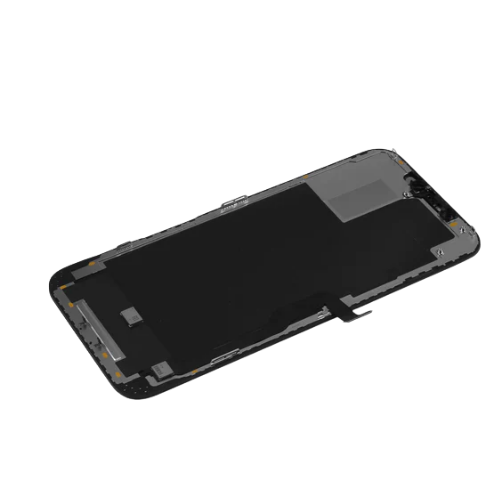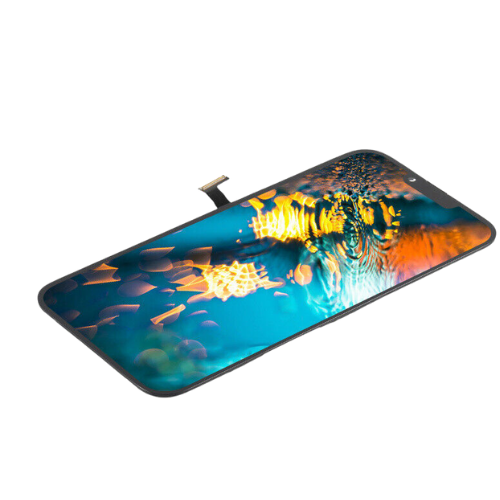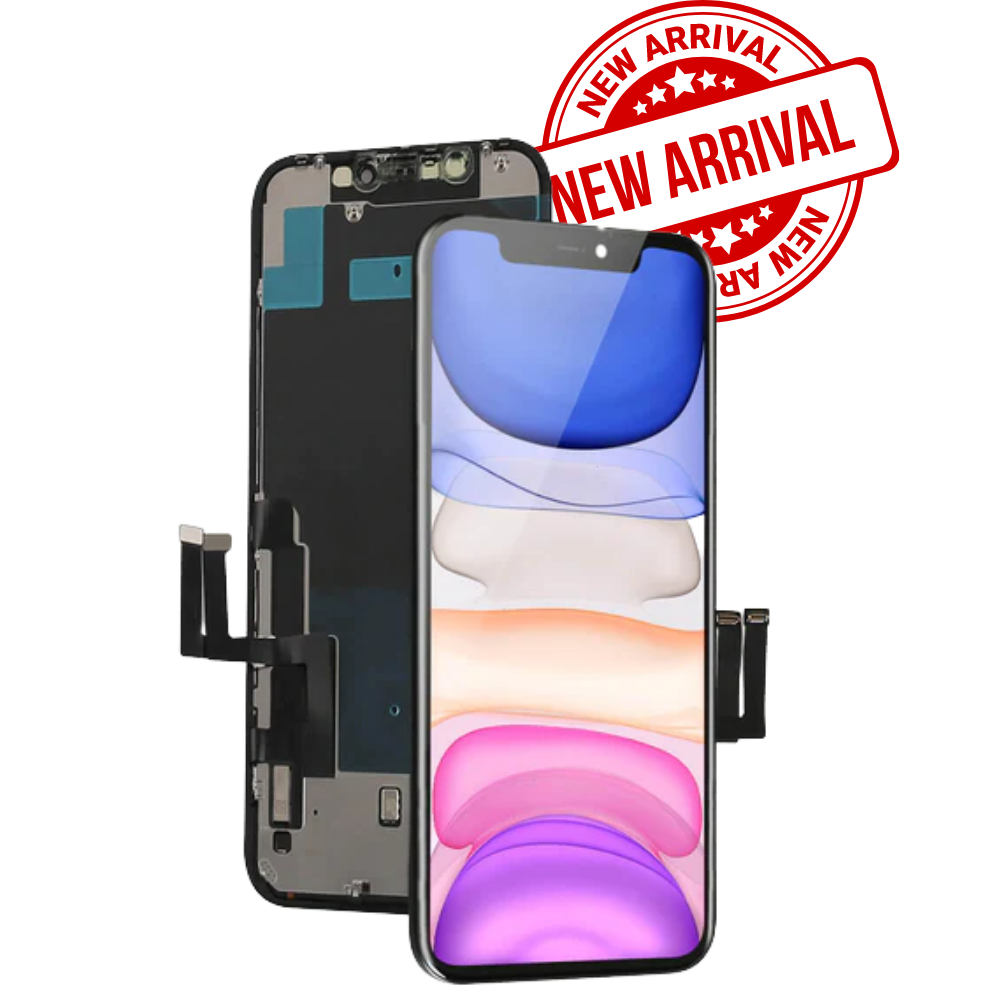
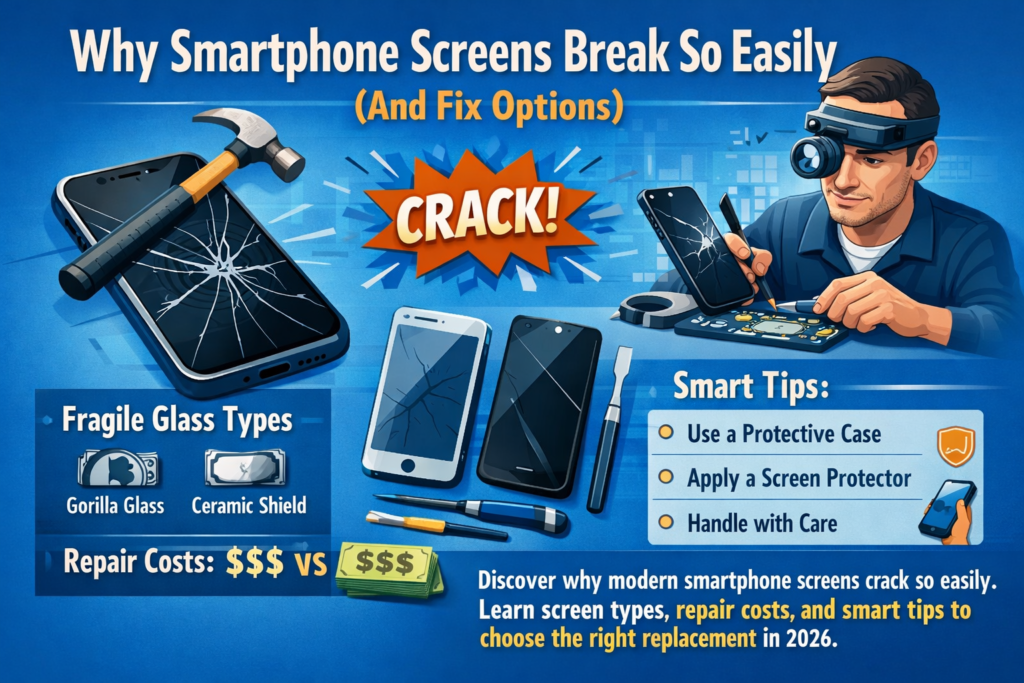
Smartphones idag ser snygga ut, elegant, och futuristisk. Men under den blanka glasytan ligger en ömtålig struktur. Moderna displayer kombineras glas, OLED/LCD-paneler, berör digitaliserare, sensorer, och flexkablar till en enda modul. Det är därför även ett mindre fall kan orsaka allvarlig skada.
De flesta smartphones använder nu kant-till-kant glasdesign, vilket innebär att det finns väldigt lite skyddsram runt skärmen. När en telefon faller, glaset absorberar stöten direkt. Medan tillverkare använder starkare material som Gorilla glas, inget glas är verkligen spricksäkert.
En annan anledning till att skärmar går sönder så ofta är tunnheten hos moderna skärmar. Högupplösta OLED-paneler är otroligt tunna för att förbättra ljusstyrkan och batterieffektiviteten. Tyvärr, tunnare komponenter betyder också mindre strukturell motståndskraft mot stötar.
Sedan är det den vardagliga verkligheten: människor tappar sina telefoner konstant. En snabb sms när du sms:ar, ett fall från bordet, eller till och med att sitta i telefonen av misstag kan spricka skärmen. När glaset går sönder, du står vanligtvis inför tre alternativ:
- Byt ut skärmen
- Reparera glaset
- Byt ut hela telefonen
Reparation är vanligtvis det mest ekonomiska valet. I många fall, fixa en skärm kan förlänga telefonens livslängd med två år eller mer, vilket är både ekonomiskt och miljömässigt fördelaktigt.
Men innan du reparerar den, du måste förstå olika typer av ersättningsskärmar.
Förstå olika typer av utbytesskärmar
När folk hör "skärmbyte,” de antar ofta att alla skärmar är likadana. I verkligheten, reparationsmarknaden innehåller fyra stora skärmtyper, var och en med olika priser, kvalitetsnivåer, och hållbarhet.
Genom att förstå dessa kategorier kan du undvika att betala för mycket eller installera en skärm av låg kvalitet.
Original tillverkare skärmar (OEM)
OEM (Original utrustningstillverkare) skärmar är de exakta displayerna som tillverkats av telefontillverkaren eller deras officiella leverantörer. Det är samma komponenter som installeras i helt nya smartphones.
OEM-skärmar ger bästa prestanda och kompatibilitet eftersom de inkluderar originalpanelen, beröringssensor, ljusstyrka kalibrering, och färgjustering.
Fördelar:
- Perfekt färgnoggrannhet
- Originalljusstyrka
- Jämn beröringsrespons
- Full kompatibilitet med telefonprogramvara
- Högsta hållbarhet
Nackdelar:
- Väldigt dyrt
- Ibland svårt att hämta utanför officiella kanaler
Till exempel, att ersätta en flaggskeppsskärm som en iPhone eller Samsung Galaxy med en OEM-panel kan kosta $200–$400 beroende på modell.
Många användare väljer OEM-skärmar om de planerar att behålla sin telefon i flera år till. Tänk på det som att byta ut en bilvindruta med fabriksglas istället för en generisk ersättning.
Renoverade originalskärmar (Renovera / Reglass)
Renoverade skärmar – ofta kallade "reglasskärmar" eller "bakåttryckta skärmar"— är en smart kompromiss mellan kvalitet och pris.
I denna process, de original OLED- eller LCD-panel återanvänds, men det trasiga yttre glasskiktet tas bort och ersätts med en ny glaspanel med hjälp av specialmaskiner.
Detta betyder:
- Displaypanelen förblir original
- Touchfunktionaliteten förblir fabrikskvalitet
- Endast glasytan är ny
Fördelar:
- Mycket billigare än OEM
- Nästan identisk bildkvalitet
- Bra hållbarhet
Nackdelar:
- Liten risk för damm eller vidhäftningsdefekter
- Kvalitet beror mycket på teknikerskicklighet
Renoverade skärmar kostar ofta 40–50 % mindre än en helt ny originalskärm, vilket gör dem till ett av de mest populära alternativen i verkstäder.
För många användare, renoverade skärmar levererar bästa balansen mellan pris och kvalitet.
Eftermarknad eller kopieringsskärmar
Eftermarknadsskärmar—kallas ibland kopieringsskärmar eller kompatibla skärmar— är skärmar som tillverkas av tredjepartstillverkare istället för originalmärket.
Dessa skärmar är allmänt tillgängliga och extremt billiga jämfört med OEM-delar. Men kvaliteten varierar avsevärt beroende på tillverkare.
Typiska egenskaper inkluderar:
- Lägre ljusstyrka
- Lite felaktiga färger
- Mindre lyhörd beröring
- Kortare livslängd
Många eftermarknadsskärmar används till äldre eller budgettelefoner, där det inte är meningsfullt att spendera mycket på reparation.
Fördelar:
- Mycket prisvärd
- Lätt att hitta
- Snabb installation
Nackdelar:
- Lägre skärmkvalitet
- Möjliga kompatibilitetsproblem
- Kan minska andrahandsvärdet
På den globala reparationsmarknaden, eftermarknads-LCD-ersättningar för äldre telefoner kan kosta endast $15–$40, medan OLED-skärmar av högre kvalitet sträcker sig från $60–110 dollar.
Tänk på dessa som generiska skrivarpatroner– billig och funktionell, men inte identisk med originalet.
Monterade skärmar / Inhemska ersättningsskärmar
På vissa reparationsmarknader, särskilt i Asien, du kan stöta på monterade skärmar eller inhemska skärmar. Dessa displayer är byggda genom att kombinera olika komponenter från olika leverantörer.
Till exempel:
- En tredjeparts LCD-panel
- En generisk digitaliserare
- En ram från en annan fabrik
Dessa skärmar är extremt billiga men kan variera kraftigt i kvalitet. Vissa fungerar alldeles utmärkt, medan andra utvecklar problem som spöke, svag ljusstyrka, eller färgförvrängning.
De används vanligtvis när kunderna vill ha lägsta möjliga reparationskostnad.
Skärmbyte Prisklasser inom 2026
En av de största anledningarna till att folk tvekar att reparera sina telefoner är priset. Kostnaden beror på flera faktorer:
- Telefonmodell
- Skärmteknik (LCD vs OLED)
- Ersättningsdel kvalitet
- Arbetsavgifter
Låt oss titta på de allmänna prisklasserna 2026.
Budgetskärmar för Android-telefoner
Budget smartphones brukar använda LCD-skärmar, som är billigare att tillverka och byta ut.
Typisk reparationskostnad:
| Enhetskategori | Skärmtyp | Genomsnittlig ersättningskostnad |
|---|---|---|
| Android på nybörjarnivå | LCD | $20 – $80 |
| Budgetverkstäder | LCD eftermarknad | $30 – $100 |
Dessa reparationer är vanligtvis enkla och kan slutföras inom en timme.
Smartphone-skärmar i mellanklass
Mellanklasstelefoner används alltmer OLED-paneler, som är tunnare och ljusare men också dyrare.
Typiska reparationskostnader:
| Telefontyp | Prisintervall |
|---|---|
| Mellanklass Android | $80 – $200 |
| iPhone 12/13 serie | $200 – $420 |
Priserna beror mycket på skärmkvaliteten och om verkstaden använder original- eller eftermarknadsdelar.
Flaggskepps smartphoneskärmar
Premium-smarttelefoner som flaggskepps-iPhones och Samsung Galaxy-modeller har avancerade skärmar som t.ex AMOLED eller LTPO OLED.
Dessa skärmar är dyra pga:
- hög upplösning
- integrerade sensorer
- fingeravtrycksläsare
- komplex montering
Typiska reparationskostnader:
| Anordning | Ersättningspris |
|---|---|
| iPhone 15 | $180 – $220 |
| Samsung Galaxy S24 | $220 – $280 |
I officiella reparationscenter, kostnaderna kan överstiga $400 för avancerade modeller.
Officiell reparation vs tredje part reparationsverkstäder
Att välja var du ska reparera din telefon kan vara lika viktigt som att välja själva skärmen.
Fördelar med officiella reparationscenter
Officiella reparationscenter använder äkta tillverkardelar och certifierade tekniker.
Förmånerna inkluderar:
- Äkta OEM-skärmar
- Programvarukalibrering
- Garantiskydd
- Minskade kompatibilitetsproblem
Dock, officiella reparationer är vanligtvis det dyraste alternativet och kan kräva möten eller längre väntetider.
För- och nackdelar med tredjepartsverkstäder
Oberoende verkstäder erbjuder billigare och snabbare tjänster. Många kan byta ut en skärm på under en timme.
Fördelar:
- Lägre priser
- Reparation samma dag
- Flexibla skärmalternativ
Nackdelar:
- Kvalitet beror på butiken
- Vissa butiker använder delar av låg kvalitet
- Garantipolicyerna varierar
Fråga alltid verkstäder vilken skärmtyp de använder innan du samtycker till reparationen.
Handledning för byte av skärm för DIY-smarttelefon
Att byta ut en telefonskärm själv kan spara pengar – men det är inte alltid lätt.
Experter rekommenderar vanligtvis DIY-reparation endast för äldre telefoner eller sekundära enheter.
Checklista för nödvändiga verktyg
Innan du börjar, förbereda dessa verktyg:
- Precisionsskruvmejselsats
- Plast bända verktyg
- Sugkopp
- Värmepistol eller hårtork
- Pincett
- Ersättningslim
- Ersättningsskärm
Verktygssatser brukar kosta $15–$30, som bör ingå vid beräkning av gör-det-själv-besparingar.
Steg-för-steg skärmbytesprocessen
- Stäng av telefonen helt.
- Värm upp skärmens kanter för att mjuka upp limmet.
- Använd en sugkopp för att lyfta den spruckna skärmen.
- Koppla försiktigt bort bildskärmens flexkabel.
- Installera den nya skärmen och anslut kabeln igen.
- Testa displayen innan du försluter telefonen.
- Sätt på nytt lim och stäng enheten.
Gör-det-själv-reparation kan spara pengar men medför risker som att skada moderkortet eller sensorerna.
Vanliga problem efter byte av skärm
Även efter lyckade reparationer, vissa problem kan dyka upp.
Pekskärmen fungerar inte
Möjliga orsaker:
- Lös bildskärmskabel
- Defekt eftermarknadsdigitalisator
- Programvarukalibreringsproblem
Ofta kräver detta att telefonen öppnas igen och komponenterna återansluts.
Gul nyans eller färgskifte
Färgproblem är vanliga med ersättningsskärmar av låg kvalitet. Billigare skärmar kan ha felaktig färgkalibrering.
Lösning:
- Byt ut mot en skärm av högre kvalitet
- Justera skärminställningarna om möjligt
Skärmlinjer eller flimmer
Vertikala linjer eller flimmer indikerar vanligtvis:
- skadad OLED-panel
- dåliga lödanslutningar
- defekt ersättningsskärm
I många fall, att byta ut skärmen igen är den enda lösningen.
Hur man identifierar renoverade eller falska skärmar
Reparationsverkstäder hävdar ibland att en skärm är "original" när den inte är det. Här är några varningsskyltar.
Röda flaggor:
- Pris långt under marknadsgenomsnittet
- Inget serienummer eller QR-kod
- Dålig ljusstyrka eller tråkiga färger
- Tjockare displayglas
- True Tone- eller fingeravtrycksfunktioner saknas
Högkvalitativa skärmar inkluderar vanligtvis fabrikskalibreringsdata och korrekta kontakter.
Fråga alltid om garanti och delars ursprung innan du betalar.
Tips för att välja en pålitlig telefonverkstad
Att hitta en pålitlig verkstad kan spara tid och pengar.
Leta efter dessa tecken:
- Transparent prissättning
- Tydlig förklaring av skärmtyp
- Minst 3–6 månaders garanti
- Positiva kundrecensioner
- Professionell reparationsutrustning
Undvik butiker som vägrar att förklara vilken skärm de installerar.
Slutsats
En sprucken telefonskärm kan kännas som en katastrof, men att reparera det är ofta det smartaste valet. Med rätt information, du kan undvika bedrägerier, välj rätt ersättningsskärm, och förläng din telefons liv i flera år.
Förstå skillnaderna mellan OEM, renoverade, eftermarknad, och monterade skärmar hjälper dig att balansera pris, kvalitet, och hållbarhet. Att betala lite mer för en skärm av högre kvalitet ibland sparar pengar i längden.
Oavsett om du väljer officiell reparation, en tredjepartsbutik, eller en DIY-ersättning, nyckeln är enkel: vet vad du köper innan reparationen påbörjas.
Vanliga frågor
1. Är det värt att byta ut en trasig telefonskärm?
Ja, om reparationskostnaden är mindre än ca 40% av telefonens värde, reparation brukar vara ekonomiskt vettigt.
2. Är eftermarknadsskärmar säkra att använda?
Ja, men kvaliteten varierar mycket. Högkvalitativa eftermarknadsskärmar fungerar bra, medan billiga kopior kan ha dålig ljusstyrka eller beröringsproblem.
3. Hur lång tid tar det att byta skärm?
De flesta verkstäder genomför skärmbyte inom 30–90 minuter beroende på telefonmodell.
4. Kan jag byta ut min telefonskärm hemma?
Ja, men gör-det-själv-reparation kräver verktyg och teknisk skicklighet. Nybörjare riskerar att skada interna komponenter.
5. Varför är min telefon långsammare efter byte av skärm?
Detta kan hända om en bildskärm av låg kvalitet påverkar beröringsresponsen eller om kontakterna inte är korrekt installerade.