Εισαγωγή – Όταν το OLED γίνεται βασικό, Η οθόνη LCD εξακολουθεί να εξυπηρετεί εκατομμύρια
Η αλλαγή από την οθόνη LCD στην AMOLED στις συσκευές Xiaomi
Τα τελευταία χρόνια, Η τεχνολογία οθόνης smartphone έχει εξελιχθεί με αστραπιαία ταχύτητα. Οι συσκευές μεσαίας και ναυαρχίδας της Xiaomi έχουν μεταβεί σε μεγάλο βαθμό σε πάνελ AMOLED, προσφέροντας βαθύτερα μαύρα, υψηλότερους λόγους αντίθεσης, και πιο αδύνατα σχέδια. Αν κοιτάξετε τις πιο πρόσφατες εκδόσεις προϊόντων, Η οθόνη LCD φαίνεται σχεδόν ξεχασμένη.
Αλλά εδώ είναι η ανατροπή: ξεχαστεί σε νέες συσκευές δεν σημαίνει ξεχασμένο στην πραγματική ζωή.
Γιατί οι οθόνες LCD εξακολουθούν να έχουν σημασία στην αγορά επισκευών
Εκατομμύρια τηλέφωνα Xiaomi και Redmi εξοπλισμένα με οθόνες LCD εξακολουθούν να χρησιμοποιούνται καθημερινά. Οι συσκευές από τη σειρά Redmi Note και τη σειρά αρχικών αριθμών Redmi συνεχίζουν να εξυπηρετούν μαθητές, εργάτες, και χρήστες με συνείδηση του προϋπολογισμού σε όλο τον κόσμο.
Και όταν σπάσουν αυτές οι οθόνες? Το aftermarket οικοσύστημα LCD ξεκινάει σε δράση.
Εκεί γίνονται ενδιαφέροντα τα πράγματα.
Επισκόπηση του τοπίου Aftermarket LCD της Xiaomi
Η ζήτηση της αγοράς βασίζεται στα μοντέλα Redmi παλαιού τύπου
Το aftermarket υπάρχει γιατί υπάρχει ζήτηση. Δημοφιλή μοντέλα όπως τα παλαιότερα Redmi Note και τα βασικά τηλέφωνα Xiaomi έχουν τεράστιες εγκατεστημένες βάσεις. Ακόμη και χρόνια μετά την κυκλοφορία, Η ζήτηση επισκευής παραμένει ισχυρή.
Η αντικατάσταση μιας οθόνης είναι συχνά φθηνότερη από την αγορά ενός νέου τηλεφώνου. Για πολλούς χρήστες, αυτός είναι αρκετός λόγος.
Βασικές πηγές εφοδιαστικής αλυσίδας
Οι οθόνες LCD Xiaomi aftermarket προέρχονται συνήθως από τρεις κύριες πηγές:
- Αυθεντικές τραβηγμένες οθόνες
- Ανακαινισμένες πρεσαριστές σίτες
- Επώνυμες συμβατές οθόνες συναρμολόγησης
Κάθε επίπεδο έχει τη δική του λογική τιμολόγησης, τεχνικό προφίλ, και επίπεδο κινδύνου.
Κατηγορίες οθονών LCD aftermarket
Πρωτότυπες οθόνες (Τραβηγμένο / Εργοστασιακές διαρροές)
Αυτά είναι τα πιο κοντά στις εργοστασιακές προδιαγραφές.
Μπορεί να προέρχονται από:
- Αποσυναρμολογημένα ελαττωματικά τηλέφωνα
- Εργοστασιακό πλεόνασμα
- Διαρροή γραμμής συναρμολόγησης
Οι προδιαγραφές ταιριάζουν με το αρχικό σχέδιο:
- Ίδια ανάλυση (HD+ ή FHD+)
- Ίδιος ρυθμός ανανέωσης (60Hz / 90Hz / 120Hz)
- Ίδιο άγγιγμα IC
- Ίδια βαθμολογία φωτεινότητας
Το μειονέκτημα? Περιορισμένη διαθεσιμότητα και υψηλές τιμές.
Ανακαινισμένες σίτες
Αυτά είναι το «γλυκό σημείο» της αγοράς.
Δείτε πώς φτιάχνονται:
- Η αρχική οθόνη LCD παραμένει ανέπαφη.
- Το σπασμένο εξωτερικό γυαλί αφαιρείται.
- Ένα νέο στρώμα γυαλιού είναι πλαστικοποιημένο.
Το πάνελ οθόνης παραμένει πρωτότυπο, έτσι:
- Η ανάλυση παραμένει αμετάβλητη.
- Η αναπαραγωγή χρωμάτων παραμένει σε εργοστασιακό επίπεδο.
- Ο ρυθμός ανανέωσης διατηρείται.
Ωστόσο, η ποιότητα πλαστικοποίησης ποικίλλει. Αυξάνεται ελαφρά το πάχος και ενδέχεται να προκύψουν μικρές διαφορές αφής.
Επώνυμες οθόνες συναρμολόγησης (Συμβατές οθόνες)
Αυτή είναι η μεγαλύτερη κατηγορία όγκου.
Αυτές οι οθόνες συναρμολογούνται χρησιμοποιώντας:
- Κυψέλες LCD τρίτων κατασκευαστών
- Οικιακές μονάδες οπίσθιου φωτισμού
- Ανεξάρτητα IC προγράμματος οδήγησης
- Flex καλώδια aftermarket
Έχουν σχεδιαστεί για να είναι συμβατά — όχι πανομοιότυπα.
Εδώ είναι που οι προδιαγραφές αρχίζουν να διαφέρουν σημαντικά.
Επεξήγηση βασικών τεχνικών προδιαγραφών
Ας αναλύσουμε τις παραμέτρους που έχουν πραγματικά σημασία.
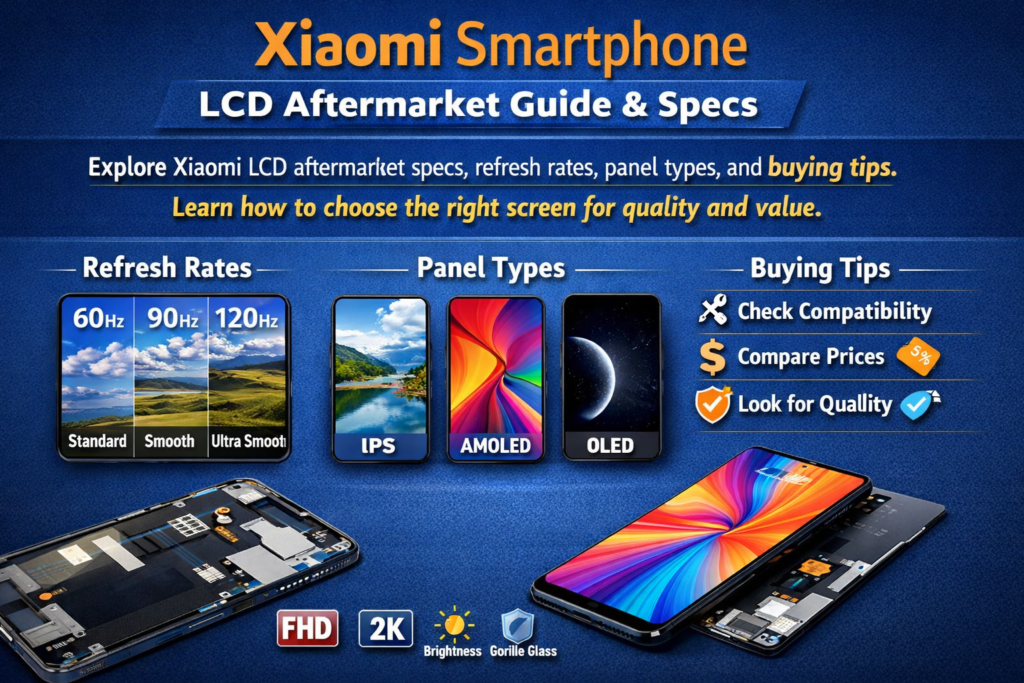
Υλικά πάνελ – a-Si vs LTPS
Διαφορές απόδοσης
a-Si (Άμορφο πυρίτιο):
- Χαμηλότερο κόστος
- Υψηλότερη κατανάλωση ενέργειας
- Περιορισμένη υποστήριξη υψηλής ανάλυσης
LTPS (Πολυκρυσταλλικό πυρίτιο χαμηλής θερμοκρασίας):
- Υψηλότερη κινητικότητα ηλεκτρονίων
- Υποστηρίζει ανάλυση FHD+
- Δυνατότητα 90Hz ή 120Hz
- Καλύτερος έλεγχος φωτεινότητας
Για μοντέλα Xiaomi μεσαίας κατηγορίας με πάνελ LCD υψηλής ανανέωσης, Το LTPS είναι απαραίτητο. Χωρίς αυτό, Η ομαλή κύλιση γίνεται φαντασία μάρκετινγκ.
Κόστος και Τοποθέτηση στην Αγορά
Τα πάνελ a-Si κυριαρχούν στις αντικαταστάσεις αρχικού επιπέδου. Τα πάνελ LTPS στοχεύουν σε μοντέλα μεσαίας κατηγορίας και έχουν υψηλότερες τιμές.
Πρότυπα ανάλυσης – HD+ έναντι FHD+
Η ανάλυση πρέπει να ταιριάζει ακριβώς με τη διαμόρφωση της μητρικής πλακέτας.
- HD+ (720σελ): Συνηθισμένο σε συσκευές Redmi εισαγωγικού επιπέδου.
- FHD+ (1080σελ): Στάνταρ για τη σειρά Redmi Note.
Οι πωλητές χαμηλής ποιότητας μερικές φορές χαρακτηρίζουν τους πίνακες χαμηλής ανάλυσης ως υψηλότερους. Μπορείτε να το εντοπίσετε ελέγχοντας την ευκρίνεια του κειμένου - οι θολές άκρες προδίδουν κατώτερη πυκνότητα εικονοστοιχείων.
Ρυθμός ανανέωσης – 60Hz έναντι 90Hz έναντι 120Hz
Αναμένεται πλέον υψηλή ανανέωση — ακόμη και σε οικονομικά τηλέφωνα.
Για οθόνες aftermarket:
- 60Τα πάνελ Hz είναι τα φθηνότερα.
- 90Οι πίνακες Hz απαιτούν συμβατό IC προγράμματος οδήγησης.
- 120Τα πάνελ Hz απαιτούν ταχύτερο χρόνο απόκρισης υγρών κρυστάλλων (≤25ms τυπικό).
Οι φτηνές αξιώσεις 120 Hz οδηγούν συχνά σε είδωλα ή θόλωση κίνησης.
Εάν η κύλιση είναι σαν να σύρετε μια βαριά κουρτίνα αντί για συρόμενο μετάξι, ξέρεις ότι κάτι δεν πάει καλά.
Αγγίξτε το IC και το Sampling Rate
Τα πάνελ LCD είναι παχύτερα από τα OLED, καθιστώντας την ενσωμάτωση αφής πιο περίπλοκη.
Κοινές λύσεις:
- Εντός κινητής τηλεφωνίας
- TDDI (Ενσωμάτωση προγράμματος οδήγησης αφής και οθόνης)
Οι αρχικοί ρυθμοί δειγματοληψίας αφής ενδέχεται να φτάσουν τα 180 Hz ή τα 240 Hz. Οι οθόνες aftermarket χαμηλότερης βαθμίδας ενδέχεται να πέφτουν στα 120 Hz, επηρεάζουν την ανταπόκριση του παιχνιδιού.
Για gamers, αυτή η διαφορά είναι αισθητή.
Διεπαφές καλωδίων Flex και συμβατότητα εκδόσεων
Αυτό είναι κρίσιμο.
Ακόμη και στο ίδιο μοντέλο Xiaomi, διαφορετικές παρτίδες μπορεί να χρησιμοποιούν πάνελ από διαφορετικούς προμηθευτές. Οι ορισμοί των καλωδίων Flex ποικίλλουν.
Η εγκατάσταση της λάθος έκδοσης μπορεί να προκαλέσει:
- Εμφάνιση ανωμαλιών
- Τρεμοπαίξιμο
- Καμία εικόνα
- Ακόμα και ζημιά στη μητρική πλακέτα
Η αντιστοίχιση της σωστής έκδοσης δεν είναι προαιρετική - είναι υποχρεωτική.
Κενά απόδοσης μεταξύ γνήσιων και aftermarket οθονών LCD
Φωτεινότητα και ορατότητα σε εξωτερικούς χώρους
Οι γνήσιες οθόνες LCD Xiaomi ενδέχεται να φτάσουν τα 450–600 nits.
Οι οθόνες συναρμολόγησης aftermarket κυμαίνονται συχνά από 350–450 nits.
Κάτω από το φως του ήλιου, ότι η διαφορά έχει σημασία.
Ακρίβεια χρώματος και βαθμονόμηση
Οι γνήσιες οθόνες είναι εργοστασιακά βαθμονομημένες.
Οι οθόνες aftermarket εμφανίζονται συχνά:
- Ελαφρώς μπλε απόχρωση
- Κιτρινωπά λευκά
- Ασυνεπής κλίμακα του γκρι
Η βαθμονόμηση χρώματος κοστίζει χρήματα. Τα πάνελ προϋπολογισμού το παραλείπουν.
Πάχος και τοποθέτηση πλαισίου
Οι οθόνες aftermarket μπορεί να είναι 0,2–0,5 mm παχύτερες λόγω:
- Ανοχή γυαλιού
- Συγκολλητικές στρώσεις
Αυτό μπορεί να επηρεάσει τη στεγανοποίηση του πλαισίου και τη συμμετρία της στεφάνης.
Κατανάλωση ρεύματος και θερμική συμπεριφορά
Η βελτιστοποίηση IC προγράμματος οδήγησης διαφέρει.
Τα πάνελ aftermarket ενδέχεται να καταναλώνουν λίγο περισσότερη ισχύ υπό πλήρη φωτεινότητα. Με την πάροδο του χρόνου, αυτό επηρεάζει τη διάρκεια ζωής της μπαταρίας.
Κοινοί κίνδυνοι στην αγορά aftermarket LCD
Απάτη επίλυσης
Πάνελ χαμηλής ανάλυσης που πωλούνται ως FHD+. Πάντα να δοκιμάζετε πριν την εγκατάσταση.
Προβλήματα IC αφής χαμηλής ποιότητας
Τα συμπτώματα περιλαμβάνουν:
- Πινίγματα φαντασμάτων
- Καθυστερημένη απάντηση
- Τυχαία άλματα κατά τη διάρκεια του παιχνιδιού
Μη συμβατές εκδόσεις παρτίδας
Ποτέ μην υποθέτετε ότι η συμβατότητα βασίζεται αποκλειστικά στο όνομα του μοντέλου.
Πώς να διαβάσετε ένα φύλλο προδιαγραφών Aftermarket
Διαβάθμιση LCD (ΕΝΑ / Πίνακες Β τάξης)
- Α-Βαθμός: Χωρίς νεκρά pixel, χωρίς σημεία σκόνης.
- Β-Βαθμός: Μικρές καλλυντικές ατέλειες.
Αγγίξτε Τύπος λύσης
Παρακαλώ:
- Γνήσιο IC ή συμβατό IC?
- Επιβεβαιώθηκε το ποσοστό δειγματοληψίας?
Τεχνολογία γυαλιού και πλαστικοποίησης
- Προτιμάται η πλήρης πλαστικοποίηση
- 2.5D Έλεγχος καμπυλότητας γυαλιού
- Διαθεσιμότητα ελαιοφοβικής επίστρωσης
Όροι Εγγύησης
Τυπική κάλυψη:
- 3– 6 μήνες
- Ελαττώματα οθόνης
- Αποτυχία αφής
Επιβεβαιώστε τι εξαιρείται.
Πρακτικός οδηγός αγοράς για συνεργεία επισκευής και χρήστες DIY
Επιλογή μεταξύ κόστους και ποιότητας
Αν αξίζει το τηλέφωνο $100, εγκατάσταση α $60 Η premium οθόνη δεν έχει νόημα. Αντιστοιχίστε το κόστος επισκευής με την αξία της συσκευής.
Προσδιορισμός υποστήριξης υψηλής ανανέωσης
Δοκιμή στις ρυθμίσεις συστήματος. Ενεργοποιήστε τη λειτουργία 120 Hz και επαληθεύστε την ομαλότητα.
Δοκιμή πριν την τελική εγκατάσταση
Πάντοτε:
- Συνδέστε την οθόνη εξωτερικά
- Δοκιμή φωτεινότητας
- Ελέγξτε τις γωνίες αφής
- Επαληθεύστε τον αισθητήρα εγγύτητας
Ποτέ μην σφραγίζετε πριν από τη δοκιμή.
Τάσεις αγοράς και προοπτικές για το μέλλον
Κυριαρχία AMOLED στα νέα μοντέλα Xiaomi
Οι νέες ναυαρχίδες της Xiaomi υιοθετούν όλο και περισσότερο πάνελ AMOLED. Η παρουσία της LCD σε νέες εκδόσεις συρρικνώνεται.
Αποθεματοποίηση αποθεμάτων και αναπαραγωγή πάνελ LCD
Καθώς η παραγωγή επιβραδύνεται, Οι προμηθευτές συσσωρεύουν παλιό απόθεμα γυαλιού LCD. Ορισμένα εργοστάσια επιχειρούν εκτελέσεις αναπαραγωγής για μοντέλα παλαιού τύπου υψηλής ζήτησης.
Μακροπρόθεσμη συρρίκνωση ή σταθεροποίηση της αγοράς?
Μακροπρόθεσμα, το aftermarket LCD θα συρρικνωθεί καθώς οι παλαιού τύπου συσκευές αποσύρονται. Αλλά δεν θα εξαφανιστεί από τη μια μέρα στην άλλη.
Θα εξελιχθεί σε μια θέση—μικρότερη, πιο εξειδικευμένο, και περισσότερο εστιασμένη στην ποιότητα.
Σύναψη
Το aftermarket LCD της Xiaomi δεν είναι μια σκιά του παρελθόντος που ξεθωριάζει - είναι ένα ζωντανό οικοσύστημα που διαμορφώνεται από τη ζήτηση, οικονομολογία, και τεχνική προσαρμογή.
Κατανόηση υλικών πάνελ, ρυθμούς ανανέωσης, αγγίξτε IC, και η συμβατότητα είναι απαραίτητη. Χωρίς αυτή τη γνώση, η αντικατάσταση μιας οθόνης γίνεται στοίχημα.
Αλλά με τις σωστές πληροφορίες?
Γίνεται μια υπολογισμένη απόφαση - εξισορροπητικό κόστος, ποιότητα, και μακροζωία.
Σε έναν κόσμο που κυνηγά την τελειότητα της AMOLED, Η LCD συνεχίζει αθόρυβα να κάνει τη δουλειά της. Και μερικές φορές, Η αξιοπιστία έχει μεγαλύτερη σημασία από την τάση.
Συχνές ερωτήσεις
1. Αξίζει τον κόπο να αντικαταστήσετε μια οθόνη LCD Xiaomi?
Εάν το τηλέφωνο εξακολουθεί να λειτουργεί καλά και το κόστος αντικατάστασης είναι λογικό, Ναί. Για συσκευές χαμηλής αξίας, αξιολογήστε την αναλογία κόστους επισκευής προς συσκευή.
2. Μπορεί μια aftermarket LCD να υποστηρίξει σωστά τα 120Hz?
Ναί, αλλά μόνο εάν χρησιμοποιεί κατάλληλα πάνελ LTPS και συμβατό IC προγράμματος οδήγησης. Οι φτηνές εκδόσεις συχνά το παραποιούν.
3. Γιατί η οθόνη αντικατάστασης φαίνεται λιγότερο φωτεινή?
Οι μονάδες οπίσθιου φωτισμού aftermarket έχουν συνήθως χαμηλότερη φωτεινότητα σε σύγκριση με τις αρχικές εργοστασιακές οθόνες.
4. Πώς μπορώ να ελέγξω αν η ανάλυση ταιριάζει με την αρχική?
Επιθεωρήστε την ευκρίνεια του κειμένου και επαληθεύστε τις πληροφορίες οθόνης μέσω διαγνωστικών εφαρμογών.
5. Είναι αξιόπιστες οι ανακαινισμένες πρεσαριστές οθόνες?
Ναί, εάν υποστεί επεξεργασία από αξιόπιστα εργοστάσια. Επειδή η κυψέλη LCD παραμένει πρωτότυπη, Η ποιότητα της οθόνης είναι συνήθως κοντά στα πρότυπα του εργοστασίου.