Die Neugestaltung der globalen Display-Industrie
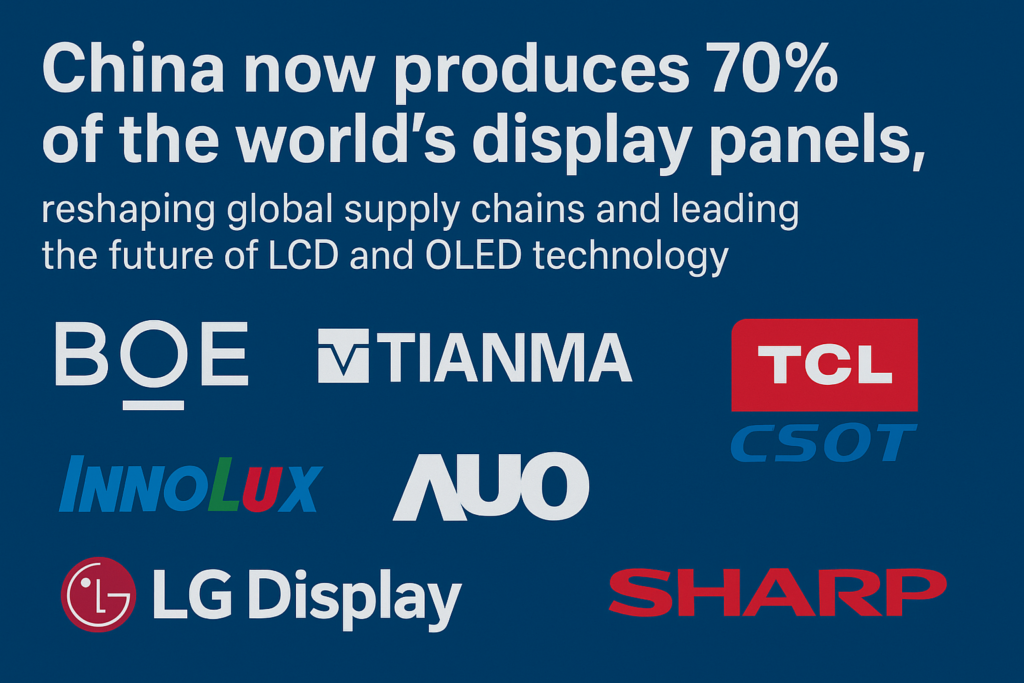
In 2025, Die globale Display-Landschaft wurde offiziell neu gestaltet. Zum ersten Mal in der Geschichte, China hält 70% der weltweiten Display-Panel-Produktion, laut dem neuesten Bericht von Omdia. Das bedeutet das sieben von zehn Anzeigetafeln Die weltweit verwendeten Geräte stammen aus chinesischen Fabriken – ein monumentaler Wandel, der Chinas Position als globales Display-Kraftpaket festigt.
Was bedeutet „70 % Marktanteil“ für globale Lieferketten??
Bei dieser Dominanz geht es nicht nur um Zahlen – sie stellt eine massive Neuausrichtung des globalen Einflusses auf Produktion und Technologie dar. Vom Smartphone bis zum Fernseher, Automobilbildschirme bis hin zu Gaming-Monitoren, Chinas Display-Industrie bildet heute das Rückgrat der weltweiten Lieferkette für visuelle Technologie.
Globale Display-Branchenlandschaft 2025
Chinas enormer Produktionsvorteil
Chinas Display-Produktion in 2024 eine Schätzung erreicht 1,3 Billionen Yen, überfangen die Hälfte des weltweiten Display-Marktes. Zwei Kerntechnologien – LCD (56.25%) Und OLED (14.51%) – dominieren die Produktion, während der Exportflächenanteil übersteigt 74% weltweit.
Dominanz des Smartphone-Displays
Laut TrendForce, Chinesische Panel-Hersteller gefangen genommen 68.8% des Smartphone-Display-Marktes in 2024, und das wird auch erwartet übertreffen 70% In 2025. BOE ist führend mit 610 Millionen Smartphone-Panel-Lieferungen dieses Jahr geplant.
Führung des TV-Panels und Versandstatistik
Im Segment der LCD-TV-Panels, Chinas Präsenz ist ebenso stark. Im ersten Quartal 2025, weltweite Lieferungen großformatiger TV-Panels erreicht 63 Millionen Einheiten, mit BOE-Beteiligung 25.9%, CSOT 20.2%, und HKC 14.4%.
Marktgröße und Exportstärke
Chinas riesiger Produktionsumfang ermöglicht es ihm, auch die Exporte zu dominieren – und zwar zu halten über 74% des weltweiten Display-Exportgebiets, Es bekräftigt seinen Einfluss auf die globale Versorgung.
Der Aufstieg chinesischer Displayhersteller
BOE – Der Branchenführer
Die BOE Technology Group ist zu einem Symbol für Chinas industrielle Stärke geworden. Im ersten Halbjahr 2025, BOE berichtete 101,28 Milliarden Yen Umsatz, ein 8.45% Anstieg gegenüber dem Vorjahr, Und ¥3,247 Milliarden Nettogewinn, hoch 42.15% aus dem Vorjahr.
Weltweiter Versandführer für alle Geräte
BOE behält seine weltweite Führungsposition in fünf wichtigen Anwendungsbereichen: Smartphones, Tabletten, Laptops, Monitore, und Fernseher – Sicherung der #1 Position weltweit in den gesamten Display-Sendungen.
Die von BOE angeführte OLED-Revolution
OLED ist der neue Wachstumsmotor für BOE. Im ersten Halbjahr 2025, OLED-Lieferungen überschritten 71 Millionen Einheiten, Anbau 7.5% Jahr für Jahr – und übertrifft damit den weltweiten Durchschnitt.
8.6-Generation AMOLED-Produktionslinie
Die 8,6G-AMOLED-Produktionslinie von BOE begann im Mai mit der frühen Ausrüstungsinstallation 2025 — vier Monate früher als geplant. Sobald es bis Ende betriebsbereit ist 2026, es wird BOE ermöglichen konkurrieren direkt mit Samsung und LG im High-End-OLED-Segment.
Das Wachstum von CSOT und Tianma
Auch TCL CSOT und Tianma Microelectronics sind auf dem Vormarsch. Es wird erwartet, dass CSOTs Smartphone-Panel-Lieferungen erreichen werden 192 Millionen Einheiten in 2025, während Tianma herumhält 188 Millionen Einheiten, unterstützt durch die steigende AMOLED-Nachfrage.
Die Dual-Track-Strategie: Koexistenz von LCD und OLED
Wie China LCD in einer neuen Ära am Leben hält
Während OLED die Zukunft ist, LCD bleibt die Grundlage. Chinesische Firmen, Nutzung von Skaleneffekten und technologischer Weiterentwicklung, dominieren die LCD-Produktion mit a 64% teilhaben 2024, erwartet zu erreichen 69% In 2025.
Vorsitzender der BOE, Chen Yanshun, festgestellt, dass LCD ein eingegeben hat „Wachstumsphase mit geringer Volatilität“, wird auch im nächsten Jahrzehnt eine wichtige Säule der Display-Technologie bleiben.
Der OLED-Sprint zur weltweiten Anerkennung
In der Zwischenzeit, Chinas OLED-Dynamik nimmt weiter zu. 2024 sah a 27% Zunahme in AMOLED-Smartphone-Panel-Lieferungen, mit einer projizierten 5.2% Wachstum In 2025. Boe, Visionox, und Tianma sind jetzt eingetreten Apples Lieferkette, Nachweis der weltweiten Validierung der chinesischen OLED-Technologie.
Von 2024, Chinesische OLED-Hersteller hielten 46% des Marktes, nähert sich Südkorea 54%. In flexiblem OLED, Chinas Anteil bereits übertroffen 57%, Dies markiert einen historischen Wandel in der Branchenführerschaft.
Neue Anwendungen treiben neue Wachstumskurven voran
Automobildisplays: Chinas nächste Grenze
Mit Smartphones, die sich der Sättigung nähern, Chinesische Panelhersteller streben neue Wachstumskurven an – und Automobildisplays stehen ganz oben auf der Liste. In 2024, Die weltweiten Lieferungen von Automobildisplays sind betroffen 232 Millionen Einheiten, hoch 6.3% Jahr für Jahr.
BOE ist in diesem Segment führend mit 17.6% Marktanteil, Bereitstellung von Marken wie Zeekr, Changan, Chery, und Dongfeng. Es war auch Mitentwickler von a 30-Zoll-Dual-Screen für XPengs G9-Modell und a 10.25-Zoll-Instrumentendisplay für den G6.
Tianmas Automobilexpansion
Tianma belegt den zweiten Platz mit 36.9 Millionen Sendungen, hoch 25% Jahr für Jahr, liefern BYD, BMW, Ford, und Honda über mehrere Displaygrößen hinweg.
Gaming- und E-Sport-Displays: Das nächste Schlachtfeld
E-Sport-Displays sind ein weiterer boomender Bereich. 2024 gesehen 32.4 Millionen LCD-Gaming-Monitore weltweit versendet, hoch 12% aus dem Jahr davor. Der Erfolg von Schwarzer Mythos: Wukong spät 2024 Chinas Inlandsnachfrage wurde weiter angekurbelt.
Und COMPUTEX 2025, ASUS und MSI vorgestellt 27-Zoll 500Hz QD-OLED-Monitore, signalisiert einen neuen Hochleistungsstandard. Es wird erwartet, dass die Nachfrage nach OLED-Displays von ASUS steigen wird verdoppeln bis über 500,000 Einheiten in 2025.
Die bevorstehenden Herausforderungen
Engpässe bei OLED-Materialien und -Geräten
Trotz des Erfolgs, Herausforderungen bleiben bestehen – insbesondere bei OLEDs Kernmaterialien und Produktionsausrüstung. China ist immer noch stark auf Importe angewiesen organische lichtemittierende Materialien Und feine Metallmasken (FMM), dominiert von Japanern Idemitsu Kosan und die der USA UDC.
Schwächen in der Upstream-Downstream-Zusammenarbeit
Laut CINNO Research, Nur inländische Lieferanten decken ab 39% von OLED-Ausrüstungsprozessen, mit Schlüsselbereichen wie Verdampfungs- und Belichtungsgeräte weniger als haben 20% Lokalisierung. Japans Tock, Kanon, Und Nikon dominieren immer noch diese kritischen Schritte.
Dies führt zu langsamen und manchmal langwierigen Einführungszyklen zwei Jahre von der Verifizierung bis zur Massenproduktion – was die Upstream-Innovation und die Rendite von R behindert&D.
Das Rentabilitätsdilemma
Während der Marktanteil wächst, Die Rentabilität bleibt gering. Die OLED-Herstellung erfordert hohes R&D, lange Zyklen, und hohe Kapitalinvestitionen, was zu einem anhaltenden finanziellen Druck führt.
Visionox, Chinas zweitgrößter AMOLED-Hersteller, veranschaulicht dieses Paradoxon – schnelle Marktexpansion, aber anhaltende Verluste. Aus 2021 Zu 2024, es wurde aufgezeichnet Vier Jahre in Folge mit Nettoverlusten, insgesamt fast 10 Milliarden Yen.
Der Weg zur globalen Führung
Vor zehn Jahren, Chinas Display-Industrie war immer noch aufgeholt. Heute, es ist den globalen Takt vorzugeben. Mit BOE, TCL CSOT, und Tianma unter den zu den fünf weltweit führenden OLED-Anbietern, „Made in China“ hat sich daraus entwickelt Anhänger zum Innovator.
Die ersten Geräteeinführungen für 8,6G-OLED-Linien und der Aufstieg der glasbasierten Kapselung zeigen, wie schnell sich das Ökosystem weiterentwickelt. Chinas Display-Industrie konkurriert nicht nur – sie ist führend.
Abschluss: Der Beginn einer neuen Ära
Durch das Einfangen 70% der weltweiten Displayproduktion, China hat die Spielregeln neu geschrieben. Von LCD bis OLED, vom Smartphone bis zum Auto, seine Technologie, Skala, und Innovation bestimmen nun, wie die Welt ihre digitale Zukunft sieht.
So wie neue Grenzen flexible Displays, microLED, und Automobilpaneele auftauchen, China ist gut aufgestellt, um weiterhin führend zu bleiben – nicht nur in der Produktion, sondern bei der Definition des nächsten Kapitels der globalen Display-Innovation.
FAQs
1. Warum produziert China? 70% der Anzeigetafeln der Welt?
Wegen seiner unübertroffenen Größe, starke staatliche Unterstützung, fortschrittliche Fertigungsmöglichkeiten, und kontinuierliche Investition in R&D- und OLED-Technologie.
2. Wer sind Chinas Top-Displayhersteller? 2025?
Zu den führenden Unternehmen gehören BOE Technology Group, TCL CSOT, Tianma Mikroelektronik, Visionox, Und HKC.
3. Welche Technologien treiben Chinas Display-Industrie an??
In erster Linie LCD Und OLED, mit schnellem Wachstum in Amoliert, Mini-LED, Und flexibles OLED für Smartphones und Automotive-Anwendungen.
4. Vor welchen Herausforderungen steht China bei der OLED-Produktion??
Abhängigkeit von importierten Materialien und Geräten, niedrige Lokalisierungsraten, und ein langsamer Innovationseinführungszyklus in der gesamten Lieferkette.
5. Wie wird sich der globale Display-Markt danach weiterentwickeln? 2025?
Erwarten Sie schneller OLED-Einführung, microLED-Durchbrüche, und China festigt seine Führungsposition, während sich der globale Wettbewerb auf die Differenzierung im High-End-Bereich konzentriert.