Introduktion: Varför Dynamic AMOLED 2X betyder något
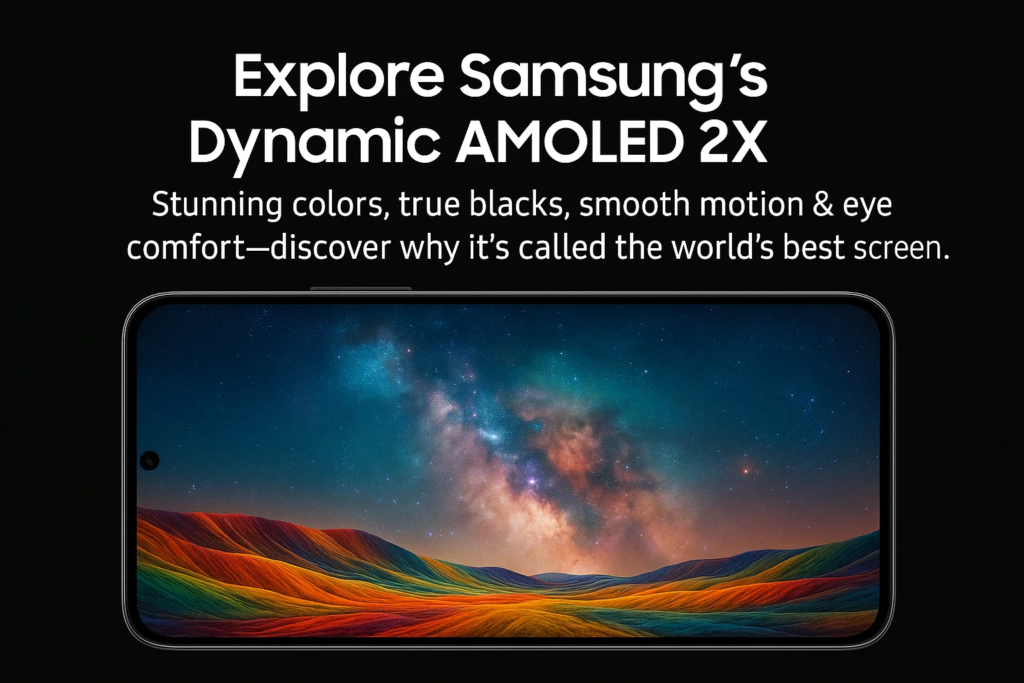
När Samsung presenterade Dynamic AMOLED 2X, recensenter och proffs var snabba med att berömma den med beröm. DisplayMate, en av de mest pålitliga myndigheterna inom displaytestning, tilldelade den en A+ betyg, markerar den som en av de bästa skärmarna som någonsin byggts för smartphones. Men här är den större frågan - översätts dessa siffror och betyg faktiskt till en bättre daglig upplevelse? Låt oss ta en närmare titt.
Kärnfunktion ett – färg och kontrast
100% DCI-P3 brett färgomfång förklaras
Om du någonsin har undrat varför färger dyker upp på Samsungs flaggskeppsskärmar, hemligheten ligger i DCI-P3 färgomfång. Beläggning 100% av detta filmiska spektrum betyder att du ser färger som regissören tänkt sig – rikare röda, djupare greener, och mer verklighetstrogna toner.
Skillnaden mellan DCI-P3 och sRGB
De flesta äldre skärmar förlitar sig på sRGB, vilket är bra för webbinnehåll men begränsat i livlighet. DCI-P3 erbjuder ca 25% mer färgrymd, få solnedgångar att se eldiga ut och foton ser närmare verkligheten.
Ljuskontroll på pixelnivå och Million-to-One Contrast Ratio
Till skillnad från LCD-skärmar som är beroende av bakgrundsbelysning, AMOLED-paneler ger varje pixel oberoende kontroll. Det är så Samsung uppnår kontrastförhållanden överstiger 1,000,000:1– perfekt svarta tillsammans med bländande vita. Tittar på en sci-fi-film med rymdscener? Du kommer att se äkta mörker istället för en urtvättad grå färg.
Kärnfunktion två – Ljusstyrka och HDR
Högsta ljusstyrka (HDR) vs global ljusstyrka (SDR)
Ljusstyrka handlar inte bara om "hur högt den går". Högsta ljusstyrka spelar in för höjdpunkter i HDR-innehåll – tänk på explosioner eller solljusreflektioner. Global ljusstyrka (SDR) handlar om hur ljus hela skärmen kan hålla sig under daglig användning. Samsung balanserar båda utan ansträngning.
Verkliga scenarier för hantering av ljusstyrka
Föreställ dig att du kollar din telefon på en solig strand – Dynamic AMOLED 2X kan skjuta upp ljusstyrkan tillräckligt hög för att vara läsbar även under starkt ljus. Inomhus, den ringer tillbaka smart för att undvika ansträngda ögon och spara energi.
HDR10+ adaptiv teknik i aktion
HDR10+ Adaptive finjusterar ljusstyrka och tonmappning beroende på din miljö. Tittar på en mörk thriller i ditt sovrum? Skärmen anpassar sig för att hålla skuggdetaljer skarpa utan bländande höjdpunkter.
Kärnfunktion tre – Jämnhet
Adaptiv uppdateringsfrekvens 1-120Hz med LTPO
Samsung använder Ltpo (Polykristallinoxid med låg temperatur) teknologi för att låta skärmen dynamiskt växla mellan 1Hz och 120Hz uppdateringsfrekvenser. Att rulla känns smörigt i 120Hz, medan statiskt innehåll som att läsa en PDF kan sjunka till 1 Hz för att spara ström.
Effekteffektivitet genom dynamisk uppdatering
Till skillnad från äldre skärmar med fast uppdatering, LTPO:s adaptiva mekanism skapar balansen mellan smidighet och batterihållbarhet. Du får smidighet när du behöver det, effektivitet när du inte gör det.
Trycksamplingsfrekvens och spellyhördhet
Spelare älskar snabb touch-respons. Med höga beröringssamplingsfrekvenser, varje tryckning, hårt slag, eller snärt registreras omedelbart. Den mikrosekundsfördelen kan göra skillnaden mellan seger och nederlag i tävlingsspel.
Visual Enhancement Suite
Blåljusfiltrering och ögonkomfortläge
Stirrar på telefonen sent på kvällen? Samsungs Eye Comfort Shield filtrerar skadligt blått ljus utan att förvränga färger. Till skillnad från råa gula filter, den behåller naturliga toner samtidigt som den skyddar dina ögon.
AI-baserade visuella klarhetsförbättringar
Använder AI-algoritmer, skärmen kan uppskala lågupplösta videor och skärpa bilder. Se det som att ge äldre innehåll ett ansiktslyft, få YouTube-klipp eller inlägg på sociala medier att se smidigare och tydligare ut.
Balanserar ögonsäkerhet med visuell kvalitet
Utmaningen med blåljusfilter är ofta färgförvrängning. Samsungs algoritmer gör att vita ser vita ut, inte gulaktig, en sällsynt balans mellan komfort och trohet.
Praktisk testning och erfarenhet från verkliga världen
Instrumentbaserade laboratorietester
Labbmätningar visar att Dynamic AMOLED 2X uppnår rekordstora ljusstyrkanivåer, branschledande färgnoggrannhet, och nästan oändlig kontrast. Siffror ljuger inte – det är objektivt sett bland de bästa.
Subjektiva användarintryck
Specs åt sidan, de flesta användare beskriver upplevelsen som enkelt uppslukande. Filmer ser filmiska ut, spel känns flytande, och även att läsa vanlig text blir lättare för ögonen.
Jämförelser mot konkurrerande bildskärmar
Apples Super Retina XDR och Googles OLED-paneler är utmärkta, men Samsungs fördel ligger i egen displaytillverkning. De är ofta konkurrenters leverantör, ger dem ett obestridligt försprång.
Varför Dynamic AMOLED 2X sticker ut
Kombinationen av hårdvaru- och mjukvarusynergi
Det är inte bara hårdvaruspecifikationer – det är hur Samsung integrerar mjukvarufunktioner som HDR10+ Adaptive, Vision Booster, och Eye Comfort Shield för att höja hela upplevelsen.
Samsungs R&D Edge in Display Innovation
Samsung hänger inte bara med i konkurrenterna – de sätter farten. Från att uppfinna AMOLED till att förfina LTPO, deras R&D ser till att flaggskeppsdisplayer förblir ett steg före alla andra.
Slutsats: En skärm byggd för framtiden
De Dynamic AMOLED 2X är inte bara ett marknadsföringsnamn – det är kulmen på år av forskning, testning, och förfining. Genom att tänja på gränserna färgnoggrannhet, ljusstyrka, kontrast, jämnhet, och ögonkomfort, Samsung har byggt en skärm som inte bara är topprankad utan genuint transformerande i verklig användning. Oavsett om du spelar, binge-tittande, eller helt enkelt bläddra igenom e-postmeddelanden, det här är så nära det kan komma den perfekta skärmupplevelsen idag.
Vanliga frågor
1. Vad skiljer Dynamic AMOLED 2X från OLED?
Det är en avancerad version av OLED med högre ljusstyrka, bättre färgnoggrannhet, adaptiva uppdateringsfrekvenser, och HDR10+-stöd.
2. Är Dynamic AMOLED 2X bättre för spel?
Ja. Med 120Hz uppdateringsfrekvens och hög beröringssampling, den levererar ultrasmidig och lyhörd gameplay.
3. Påverkar högre ljusstyrka batteritiden?
Inte nämnvärt. Tack vare LTPO adaptiv uppdatering och smart energihantering, det balanserar prestanda och effektivitet.
4. Hur jämför Samsung med Apples skärmar?
Båda är utmärkta, men Samsung levererar ofta OLED-paneler till Apple – så på många sätt, Samsung ligger i framkant när det gäller innovation.
5. Kommer Dynamic AMOLED 2X att utvecklas ytterligare i framtida smartphones?
Absolut. Räkna med förfining av ljusstyrkan, uppdateringshastighetseffektivitet, och AI-drivna visuella förbättringar i kommande modeller.