📱 Wprowadzenie do opakowań do wyświetlaczy mobilnych
Co to jest układ scalony sterownika ekranu (KUTAS)?
Jeśli kiedykolwiek zastanawiałeś się, co tak naprawdę kontroluje piksele na ekranie Twojego telefonu, odpowiedź leży w czymś zwanym Układ scalony sterownika wyświetlacza (KUTAS). Ten niewielki układ półprzewodnikowy działa jak mózg wyświetlacza, wysyłanie sygnałów elektrycznych do każdego piksela, czyli obrazów, zabarwienie, i animacje wyświetlają się poprawnie. Bez tego, Twój ekran byłby w zasadzie martwym kawałkiem szkła.
We współczesnych smartfonach, DDIC odgrywa kluczową rolę w tłumaczeniu danych z procesora na widoczną treść. Kontroluje jasność, częstotliwość odświeżania, Dokładność koloru, a nawet szybkość reakcji na dotyk. Według źródeł branżowych, wszystkie technologie wyświetlania — czy to LCD, czy OLED — w dużym stopniu zależą od tego, jak skutecznie ten chip jest zintegrowany z panelem . Umiejscowienie i opakowanie tego chipa bezpośrednio wpływa na wydajność, grubość, i ogólny projekt urządzenia.
Tutaj sprawy stają się interesujące: sposób, w jaki ten chip jest zamontowany na wyświetlaczu, określa, czy ekran będzie używany ZĄB, COF, lub technologię COP. I tak, ten mały szczegół techniczny może radykalnie zmienić wygląd i sposób trzymania smartfona w dłoni.
Dlaczego technologia pakowania ma znaczenie w smartfonach
Można by pomyśleć, że jakość ekranu zależy tylko od rozdzielczości i jasności — ale to tylko powierzchnia. Za kulisami, technologia pakowania określa takie rzeczy, jak rozmiar ramki, trwałość, elastyczność, a nawet kosztować.
Na przykład, dlaczego niektóre telefony mają grube dolne krawędzie, podczas gdy inne wyglądają prawie „bez obramowania”? Odpowiedź często leży w tym, czy wyświetlacz wykorzystuje COG, COF, lub COP. Technologie te decydują o tym, gdzie znajduje się chip i ile miejsca zajmuje.
W miarę ewolucji smartfonów w kierunku projektów pełnoekranowych, producenci potrzebowali sposobów na zmniejszenie ramek i zwiększenie proporcji ekranu do obudowy. Aby rozwiązać ten problem, pojawiły się elastyczne metody pakowania, takie jak COF i COP, umożliwiając wyświetlaczom zginanie i zawijanie wokół krawędzi . Tymczasem, tradycyjny COG pozostał odpowiedni dla opłacalnych ekranów LCD.
Więc, wybór pomiędzy tymi technologiami to nie tylko decyzja techniczna – to filozofia projektowania.
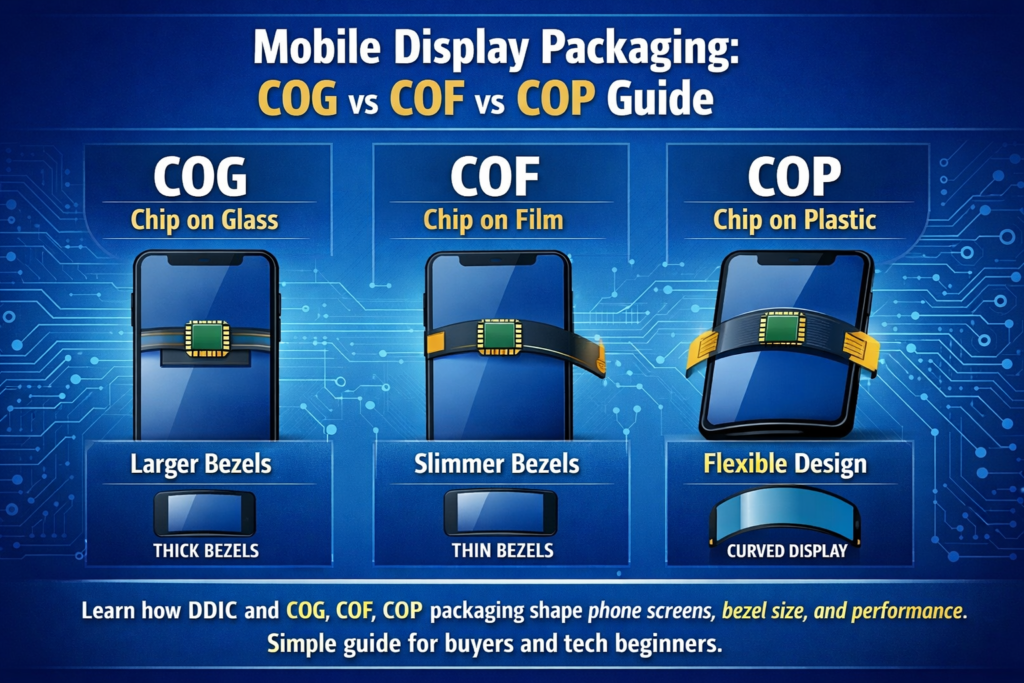
🔍 Przegląd COG, COF, i COP
Definicja COG (Chip na szkle)
COG oznacza Chip na szkle, i jest to najbardziej tradycyjna i powszechnie stosowana metoda pakowania ekspozycyjnego. W tej strukturze, DDIC jest bezpośrednio przyklejony do szklanego podłoża panelu LCD. To bezpośrednie połączenie zmniejsza złożoność i koszty produkcji.
Wszystko bowiem osadzone jest na sztywnej, szklanej podstawie, Wyświetlacze COG są bardzo stabilne i niezawodne. Są powszechnie stosowane w ekranach LCD, szczególnie w budżetowych smartfonach i urządzeniach przemysłowych. Jednakże, Wadą jest to, że szkło nie może się wygiąć, co ogranicza elastyczność projektowania.
Definicja COF (Chip na filmie)
COF, Lub Chip na filmie, stanowi znaczący krok naprzód. Zamiast mocowania chipa bezpośrednio do szkła, DDIC jest zamontowany na elastycznej folii (zwykle FPC na bazie poliimidu). Film ten jest następnie podłączany do wyświetlacza.
Ta elastyczność pozwala na złożenie folii za ekranem, redukując widoczne ramki i umożliwiając bardziej nowoczesne projekty. W rezultacie, COF jest szeroko stosowany w wysokiej klasy smartfonach, a nawet w niektórych wyświetlaczach OLED.
Definicja COP (Chip na plastiku)
COP oznacza Chip na plastiku, i jest to obecnie najbardziej zaawansowana technologia pakowania. W tej konfiguracji, DDIC jest bezpośrednio zintegrowany z elastycznym podłożem z tworzywa sztucznego.
W odróżnieniu od COFA, który nadal wykorzystuje folię pośrednią, COP eliminuje dodatkowe warstwy, pozwalając na jeszcze większą elastyczność. Dzięki temu idealnie nadaje się do zakrzywionych wyświetlaczy, składane telefony, i ultracienkie ramki. W rzeczywistości, COP jest często uważany za rozwiązanie premium dla nowoczesnych flagowych urządzeń.
🧩 Głębokie nurkowanie w strukturze COG
Jak COG działa w panelach LCD
W strukturze COG, układ scalony sterownika jest przyklejany bezpośrednio do szklanego podłoża przy użyciu technik takich jak anizotropowa folia przewodząca (ACF). Tworzy to kompaktowe i wydajne połączenie między chipem a wyświetlaczem.
Ponieważ nie ma potrzeby stosowania dodatkowych elastycznych obwodów, konstrukcja jest stosunkowo prosta. Ta prostota przekłada się na wysoką wydajność produkcji i niższe koszty produkcji. Dlatego COG jest nadal szeroko stosowany w smartfonach klasy podstawowej i modułach LCD.
Jednakże, istnieje kompromis. Ponieważ chip siedzi na szkle, zajmuje miejsce na krawędzi wyświetlacza – zwykle na dole. Skutkuje to grubszą ramką „podbródkową”., co jest mniej pożądane w dzisiejszych projektach pełnoekranowych.
Zalety i ograniczenia COG
COG ma kilka mocnych stron. Jest to opłacalne, niezawodny, i łatwe do masowej produkcji. Sztywna konstrukcja sprawia, że jest również mniej podatny na uszkodzenia mechaniczne w porównaniu do rozwiązań elastycznych.
Ale ograniczenia są trudne do zignorowania. Brak możliwości zgięcia lub złożenia podłoża oznacza, że projektanci muszą pozostawić dodatkową przestrzeń na chip. Prowadzi to do szerszych ramek i niższych proporcji ekranu do obudowy .
Tak więc COG jest idealny do urządzeń budżetowych, stara się sprostać wymaganiom estetycznym nowoczesnych smartfonów.
🔄 Głębokie nurkowanie w strukturze COF
Jak COF poprawia konstrukcję ekranu
COF zmienia grę, wprowadzając elastyczność. Montując DDIC na elastycznej folii, producenci mogą złożyć obwód za panelem wyświetlacza. Ta sprytna konstrukcja ukrywa chip i zmniejsza dolną ramkę.
Właśnie dlatego wiele nowoczesnych smartfonów ma niemal symetryczne ramki. Możliwość zmiany położenia chipa pozwala na bardziej efektywne wykorzystanie przestrzeni i czystszy wygląd.
Zalety i kompromisy COF
COF zapewnia silną równowagę pomiędzy wydajnością i kosztami. Umożliwia cieńsze projekty, węższe ramki, i lepszą estetykę. Jest także kompatybilny zarówno z panelami LCD, jak i OLED, dzięki czemu jest wszechstronny.
Jednakże, ta elastyczność ma swoją cenę. Proces produkcyjny jest bardziej złożony, a materiały są droższe. Dodatkowo, elastyczna folia może być bardziej podatna na naprężenia i uszkodzenia podczas montażu .
Nadal, dla większości smartfonów ze średniej i wyższej półki, COF zapewnia idealny kompromis.
🚀 Głębokie zanurzenie się w strukturę COP
Dlaczego COP umożliwia wyświetlanie pełnoekranowe
COP przenosi elastyczność na wyższy poziom. Poprzez integrację chipa bezpośrednio z plastikowym podłożem, eliminuje potrzebę stosowania warstw pośrednich. Dzięki temu wyświetlacz może się swobodniej wyginać, nawet owijając się wokół krawędzi urządzenia.
Na tej technologii opiera się wiele „bezramkowych” i zakrzywionych smartfonów. Pozwala producentom przesuwać granice designu i osiągać niezwykle wysokie proporcje ekranu do obudowy.
Zalety i wyzwania COP
COP zapewnia najwyższą wydajność. Oferuje ultracienkie ramki, doskonała elastyczność, i doskonałą trwałość przy naprężeniach zginających. Idealnie nadaje się również do zaawansowanych zastosowań, takich jak składane telefony.
Minusem? Koszt. COP jest najdroższą z trzech technologii i wymaga zaawansowanych procesów produkcyjnych. Zwykle jest zarezerwowany dla flagowych urządzeń i wysokiej klasy wyświetlaczy OLED .
📊 Kluczowe różnice między COG, COF, i COP
Strukturalna tabela porównawcza
| Funkcja | ZĄB | COF | POLICJANT |
|---|---|---|---|
| Pozycja chipa | Na szkle | Na elastycznej folii | Na podłożu z tworzywa sztucznego |
| Elastyczność | Nic | Umiarkowany | Wysoki |
| Rozmiar ramki | Szeroki | Wąski | Ultracienki |
| Koszt | Niski | Średni | Wysoki |
| Aplikacja | LCD (budżet) | LCD & OLED | Wysokiej jakości wyświetlacz OLED |
Różnice w wydajności i kosztach
Z punktu widzenia wydajności, COP jest liderem, następnie COF, następnie COG. Ale jeśli chodzi o koszty, kolejność jest odwrotna. Tworzy to klasyczny kompromis między ceną a wydajnością.
COG jest idealny ze względu na przystępną cenę, COF równoważy koszty i jakość, i COP zapewniają najwyższą wydajność dla urządzeń klasy premium.
📈 Zastosowanie w nowoczesnych smartfonach (2026 Trendy)
Scenariusze użycia wyświetlaczy LCD i OLED
W 2026, rynek wyświetlaczy jest wyraźnie podzielony. Panele LCD nadal w dużym stopniu opierają się na COG i COF, podczas gdy panele OLED coraz częściej wykorzystują współczynniki COF i COP ze względu na elastyczność i zalety projektowe.
COF pozostaje dominujący w wyświetlaczach o wysokiej rozdzielczości, oczekuje się, że rynek będzie stale rósł ze względu na popyt na ultracienkie urządzenia i wąskie ramki .
Trendy rynkowe i wskaźniki adopcji
Przejście na urządzenia bezramkowe i składane przyspiesza wdrażanie technologii COP. Tymczasem, COG w dalszym ciągu obsługuje rynki wrażliwe na koszty.
Pomyśl o tym w ten sposób: COG to „klasa ekonomiczna”.,COF to „klasa biznesowa”.,”, a COP to „pierwsza klasa” w świecie technologii wyświetlaczy.
🛠️ Jak wybrać odpowiednią technologię wyświetlania
Dla Producentów
Producenci muszą zrównoważyć koszty, wydajność, i cele projektowe. Jeśli przystępność cenowa jest kluczowa, COG to najlepszy wybór. Dla estetyki premium, Konieczne jest COF lub COP.
Dla kupujących i branży naprawczej
Jeśli kupujesz ekrany zamienne, Zrozumienie tych technologii pomoże Ci uniknąć przepłacania lub gorszych wyników. COF często oferuje najlepszą wartość, podczas gdy COP zapewnia jakość niemal oryginalną.
🔮 Przyszłe trendy w opakowaniach ekspozycyjnych
Elastyczne wyświetlacze i składane
Przyszłość należy do elastycznych wyświetlaczy. Technologia COP umożliwia już tworzenie składanych smartfonów i zwijanych ekranów.
Innowacje nowej generacji wykraczające poza COP
Naukowcy badają jeszcze bardziej zaawansowane metody pakowania, celując w cieńszy, bardziej wydajny, i trwalsze wyświetlacze.
🏁 Podsumowanie
ZĄB, COF, i COP mogą brzmieć jak żargon techniczny, ale odgrywają one ogromną rolę w kształtowaniu wrażeń ze smartfona. Od rozmiaru ramki po trwałość, te metody pakowania definiują wygląd i działanie nowoczesnych wyświetlaczy.
Zrozumienie różnic między nimi pomoże Ci podejmować mądrzejsze decyzje – niezależnie od tego, czy projektujesz produkty, pozyskiwanie części, lub po prostu wybrać następny telefon.
❓ Często zadawane pytania
1. Jaka jest główna różnica między COG a COF?
COG montuje chip bezpośrednio na szkle, podczas gdy COF wykorzystuje elastyczną folię, umożliwiając węższe ramki i większą elastyczność projektowania.
2. Dlaczego COP jest uważany za najlepszą technologię?
Ponieważ zapewnia maksymalną elastyczność, ultracienkie ramki, i doskonała wydajność, zwłaszcza w przypadku wyświetlaczy OLED.
3. Czy COG jest nadal używany? 2026?
Tak, głównie w budżetowych urządzeniach LCD ze względu na niski koszt i wysoką niezawodność.
4. Co jest lepsze do naprawy telefonu: COF lub COP?
COF to zazwyczaj najlepsza równowaga pomiędzy ceną i wydajnością, podczas gdy COP jest bliższy oryginalnej jakości.
5. Czy opakowanie wpływa na jakość ekranu??
Tak, ma to wpływ na rozmiar ramki, trwałość, elastyczność, a nawet wydajność dotykową.