Wprowadzenie do kontroli jakości wyświetlaczy LCD
W dzisiejszej branży smartfonów, jakość ekranu LCD może określić, czy klient jest zadowolony, czy rozczarowany urządzeniem. Wyświetlacz to jeden z najważniejszych elementów każdego telefonu komórkowego, ponieważ bezpośrednio wpływa na wrażenia wizualne i interakcję użytkownika z urządzeniem.. Czy klient ogląda filmy, przeglądanie mediów społecznościowych, granie w gry, lub prowadzenia zadań służbowych, głównym punktem zaangażowania pozostaje ekran. W rezultacie, producenci inwestują znaczne zasoby w procedury kontroli jakości, aby zapewnić niezawodne działanie każdego ekranu LCD przed wprowadzeniem go na rynek.
Branża wyświetlaczy LCD do telefonów komórkowych staje się coraz bardziej konkurencyjna, z producentami dostarczającymi wyświetlacze markom, warsztaty naprawcze, hurtownicy, remontowcy, i dystrybutorów na całym świecie. Pojedynczy uszkodzony ekran może skutkować roszczeniami gwarancyjnymi, skargi klientów, powraca, i szkody dla reputacji firmy. Dlatego właśnie przeprowadzane są kompleksowe testy w całym procesie produkcyjnym i ponownie przed wysyłką międzynarodową.
Kontrola jakości nie polega wyłącznie na znajdowaniu defektów. Chodzi o zapobieganie problemom zanim one wystąpią. Nowoczesne fabryki wdrażają wiele punktów kontrolnych, zautomatyzowane systemy kontroli, i testy niezawodności, aby upewnić się, że każdy ekran LCD spełnia surowe standardy. Od kontroli surowców po końcową weryfikację opakowania, każdy krok przyczynia się do dostarczenia produktu, który działa konsekwentnie w rzeczywistych warunkach.
Zrozumienie tych procedur testowych pomaga kupującym, hurtownicy, firmy remontowe, i producenci smartfonów doceniają wysiłek włożony w produkcję wysokiej jakości ekranów LCD na rynki światowe.
Dlaczego testowanie wyświetlaczy LCD ma znaczenie
Wyobraź sobie, że kupujesz ekran zastępczy do smartfona tylko po to, aby odkryć martwe piksele, słaba wrażliwość na dotyk, lub zniekształcenie kolorów po instalacji. Takie problemy powodują frustrację zarówno u klientów, jak i techników zajmujących się naprawami. Testowanie LCD ma na celu zapobieganie takim sytuacjom.
Odpowiednio przetestowany ekran zapewnia wierne kolory, stabilna jasność, responsywna funkcja dotykowa, i długoterminową trwałość. Testowanie pomaga również producentom wcześnie zidentyfikować problemy z procesem, zmniejszenie ilości odpadów i kosztów produkcji. W środowiskach produkcyjnych na dużą skalę, w których codziennie produkuje się tysiące ekranów, nawet niewielki odsetek defektów może prowadzić do znacznych strat finansowych.
Testowanie chroni także reputację marki. Firmy, które konsekwentnie dostarczają niezawodne ekrany LCD, zdobywają zaufanie wśród hurtowników, dystrybutorzy, i centra naprawcze. Zaufanie to często przekłada się na długotrwałe relacje biznesowe i powtarzalne zamówienia.
Na rynki eksportowe, testowanie staje się jeszcze ważniejsze, ponieważ produkty muszą wytrzymać dłuższe okresy transportu, zmieniające się warunki środowiskowe, i rygorystyczne oczekiwania jakościowe ze strony międzynarodowych nabywców. Każdy ekran, który przejdzie kontrolę, oznacza zaangażowanie w jakość, konsystencja, i zadowolenie klienta.
Zrozumienie produkcji ekranów LCD do telefonów komórkowych
Przed omówieniem procedur testowych, ważne jest zrozumienie złożoności produkcji ekranów LCD smartfonów. Nowoczesne wyświetlacze zawierają wiele precyzyjnych komponentów współpracujących ze sobą w celu tworzenia obrazów i reagowania na dotyk.
Typowy zespół LCD telefonu komórkowego może zawierać panel LCD, dotykowy digitalizator, moduł podświetlenia, warstwy polaryzacyjne, kable elastyczne, układy scalone, złącza, i szkło ochronne. Każdy komponent musi doskonale działać i płynnie integrować się z pozostałymi.
Produkcja takich zespołów wymaga precyzyjnego sprzętu, kontrolowane środowiska, i ścisłe zarządzanie procesami. Nawet mikroskopijne zanieczyszczenia mogą mieć wpływ na jakość wyświetlacza. Cząsteczki kurzu, zadrapania, wady klejenia, a błędy w wyrównaniu mogą prowadzić do awarii produktu.
Typowe wady monitorowane przez producentów obejmują:
| Typ wady | Opis |
|---|---|
| Martwe piksele | Piksele, które pozostają trwale wyłączone |
| Jasne kropki | Piksele podświetlone na stałe |
| Efekt Mury | Nierówna jasność lub rozkład kolorów |
| Wyciek światła | Podświetlenie uciekające z krawędzi ekranu |
| Kliknij Niepowodzenie | Niereagujące obszary dotykowe |
| Odchylenie koloru | Niedokładne odwzorowanie kolorów |
| Zadrapania | Uszkodzenia powierzchni wpływające na wygląd |
| Problemy ze złączem | Wadliwe połączenia kabla elastycznego |
Zapobieganie tym problemom wymaga kompleksowej strategii testowania w trakcie całej produkcji.
Kontrola jakości przed produkcją
Kontrola jakości rozpoczyna się na długo zanim ekran LCD dotrze na linię montażową. Kontrola surowców jest jednym z najważniejszych etapów, ponieważ wprowadzone wcześniej wady mogą się mnożyć w trakcie procesu produkcyjnego.
Producenci dokładnie sprawdzają przychodzące panele LCD, czujniki dotykowe, Układy scalone, złącza, kleje, i elementy szklane. Dostawcy są oceniani według rygorystycznych standardów jakości, a każda partia przed przyjęciem przechodzi weryfikację. Proces ten pomaga zapewnić spójność pomiędzy seriami produkcyjnymi.
Testowanie kompatybilności komponentów to kolejny krytyczny krok. Inżynierowie sprawdzają, czy sterowniki wyświetlacza, kontrolery dotykowe, i kable elastyczne komunikują się prawidłowo. Przykładowe zespoły są często budowane i testowane przed rozpoczęciem masowej produkcji. Wszelkie niezgodności wykryte na tym etapie można skorygować przed wyprodukowaniem tysięcy sztuk.
Fabryki stosują również statystyczne metody kontroli jakości w celu monitorowania wydajności dostawców. Śledząc liczbę defektów i spójność materiału w czasie, producenci mogą identyfikować trendy i ulepszać decyzje zakupowe. To proaktywne podejście zmniejsza prawdopodobieństwo zakłóceń w produkcji i poprawia jakość produktu końcowego.
Proces testowania fabrycznego ekranu LCD
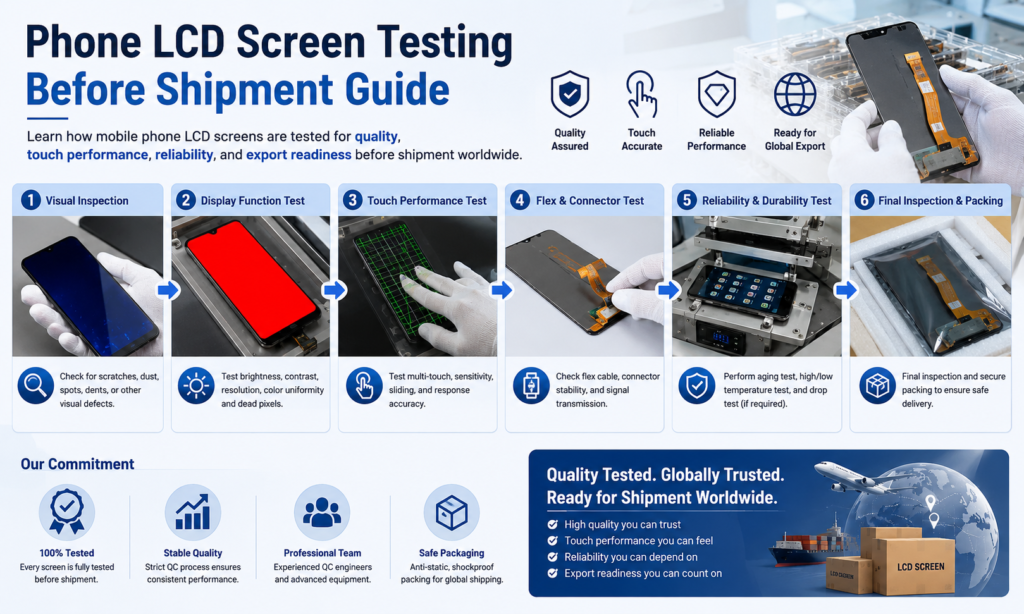
Kontrola wyglądu
Kontrola wyglądu jest zazwyczaj pierwszym ważnym punktem kontroli jakości po montażu. Przeszkoleni inspektorzy i zautomatyzowane systemy kontroli optycznej sprawdzają każdy ekran w kontrolowanych warunkach oświetleniowych.
Inspektorzy szukają zadrapań, zanieczyszczenie pyłem, bąbelki, spękanie, wgniecenia, odciski palców, i niedoskonałości kosmetyczne. Nawet drobne wady mogą mieć wpływ na postrzeganie przez klienta, szczególnie na rynkach smartfonów premium, gdzie oczekiwania dotyczące jakości wizualnej są niezwykle wysokie.
Fabryki często definiują akceptowalne standardy wad zgodnie z wytycznymi branżowymi. Kryteria kontroli określają maksymalne dopuszczalne rozmiary defektów, lokalizacje, i ilości. Produkty niespełniające standardów kosmetycznych są odrzucane lub przerabiane przed przejściem do kolejnego etapu.
Zaawansowani producenci w coraz większym stopniu polegają na systemach optycznych opartych na sztucznej inteligencji, które są w stanie wykrywać mikroskopijne defekty z większą powtarzalnością niż w przypadku samych inspektorów. Systemy te poprawiają dokładność, jednocześnie skracając czas kontroli.
Testy funkcjonalne
Po spełnieniu wymagań dotyczących wyglądu, ekran LCD przechodzi kompleksowe testy funkcjonalne. Proces ten sprawdza, czy wszystkie funkcje elektroniczne i mechaniczne działają prawidłowo.
Technicy podłączają ekrany do specjalistycznego sprzętu testującego, który symuluje działanie smartfona. System sprawdza zużycie energii, transmisja sygnału, aktywacja wyświetlacza, czułość na dotyk, i komunikację pomiędzy układami scalonymi.
Szczególnie ważną rolę odgrywa weryfikacja czułości dotyku. Sprzęt testujący ocenia wydajność wielodotyku, rozpoznawanie gestów, szybkość reakcji, i dokładność dotyku na całej powierzchni wyświetlacza. Martwe strefy lub niedokładne reakcje na dotyk mogą znacząco wpłynąć na wygodę użytkownika i należy je zidentyfikować przed wysyłką.
Testy funkcjonalne zapewniają, że każdy ekran działa zgodnie ze specyfikacjami projektowymi i działa niezawodnie po zainstalowaniu w smartfonie.
Testowanie wydajności wyświetlacza
Jakość wyświetlacza stanowi jeden z najbardziej widocznych aspektów wydajności LCD. Nawet jeśli ekran działa poprawnie, zła jakość obrazu może skutkować niezadowoleniem klienta.
Fabryki mierzą poziomy jasności za pomocą specjalistycznego sprzętu fotometrycznego. Przyrządy te sprawdzają, czy wyświetlacze spełniają docelowe specyfikacje luminancji i utrzymują równomierne oświetlenie na całej powierzchni ekranu.
Testy dokładności kolorów oceniają, jak dokładnie wyświetlacz odwzorowuje zamierzone kolory. Systemy kalibracyjne porównują zmierzone wyniki z wcześniej zdefiniowanymi standardami i identyfikują odchylenia wymagające korekty. Testowanie jednolitości sprawdza spójność w całym panelu, zapewniając, że użytkownicy nie zauważą nierównej jasności lub zmian kolorów.
Współczynnik kontrastu, wydajność kąta widzenia, i czas reakcji są również oceniane. Razem, testy te zapewniają wszechstronną ocenę wydajności wizualnej i pomagają utrzymać stałą jakość we wszystkich partiach produkcyjnych.
Producenci często porównują wyniki testów ze specyfikacjami klientów i wzorcami branżowymi, aby mieć pewność, że wyświetlacze spełniają oczekiwania rynku.
Kontrola martwych pikseli i Mury
Kontrola martwych pikseli pozostaje jednym z najbardziej uznanych testów jakości LCD. Pojedynczy martwy piksel może wydawać się nieistotny, ale wiele defektów może znacząco wpłynąć na jakość obrazu.
Podczas testowania, wyświetlacze pokazują jednolite wzory kolorów, w tym biały, czarny, czerwony, zielony, i niebieski. Te wzorce ułatwiają identyfikację uszkodzonych pikseli. Zautomatyzowane systemy kamer skanują wyświetlacz i rejestrują lokalizacje usterek z dużą precyzją.
Kontrola Mura koncentruje się na wykrywaniu subtelnych nieprawidłowości w jasności lub jednolitości kolorów. W przeciwieństwie do martwych pikseli, Wady Mury mogą być trudne do zidentyfikowania, ponieważ często pojawiają się jako mętne obszary lub nierówne cieniowanie. Kontrolowane środowisko oświetleniowe pomaga inspektorom dokładnie wykryć te problemy.
Ponieważ klienci premium wymagają wyjątkowej jakości wizualnej, powszechnie stosowane są rygorystyczne standardy akceptacji. Wyświetlacze wykazujące nadmierną liczbę martwych pikseli lub widoczne efekty Mura są odrzucane z wysyłki.
Ten etap pomaga zapewnić klientom otrzymanie czystych ekranów, stała jakość obrazu.
Testy starzenia i wypalania
Testy starzenia symulują długotrwałe użytkowanie produktu przed wysyłką. Producenci rozumieją, że niektóre defekty pojawiają się dopiero wtedy, gdy wyświetlacz działa nieprzerwanie przez dłuższy czas.
Podczas testów wypalania, Ekrany LCD pozostają włączone przez kilka godzin lub nawet dni, wyświetlając różne wzorce testowe. Ten proces pomaga wykryć niestabilne komponenty, awarie elektryczne, oraz sporadyczne defekty, które w przeciwnym razie mogłyby umknąć wykryciu.
Systemy monitorowania temperatury śledzą warunki pracy w całym cyklu testowym. Inżynierowie analizują dane dotyczące wydajności, aby zidentyfikować nietypowe zachowanie i usunąć wadliwe jednostki przed wysyłką.
Testy starzenia poprawiają długoterminową niezawodność i zmniejszają awaryjność w terenie. Chociaż zwiększają czas i koszty produkcji, zapewniają cenną pewność, że produkty będą działać niezawodnie po instalacji.
Do dużych zamówień eksportowych, Testy wypalania często służą jako końcowy etap weryfikacji niezawodności przed pakowaniem.
Testowanie niezawodności przed wysyłką
Testy niezawodności oceniają działanie ekranów LCD w trudnych warunkach środowiskowych. Przesyłki międzynarodowe mogą napotykać wahania temperatury, narażenie na wilgoć, wibracja, i stres fizyczny podczas transportu.
Testy temperatury i wilgotności wystawiają ekrany na ekstremalne warunki środowiskowe w wyspecjalizowanych komorach. Testy te sprawdzają, czy wyświetlacze nadal działają prawidłowo po wystawieniu na działanie gorąca, zimno, suchy, i wilgotnym środowisku.
Testy upadku i testy wibracji symulują wpływ transportu. Inżynierowie oceniają skuteczność pakowania, zapewniając jednocześnie ochronę ekranów podczas operacji logistycznych. Produkty przeznaczone do dystrybucji globalnej muszą wytrzymać transport na duże odległości bez uszkodzeń.
Test wyładowań elektrostatycznych sprawdza odporność na elektryczność statyczną. Ponieważ wyładowania statyczne mogą uszkodzić wrażliwe elementy elektroniczne, producenci sprawdzają odpowiednie środki ochrony przed wysyłką.
Razem, te testy niezawodności dają pewność, że ekrany LCD wytrzymają rzeczywiste warunki obsługi i transportu.
Proces testowania eksportu dla przesyłek zagranicznych
Klienci międzynarodowi często wymagają dodatkowej weryfikacji jakości przed przyjęciem przesyłek. Procedury testów eksportowych koncentrują się na spójności partii, integralność opakowania, i zgodność z przepisami.
Kontrola pobierania próbek partii polega na wyborze reprezentatywnych jednostek z partii produkcyjnych do szczegółowego badania. Statystyczne metody pobierania próbek pomagają zweryfikować ogólny poziom jakości przy jednoczesnym zachowaniu wydajności produkcji.
Weryfikacja opakowania zapewnia ochronę ekranów podczas transportu międzynarodowego. Producenci oceniają antystatyczne materiały opakowaniowe, systemy amortyzacyjne, bariery dla wilgoci, i wytrzymałość kartonu. Właściwe opakowanie minimalizuje szkody w transporcie i zmniejsza liczbę skarg klientów.
Wielu zagranicznych nabywców wymaga niestandardowych raportów z testów, świadectwa kontroli, i dokumentacja jakościowa. Zewnętrzne agencje kontrolne mogą również przeprowadzać niezależne oceny przed zatwierdzeniem wysyłki.
Weryfikacja zgodności potwierdza, że produkty spełniają wymagania rynku docelowego. W zależności od regionu, producenci mogą być zobowiązani do zapewnienia dyrektywy RoHS, ZASIĘG, CE, lub inną dokumentację dotyczącą zgodności. Spełnienie tych wymagań pozwala uniknąć opóźnień celnych i zapewnia płynne wejście na rynek.
Ostateczna gwarancja jakości przed dostawą
Końcowy etap zapewnienia jakości stanowi ostatnią ochronę przed wadami docierającymi do klientów. W tym momencie, producenci przeglądają zapisy z inspekcji, wyniki testów, i danych produkcyjnych w celu sprawdzenia zgodności z wymaganiami klienta.
Zespoły ds. jakości przeprowadzają audyty końcowe w celu potwierdzenia dokładności etykietowania, integralność opakowania, kompletność dokumentacji, i gotowość do wysyłki. Wszelkie rozbieżności stwierdzone podczas tego przeglądu są korygowane przed opuszczeniem fabryki przez towar.
Wielu profesjonalnych producentów wyświetlaczy LCD utrzymuje systemy identyfikowalności, które umożliwiają śledzenie każdego ekranu do określonej partii produkcyjnej, przybory, i zapisy z testów. Ta funkcja wspiera ciągłe doskonalenie i ułatwia szybkie rozwiązywanie problemów, jeśli pojawią się problemy w terenie.
Ostateczne zapewnienie jakości stanowi zwieńczenie całego procesu testowania. Każda inspekcja, pomiar, i etap weryfikacji przyczynia się do dostarczania niezawodnych ekranów LCD klientom na całym świecie.
Wniosek
Podróż ekranu LCD telefonu komórkowego od produkcji fabrycznej do wysyłki międzynarodowej obejmuje znacznie więcej niż tylko prosty montaż. Producenci wdrażają kompleksowe procedury badawcze obejmujące kontrolę surowców, weryfikacja wyglądu, ocena funkcjonalna, analizę wydajności wyświetlania, ocena niezawodności, oraz kontrole zgodności eksportowej. Każdy etap odgrywa kluczową rolę w zapewnieniu stałej jakości produktu i zadowolenia klienta.
Ponieważ globalny rynek naprawy i wymiany smartfonów stale się rozwija, kupujący coraz częściej oczekują ekranów LCD, które zapewniają niezawodne działanie natychmiast po instalacji. Kompleksowe testy fabryczne i kontrola jakości eksportu pomagają producentom spełnić te oczekiwania, jednocześnie zmniejszając liczbę zwrotów, roszczeń gwarancyjnych, i ryzyko reputacji.
Dla hurtowników, dystrybutorzy, warsztaty naprawcze, i marki smartfonów, zrozumienie tych procesów testowania zapewnia cenny wgląd w to, co odróżnia dostawcę LCD klasy premium od przeciętnego. Jakość nie jest tworzona na etapie kontroli końcowej — jest ona wbudowana na każdym etapie procesu produkcyjnego i testowania.
FAQ
1. Dlaczego testowanie ekranu LCD jest ważne przed wysyłką??
Testowanie LCD zapewnia prawidłowe działanie ekranu, wyświetla dokładne kolory, reaguje na polecenia dotykowe, i spełnia standardy jakości, zanim dotrze do klientów.
2. Co to jest test martwych pikseli?
Test martwych pikseli identyfikuje piksele, które nie wyświetlają prawidłowo kolorów lub pozostają trwale włączone lub wyłączone.
3. Ile czasu zwykle zajmuje testowanie starzenia LCD?
W zależności od wymagań klienta, testy starzenia mogą trwać od kilku godzin do kilku dni.
4. Co to jest inspekcja Mura?
Kontrola Mura wykrywa nierówną jasność, niespójność kolorów, lub mętne wady wizualne na panelach LCD.
5. Dlaczego konieczne jest testowanie opakowań eksportowych?
Testy opakowań eksportowych zapewniają, że ekrany LCD są chronione przed wibracjami, wilgoć, uderzenie, i elektryczność statyczna podczas transportu międzynarodowego.