Einführung
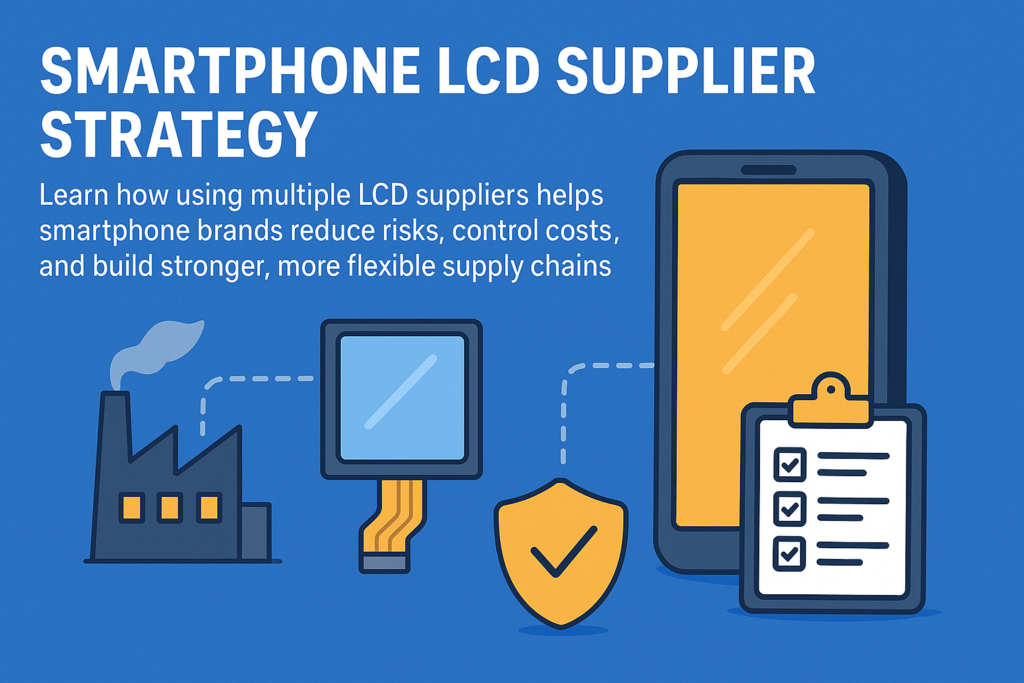
In der Smartphone-Branche, LCD-Bildschirme gehören zu den wichtigsten und kostenintensivsten Komponenten. Ein einzelner Produktionsausfall in der Sieb-Lieferkette kann die Produkteinführung verzögern, Kosten erhöhen, und den Ruf einer Marke schädigen. Aus diesem Grund übernehmen immer mehr Smartphone-Hersteller eine Strategie mit mehreren Lieferanten– Zusammenarbeit mit zwei oder mehr Bildschirmanbietern, um eine stabile Produktion zu gewährleisten, flexibel, und kostengünstige Lieferkette.
Die Strategie mehrerer Lieferanten verstehen
Eine Strategie mit mehreren Lieferanten bedeutet, dass dieselbe Komponente – wie LCD-Panels – von mehr als einem Hersteller bezogen wird. Anstatt sich auf einen einzigen Lieferanten zu verlassen, Unternehmen arbeiten mit mehreren Anbietern zusammen, die ihre Spezifikationen und Qualitätsanforderungen erfüllen. Diese Diversifizierung hilft Marken dabei, die Kosten auszugleichen, Qualität, und Verfügbarkeit.
Im Gegensatz zu Single Sourcing, was zwar die Logistik vereinfacht, aber die Abhängigkeit erhöht, Multi-Sourcing-Builds Widerstandsfähigkeit und Verhandlungsmacht über die gesamte Lieferkette hinweg.
Warum die Abhängigkeit von einem einzigen Lieferanten riskant ist
Die Abhängigkeit von einem einzelnen LCD-Anbieter kann gefährlich sein. Hier erfahren Sie, warum:
- Produktionsstörungen: Fabrikschließungen, Naturkatastrophen, oder politische Instabilität kann Lieferungen stoppen.
- Preisvolatilität: Ohne Konkurrenz, Ein einziger Anbieter kann die Preise unerwartet erhöhen.
- Qualitätsprobleme: Wenn Mängel auftreten, die gesamte Produktionslinie könnte betroffen sein, Dies führt zu massiven Rückrufen oder Verzögerungen.
Zusamenfassend, Wenn Sie alles auf eine Karte setzen, kann dies Ihr gesamtes Unternehmen gefährden.
Vorteile mehrerer LCD-Bildschirmlieferanten
1. Lieferkontinuität und Zuverlässigkeit
Mit mehreren Lieferanten, auch wenn es bei einem Anbieter zu Verzögerungen kommt, andere können die Lücke füllen. Das sorgt dafür Kontinuierliche Produktion und pünktliche Lieferung.
2. Wettbewerbsfähige Preise
Wenn mehrere Lieferanten um Ihre Bestellungen konkurrieren, Sie bieten natürlich bessere Preise und Mehrwertdienste. Dieser Wettbewerb führt zu reduzierte Beschaffungskosten.
3. Stärkere Verhandlungsmacht
Eine diversifizierte Beschaffung verschafft Herstellern mehr Einfluss bei Preisdiskussionen. Lieferanten sind motiviert, wettbewerbsfähige Angebote einzuhalten, um ihre Position zu behaupten.
Risikominderung durch Diversifizierung
Mehrere Lieferanten fungieren als ein Sicherheitsnetz. Wenn in einer Region ein Strommangel oder ein pandemiebedingter Lockdown droht, Die Produktion kann an einen anderen Lieferanten verlagert werden. Dies minimiert Ausfallzeiten und schützt vor Marktschocks.
Kostenkontrolle und Marktwettbewerb
Kosteneffizienz ist ein weiterer großer Vorteil. Wenn mehrere LCD-Anbieter konkurrieren, Marken gewinnen bessere Kostentransparenz. Unternehmen können Preisstrukturen analysieren, Vergleichen Sie die Erträge, und faire Konditionen aushandeln – was zu langfristigen Kosteneinsparungen führt.
Verbesserung der Flexibilität der Lieferkette
Der Smartphone-Markt entwickelt sich schnell. Während der Feiertage oder bei der Einführung neuer Modelle steigt die Nachfrage stark an. Mit mehreren Bildschirmlieferanten können Unternehmen dies tun die Produktion hochfahren oder verlangsamen flexibel, ohne einen Anbieter zu überlasten.
Der strategische Wert von Zweit- und Drittlieferanten
Backup-Sourcing-Strategie
Bei einem sekundären oder tertiären Lieferanten geht es nicht nur um die Sicherung – es geht darum strategische Kontinuität. Zum Beispiel, Ein Anbieter könnte sich auf High-End-OLED-Bildschirme spezialisieren, während ein anderer sich auf preisgünstige LCD-Varianten konzentriert. Zusammen, Sie bieten eine vollständige Marktabdeckung.
Beispiel: Apples Multi-Supplier-Ansatz
Apple bezieht seine Displays von Samsung Display, LG -Anzeige, und BOE. Diese Strategie gewährleistet eine kontinuierliche Produktion, bessere Kostenkontrolle, und Freiheit vom Lieferantenmonopol.
Beispiel: Das Dual-Supplier-Modell von Xiaomi und Realme
Marken wie Xiaomi verwenden Tianma Und CSOT gleichzeitig. Dadurch können sie bessere Angebote aushandeln und ein Gleichgewicht zwischen Innovation und Erschwinglichkeit herstellen.
Wichtigste Herausforderungen bei der Umsetzung von Multi-Supplier-Strategien
Qualitätskonsistenz
Jeder Lieferant verfügt über einzigartige Materialien und Kalibrierungsmethoden. Aufrechterhaltung einer gleichmäßigen Farbgenauigkeit, Helligkeit, und die Berührungsempfindlichkeit verschiedener Anbieter kann schwierig sein.
Logistik und Koordination
Mehr Lieferanten bedeuten mehr Koordination – Transport, Zoll, Lieferzeiten, und Dokumentation werden immer komplexer.
Schutz des geistigen Eigentums
Der Austausch von Entwürfen und technischen Zeichnungen mit mehreren Lieferanten erhöht das Risiko von Datenlecks oder Nachahmungen. NDAs und Audits sind wichtige Schutzmaßnahmen.
Verwalten von Lieferantenbeziehungen
Der Aufbau langfristiger Partnerschaften erfordert Transparenz und Kommunikation. Regelmäßige Audits, gemeinsame Qualitätsdaten, und klare Leistungs-KPIs halten alle auf dem Laufenden. Marken, die Lieferanten als Kooperationspartner und nicht nur als Anbieter behandeln, erzielen die besten Ergebnisse.
Daten- und technische Kompatibilitätsprobleme
Die LCD-Module der einzelnen Anbieter können sich hinsichtlich der Treiber-ICs oder des Schnittstellendesigns geringfügig unterscheiden. daher, Marken müssen investieren Kompatibilitätsprüfung Und Firmware-Kalibrierung um eine nahtlose Integration in das endgültige Smartphone-Produkt sicherzustellen.
Praktische Schritte zur Umsetzung einer Multi-Supplier-Strategie
- Bewerten Sie die aktuelle Abhängigkeit: Identifizieren Sie, wo Single-Sourcing-Risiken bestehen.
- Recherchieren Sie nach alternativen Lieferanten: Nehmen Sie Kandidaten mit nachgewiesenen Fähigkeiten in die engere Wahl.
- Spezifikationen standardisieren: Stellen Sie sicher, dass alle Lieferanten identische Leistungsstandards erfüllen.
- Pilotproduktion: Führen Sie vor der vollständigen Integration kleine Tests durch.
- Kontinuierliche Bewertung: Überwachen Sie die Leistung und passen Sie die Beschaffungsquoten regelmäßig an.
Die Rolle lokaler und globaler Lieferanten
Durch die Ausbalancierung lokaler und internationaler Anbieter kann die Widerstandsfähigkeit weiter verbessert werden. Lokale Lieferanten bieten schnellere Logistik und einfachere Kommunikation, während globale diejenigen bereitstellen Kosteneffizienz und Zugang zu fortschrittlicher Technologie.
Technologie und Transparenz im Supply Chain Management
Digitale Tools wie z ERP-Systeme Und Lieferanten-Dashboards in Echtzeit erleichtern die Verfolgung des Produktionsfortschritts, Qualitätskennzahlen, und Versandzeitpläne. Datengesteuerte Sichtbarkeit entsteht Vertrauen und Agilität quer durch die Kette.
Zukünftige Trends in den Lieferketten für Smartphone-Bildschirme
- Regionale Diversifizierung um geopolitische Risiken zu vermeiden
- Erhöhte Automatisierung bei der Qualitätskontrolle
- Nachhaltige Beschaffung durch Recycling- und Kreislaufwirtschaftsinitiativen
- Engere Zusammenarbeit zwischen OEMs und Komponentenherstellern
Abschluss
Eine Multi-Supplier-Strategie ist nicht nur ein Backup-Plan – sie ist ein Kerngeschäftsvorteil. Durch die Diversifizierung der Anbieter von LCD-Bildschirmen, Smartphone-Hersteller können für Stabilität sorgen, Kosten verwalten, und Risiken reduzieren. Allerdings bestehen Herausforderungen wie Konsistenz und Kommunikation, Die langfristigen Gewinne an Widerstandsfähigkeit und Rentabilität sind die Mühe wert.
FAQs
1. Warum sollten Smartphone-Marken mehrere LCD-Anbieter nutzen??
Um das Risiko zu reduzieren, sorgen für eine stabile Versorgung, und erhalten Sie eine bessere Kostenkontrolle.
2. Was sind die größten Herausforderungen bei der Nutzung mehrerer Bildschirmlieferanten??
Aufrechterhaltung einer gleichbleibenden Qualität und Bewältigung der Logistikkomplexität.
3. Wie senkt die Lieferantendiversifizierung die Kosten??
Es fördert den Wettbewerb unter den Anbietern, Senkung der Komponentenpreise.
4. Können auch kleine Smartphone-Marken diese Strategie umsetzen??
Ja, Selbst kleinere OEMs können mit zwei Anbietern zusammenarbeiten, um Flexibilität und Kosten in Einklang zu bringen.
5. Wie sieht die Zukunft der LCD-Lieferantenstrategien aus??
Ein Trend zur regionalen Diversifizierung, Transparenz, und nachhaltige Beschaffung.