Wstęp
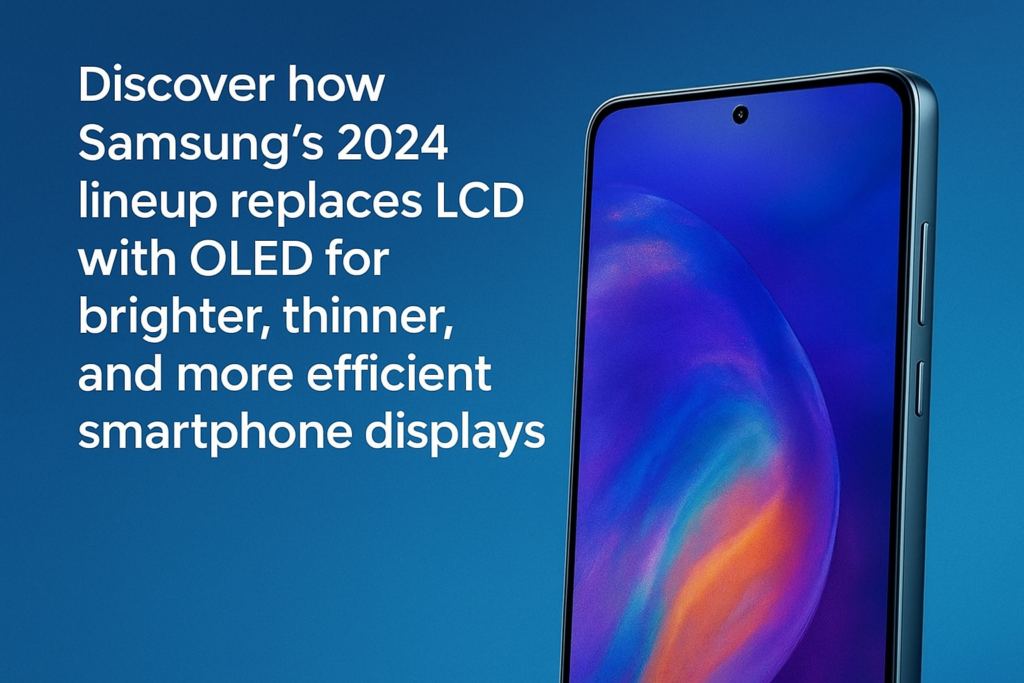
Samsung od dawna jest liderem innowacji w zakresie wyświetlaczy 2024 wyznacza decydujący moment. Technologiczny gigant całkowicie przeszedł na Ekrany OLED dla prawie wszystkich modeli smartfonów powyżej poziomu podstawowego. LCD, niegdyś standard w urządzeniach średniej klasy, teraz szybko znikają. Z Galaxy S24 Ultra do niedrogi Galaxy A15, Ewolucja wyświetlaczy Samsunga odzwierciedla jego wizję jaśniejszego obrazu, rozcieńczalnik, i bardziej energooszczędne telefony.
Więc, co doprowadziło do całkowitego przejęcia technologii OLED? Przyjrzyjmy się bliżej, jak Samsung zmienił swoją ofertę smartfonów dzięki oszałamiającej technologii wizualnej.
Zrozumienie technologii wyświetlania
Co to jest wyświetlacz LCD i dlaczego zanika
LCD, Lub Wyświetlacz ciekłokrystaliczny, był niegdyś królem ekranów smartfonów. Oferował przyzwoitą jasność i przystępną cenę. Jednakże, Panele LCD polegają podświetlenie, co ogranicza kontrast i głębię czerni. W rezultacie, kolory mogą wydawać się wyblakłe, zwłaszcza w porównaniu do OLED-a.
Krótko mówiąc, Wyświetlacz LCD działa, ale nie jest już ekscytujący. Konsumenci oczekują teraz głębszej czerni, bogatsze kolory, i płynniejszy obraz — a wszystko to zapewnia technologia OLED bez wysiłku.
Co sprawia, że OLED jest lepszy
OLED (Organiczna dioda emitująca światło) Panele działają inaczej. Każdy piksel emituje własne światło, eliminując potrzebę podświetlenia. Wynik?
- Idealni czarni
- Nieskończony współczynnik kontrastu
- Lepsza wydajność energetyczna
- Cieńsze i lżejsze panele
Ekrany OLED firmy Samsung cieszą się uznaniem na całym świecie żywe odwzorowanie kolorów I długowieczność, dzięki czemu idealnie nadają się zarówno do urządzeń flagowych, jak i średniej klasy.
Warianty OLED Samsunga – Super AMOLED vs. Dynamiczny AMOLED 2X
Samsung nie tylko produkuje panele OLED — on je udoskonala.
- Super AMOLED-owy: Używany w telefonach średniej klasy i podstawowych, takich jak A55 Lub M55. Jest jasno, kolorowy, i energooszczędny.
- Dynamiczny AMOLED 2X: Można go znaleźć we flagowych urządzeniach, takich jak S24 Ultra I Składanie Z6. Oferuje wyższe częstotliwości odświeżania, Obsługa HDR, i adaptacyjna jasność do 2600 gnidy.
Samsunga 2024 Strategia wyświetlania
Przejście z wyświetlaczy LCD na OLED w różnych modelach
W 2024, Samsung zrealizował swój długoterminowy plan: wymienić wszystkie panele LCD w modelach podstawowych z OLED-em. Marka nie uważa już, że wyświetlacze LCD są opłacalne w przypadku telefonów średniej i wyższej półki. Nawet niedrogie modele, takie jak Galaxy A15 teraz wyposażone w wyświetlacze OLED – to ruch sygnalizujący demokratyzację technologii premium.
Jak technologia paneli Samsunga definiuje jego wizerunek premium
Samsung to nie tylko producent smartfonów — to także największym na świecie dostawcą paneli OLED. Daje to przewagę konkurencyjną w zakresie kontroli kosztów i zapewniania jakości. Sukces firmy z technologią OLED wpłynął na całą branżę smartfonów, popychając konkurentów do pójścia w ich ślady.
2024 Flagowe modele – seria Galaxy S24
Galaxy S24 Ultra – najlepszy test porównawczy wyświetlaczy
. Galaxy S24 Ultra wyposażony w najlepszy w historii wyświetlacz Samsunga: A 6.8-calowy Dynamiczny AMOLED 2X z częstotliwością odświeżania 120 Hz i rozdzielczością QHD+. To, co go wyróżnia, to powłoka antyrefleksyjna I konstrukcja ze szkła płaskiego, poprawiając użyteczność i widoczność w świetle słonecznym.
Jest również chroniony przez Zbroja ze szkła Corning Gorilla, co zapewnia wyjątkową trwałość. Niezależnie od tego, czy grasz, czy przesyłasz strumieniowo, ten wyświetlacz wyznacza złoty standard 2024.
Galaxy S24+ i S24 – równowaga wydajności i perfekcji
Zarówno S24+ I S24 kontynuuj tradycję OLED, używając Dynamiczne panele AMOLED 2X. S24+ oferuje rozdzielczość QHD+, podczas gdy S24 pozostaje w rozdzielczości FHD+, zachowując przejrzystość i jasność, jednocześnie optymalizując żywotność baterii.
Warianty Snapdragon i Exynos
Samsung oferuje na całym świecie dwie wersje chipsetów:
- Snapdragon® 8 Gen 3 dla Galaxy (w USA, Kanada, Chiny)
- Exynos 2400 (w Europie, Indie, i inne rynki)
Niezależnie od chipa, jakość wyświetlania pozostaje niezmiennie na najwyższym poziomie.
Płaska konstrukcja wyświetlacza i powłoka antyrefleksyjna
Po raz pierwszy, nawet model Ultra przyjmuje płaski wyświetlacz, kończące się lata zakrzywionych krawędzi. W połączeniu z nowe wykończenie przeciwodblaskowe, ten projekt jest zarówno praktyczny, jak i premium.
Seria składanych flagowców – Galaxy Z Fold6 & Z Flip6
Sztuka elastyczności dzięki dynamicznemu AMOLED 2X
Składane urządzenia Samsunga —Składanie Z6 I Z Flip6-używać Dynamiczny AMOLED 2X panele zarówno dla ekranu głównego, jak i osłonowego. Elastyczny charakter tych wyświetlaczy podkreśla wszechstronność OLED, coś, czego LCD nigdy nie byłby w stanie osiągnąć.
Wyświetl innowacje w urządzeniach składanych
Funkcja składania cieńsze zagniecenia, lepsza jasność, I zoptymalizowane zużycie energii. Samsung nadal liderem segmentu składanych urządzeń, wykorzystując możliwości adaptacyjne OLED do tworzenia futurystycznych projektów.
Doskonałość średniej półki – Galaxy A55 i A35
Super AMOLED dla rynku masowego
. A55 I A35 używać Super AMOLED-owy wyświetlacze — jaśniejsze, gładsza, i znacznie lepsze od wyświetlaczy LCD swoich poprzedników. Zapewnia to flagową dokładność kolorów i głęboką czerń w przystępnych cenach.
Jasność, Kolor, i wartość w równowadze
Urządzenia te stanowią złoty środek pomiędzy estetyką najwyższej jakości a praktyczną przystępnością cenową, wzmocnienie dominacji Samsunga w klasie średniej.
Niedrogi, ale zaawansowany – Galaxy A15 & Seria M15
Rewolucja OLED na poziomie podstawowym
Nawet Galaxy A15— model budżetowy — został uaktualniony do Super AMOLED-owy, całkowicie zastępując LCD. Ta zmiana oznacza, że nawet kupujący smartfony po raz pierwszy będą mogli cieszyć się wrażeniami wizualnymi na najwyższym poziomie.
Dlaczego ta zmiana ma znaczenie dla konsumentów
OLED to nie tylko grafika; chodzi o komfort i wydajność. Ekrany zmniejszają zmęczenie oczu i wydłużają czas pracy baterii. Samsung wyznacza nowe oczekiwania: OLED to teraz standard, nie ten luksus.
Specjalne modele regionalne – Galaxy M55 i F55
Ekspansja AMOLED na rynkach wschodzących
Samsung rozszerza zastosowanie OLED na Indie, Ameryka Łacińska, i innych rozwijających się regionów z M55 I F55 szereg. Te modele używają Super AMOLED-owy panele zapewniające wysoki kontrast i płynną pracę.
Równoważenie żywotności baterii i wydajności wyświetlacza
Dzięki wydajności energetycznej AMOLED, modele te zapewniają długi czas pracy baterii bez utraty atrakcyjności wizualnej – co jest czynnikiem krytycznym na rynkach zorientowanych na wartość.
Prognozy na przyszłość na koniec 2024 Modele
Możliwe blokady LCD w urządzeniach z bardzo niskiej półki
Samsung może zachować panele LCD do telefonów ultrabudżetowych, takich jak Galaxy A05s, wyłącznie w celu zarządzania kosztami. Jednakże, nawet ta kategoria może przejść na OLED 2025.
Koszt vs. Doświadczenie na rynkach podstawowych
Główny kompromis pozostaje pomiędzy ceną a jakością wizualną. Ale ponieważ produkcja OLED staje się tańsza, dni dominacji LCD są oficjalnie policzone.
Przegląd porównawczy w formie tabeli
| Kategoria serii | 2024 Przykłady modeli | Typ wyświetlacza | Uwagi |
|---|---|---|---|
| Flagowiec | Galaxy S24 Ultra, S24+, S24 | Dynamiczny AMOLED 2X | Najlepszy w swojej klasie wyświetlacz OLED o wysokiej jasności i żywych kolorach. |
| Składany okręt flagowy | Składanie Z6, Z Flip6 | Dynamiczny AMOLED 2X / Super AMOLED-owy | Elastyczne i bardzo jasne wyświetlacze główne. |
| Średniego zasięgu | A555G, A355G, M555G | Super AMOLED-owy | Doskonała równowaga wydajności i efektów wizualnych. |
| Poziom podstawowy | A155G, M155G | Super AMOLED-owy | OLED staje się mainstreamem. |
| Ultra-niski koniec | (np., A05s, w oczekiwaniu na wydanie) | Możliwy wyświetlacz LCD | LCD pozostaje tylko dla ekstremalnych poziomów budżetowych. |
Szerszy obraz – dlaczego OLED to przyszłość
Efektywność środowiskowa i energetyczna
Ekrany OLED zużywają mniej energii, ponieważ nieaktywne piksele po prostu się wyłączają. To świetne rozwiązanie dla obu stron żywotność baterii I trwałość energetyczna.
Oczekiwania konsumentów i postrzeganie marki
Dzięki zastosowaniu OLED nawet w urządzeniach klasy podstawowej, Samsung wzmacnia swój wizerunek premium. Klienci oczekują teraz bogatej grafiki od każdego telefonu Galaxy, niezależnie od ceny.
Wniosek – koniec LCD dla Samsunga
W 2024, Samsung oficjalnie wszedł do swojego Era „w pełni OLED”.. Od flagowców po modele podstawowe, OLED definiuje teraz doświadczenie Galaxy. Panele LCD szybko blakną, znaleźć tylko w najtańszych segmentach.
Przejście firmy Samsung oznacza nie tylko aktualizację techniczną, ale także nowy standard dla całej branży smartfonów.
FAQ
1. Dlaczego Samsung przestał używać ekranów LCD w większości telefonów??
OLED zapewnia lepszy kontrast, efektywność energetyczna, i elastyczność projektowania.
2. Czy wszystkie telefony Samsung korzystają teraz z technologii OLED??
Prawie wszystkie – tylko kilka modeli z bardzo niskiej półki może nadal korzystać z wyświetlacza LCD.
3. Jaka jest różnica między Super AMOLED a Dynamic AMOLED 2X?
Dynamiczny AMOLED 2X oferuje wyższą jasność, Obsługa HDR, i płynniejsze częstotliwości odświeżania.
4. Czy ekrany OLED są bardziej delikatne??
Nie koniecznie. Z Gorilla Glass Armor i zaawansowanymi powłokami, Diody OLED firmy Samsung są trwalsze niż kiedykolwiek.
5. Czy przyszłe telefony Samsunga będą korzystać wyłącznie z technologii OLED??
Tak. Przez 2025, Oczekuje się, że Samsung całkowicie wycofa wyświetlacze LCD ze wszystkich modeli Galaxy.