Einführung in die Beschaffung von Smartphone-LCD-Bildschirmen
Smartphone-LCD-Bildschirme sind das schlagende Herz jedes mobilen Geräts. Knack einen, und das Telefon wird zum Briefbeschwerer. Deshalb ist die Beschaffung der richtigen LCD-Bildschirme nicht nur eine Kaufaufgabe, sondern eine geschäftskritische Entscheidung.
Warum die Beschaffung von LCD-Bildschirmen wichtig ist
Egal, ob Sie Werkstattbesitzer sind, Großhändler, oder Markenhändler, Ihr Ruf hängt von der Bildschirmqualität ab. Ein schlechtes LCD bedeutet unzufriedene Kunden, hohe Rücklaufquoten, und endlose Streitigkeiten. Die Wahl des richtigen Beschaffungskanals kann sich wie eine Gratwanderung zwischen Preis und Zuverlässigkeit anfühlen.
Häufige Herausforderungen, mit denen Käufer konfrontiert sind
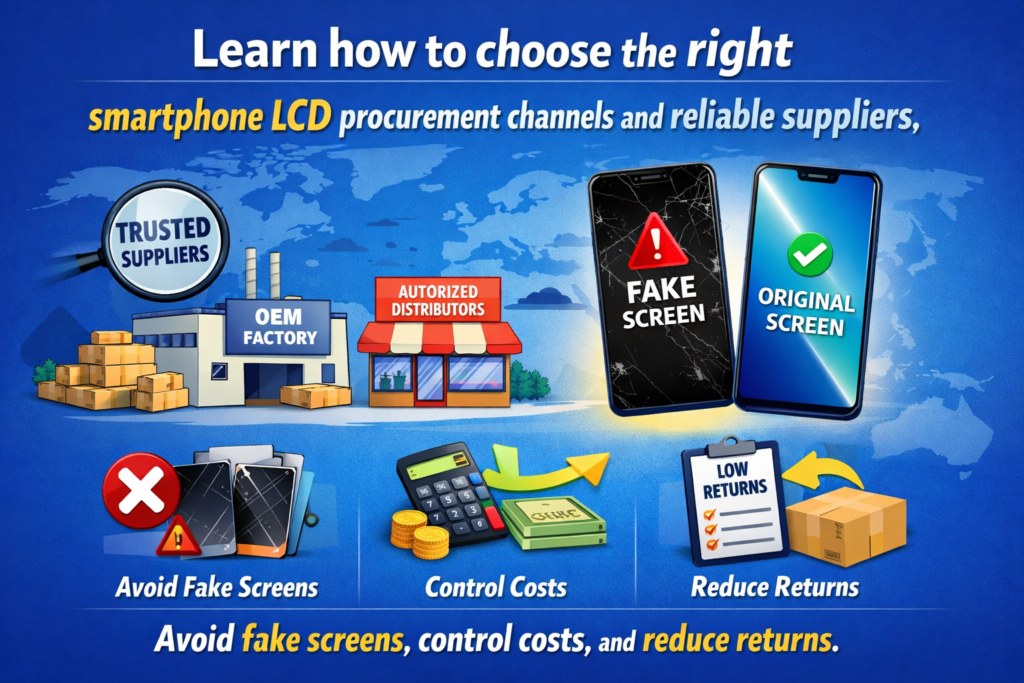
Gefälschte Originale, instabile Chargen, Verspätete Lieferungen – kommen mir bekannt vor? Der LCD-Markt ist wettbewerbsintensiv, fragmentiert, und manchmal trübe. Ohne klare Strategie, Käufer können sich leicht verbrennen.
Überblick über die Lieferketten für Smartphone-LCD-Bildschirme
Von der Fabrik zum Endverbraucher
Die meisten Smartphone-LCD-Bildschirme stammen von Panel-Herstellern, Gehen Sie durch die Modulmontage, fließen dann in Agenten, Großhändler, und schließlich Käufer. Jeder Schritt erhöht den Wert – und die Kosten.
Rolle der Qualitätskontrolle in der Lieferkette
Die Qualitätskontrolle fungiert wie ein Gatekeeper. Je mehr Schichten ein Produkt durchläuft, desto schwieriger wird es, Probleme aufzuspüren. Deshalb ist es wichtig zu verstehen, wo Ihr Lieferant in der Kette steht.
Beschaffung von Originalherstellern (OEM / ODM)
Was sind Original-LCD-Bildschirme?
Originale Fabrikbildschirme werden von Herstellern hergestellt, die Marken direkt beliefern. Diese Bildschirme erfüllen in der Regel strenge Spezifikationen und Qualitätsstandards.
Vorteile des Direktkaufs beim Hersteller
Der Kauf bei OEMs ist wie der Kauf von Gemüse direkt vom Bauernhof – frisch, authentisch, und konsistent. Sie erhalten eine stabile Qualität, geringere Fehlerquoten, und oft besseren technischen Support.
Nachteile und Risiken der OEM-Beschaffung
Aber hier ist der Haken: hohe Mindestbestellmengen (MOQs), längere Vorlaufzeiten, und begrenzte Flexibilität. Für kleine Käufer ist die OEM-Beschaffung möglicherweise unerreichbar.
Beschaffung über autorisierte Vertreter und Distributoren
Autorisierte Vertriebskanäle verstehen
Autorisierte Vertreter fungieren als Brücke zwischen Fabriken und dem Markt. Sie verfügen in der Regel über offizielle Vertriebsrechte und stabile Lagerbestände.
Vorteile der Zusammenarbeit mit Agenten
Niedrigere MOQs, schnellere Lieferung, und zuverlässige Qualität. Agenten sind ideal für mittelständische Käufer, die ein Gleichgewicht ohne die Kopfschmerzen von Fabrikverhandlungen wünschen.
Nachteile und Kostenüberlegungen
Sie zahlen eine Prämie. Die Preise sind höher als bei der Direktbeschaffung ab Werk, Sie zahlen jedoch für Komfort und geringeres Risiko.
Einkauf auf Großhandelsmärkten
Elektronikmärkte und offene Lieferkanäle
Großhandelsmärkte sind wie Flohmärkte für LCD-Bildschirme – alles ist verfügbar, wenn man weiß, wo man suchen muss.
Vorteile einer marktbasierten Beschaffung
Flexible Mengen, wettbewerbsfähige Preise, und schnelle Verfügbarkeit. Perfekt für dringende Bestellungen oder zum Testen neuer Modelle.
Risiken inkonsistenter Qualität
Die Qualität variiert stark. Ohne strenge Inspektionsprozesse, Möglicherweise erhalten Sie gemischte Chargen, renovierte Einheiten, oder inkompatible Bildschirme.
Vergleich verschiedener Beschaffungskanäle
Kompromisse zwischen Kosten und Qualität
Billige Bildschirme haben oft versteckte Kosten – Rendite, Reparaturen, und das Vertrauen verloren. Hochwertige Kanäle senken die langfristigen Kosten.
Volumenflexibilität und MOQ-Unterschiede
OEMs bevorzugen Großabnehmer, Agenten bieten mittlere Flexibilität, und Märkte erfüllen kleine und dringende Bedürfnisse.
So bewerten Sie Lieferanten von Smartphone-LCD-Bildschirmen
Überprüfung der Lieferantenqualifikationen
Nehmen Sie Ansprüche niemals für bare Münze. Ein professioneller Lieferant sollte eine Überprüfung begrüßen.
Geschäftslizenzen und Zertifizierungen
Gewerbeanmeldung prüfen, ISO-Zertifizierungen, und Exportlizenzen. Diese sind einfach, aber unerlässlich.
Werksaudits und Vor-Ort-Inspektionen
Wenn die Lautstärke es rechtfertigt, Werksbesuche offenbaren die tatsächliche Produktionskapazität und die Qualitätskontrollprozesse.
Beurteilung der Produktqualität und -stabilität
LCD-Leistungsindikatoren
Bei Qualität kommt es nicht nur auf das Aussehen an, sondern auch auf die Leistung.
Helligkeit, Berührungsempfindlichkeit, und Farbgenauigkeit
Testen Sie Bildschirme auf gleichmäßige Helligkeit, Berührungsreaktion, und Farbabweichung. Kleine Mängel summieren sich schnell.
Chargenkonsistenz und Fehlerraten
Stabile Lieferanten liefern konsistente Chargen. Fordern Sie Fehlerratendaten und Testberichte an.
Bewertung der Liefer- und Lieferfähigkeit
Vorlaufzeit und Produktionskapazität
Ein Lieferant, der nicht rechtzeitig liefern kann, ist eine Belastung. Bestätigen Sie Produktionspläne und Backup-Kapazität.
Bestandsverwaltung und Logistikunterstützung
Starke Lieferanten unterhalten Lagerbestände und unterstützen mehrere Versandmethoden, Reduzierung von Verzögerungen.
Preisstrategien und Zahlungsbedingungen
Marktpreise verstehen
Machen Sie sich mit dem Marktangebot vertraut, bevor Sie verhandeln. Wenn ein Preis zu gut erscheint, um wahr zu sein, das ist es wahrscheinlich.
Sichere Zahlungsmethoden
Nutzen Sie sichere Zahlungen wie ein Treuhandkonto, Handelssicherung, oder Teileinlagen zur Risikominimierung.
Kundendienst- und Garantierichtlinien
Bedeutung des After-Sales-Service
Es passieren Probleme. Entscheidend ist, wie die Lieferanten reagieren.
RMA- und Rückgaberichtlinien
Klare RMA-Prozesse und angemessene Rückgabebedingungen signalisieren Professionalität und Vertrauen in die Qualität.
Häufige Fehler, die Sie bei der Lieferantenauswahl vermeiden sollten
Blinde Jagd nach niedrigen Preisen
Niedrige Preise locken mit hohen Risiken. Kosten und Zuverlässigkeit immer im Gleichgewicht halten.
Ignorieren langfristiger Kooperationspotenziale
Ein guter Lieferant ist nicht nur ein Lieferant – er ist ein Partner.
Aufbau langfristiger Lieferantenbeziehungen
Kommunikation und Vertrauen
Transparente Kommunikation schafft Vertrauen und eine reibungslosere Zusammenarbeit.
Strategische Partnerschaften
Langfristige Partnerschaften ermöglichen oft bessere Preise, vorrangige Versorgung, und gemeinsames Wachstum.
Zukünftige Trends bei der Beschaffung von Smartphone-LCDs
Markttransparenz und digitale Beschaffung
Online-Plattformen und datengesteuertes Sourcing machen Märkte transparenter.
Qualitätsstandardisierungstrends
Erwarten Sie strengere Qualitätsstandards, da sich der Wettbewerb verschärft.
Abschluss
Die Wahl des richtigen Beschaffungskanals für Smartphone-LCD-Bildschirme ist wie die Wahl des richtigen Wegs für eine lange Reise. OEMs bieten Stabilität, Agenten sorgen für Ausgewogenheit, and wholesale markets deliver flexibility. The key lies in understanding your business needs, evaluating suppliers carefully, and focusing on long-term value rather than short-term savings. Get it right, and your supply chain becomes a competitive advantage instead of a constant headache.
FAQs
1. Which procurement channel is best for small buyers?
Authorized agents and wholesale markets are usually more suitable due to lower MOQs.
2. How can I avoid fake original LCD screens?
Verify supplier credentials, request samples, and perform batch testing.
3. Are OEM screens always better quality?
Generell ja, but only if sourced directly from verified manufacturers.
4. What is an acceptable defect rate for LCD screens?
Typically below 2–3% for stable suppliers.
5. How important is after-sales service in supplier selection?
Äußerst wichtig – es wirkt sich direkt auf Ihre Risikokontrolle und Kundenzufriedenheit aus.