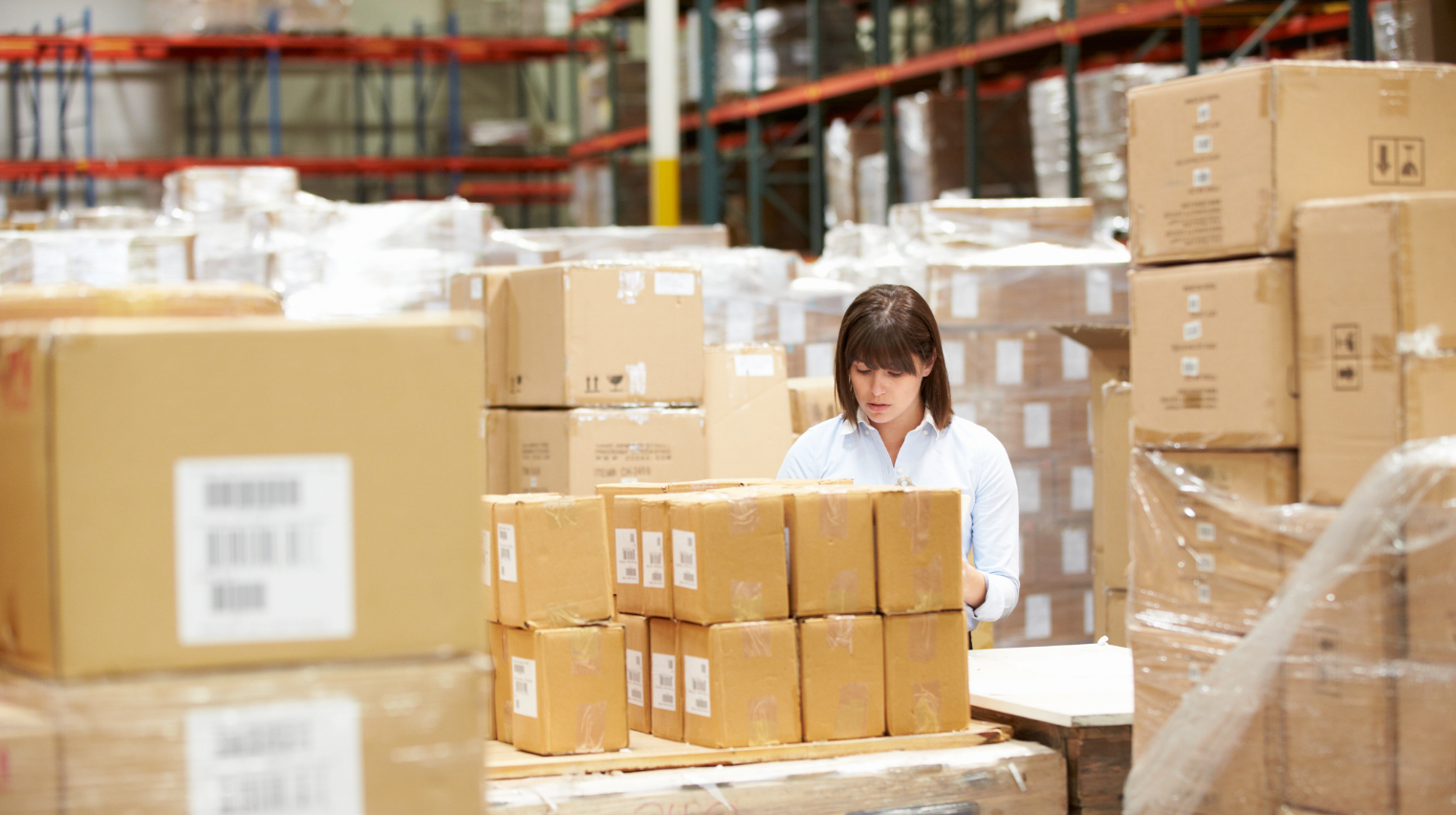
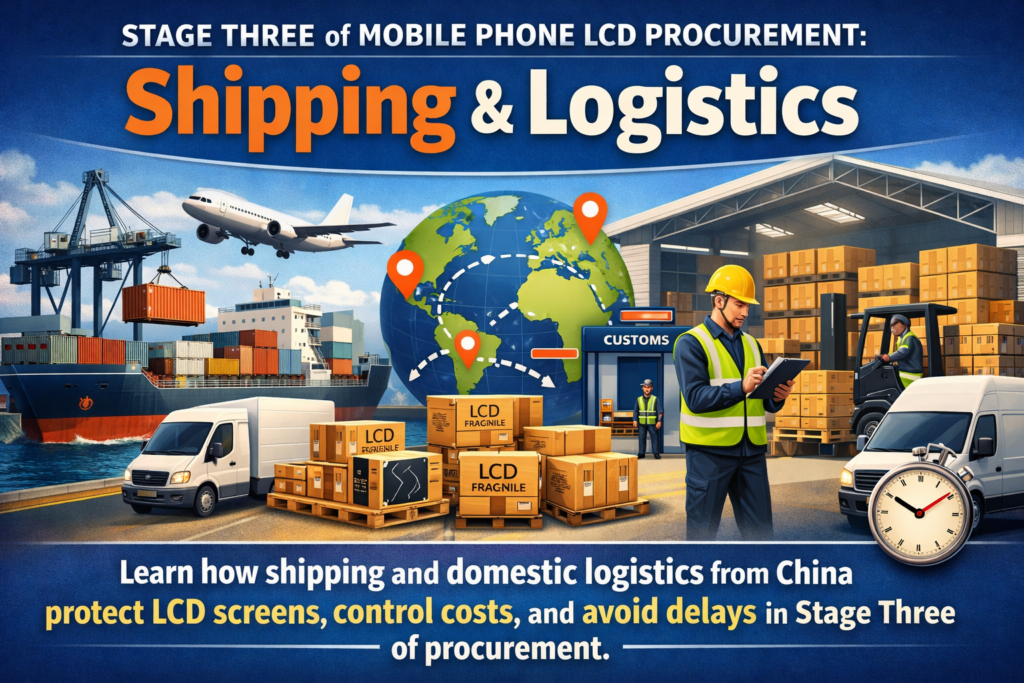
När du köper LCD-skärmar för mobiltelefoner från Kina, många köpare fokuserar mycket på prissättning och kvalitetskontroller. Men här är sanningen de flesta lär sig den hårda vägen: även perfekta skärmar kan förvandlas till förluster om frakt och inrikeslogistik går fel. Det är just därför Steg tre – frakt och inrikeslogistik – är en av de mest kritiska faserna i hela upphandlingsprocessen.
Se det här skedet som bryggan mellan din leverantörs fabrik och den globala marknaden. Om bron är skakig, allt på den är i fara.
Låt oss bryta ner det steg för steg, från bokningsutrymme till slutlig lastning, med hjälp av en praktisk, köparfokuserad lins.
Förstå steg tre i LCD-skärmupphandling
Varför frakt och inrikeslogistik är viktiga
LCD-skärmar är ömtåliga, högt värde, och känslig för tryck, fukt, och felhantering. Steg tre är där dessa produkter rör sig mest – och utsätts för den högsta exponeringen för skador, förseningar, och oväntade kostnader.
Detta stadium avgör:
- Om din leveranstid är uppfylld
- Om skärmarna kommer intakta
- Om din landade kostnad förblir under kontroll
Kort sagt, det är här vinster skyddas – eller tyst läcker ut.
Vanliga risker i detta skede
- Missat fartyg eller flyg på grund av sen bokning
- Felaktiga dokument som orsakar tullförseningar
- Oväntade lokala avgifter ökar kostnaderna
- Fysiska skador vid inrikes transport
De goda nyheterna? Varje risk kan hanteras med rätt process.
Översikt över inrikeslogistik från fabrik till hamn
Förflyttningen från fabrik till exporthubb
Innan dina LCD-skärmar någonsin lämnar Kina, de måste resa från fabriken till:
- En hamn (för sjöfrakt), eller
- En flygplatsfraktterminal (för flygfrakt)
Denna "korta" inrikesresa innebär flera överlämningar – och var och en har betydelse.
Viktiga intressenter involverade
- Leverantörsfabrik
- Speditör
- Åkerifirma
- Lageroperatör
- Tullförmedlare
Smidig koordination mellan dessa spelare är ryggraden i steg tre.
Steg 29 – Bokning av fraktutrymme
Att välja sjöfrakt eller flygfrakt
Din leveranstid avgör allt här:
- Sjöfrakt: Kostnadseffektivt, långsammare, idealisk för bulk LCD-beställningar
- Flygfrakt: Snabbare, dyrare, lämplig för brådskande eller värdefulla försändelser
Bokning bör göras i god tid, speciellt under högsäsong.
Vikten av bokningsbekräftelse
När utrymmet är säkrat, du får en Bokningsbekräftelse. Detta dokument bekräftar:
- Fartygs- eller flyginformation
- Beräknat avresedatum
- Avstängningstider för last
Ingen bekräftelse = ingen garanterad plats.
Steg 30 – Upphämtning av last
EXW vs FOB-ansvar
Incoterms avgör vem som gör vad:
- EXW: Köparen ordnar hämtning från fabriken
- FOB: Leverantören levererar varor till exporthamnen
Att veta detta i förväg undviker kaos i sista minuten.
Arbeta med speditörer
En pålitlig speditör fungerar som din logistik-quarterback – koordinerar lastbilar, lager, och pappersarbete.
Steg 31 – Övervakning under lastning
Verifiering av kvantitet och förpackning
Vid hämtning, någon måste kolla:
- Kartong kvantitet
- Förpackningsskick
- Etikettens noggrannhet
Det här är din sista chansen att fånga problem innan export.
Fotodokumentation som bevis
Bilder tagna under lastningen fungerar som bevis om tvister uppstår senare. Se dem som din logistikförsäkring.
Steg 32 – Inrikes transporter i Kina
Vägtransport som huvudalternativ
De flesta LCD-försändelser flyttas med lastbil från fabrik till hamn eller flygplats. Transporttiden kan variera från några timmar till flera dagar.
Hantera transitrisker
- Använd stöttålig förpackning
- Undvik onödig omlastning
- Spåra fordon i realtid
Bräckliga varor förtjänar försiktig hantering.
Steg 33 – Lastlager i hamn eller flygplats
Överlämningsförfaranden
Vid ankomst, varor överlämnas till:
- Hamnlager, eller
- Flygplats fraktterminal
Ett formellt kvitto bekräftar vårdnadens överföring.
Lagerincheckningsprocessen
Lagerpersonal verifierar:
- Antal kartonger
- Externt skick
Eventuella avvikelser registreras omedelbart.
Steg 34 – Lagerräkning av last & Mått
Verifiering av volym och vikt
Lager mått:
- Faktisk vikt
- Laddbar volym
Detta avgör din slutlig fraktkostnad.
Vikten av lagerkvittot
Det inkommande kvittot är ett centralt logistikdokument – spara det.
Steg 35 – Verifiering av fraktdokument
Bill of Lading / Kontroll av flygfraktsedel
Kontrollera varje detalj noggrant:
- Befraktare & mottagarens namn
- Produktbeskrivning
- Kvantitet och vikt
Ett enstaka stavfel kan fördröja frigivningen vid destinationen.
Avoiding Costly Documentation Errors
Always confirm drafts before final issuance. Corrections later cost time and money.
Steg 36 – Payment of Local Charges in China
Common Local Fees Explained
Typical charges include:
- Documentation fees
- Booking fees
- THC (Terminal Handling Charges)
These are unavoidable but manageable.
Cost Control Tips
- Request a fee breakdown upfront
- Avoid last-minute changes
Transparency saves budgets.
Steg 37 – Customs Declaration Authorization
Role of Customs Brokers
Licensed brokers handle export declarations on your behalf, ensuring compliance with Chinese regulations.
Exporter Name & Efterlevnad
The declaration is filed under the legal exporter’s name—accuracy is non-negotiable.
Steg 38 – Preparation of Export Customs Declaration
Required Core Documents
- Kommersiell faktura
- Packlista
- Sales contract
These form the backbone of the declaration.
Noggrannhet i HS-koder och deklarationer
Fel HS-koder kan utlösa inspektioner eller böter. Precision här förhindrar huvudvärk senare.
Steg 39 – Inlämning av tullhandlingar
Anmälan till den kinesiska tullen
Alla dokument lämnas elektroniskt till tullen för granskning.
Vanliga orsaker till avslag
- Missmatch mellan faktura och packlista
- Ofullständiga deklarationselement
Dubbelkolla innan inlämning.
Steg 40 – Tullgranskning och kontroll
Dokumentgranskningsprocessen
Tullen kan:
- Godkänn direkt, eller
- Välj last för inspektion
Båda är normala.
Scenarier för fysisk inspektion
Om valt, tullen inspekterar kartonger eller prover. En gång passerat, lasten töms.
Steg 41 – Lastning av last på fartyg eller flygplan
Slutligt exportgodkännande
Efter tullfrisläppandet, last är officiellt godkänd för export.
Officiell start för internationell frakt
Lastning på fartyget eller flygplanet markerar övergången från inhemsk till internationell logistik.
Bästa metoder för en smidig steg tre-process
Kommunikation & Spårning
Dagliga uppdateringar med din speditör förhindrar överraskningar.
Samarbete med pålitliga logistikleverantörer
Erfarna partners minskar risker som du inte ens visste fanns.
Slutsats
Steg tre handlar inte bara om att flytta lådor – det handlar om skyddande värde. Från bokningsutrymme till slutlig lastning, varje steg påverkar leveranstiden, kosta, och produktens skick. När det sköts väl, detta steg gör komplex logistik till en konkurrensfördel. När ignoreras, det tär tyst på marginalerna.
Mästarsteg tre, och din LCD-upphandlingsprocess blir inte bara smidigare – utan smartare.
Vanliga frågor
1. Varför är steg tre avgörande vid upphandling av LCD-skärmar?
Eftersom det direkt påverkar leveranstiden, produktsäkerhet, och total landad kostnad.
2. Är flygfrakt bättre än sjöfrakt för LCD-skärmar?
Flygfrakt är snabbare, sjöfrakt är billigare. Rätt val beror på brådska och budget.
3. Vilka dokument är nödvändiga för exporttullklarering?
Kommersiell faktura, packlista, och exportdeklaration är obligatoriska.
4. Hur kan köpare minska skaderisken vid inrikes transporter?
Använd förstärkt förpackning, övervaka lastningen, och minimera hanteringspunkter.
5. Vilket är det vanligaste misstaget i detta skede?
Att ignorera dokumentets noggrannhet – små fel orsakar stora förseningar.