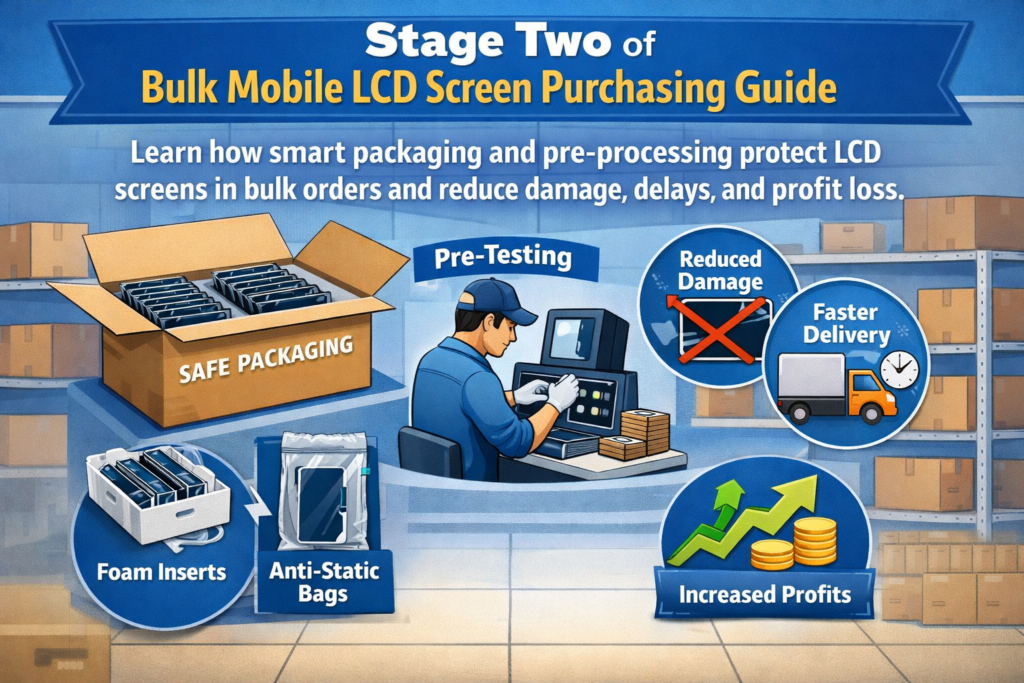
Jeśli chodzi o masowe zakupy ekranów LCD do telefonów komórkowych, wielu kupujących koncentruje się głównie na cenie, jakość, i dostawcami na wczesnych etapach. Ale oto prawda, której większość początkujących uczy się na własnej skórze: nawet najlepsze ekrany LCD mogą zostać uszkodzone, jeśli opakowanie i wstępna obróbka zostaną wykonane nieprawidłowo.
Pomyśl o ekranach LCD jak o jajach – delikatnych, wrażliwy, i bezlitosny. Jeden zły ruch podczas pakowania lub wysyłki, a Twoja marża zysku natychmiast się zmniejsza. Dlatego Etap drugi: Opakowanie & Przetwarzanie wstępne nie jest opcjonalne – jest krytyczne.
W tym przewodniku, przejdziemy Kroki 15 Do 28 w praktycznym, sposób przyjazny człowiekowi. Niezależnie od tego, czy jesteś hurtownikiem, dystrybutor, lub nabywca łańcucha naprawczego, ten etap chroni Twoją inwestycję i gwarantuje, że Twoje ekrany dotrą bezpiecznie, uległy, i gotowe do sprzedaży.
Zrozumienie, dlaczego opakowanie ma znaczenie dla ekranów LCD
Dlaczego ekrany LCD są produktami wysokiego ryzyka
Ekrany LCD są:
- Niezwykle kruchy
- Wysoko wrażliwe na ładunki elektrostatyczne
- Podatny na ciśnienie, wibracja, i wilgoć
Pojedynczy pęknięty panel może przerodzić się w reklamację klienta, powrót, lub całkowita strata.
Opakowanie jako narzędzie ochrony zysków
Dobre opakowanie to nie wydatek – to jest ubezpieczenie. Właściwe opakowanie:
- Zmniejsza współczynnik obrażeń
- Zmniejsza spory posprzedażowe
- Poprawia odprawę celną
- Buduje profesjonalizm dostawców
15. Opakowanie antystatyczne: Pierwsza linia obrony
Dlaczego ochrona antystatyczna jest obowiązkowa
Elektryczność statyczna może po cichu zniszczyć elementy LCD. Nie zobaczysz tego, ale Twój ekran nie będzie działać.
Zalecane materiały antystatyczne
Każdy ekran LCD musi być indywidualnie zapieczętowane używając:
- Worki antystatyczne z folii aluminiowej
- Różowe, antystatyczne torby bąbelkowe
Najlepsze praktyki
- Jeden ekran na torbę
- Zgrzewane lub szczelnie zamknięte
- Żadnego układania w stosy bez izolacji
16. Ochrona amortyzacji: Absorbowanie wpływu zewnętrznego
Dlaczego amortyzacja jest krytyczna
Transport równa się wibracjom. Amortyzacja amortyzuje wstrząsy niczym zawieszenie samochodu.
Typowe materiały amortyzujące
- Bawełna perłowa (Pianka EPE)
- Gruba pianka gąbczasta
- Folia bąbelkowa (użyte prawidłowo)
Kluczowa wskazówka
Zawinąć poza torbą antystatyczną, nigdy w nim.
17. Wewnętrzne wzmocnienie pudełka: Zapobieganie ruchowi
Dlaczego indywidualne pudełka wewnętrzne mają znaczenie
Luźne ekrany to uszkodzone ekrany.
Jak to zrobić dobrze
- Używaj małych kartonów o dopasowanym rozmiarze
- Dodaj wewnętrzne wypełniacze
- Po zamknięciu nie wolno wstrząsać
Ten krok przekształca delikatne ekrany w stabilne jednostki ładunkowe.
18. Wybór kartonu zewnętrznego & Jasne oznakowanie
Wybór odpowiedniego kartonu
Zawsze używaj:
- Pudełka z tektury falistej pięciowarstwowej
- Materiały odporne na ściskanie
Obowiązkowe etykiety ostrzegawcze
Wyraźnie zaznacz:
- Kruchy
- Zachowaj suchość
- Tą stroną do góry
Etykiety te stanowią wskazówki dla opiekunów – nawet jeśli nie zawsze słuchają.
19. Wypełnianie pustych przestrzeni wewnątrz kartonu
Dlaczego pusta przestrzeń jest niebezpieczna
Pusta przestrzeń = ruch = obrażenia od uderzenia.
Najlepsze opcje napełniania
- Bloki piankowe
- Poduszki powietrzne
- Zmięty papier pakowy
Złota zasada
Brak ruchu wewnętrznego przy delikatnym potrząsaniu pudełkiem.
20. Zaklejanie kartonów & Wzmocnienie konstrukcyjne
Uszczelnianie to nie tylko oklejanie
Słabe uszczelnienie prowadzi do zmiażdżonych narożników.
Zalecana metoda uszczelniania
- Taśma pakowa o dużej wytrzymałości
- Wzory uszczelnień „H” lub „I”.
- Wzmocnione krawędzie i punkty naprężenia
Ten stopień chroni przed upadkami i naciskiem podczas układania.
21. Testowanie materiałów opakowaniowych dla dużych przesyłek
Dlaczego testowanie ma znaczenie
Duży wolumen = wysokie ryzyko. Jeden słaby projekt kartonu może zrujnować setki ekranów.
Wymagania testu upuszczenia
Poproś dostawców o postępowanie:
- Upuść testy
- Testy kompresji
- Symulacje wibracji
Testowanie dzisiaj zapobiega katastrofom jutro.
22. Waga pojedynczego kartonu & Kontrola rozmiaru
Dlaczego kartony z nadwagą stanowią problem
- Trudniejsze w obsłudze
- Wyższe ryzyko złamania
- Zwiększony koszt wysyłki
Wytyczne dotyczące najlepszych praktyk
- Rozsądny ręczny ciężar do podnoszenia
- Zoptymalizowane wymiary dla wyceny logistyki
Mniejszy, Inteligentniejsze kartony = bezpieczniejszy transport.
23. Znaki wysyłkowe (Oznaczenia kartonu) Przygotowanie
Co to jest znak wysyłkowy?
Znak wysyłkowy to znak kartonu dowód osobisty.
Wymagane informacje
- Nazwa odbiorcy
- Port docelowy
- Numer kartonu
- Brutto & waga netto
- Numer zamówienia
Zasady rozmieszczania
- Jasne
- Wodoodporny
- Mocno przymocowane
24. Wskazówki dotyczące załadunku kontenera (Dla ładunków pełnokontenerowych)
Dlaczego załadunek kontenerów ma znaczenie
Złe obciążenie powoduje uszkodzenia spowodowane ciśnieniem – szczególnie w dolnych warstwach.
Zasady ładowania kluczy
- Równomierny rozkład masy
- Żadnego nadmiernego układania
- Jeśli to możliwe, użyj palet
Dostarczenie diagramu ładowania jest mądrym posunięciem.
25. Przygotowanie faktury handlowej
Dlaczego faktura handlowa jest kluczowa
Służba celna widzi to jako pierwsza. Błędy powodują opóźnienia i kary.
Faktura musi zawierać
- Kupujący & dane sprzedawcy
- Opisy produktów
- Cena jednostkowa & całkowita wartość
- Waluta
- Formuły handlowe
Dokładność równa się szybszemu prześwitowi.
26. Przygotowanie listy pakowania
Co robi lista pakowania
Dokładnie informuje organy celne i magazyny co jest w środku.
Wymagane szczegóły
- Ilość w kartonie
- Waga brutto
- Waga netto
- Tom
Złota zasada
Lista pakowania musi Pasują do rzeczywistych towarów 100%.
27. Przygotowanie kopii umowy sprzedaży
Dlaczego umowy mają znaczenie
Potwierdzają autentyczność handlu.
Typowe zastosowania
- Weryfikacja celna
- Dokumenty bankowe
- Rozstrzyganie sporów
Zawsze miej przygotowaną podpisaną kopię.
28. Wniosek o świadectwo pochodzenia
Co to jest świadectwo pochodzenia?
Świadczy to o tym, że towar został wyprodukowany w Chinach.
Dlaczego to ważne
- Umożliwia preferencyjne taryfy
- Wymagane przez wiele krajów
Gdzie złożyć wniosek
- Chińska Rada Promocji Handlu Międzynarodowego (CCPIT)
- Autoryzowane izby lokalne
Ten krok może zaoszczędzić prawdziwe pieniądze na obowiązkach.
Typowe błędy w pakowaniu, których należy unikać
Z widokiem na ochronę antystatyczną
Uszkodzenia statyczne często pojawiają się po dostawie.
Używanie słabych kartonów
Tanie kartony upadają pod naciskiem.
Niekompletne dokumenty
Brak dokumentów opóźnia wysyłkę.
Unikaj tych błędów, aby chronić swoje marże.
Jak etap drugi wpływa na ogólny sukces łańcucha dostaw
Opakowanie to nie tylko logistyka – to prawda ochrona marki. Profesjonalne opakowanie:
- Buduje zaufanie wśród kupujących
- Zmniejsza zwroty
- Zwiększa wiarygodność dostawcy
To cichy bohater udanego zaopatrzenia w wyświetlacze LCD.
Wniosek
Etap drugi hurtowego zakupu ekranów LCD do telefonów komórkowych —Opakowanie & Przetwarzanie wstępne– to miejsce, w którym sprytni nabywcy oddzielają się od ryzykownych. Od toreb antystatycznych po certyfikaty pochodzenia, każdy krok chroni Twoje produkty, twoje pieniądze, i twoją reputację.
Jeśli etap pierwszy polega na wyborze odpowiednich ekranów, Etap drugi polega na upewnieniu się, że dotrą na miejsce żywi. Opanuj ten etap, a Twój łańcuch dostaw stanie się silniejszy, gładsza, i znacznie bardziej opłacalne.
Często zadawane pytania (FAQ)
1. Dlaczego opakowanie antystatyczne jest obowiązkowe w przypadku ekranów LCD??
Ponieważ elektryczność statyczna może uszkodzić obwody wewnętrzne nawet bez widocznych oznak.
2. Czy folia bąbelkowa może zastąpić torby antystatyczne?
NIE. Folia bąbelkowa zapewnia amortyzację, ale nie zapewnia ochrony elektrostatycznej.
3. Jaki jest idealny rozmiar kartonu do przesyłek LCD?
Rozmiar uniemożliwiający przemieszczanie się, a jednocześnie łatwy w obsłudze ręcznej.
4. Czy znaki wysyłkowe są naprawdę potrzebne??
Tak. Pomagają zespołom logistycznym, odprawa celna, i magazyny prawidłowo identyfikują towary.
5. Czy Świadectwo Pochodzenia rzeczywiście obniża koszty importu??
W wielu krajach, tak – umożliwia preferencyjne stawki taryfowe.