Was ist ein original neuer LCD-Bildschirm?
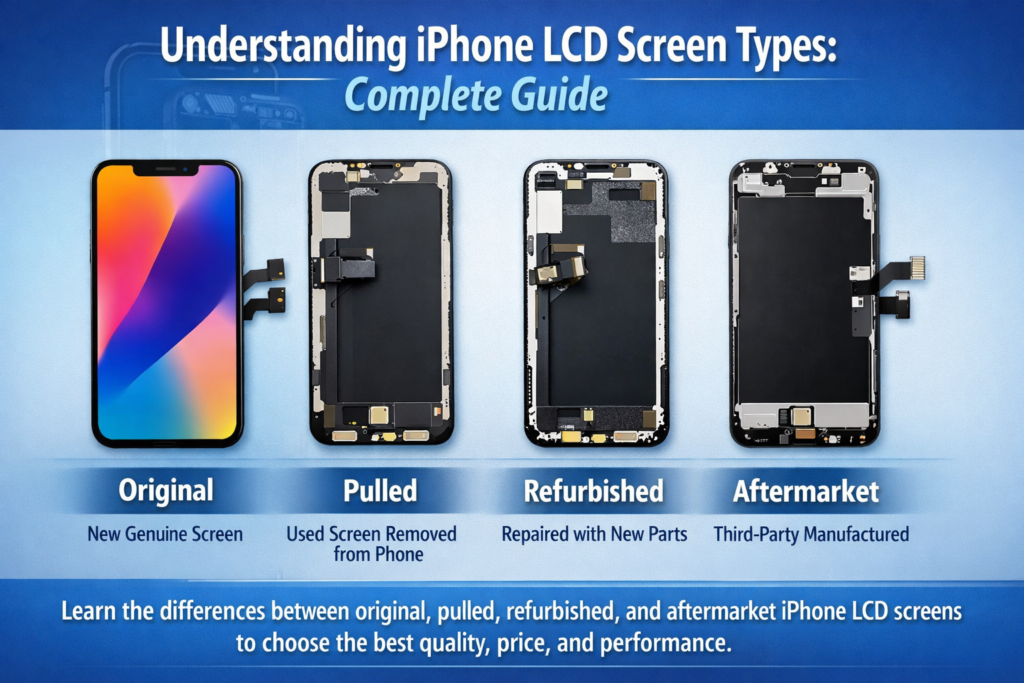
Wenn Leute darüber reden bestmöglicher iPhone-LCD-Bildschirm, Sie beziehen sich normalerweise auf das, was man „an“ nennt Originaler neuer Bildschirm. Dabei handelt es sich im Wesentlichen um ein Display, das hinsichtlich der Materialien den Werksstandards von Apple entspricht, Kalibrierung, und Leistung. Jedoch, Hier ist die Realität, die den meisten Käufern nicht bewusst ist: Echte brandneue Originalbildschirme sind auf dem freien Markt selten erhältlich, da sie im Rahmen offizieller Reparaturkanäle streng kontrolliert werden.
Was Sie also auf Großhandelsmärkten als „original neu“ bezeichnen, bezieht sich oft darauf OEM-Bildschirme, die nach den gleichen Spezifikationen hergestellt werden, nicht unbedingt direkt von Apple geliefert. Diese Bildschirme liefern eine nahezu perfekte Farbgenauigkeit, hohe Helligkeitsstufen, und sanfte Touch-Reaktionsfähigkeit. Tatsächlich, Premium-Bildschirme in OEM-Qualität können bis zu erreichen 95–100 % der ursprünglichen Anzeigequalität je nach Quelle.
Stellen Sie sich das wie den Kauf einer Luxusuhr vor: Die authentische Version wird selten außerhalb autorisierter Geschäfte verkauft, Aber hochwertige Werksäquivalente können dennoch eine außergewöhnliche Leistung erbringen. Für Reparaturbetriebe und Händler, Diese Kategorie steht an der Spitze der Qualitätspyramide – hoher Preis, niedrige Fehlerquote, und maximale Kundenzufriedenheit.
Was ist ein Original gezogen? (Zerlegt) Bildschirm
Ein Original gezogener Bildschirm (auch zerlegter Bildschirm genannt) stammt direkt von einem gebrauchten iPhone. Das Gerät kann kaputt sein oder recycelt werden, aber das Display selbst bleibt intakt und funktionsfähig. Diese Bildschirme werden berücksichtigt 100% Originalkomponenten weil sie von Apple oder seinen offiziellen Lieferanten hergestellt wurden.
Was gezogene Bildschirme attraktiv macht, ist ihr authentische Leistung. Sie erhalten eine perfekte Farbkalibrierung, ursprüngliche Helligkeit, und volle Kompatibilität mit Funktionen wie True Tone und Face ID. Es ist im Wesentlichen das gleiche Erlebnis wie bei einem brandneuen Telefon – nur wiederverwendet.
Jedoch, Es gibt einen Kompromiss. Das Angebot ist begrenzt, und die Qualität kann variieren, je nachdem, wie sorgfältig der Bildschirm entfernt wurde. Selbst mikroskopische Schäden bei der Demontage können später zu Problemen führen. Deshalb fragen erfahrene Käufer immer nach: Wurde dieser Bildschirm professionell entfernt und getestet??
In vielerlei Hinsicht, Pulled Screens sind wie gebrauchte Luxusautos – sie können ein unglaubliches Schnäppchen machen, wenn sie richtig beschafft werden, aber riskant, wenn man den Lieferanten nicht kennt.
Was ist ein generalüberholter Bildschirm? (Glas ersetzt)
A generalüberholter Bildschirm– oft als „Original-LCD mit ersetztem Glas“ bezeichnet – ist heute eine der beliebtesten Optionen auf dem Markt. Das Konzept ist einfach: Die Die originale Anzeigetafel ist erhalten, aber das zerbrochene Außenglas wird durch ein neues ersetzt.
Dieser Prozess ermöglicht es Lieferanten, hochwertige Komponenten wiederzuverwenden und gleichzeitig das Erscheinungsbild des Bildschirms wiederherzustellen. Das Ergebnis? Ein Produkt, das liefert nahezu originale Anzeigequalität zu geringeren Kosten. In vielen Fällen, Benutzer können den Unterschied im täglichen Gebrauch nicht einmal erkennen.
Aber hier wird es schwierig. Die endgültige Qualität hängt stark vom Sanierungsprozess ab. Hochwertige Sanierungsfabriken verwenden fortschrittliche Laminiermaschinen und erstklassiges Glas, Gewährleistung einer hervorragenden Touch-Reaktion und Haltbarkeit. Renovierer der unteren Preisklasse verwenden möglicherweise billigeres Glas oder schlechte Klebetechniken, Dies führt zu Problemen wie Touch-Lag oder verminderter Klarheit.
Sie können sich überholte Bildschirme als „repariertes Fenster mit intaktem Originalmotor“ vorstellen. Wenn es richtig gemacht wird, Es ist eine intelligente und kostengünstige Lösung.
Was ist ein Aftermarket-LCD-Bildschirm?
Aftermarket-Bildschirme sind vollständig von Drittanbietern hergestellte Displays Entwickelt, um den ursprünglichen iPhone-Bildschirm nachzuahmen. Sie sind die am weitesten verbreitete Option und in mehreren Qualitätsstufen erhältlich, von Budget bis Premium.
Der größte Vorteil? Preis. Einige LCD-Bildschirme der Einstiegsklasse kosten nur 20–30 % des ursprünglichen Bildschirmpreises, Dies macht sie für Low-Budget-Reparaturen äußerst attraktiv.
Jedoch, Der Nachteil ist die Inkonsistenz. Minderwertige Bildschirme leiden häufig darunter:
- Schlechte Farbgenauigkeit (70–85 % des Originals)
- Niedrigere Helligkeit
- Höhere Ausfallraten (bis zu 12%)
Premium-Ersatzteilbildschirme haben sich in den letzten Jahren deutlich verbessert, Dennoch erreichen sie selten die Präzision und Langlebigkeit von Originalkomponenten.
In einfachen Worten, Aftermarket-Bildschirme sind wie Fast Fashion – sie sehen auf den ersten Blick gut aus, aber Langlebigkeit und Konsistenz können fraglich sein.
Hauptunterschiede zwischen Bildschirmtypen
Anzeigequalität (Farbe, Helligkeit)
Bei der Anzeigequalität macht sich der Unterschied sofort bemerkbar. Originalbildschirme werden durchlaufen Farbkalibrierung auf Werksebene, Gewährleistung einer konsistenten und genauen Farbwiedergabe auf allen Geräten.
Aftermarket-Bildschirme, vor allem die der unteren Preisklasse, erscheinen oft leicht bläulich oder matt. Auch die Helligkeit kann deutlich geringer ausfallen, was die Sicht im Freien zu einer Herausforderung macht.
Renovierte und gezogene Bildschirme, auf der anderen Seite, Behalten Sie die nahezu originale Anzeigequalität bei, da das Original-Panel erhalten bleibt.
Berührungsempfindlichkeit & Leistung
Die Touch-Leistung ist ein weiteres wichtiges Unterscheidungsmerkmal. Original-Bildschirme im Angebot präzise, schnell, und stabile Touch-Reaktion, Bei günstigeren Alternativen kann es hingegen zu Verzögerungen kommen, Geisterberührungen, oder verpasste Eingaben.
Überholte Bildschirme funktionieren gut, wenn hochwertiges Glas verwendet wird. Jedoch, Eine schlechte Sanierung kann sich negativ auf die Berührungsempfindlichkeit auswirken.
Haltbarkeit & Lebensdauer
Die Haltbarkeit hängt stark von den Materialien und Herstellungsstandards ab. Verwendung originaler und hochwertig generalüberholter Bildschirme Premium-Glas und starke Klebetechniken, wodurch sie widerstandsfähiger gegen Beschädigungen werden.
Billige Aftermarket-Bildschirme neigen schneller zu Rissen und können innerhalb von Monaten abbauen.
Funktionskompatibilität (Wahrer Ton, Gesichtserkennung)
Einer der größten versteckten Unterschiede ist die Funktionskompatibilität. Originale und hochwertige Bildschirme unterstützen Funktionen wie True Tone und Face ID, während viele Aftermarket-Bildschirme dies nicht tun.
Dies kann die Benutzererfahrung erheblich beeinträchtigen, speziell für High-End-iPhone-Modelle.
Detaillierte Vergleichstabelle
Preis-Leistungs-Vergleich
| Bildschirmtyp | Qualitätsniveau | Preisklasse | Lebensdauer | Funktionsunterstützung |
|---|---|---|---|---|
| Original Neu | ⭐⭐⭐⭐⭐ | Höchste | Am längsten | Voll |
| Original gezogen | ⭐⭐⭐⭐⭐ | Hoch | Lang | Voll |
| Renoviert (Glas ersetzt) | ⭐⭐⭐⭐ | Medium | Mittellang | Größtenteils voll |
| Aftermarket-Premium | ⭐⭐⭐ | Mittel-Niedrig | Medium | Teilweise |
| Aftermarket-Budget | ⭐⭐ | Niedrig | Kurz | Beschränkt |
Vor- und Nachteile jedes Bildschirmtyps
Originale neue Bildschirme
Original neue Bildschirme bieten unübertroffene Leistung und Zuverlässigkeit. Sie sind ideal für Premium-Reparaturen, bei denen keine Kompromisse bei der Qualität eingegangen werden dürfen. Der Nachteil sind die hohen Kosten und die begrenzte Verfügbarkeit.
Gezogene Bildschirme
Gezogene Siebe bieten echte Leistung zu etwas geringeren Kosten. Jedoch, Sie erfordern eine sorgfältige Beschaffung und Prüfung, um versteckte Mängel zu vermeiden.
Überholte Bildschirme
Überholte Bildschirme bieten ein ausgewogenes Verhältnis zwischen Preis und Qualität. Aufgrund ihrer Kosteneffizienz werden sie häufig bei der Massenbeschaffung eingesetzt. Trotzdem, Die Konsistenz hängt stark von der Qualität des Lieferanten ab.
Aftermarket-Bildschirme
Aftermarket-Bildschirme sind preisgünstig und weit verbreitet. Jedoch, Qualität schwankt stark, Die Lieferantenauswahl ist von entscheidender Bedeutung.
Missverständnisse auf dem Gemeinsamen Markt
Die Wahrheit über das „Original“-Label
Der Begriff „Original“ wird oft falsch verwendet auf dem Markt. Many sellers label products as original even when they are refurbished or aftermarket.
Understanding the exact category is crucial to avoid overpaying for lower-quality products.
How Suppliers Mislead Buyers
Some suppliers use vague terms like:
- “AAA quality”
- “OEM equivalent”
- “Premium original”
These terms are not standardized and can be misleading. Always request detailed specifications and testing reports.
Bulk Purchasing Guide for Buyers
How to Evaluate Suppliers
Choosing the right supplier is the most important step in bulk purchasing. Look for suppliers with:
- Stable quality consistency
- Clear product classification
- Verified customer feedback
Key Quality Inspection Methods
Bevor Sie große Bestellungen aufgeben, always test samples. Konzentrieren Sie sich auf:
- Helligkeits- und Farbvergleich
- Touch-Reaktionsfähigkeit
- Sensor compatibility
Pricing Strategy and Risk Control
Wählen Sie niemals ausschließlich nach dem Preis. Ein billigerer Bildschirm mit hoher Fehlerquote führt zu höheren Retourenkosten und Rufschädigung.
Logistik- und After-Sales-Überlegungen
Zuverlässige Lieferanten sollten bieten:
- Garantiebestimmungen
- Ersatzgarantien
- Stabile Lieferzeiten
Abschluss
Bei der Auswahl des richtigen iPhone-LCD-Bildschirms kommt es nicht nur auf den Preis an, sondern auch darauf Auswuchtqualität, Zuverlässigkeit, und langfristiger Wert. Original neue und gezogene Siebe liefern die beste Leistung, während generalüberholte Bildschirme einen intelligenten Mittelweg bieten. Aftermarket-Bildschirme können für Budgetmärkte geeignet sein, aber sie erfordern eine sorgfältige Auswahl.
Für Großabnehmer, Der Schlüssel liegt darin Lieferantenüberprüfung, Probenprüfung, und klare Produktklassifizierung. Treffen Sie fundierte Entscheidungen, und Sie werden nicht nur die Kosten senken, sondern auch ein stärkeres Unternehmen aufbauen, vertrauenswürdigeres Geschäft.
FAQs
1. Was ist der beste iPhone-LCD-Bildschirmtyp??
Original neue oder gezogene Siebe bieten beste Qualität und Leistung.
2. Sind generalüberholte Bildschirme zuverlässig??
Ja, wenn sie aus hochwertigen Aufarbeitungsfabriken stammen.
3. Warum sind Aftermarket-Bildschirme günstiger??
Sie verwenden kostengünstigere Materialien und vereinfachte Herstellungsprozesse.
4. Wie kann ich die Bildschirmqualität überprüfen??
Testen Sie Muster und prüfen Sie die Lieferantenzertifizierungen vor Großbestellungen.
5. Welcher Bildschirmtyp eignet sich am besten für den Großhandel??
Überholte Bildschirme bieten in der Regel das beste Verhältnis zwischen Kosten und Qualität.