Zusammenfassung
Wichtige Marktergebnisse
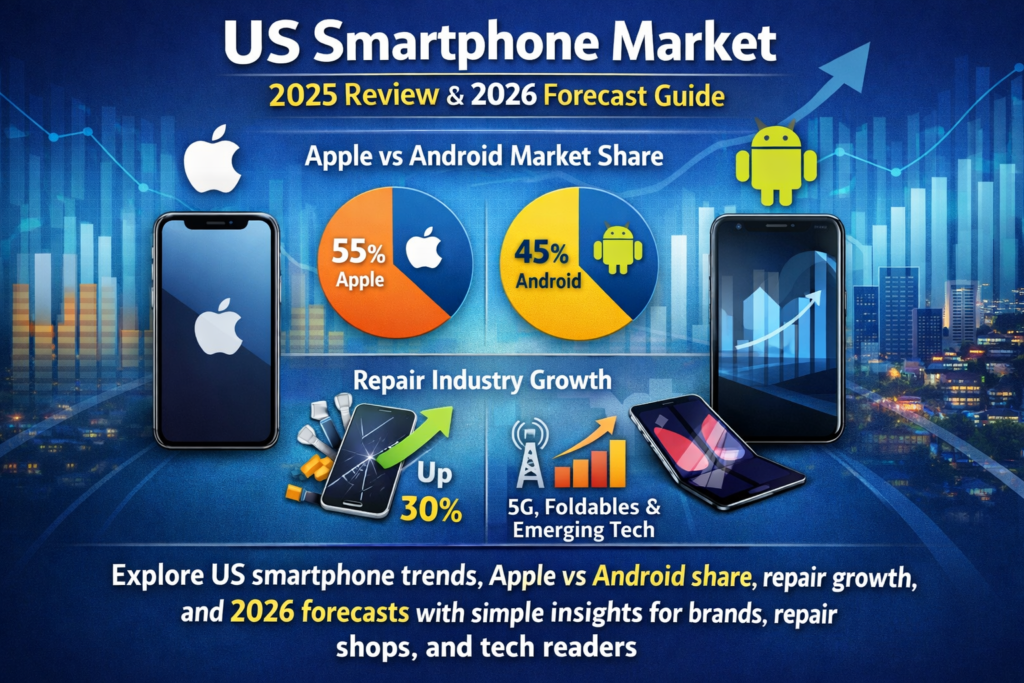
Der US-Smartphone-Markt in 2025 zeigte eine faszinierende Mischung aus Reife und Transformation. Das Umsatzwachstum verlangsamte sich im Vergleich zu den Vorjahren, Dank höherer durchschnittlicher Verkaufspreise und einer starken Premium-Nachfrage stiegen die Einnahmen jedoch weiter an. Apple dominierte den Markt mit einem Rekord 69% Anteil im vierten Quartal 2025, Stärkung seiner Führungsposition. Samsung blieb der zweitgrößte Player, während kleinere Android-Marken in Nischensegmenten hart umkämpft waren.
In der Zwischenzeit, Die Smartphone-Reparaturbranche wuchs stetig. Verbraucher entscheiden sich zunehmend für Reparaturen anstelle von Ersatzlieferungen, getrieben durch steigende Gerätepreise, Nachhaltigkeitsbewusstsein, und längere Austauschzyklen.
Wachstumstreiber und Herausforderungen
Mehrere Kräfte prägten den Markt. KI-Funktionen, fortschrittliche Kameras, und die Integration des Ökosystems führte zu Premium-Upgrades. Jedoch, Steigende Hardwarekosten und geopolitische Verschiebungen in der Lieferkette setzten die Hersteller unter Druck. Wie wir hinschauen 2026, Die Branche steht vor einem möglichen Wendepunkt: höhere Preise, langsameres Einheitenwachstum, und zunehmende Abhängigkeit von Innovationen.
Überblick über den US-Smartphone-Markt in 2025
Marktgrößen- und Umsatztrends
Die Vereinigten Staaten bleiben einer der ausgereiftesten Smartphone-Märkte der Welt. In 2025, Der Gesamtabsatz stieg nur geringfügig – ungefähr 1% im Vergleich zum Vorjahr – der Umsatz stieg jedoch stärker. Warum? Weil die Verbraucher auch während der wirtschaftlichen Unsicherheit weiterhin Premium-Geräte kauften.
Mittelklasse-Smartphones zum Preis zwischen $300 Und $600 erlebte einen großen Anstieg, mit rund 27% Wachstum. High-End-Modelle zum oben genannten Preis $600 blieb stabil, erwirtschaftete aber die meisten Branchengewinne.
Verbrauchernachfrage verändert sich
Premium- und Mittelklasse-Segmente
Verbraucher legen mehr denn je Wert auf Leistung und Wert. Premium-Modelle ziehen immer noch treue Kunden an, die die neuesten Funktionen wünschen. Gleichzeitig, Geräte der Mittelklasse werden immer leistungsfähiger, „Flaggschiff-ähnliche“ Erlebnisse zu niedrigeren Preisen anbieten.
Trends im Austauschzyklus
Der durchschnittliche Smartphone-Ersatzzyklus verlängerte sich weiter, oft länger als drei Jahre. Höhere Preise und eine verbesserte Haltbarkeit der Geräte veranlassten die Leute, vor einem Upgrade zweimal darüber nachzudenken.
Apples Marktführerschaft
Marktanteilswachstum und Daten
Die Dominanz von Apple ist schwer zu ignorieren. Im vierten Quartal 2025, sein US-Marktanteil sank 69%, markiert einen historischen Meilenstein. Ein Großteil dieses Erfolgs war auf die starke Nachfrage nach Pro Max-Modellen und die strategische Expansion in Geräte der Mittelklasse zurückzuführen.
Ökosystemstrategie
Apples Ökosystem – die Kombination von Hardware, Software, und Dienstleistungen – schafft eine hohe Kundenbindung. Funktionen wie die nahtlose Gerätesynchronisierung und Abonnementdienste ermutigen Benutzer, in der Apple-Umgebung zu bleiben.
Carrier-Partnerschaften
Apples enge Beziehungen zu großen US-amerikanischen Mobilfunkanbietern wie AT&T, Verizon, und T-Mobile verstärkte Werbeaktionen und Finanzierungsangebote, Premium-Geräte zugänglicher machen.
Mittelklasse-Erweiterung
Die Einführung erschwinglicherer Modelle ermöglichte es Apple, preisbewusste Verbraucher anzulocken, ohne sein Premium-Image zu verwässern.
Markenwettbewerbslandschaft
Samsungs Strategie und Position
Samsung behauptete mit ca. einen starken zweiten Platz 13% Marktanteil. Die breite Produktpalette – von Galaxy-S-Flaggschiffen bis hin zu Mittelklasse-Handys der A-Serie – trug dazu bei, mehrere Preisklassen abzudecken. Auch faltbare Geräte dienten als wesentliches Unterscheidungsmerkmal.
Google Pixel und KI-Differenzierung
Bei Google Pixel-Geräten lag der Schwerpunkt stark auf KI-Funktionen und Kameraleistung. Die native Android-Integration und fortschrittliche Software zogen Technikbegeisterte an.
Markterfolg von Motorola und Budget
Motorola continued to dominate entry-level and prepaid markets. Affordable models with reliable performance appealed to cost-conscious buyers.
OnePlus and Performance-Focused Users
OnePlus targeted enthusiasts who wanted high performance at competitive prices, often positioning itself as a “flagship killer.”
Brand Market Share Comparison Table
| Marke | Estimated US Market Share (Q4 2025) | Core Strategy | Key Product Lines |
|---|---|---|---|
| Apfel | 69% | Premium ecosystem + mid-range expansion | iPhone Pro/Max, iPhone 16e |
| Samsung | 13% | Wide product range + foldable innovation | Galaxy S, Z Fold/Flip, Eine Serie |
| ~6% | AI software leadership | Pixel Series | |
| Motorola | ~7% | Budget and prepaid focus | Moto G, Razr |
| Andere | ~5% | Niche innovation and value | OnePlus and smaller brands |
US Smartphone Repair Market Analysis
Market Size and Growth
The US smartphone repair industry is a multibillion-dollar market estimated between $3.8 billion and $5 Milliarde. Das Wachstum blieb aufgrund steigender Gerätepreise und Nachhaltigkeitsbedenken stabil.
Haupttreiber der Reparaturnachfrage
Nachhaltigkeitsbewusstsein
Verbraucher werden umweltbewusster. Ein Telefon zu reparieren, statt es auszutauschen, verringert den Elektroschrott und spart Geld.
Steigende Gerätekosten
Als Flaggschiff-Smartphones übertreffen $1,000, Die Reparatur wird zu einer attraktiveren Option als der Kauf eines neuen Geräts.
Große Reparaturdienstleister
Die Branche umfasst offizielle Reparaturzentren der Hersteller, bundesweite Ketten, unabhängige Geschäfte, und DIY-Reparaturgemeinschaften.
Gängige Reparaturarten
Der Austausch von Bildschirmen und Akkus ist mit Abstand die häufigste Reparatur. Auch Probleme mit der Kamera und dem Ladeanschluss tragen erheblich dazu bei.
Herausforderungen und Trends in der Reparaturbranche
Teileverfügbarkeit und Herstellerbeschränkungen
Freie Werkstätten haben oft Schwierigkeiten, an Originalteile zu kommen. Auch Komponentenpaarungen und Softwaresperren können Reparaturen erschweren.
Technikerschulung und neue Technologien
Neue Funktionen wie faltbare Displays und fortschrittliche Kamerasysteme erfordern spezielle Werkzeuge und Schulungen.
Wachstum bei Online-Reparaturdiensten
Viele Unternehmen bieten mittlerweile Mail-in-Reparaturdienste und Online-Buchungssysteme an, Verbesserung des Komforts für die Kunden.
2026 Marktprognose
Steigende Hardwarekosten und Stücklistendruck
Die größte Herausforderung für 2026 Steigende Komponentenkosten. Es wird erwartet, dass die Speicherpreise stark steigen, Hersteller dazu drängen, die Preise zu erhöhen oder die Margen zu senken. Infolge, Auf dem Markt kann es zu „geringerem Volumen, aber höheren Preisen“ kommen.
Geräteseitige KI-Integration
KI wird praktischer und in alltägliche Funktionen integriert – Batterieoptimierung, Verbesserung der Fotografie, und personalisierte Assistenten.
Faltbare und innovative Formfaktoren
Es wird erwartet, dass faltbare Smartphones immer beliebter werden, vor allem unter Technikbegeisterten, die auf der Suche nach neuen Erfahrungen sind.
Anpassungen der Lieferkette und politische Risiken
Zölle und Produktionsverschiebungen
Hersteller diversifizieren ihre Produktion über China hinaus in Länder wie Indien und Vietnam, um Risiken zu reduzieren.
Gesetzgebung zum Recht auf Reparatur
Neue Gesetze könnten von den Herstellern verlangen, die Reparatur von Geräten zu erleichtern, Dies kommt unabhängigen Werkstätten und Verbrauchern zugute.
Strategische Empfehlungen
Ratschläge für Smartphone-Marken
Konzentrieren Sie sich auf die Balance zwischen Innovation und Erschwinglichkeit. Investieren Sie in KI-Funktionen, die das Benutzererlebnis wirklich verbessern, statt in auffällige Marketing-Tricks.
Beratung für Reparaturbetriebe
Erweitern Sie Dienste über Smartphones hinaus auf Tablets und Laptops. Schulen Sie Techniker im Umgang mit neuen Technologien wie faltbaren Displays.
Beratung für Verbraucher und Anleger
Verbraucher sollten beim Kauf von Telefonen Wert auf Langlebigkeit und langfristigen Software-Support legen. Anleger sollten Unternehmen mit starker Lieferkettenkontrolle und erstklassiger Markenpositionierung im Auge behalten.
Einschränkungen melden
Dieser Bericht basiert auf öffentlich zugänglichen Branchendaten und Marktforschung. Die Marktanteilszahlen können je nach Methodik und Datenquellen leicht variieren. Schnelle Veränderungen in der Branche könnten zukünftige Ergebnisse verändern.
Abschluss
Der US-Smartphone-Markt in 2025 zeigte sowohl Stabilität als auch Transformation. Die Dominanz von Apple blieb stark, während Android-Marken nach Differenzierung durch Innovation und Wert suchten. Die Reparaturbranche florierte, da Verbraucher nach nachhaltigen Alternativen zu häufigen Upgrades suchten.
Ich schaue nach vorn 2026, Steigende Hardwarekosten und die KI-Integration werden die Branche verändern. Marken müssen Innovation mit Erschwinglichkeit in Einklang bringen, Reparaturbetriebe müssen sich an neue Technologien anpassen, und Verbraucher werden wahrscheinlich höhere Preise, aber erweiterte Funktionen erwarten. Letztlich, Die Zukunft des Marktes wird davon abhängen, wie gut Unternehmen den Kostendruck bewältigen und gleichzeitig sinnvolle Innovationen liefern.
FAQs
1. Warum dominiert Apple den US-Smartphone-Markt??
Apples starkes Ökosystem, Carrier-Partnerschaften, und eine hohe Kundenbindung verschaffen dem Unternehmen einen starken Wettbewerbsvorteil.
2. Was treibt das Wachstum in der Smartphone-Reparaturbranche an??
Höhere Gerätepreise, Nachhaltigkeitsbewusstsein, und längere Austauschzyklen sind Schlüsselfaktoren.
3. Werden die Smartphone-Preise steigen? 2026?
Ja, Steigende Hardwarekosten und Veränderungen in der Lieferkette dürften die Preise in die Höhe treiben.
4. Wie wird sich KI in Zukunft auf Smartphones auswirken??
KI wird das Batteriemanagement verbessern, Fotografie, und Personalisierung, anstatt nur auffällige Funktionen hinzuzufügen.
5. Werden faltbare Telefone wahrscheinlich zum Mainstream??
Sie wachsen stetig, Die Akzeptanz wird jedoch von einer verbesserten Haltbarkeit und niedrigeren Preisen abhängen.