Bevezetés az afrikai mobilforradalomba
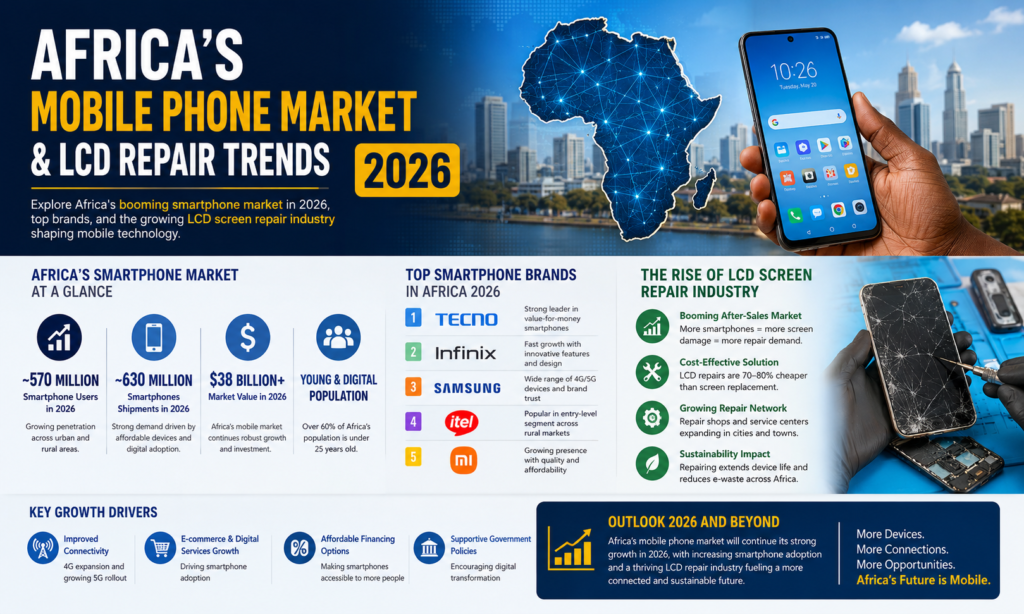
Afrika a világ egyik legizgalmasabb okostelefon-piaca lett. Míg az érett piacok Észak-Amerikában, Európa, és Ázsia egyes részein lassabb növekedés tapasztalható, sok afrikai országban továbbra is egyre nő az okostelefonok elterjedése a megfizethetőség miatt, digitális átalakítás, mobil bankolás, és az internet-hozzáférés bővítése. Emberek milliói számára szerte a kontinensen, Az okostelefonok nem csupán kommunikációs eszközök, hanem az oktatás kapui is, e-kereskedelem, egészségügyi ellátás, közösségi média, és pénzügyi szolgáltatások.
Az afrikai mobil ökoszisztéma drámai fejlődésen ment keresztül az elmúlt évtizedben. Azok a fogyasztók, akik egykor erősen támaszkodtak a funkciós telefonokra, most a belépő szintű és középkategóriás okostelefonok felé mozdulnak el. Ez az átállás óriási lehetőségeket teremtett az okostelefon-gyártók számára, forgalmazók, kiskereskedők, és javítási szolgáltatók. Egy időben, az okostelefon-felhasználók növekvő száma növelte a cserealkatrészek iránti keresletet, főleg LCD képernyők, OLED kijelzők, akkumulátorok, töltőportok, és javítási szolgáltatások.
Az afrikai okostelefon-piac egyedülálló, mert a vásárlási döntéseket gyakran a megfizethetőség befolyásolja, akkumulátor élettartama, tartósság, kamera teljesítménye, és két SIM funkcionalitás. Azok a márkák, amelyek megértik ezeket a helyi igényeket, figyelemre méltó sikereket értek el. Köztük, kínai gyártók, különösen a Transsion csoport, domináns jelenlétet épített ki azáltal, hogy kifejezetten az afrikai fogyasztók számára szabott termékeket. Az okostelefonok növekvő elterjedésének és a javítási igények növekedésének kombinációja virágzó ökoszisztémát hoz létre, amely továbbra is vonzza a globális figyelmet..
Az afrikai okostelefon-piac jelenlegi helyzete
Piaci növekedési és szállítási trendek
Az afrikai okostelefon-piac erőteljes növekedést produkált az elmúlt időszakban 2025 és továbbra is vonzza a globális okostelefon-gyártókat. Az Omdia több iparági forrásból származó adatai szerint, Afrikában elért okostelefon-szállítások kb 84.4 millió egységben 2025, képviselve a 13% évről évre növekszik, Afrikát a világ egyik leggyorsabban növekvő okostelefon-régiójává tette.
Ehhez a növekedéshez több tényező is hozzájárult. Gazdasági stabilizáció a kulcsfontosságú országokban, a finanszírozási programokhoz való jobb hozzáférés, a távközlési infrastruktúra bővítése, és a versenyképes árképzési stratégiák segítettek növelni az okostelefonok megfizethetőségét. Olyan országok, mint Nigéria, Dél-Afrika, Egyiptom, és Kenya továbbra is a kontinens fő növekedési motorja maradt. Az olcsóbb Android-eszközök növekvő elérhetősége az alábbi árakon $200 az okostelefonok tulajdonjogát első alkalommal használók milliói számára tette elérhetővé.
A piac az inflációs nyomás és az árfolyam-ingadozások ellenére is erős rugalmasságot mutat. A gyártók továbbra is innovációt folytatnak a pénztárcabarát 4G és 5G okostelefonok bevezetésével, miközben bővítik kiskereskedelmi hálózataikat. Ennek eredményeként, Az okostelefonok elterjedtsége folyamatosan növekszik a városi és vidéki régiókban egyaránt, jelentős lehetőségeket teremtve a mobilszolgáltatók és a javítási vállalkozások számára egyaránt.
Az átállás a kiemelt telefonokról az okostelefonokra
Afrika mobilkörnyezetét meghatározó jelentős tendencia a mobil telefonokról az okostelefonokra való folyamatos migráció. Az okostelefonok ma már nagyjából 55% az összes mobiltelefon-szállításból Afrikában, a fogyasztói magatartás jelentős átalakulását tükrözi.
Ezt az elmozdulást nagymértékben a mobilinternet-hozzáférés növekvő jelentősége okozza. Mobil banki platformok, digitális fizetési rendszerek, online oktatás, és a közösségi média alkalmazások olyan okostelefon-funkciókat igényelnek, amelyeket a telefonkészülékek nem tudnak biztosítani. Az olyan szolgáltatások, mint a mobilpénz, számos afrikai országban mélyen beépültek a mindennapi életbe, az okostelefonok alapvető eszközzé tétele luxustermékek helyett.
Ahogy növekszik az okostelefonok elterjedése, így a karbantartást és javítást igénylő készülékek telepített bázisa is. A képernyő sérülése továbbra is az egyik leggyakoribb probléma, amellyel a felhasználók szembesülnek, az LCD-csereszolgáltatások kritikus szegmenssé tétele a szélesebb mobil ökoszisztémán belül.
Az afrikai okostelefonok terjeszkedésének fő mozgatórugói
Megfizethető eszközök és finanszírozási programok
A megfizethetőség továbbra is a legfontosabb tényező, amely befolyásolja az okostelefonok vásárlását Afrikában. Az eladott készülékek többsége a belépő szintű és a pénztárcabarát kategóriákba tartozik. Az iparági jelentések szerint az okostelefonok ára alacsonyabb $200 alatt a szállítmányok jelentős többségét képviselték 2025.
A gyártók válaszul kifejezetten a költségtudatos fogyasztók számára készült termékeket fejlesztettek ki. Az eszközfinanszírozási programok is egyre népszerűbbek, lehetővé teszi az ügyfelek számára, hogy részletekben fizessenek a nagy előzetes vásárlások helyett. A távközlési szolgáltatók és a fintech cégek együttműködnek annak érdekében, hogy rugalmas fizetési megoldásokat kínáljanak, amelyek elérhetőbbé teszik az okostelefonok tulajdonjogát.
Ezek a finanszírozási modellek jelentősen kiterjesztették a megszólítható piacot, és felgyorsították az okostelefonok elterjedését az alacsonyabb jövedelmű lakosság körében..
A 4G és 5G hálózatok bővítése
A hálózat bővítése továbbra is ösztönzi az okostelefonok iránti keresletet Afrikában. A 4G infrastruktúrába való beruházások sok országban javították a kapcsolatot, miközben az 5G korai szakaszában történő bevezetése egyre nagyobb lendületet kap az olyan piacokon, mint Dél-Afrika és Egyiptom.
A fogyasztók egyre gyakrabban keresnek olyan eszközöket, amelyek képesek támogatni a gyorsabb internetsebességet és a jobb mobilélményt. Egyre elérhetőbbek a megfizethető 5G okostelefonok, arra ösztönzi a felhasználókat, hogy frissítsenek régebbi eszközökről. Ez a frissítési ciklus nemcsak a gyártók számára előnyös, hanem lehetőségeket teremt a javítóműhelyek számára is, mivel a régebbi telefonok továbbra is forgalomban maradnak a viszonteladói és felújítási piacokon..
A legnépszerűbb okostelefon-márkák, amelyek uralják Afrikát
Tecno
A TECNO Afrika egyik legelismertebb okostelefonmárkája lett. Sikerét a funkciókban gazdag eszközök rendkívül versenyképes áron kínálják. A TECNO okostelefonok különösen nagy akkumulátoruk miatt népszerűek, kamera optimalizálás a sötétebb bőrtónusokhoz, és a helyi preferenciákhoz szabott, vonzó dizájn.
Infinix
Az Infinix a fiatalabb fogyasztókat célozza meg, akik stílusos eszközöket keresnek erős játékteljesítménnyel és modern funkciókkal. A márka erős hírnevet szerzett Nigériában, Kenya, Ghána, és számos más afrikai piacon. A versenyképes árképzés és az agresszív marketing hozzájárult a gyors növekedéshez.
itel
Az itel azokra az ultra-költségvetésű eszközökre összpontosít, amelyeket az első alkalommal vásárló okostelefon-vásárlók számára terveztek. Termékei a megfizethetőséget hangsúlyozzák, megbízhatóság, és hosszú akkumulátor-élettartam. Sok fogyasztó számára, akik belépnek az okostelefonok piacára, itel elérhető kiindulópontként szolgál.
Samsung
A Samsung továbbra is Afrika egyik legerősebb okostelefon-márkája. A Galaxy A-sorozat a minőségi egyensúly miatt különösen sikeres volt, megfizethetőség, és a márkabizalom. A Samsung erős pozíciókat tart fenn mind a belépő szintű, mind a prémium szegmensben.
Xiaomi
A Xiaomi folyamatosan terjeszkedett Afrika egész területén, magas műszaki jellemzőket kínálva versenyképes áron. A vállalat elterjedt az értéktudatos fogyasztók körében, akik prémium szolgáltatásokat keresnek prémium árak nélkül.
alma
Bár az Apple az egységszállítások kisebb részét képviseli, a márka erős jelenlétet tart fenn a jómódú fogyasztók és üzleti szakemberek körében. iPhone javítási igény, különösen képernyőcsere, az Apple eszközök prémium jellege miatt folyamatosan magas.
Miért vezetik a Transsion Brands az afrikai piacot?
A helyi fogyasztói igények megértése
Az afrikai okostelefon-piac egyik legfigyelemreméltóbb sikertörténete a Transsion Holdings, a TECNO mögött álló anyavállalat, Infinix, és itel. A friss piaci adatok szerint, A Transsion márkák együttesen kb 48% az afrikai okostelefon-szállítmányokból 2025.
A vállalat sikere abból fakad, hogy sok versenytársánál jobban megérti a helyi piaci követelményeket. A Transsion által kifejlesztett telefonok több SIM-kártya nyílással, megnövelt akkumulátor-élettartam, és az afrikai bőrtónusokra optimalizált kamerarendszerek. Ezek a látszólag kis kiigazítások jelentős versenyelőnyt teremtettek.
Megfizethető árképzési stratégiák
A Transsion árazási stratégiája egy másik kulcsfontosságú tényező dominanciája mögött. Azáltal, hogy a megfizethetőségre összpontosít, miközben fenntartja az elfogadható teljesítménynormákat, a vállalat sikeresen megragadta a tömegpiaci szegmenst, ahol az afrikai fogyasztók többsége hoz vásárlási döntéseket.
| Márka | Fő szegmens | Kulcs erőssége |
|---|---|---|
| Tecno | Költségvetés/Középkategória | Fényképezőgép és akkumulátor |
| Infinix | Ifjúsági/Gaming | Teljesítmény és dizájn |
| itel | Belépő szintű | Ultra megfizethető árképzés |
| Samsung | Középkategória/prémium | Márka hírneve |
| Xiaomi | Értékközpontú | Magas specifikációk |
| alma | Prémium | Ökoszisztéma és presztízs |
Főbb okostelefon-piacok Afrika-szerte
Nigéria
Nigéria továbbra is Afrika legnagyobb okostelefon-piaca népesség szerint. A keresletet a fiatal demográfia vezérli, gyors urbanizáció, és a mobil pénzügyi szolgáltatások erőteljes elterjedése. Tecno, Infinix, Samsung, és a Xiaomi jelentős piaci jelenléttel rendelkezik.
Dél-Afrika
Dél-Afrika a kontinens egyik legfejlettebb okostelefon-piaca. Az országban erőteljes növekedés tapasztalható a megfizethető 5G-eszközök terén, és továbbra is kulcsfontosságú célpont a globális okostelefon-gyártók számára.
Egyiptom
Egyiptom profitált a helyi gyártási kezdeményezésekből és a növekvő fogyasztói keresletből. Az ország a régió fontos termelési és elosztási központjaként szolgál.
Kenya
Kenya továbbra is technológiai vezető Kelet-Afrikában. A mobilbanki innováció és az internet széles körű elterjedése hozzájárult az okostelefonok iránti erős kereslethez, különösen a fiatalabb fogyasztók körében.
A növekvő mobiltelefon-javító iparág
Növekvő kereslet az LCD-képernyő cseréje iránt
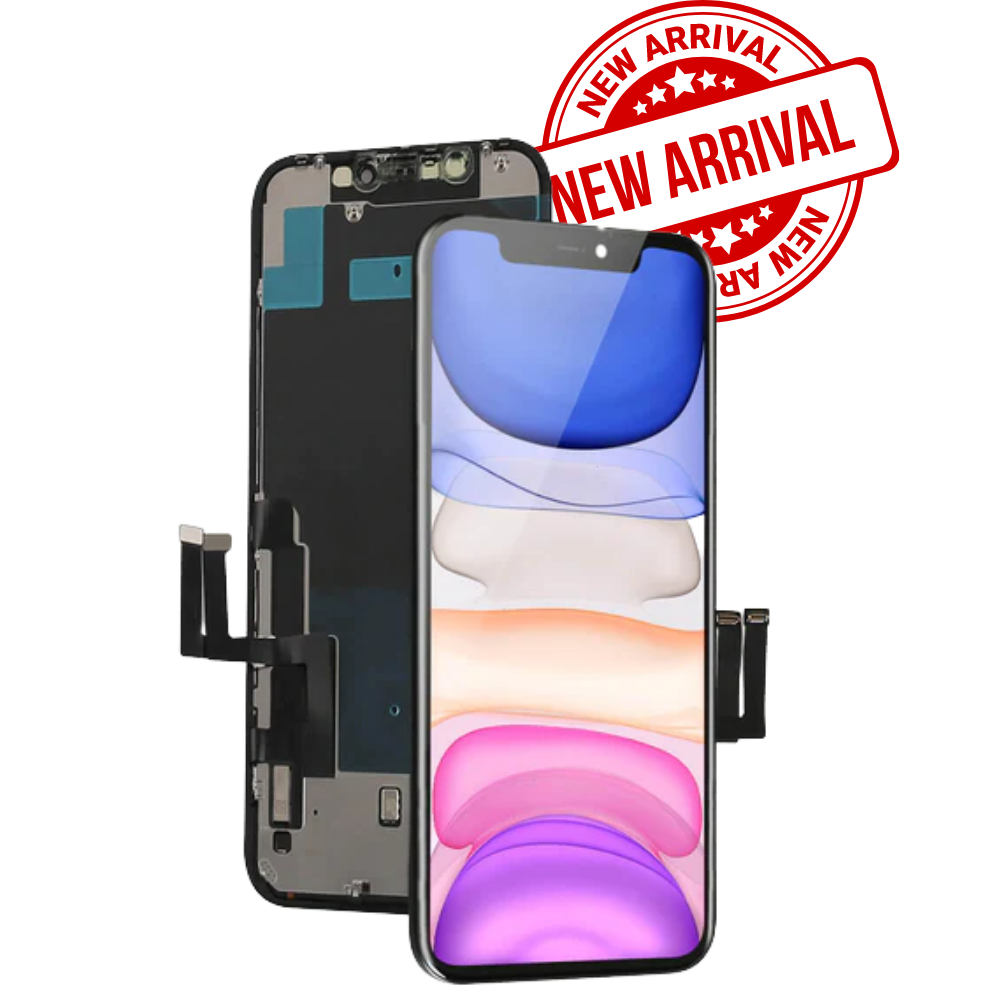
Az okostelefonok tulajdonjogának növekedésével, így a javítási igény is. Az összes javítási kategória között, LCD és OLED kijelző csere továbbra is a fogyasztók által kért leggyakoribb szolgáltatás. Repedt képernyők, érintési hibák, kijelző elszíneződése, és a véletlen leejtés állandó igényt generál a cserekijelzőkre.
Sok afrikai piacon, a fogyasztók inkább a készülékek javítását részesítik előnyben, mint új telefonok vásárlását. A gazdasági megfontolások nagy szerepet játszanak ebben a döntésben. Egy új okostelefon töredékébe kerülő képernyőcsere gyakran a legpraktikusabb megoldás.
A javítóműhelyek az okostelefonok ökoszisztémájának alapvető elemeivé váltak. A kis környéki javítóközpontoktól a nagyobb szervizláncokig, a kijelzőcserére szakosodott vállalkozások továbbra is terjeszkednek az egész kontinensen.
Független javítóműhelyek kontra hivatalos szervizközpontok
A megfizethetőség és a hozzáférhetőség miatt a független javítóműhelyek uralják az afrikai javítási piacot. Az ügyfelek gyakran választanak független szerelőket, mert a javítások gyorsan és alacsonyabb költségek mellett elvégezhetők, mint a hivatalos szervizközpontokban.
Felhatalmazott központok, viszont, továbbra is fontosak a prémium márkák, például a Samsung és az Apple számára. Ezek a létesítmények általában eredeti alkatrészeket használnak, és garanciális szolgáltatásokat nyújtanak, vonzó a magasabb szintű megbízhatóságot kereső ügyfelek számára.
Mobil LCD-képernyők ellátási lánca Afrikában
A csereképernyők forrásai
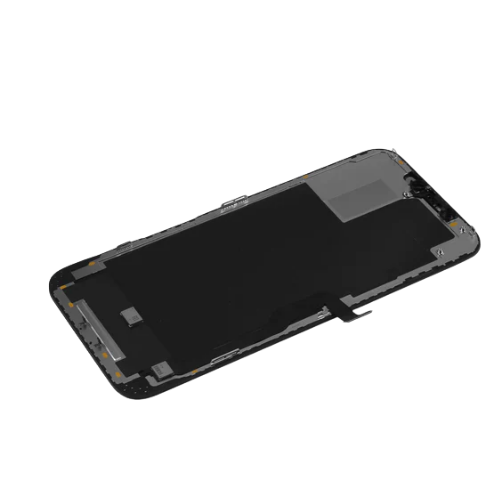
A legtöbb Afrikában használt okostelefon-csere-kijelzőt kínai gyártóközpontokból importálják. Shenzhen továbbra is az LCD- és OLED-gyártás jelentős globális központja, ellátó nagykereskedőket, forgalmazók, és javítási vállalkozások Afrika-szerte.
Az ellátási lánc magában foglalja a gyártókat, exportőrök, nagykereskedők, regionális forgalmazók, és a helyi javítóműhelyek. Ez az ökoszisztéma biztosítja, hogy cserekijelzők álljanak rendelkezésre a népszerű és a kevésbé elterjedt okostelefonokhoz egyaránt.
Eredeti, Húzták, Felújított, és utángyártott kijelzők
A javítóvállalkozások általában több fajta csereképernyővel dolgoznak:
| Képernyő típusa | Leírás | Tipikus piaci pozíció |
|---|---|---|
| Eredeti Képernyő | Vadonatúj eredeti kijelző | Prémium |
| Service Pack képernyő | Hivatalos gyártói csere | High-end |
| Húzott képernyő | Eltávolítva a használt eszközök közül | Középkategóriás |
| Felújított képernyő | Eredeti kijelző javítva | Költséghatékony |
| Utángyártott LCD | Harmadik fél által gyártott kijelző | Költségvetés |
Ezeknek a kategóriáknak a megértése fontos azon forgalmazók és javítóműhelyek számára, amelyek a vásárlók eltérő költségvetésének és minőségi elvárásainak szeretnének megfelelni.
Lehetőségek mobil LCD beszállítók és nagykereskedők számára
Az afrikai javítóipar jelentős lehetőségeket kínál a mobil LCD-beszállítók számára. Az okostelefonok elterjedtségének növekedésével, ennek megfelelően nő a javítást igénylő készülékek telepített bázisa. A kereslet a zászlóshajó modelleken túl a TECNO olcsó és középkategóriás készülékeit is magában foglalja, Infinix, itel, Samsung, Xiaomi, Oppo, és Vivo.
Állandó minőséget biztosítani képes beszállítók, versenyképes árképzés, és a megbízható logisztika erős partneri kapcsolatokat létesíthet afrikai forgalmazókkal és javítóhálózatokkal. Olyan országok, mint Nigéria, Dél-Afrika, Kenya, Egyiptom, Ghána, és Tanzánia különösen vonzó lehetőségeket kínál nagy okostelefon-felhasználói bázisa miatt.
Nagykereskedők, akik felvilágosítják az ügyfeleket a képernyő minőségi különbségeiről, garanciális lehetőségek, és a telepítési szabványok is erősebb hosszú távú kapcsolatokat építhetnek ki a piacon.
Az afrikai okostelefonok és -javítási piac jövőbeli kilátásai
Afrika okostelefon-piaca továbbra is a világ egyik legígéretesebb növekedési régiója. Folyamatos urbanizáció, az internet hozzáférés bővítése, digitális átalakítási kezdeményezések, és az okostelefonok növekvő megfizethetősége várhatóan növeli a hosszú távú keresletet. Az iparági előrejelzések a gazdasági kihívások ellenére folyamatos növekedést jeleznek.
Az okostelefonok elterjedésével párhuzamosan a javítási ipar valószínűleg bővülni fog. A fogyasztók egyre tudatosabbak az eszközök élettartamát és a javítási költségeket illetően, kedvező feltételek megteremtése a képernyőcsere-vállalkozások és az alkatrész-beszállítók számára. Megfizethető 5G eszközök megjelenése, fokozott helyi közgyűlési erőfeszítések, és az erősebb elosztó hálózatok tovább támogatják a piac fejlődését.
LCD gyártóknak, nagykereskedők, és javítási szolgáltatók, Afrika jelentős lehetőséget jelent, ahol a minőségi csereképernyők iránti kereslet várhatóan még évekig erős marad.
Következtetés
Afrika mobiltelefon-piaca a növekedés és a lehetőségek új korszakába lépett. Többet elérő okostelefon-szállítmányokkal 84 millió darab évente, és az elfogadás folyamatosan növekszik, a kontinens a világ egyik legdinamikusabb okostelefon-régiója lett. Márkák, mint például a TECNO, Infinix, itel, Samsung, Xiaomi, és az Apple továbbra is versenyez a piaci részesedésért, míg a Transsion fenntartja domináns pozícióját a helyi fogyasztói igények mély megértése révén.
Egy időben, az okostelefonok számának gyors növekedése virágzó javítási ökoszisztémát hajtott végre. LCD képernyő csere, OLED javítások, és a felújítási szolgáltatások alapvető iparágakká váltak, amelyek eszközfelhasználók millióit támogatják Afrikában. Gyártóknak, forgalmazók, nagykereskedők, és javítási vállalkozások, az afrikai piac jelentős növekedési potenciált kínál, amely valószínűleg a jövőben is folytatódni fog.
GYIK
1. Melyik okostelefon márka a legnépszerűbb Afrikában?
Transzion márkák, beleértve a TECNO-t is, Infinix, és itel, együttesen birtokolják az afrikai okostelefon-piac legnagyobb részesedését, körülbelül 48% beérkező szállítmányok közül 2025.
2. Miért sikeresek Afrikában a TECNO és az Infinix??
Sikerük a megfizethető áraknak köszönhető, hosszú akkumulátor-élettartam, kettős SIM funkció, lokalizált funkciók, és az afrikai fogyasztókra szabott erős elosztóhálózatok.
3. Növekszik-e az okostelefonok javítási piaca Afrikában??
Igen. Az okostelefonok növekvő birtoklása és az eszközök cseréjének költségei növelik a képernyőcsere iránti keresletet, akkumulátor csere, és egyéb javítási szolgáltatások.
4. Milyen típusú csereképernyőket használnak általában Afrikában?
Eredeti képernyők, szervizcsomag képernyők, húzott képernyők, felújított képernyők, és az utángyártott kijelzőket általában az ügyfelek költségvetésétől és minőségi követelményeitől függően használják.
5. Mely afrikai országok kínálják a legnagyobb lehetőségeket a mobiltelefon-alkatrészek beszállítói számára?
Nigéria, Dél-Afrika, Egyiptom, Kenya, Ghána, és Tanzánia a legvonzóbb piacok közé tartozik nagy és növekvő okostelefon-felhasználóinak köszönhetően.