Bevezetés
Miért fontos Európa a Xiaomi számára?
Európa nem csupán egy újabb tengerentúli piac a Xiaomi számára – ez a záróvizsga. Ha Ázsiában a lépték épül, és a feltörekvő piacokon nő a mennyiség, akkor Európa az, ahol a márkákat valóban tesztelik. Érett fogyasztók, szigorú előírásokat, erős hordozó hatás, és a mélyen gyökerező márkahűség Európát a bolygó egyik legkeményebb okostelefon-arénájává teszi.
A Challengertől a Top-Tier Contenderig
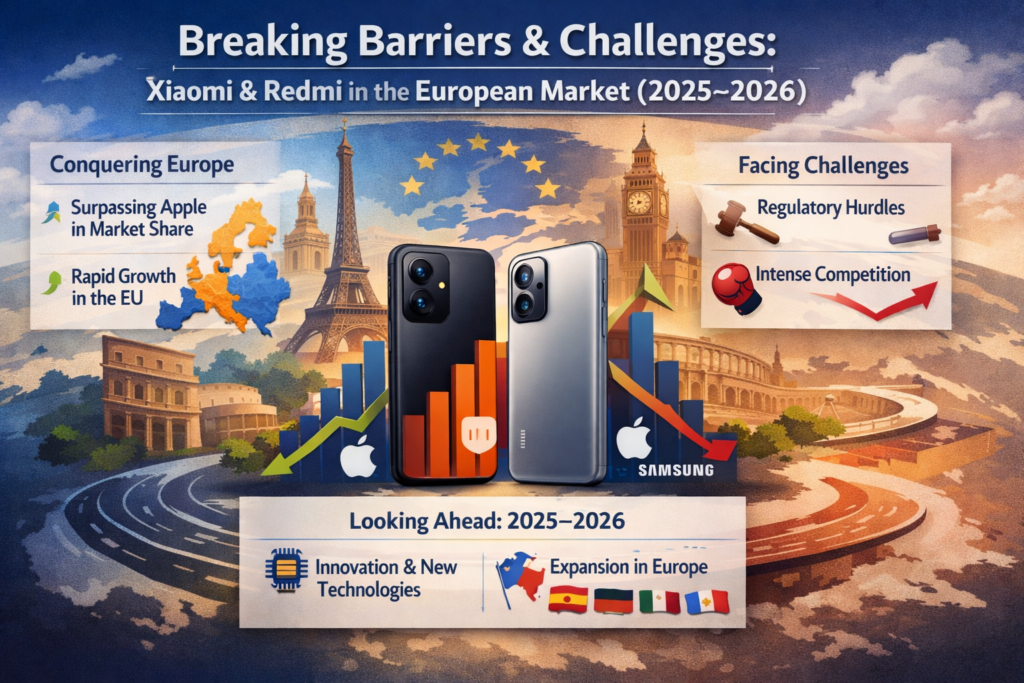
In 2025, A Xiaomi nem csak úgy megjelent, hanem zajt is adott. Azzal, hogy a második negyedévben megelőzte az Apple piaci részesedését, A Xiaomi jelezte, hogy már nem elégedett azzal, hogy „olcsó alternatíva”. Helyet akar a prémium asztalhoz, még ha az a szék még kissé ingatag is.
Vezetői összefoglaló
Történelmi áttörés a második negyedévben 2025
A második negyed 2025 mérföldkövet jelölt meg. A Xiaomi kb 23% az európai okostelefon-piacon, a történelem során először megelőzte az Apple-t, és megszerezte a második helyet a Samsung mögött. Ez nem volt szerencsés negyedév – több éves alapozás eredménye volt.
Mit jelent valójában ez a váltás
Ez az eredmény többet tükröz, mint a szállítmányok számát. Ez azt mutatja, hogy a kínai márkák, Xiaomi vezetésével, az agresszív terjeszkedésről az értékvezérelt versenyre térnek át. A nagy kérdés most: képes-e a Xiaomi a lendületet hosszú távú márkaértékké alakítani?
Az európai okostelefon-piac áttekintése
Piaci érettség és telítettség
Az európai okostelefon-piac olyan, mint egy zsúfolt metró a csúcsforgalomban – már mindenki bent van. A növekedés nem az új felhasználókból fakad, hanem abból, hogy meggyőzik az embereket a márkaváltásról vagy a gyorsabb frissítésről.
Fogyasztói magatartási trendek (2025–2026)
Az európai fogyasztók pragmatikusak. Az infláció és a gazdasági bizonytalanság ártudatosabbá tette a vásárlókat, de nem a minőség rovására.
Költségvetési érzékenység vs. Márkahűség
Itt van a paradoxon: a fogyasztók jobb ajánlatokat akarnak, mégis érzelmileg kötődik az Apple-hez és a Samsunghoz. A Xiaomi kihívása az, hogy megtörje a szokásait a bizalom megtörése nélkül.
A Xiaomi piaci teljesítménye Európában
A piaci részesedés növekedésének magyarázata
Éves növekedéssel kb 11%, A Xiaomi volt az egyetlen első három márka, amely a második negyedévben növekedett 2025. A Samsung és az Apple is elutasította, ritka lehetőség ablakát nyitja meg.
Szállítási adatok vs. Aktív felhasználói adatok
A szállítmányokon alapuló jelentések a Xiaomi-t egy erőműként mutatják be. Viszont, a felhasználáson alapuló adatok konzervatívabb történetet mesélnek el.
Az adathiány megértése
Ez a hiányosság azt sugallja, hogy a Xiaomi sok telefont ad el – de sok belépő vagy középkategóriás készülék. A piaci jelenlét erős, de a prémium mindshare még mindig elmarad.
Versenyképes tájelemzés
A Samsung védekező álláspontja
A Samsung továbbra is Európa vezető szerepet tölti be széles portfóliójának és szolgáltatói kapcsolatainak köszönhetően. A csökkenő szállítmányok mégis a fáradtságra utalnak.
Apple Premium Stronghold
Lehet, hogy az Apple lecsúszott a harmadik helyre, de markolata a csúcskategóriás szegmensben vaskalapos marad. A hűség a titkos fegyvere.
Feltörekvő riválisok: Motorola és Realme
A Motorola hanyatlása és a realme felemelkedése azt mutatja, hogy a középkategóriás csatatér még korántsem rendeződött. A Xiaomi nem engedheti meg magának az önelégültséget.
Kettős márka stratégia: Xiaomi + Redmi
Redmi, mint a Volume Engine
A Redmi ott virágzik, ahol szűk a pénztárca. Olyan specifikációkat kínál, amelyek alkunak tűnnek, különösen a gazdasági visszaesések idején.
A Xiaomi márka imázsépítőként
Míg a Redmi forgalmat hoz, A Xiaomi márkájú zászlóshajók presztízsépítésre szolgálnak.
Tiszta szegmentáció vagy márkazavar?
A Redmi és a Xiaomi közötti határ néha elmosódik. A világosabb megkülönböztetés elengedhetetlen az önkannibalizálás elkerüléséhez.
Termékstratégia és portfólióoptimalizálás
Flagship sorozat és összecsukható
A Xiaomi digitális sorozatai és összecsukható telefonjai technológiai bemutatók. Bebizonyították, hogy a Xiaomi képes újítani, nem csak az árban versenyez.
Középkategóriás uralom
Ez a Xiaomi komfortzónája. Erős specifikációk, agresszív árképzés, és a gyors frissítési ciklusok lábujjhegyen tartják a versenytársakat.
Árképzési stratégia az inflációs Európában
A Xiaomi rugalmas árazása lengéscsillapítóként működik, jobban segít eligazodni a gazdasági nehézségeken, mint a merev prémium márkák.
Csatorna innováció és lokalizáció
Stratégiai partnerség az AliExpressszel
Az AliExpressszel való együttműködés játékmódot jelent. Ez nem csak a telefonok eladásáról szól, hanem az ügyfélkapcsolat birtoklásáról.
Operátori csatornák vs. Közvetlenül a fogyasztóhoz
Míg a fuvarozók méretet kínálnak, közvetlen csatornák kínálják az irányítást. A Xiaomi bölcsen egyensúlyozza mindkettőt.
Lokalizált márkaélmény felépítése
Lokalizált tartalom, logisztika, és az értékesítés utáni támogatás a Xiaomit külföldi márkából ismerős névvé varázsolja.
Az „ember–autó–otthon” ökoszisztéma előnye
Okostelefonok, mint vezérlőközpont
A Xiaomi világában, a telefon az agy, nem a test. Minden ehhez kapcsolódik.
AIoT növekedés Európában
Az AIoT-bevételek megugrásával 60%, A Xiaomi csendesen beágyazódik az európai otthonokba.
Ökoszisztéma bezárási effektus
Miután a felhasználók bevásárolnak az ökoszisztémába, A távozás olyan érzés, mint a költözés – lehetséges, de fájdalmas.
A márkaérzékelés és a prémium dilemma
Az „Érték arány” címke
Ez a címke építette a Xiaomi-t, de be is kerülhet.
Lehet-e igazán prémium a Xiaomi??
A prémium nem csak hardver. Ez történetmesélés, következetesség, és érzelmi kapcsolat.
Az Apple és a Samsung tanulságai
Mindkét márka éppúgy értékesít érzéseket, mint funkciókat. A Xiaomi tanul – de ez egy maraton, nem sprint.
Pénzügyi mutatók és ASP-kihívások
Az ASP elutasítása magyarázata
A költségvetési modellek nagyobb aránya lehúzta az átlagos eladási árakat a második negyedévben 2025.
Skála vs. Jövedelmezőség
A több egység nem mindig jelent több profitot. A Xiaominak egyensúlyba kell hoznia az ambíciót az árréssel.
Fenntartható-e a növekedés?
Igen – de csak akkor, ha a prémium eszközök valódi tapadást nyernek.
Az előttünk álló legfontosabb kockázatok és kihívások
Erősödő verseny
Az árháborúk brutálisak, és az innovációs ciklusok rövidülnek.
Gazdasági és geopolitikai kockázatok
Infláció, kereskedelmi politikák, a geopolitikai feszültségek pedig bizonytalansági rétegeket adnak hozzá.
Szabályozási és kereskedelmi bizonytalanság
A megfelelési költségek és a szakpolitikai változások gyorsan alááshatják az előnyöket.
Stratégiai kilátások 2025–2026-ra
Belépve a 200 Millió Klub
A Xiaomi célja, hogy csatlakozzon a Samsunghoz és az Apple-hez, mint évi 200 millió darabos eladó.
Európa mint hosszú távú csatatér
A siker Európában nem opcionális, hanem egzisztenciális.
Stratégiai ajánlások
A márkaépítés prioritásai
Koncentráljon a zászlóshajó marketingre a történetmesélésre, nem specifikációk.
Termék és ökoszisztéma integráció
Kösse össze az okostelefonokat AIoT-termékekkel, hogy életmód-megoldásokat hozzon létre.
Csatorna és kiskereskedelmi optimalizálás
Változtassa az offline üzleteket magával ragadó ökoszisztéma élményközpontokká.
Következtetés
Az áttöréstől az elszakadásig
Lenyűgöző a Xiaomi felemelkedése Európában, de az igazi kihívás előttünk áll. Piaci részesedést árazással és gyorsasággal lehet nyerni; a márka értékéhez türelem és hit kell. A következő fejezet nem az Apple üldözéséről szól, hanem az összetéveszthetetlenül Xiaomivá válásról. Ha sikerül, ez nem csak vállalati győzelem lesz, hanem a világra törő kínai márkák tervrajza.
GYIK
1. Miért múlta felül a Xiaomi az Apple-t Európában? 2025?
Az erős középkategóriás eladások miatt, rugalmas árképzés, és a versenytársak szállítmánya csökken.
2. A Xiaomi prémium márkának számít Európában??
Még nem teljesen. Értéke miatt tisztelik, de a prémium felfogás még mindig alakul.
3. Milyen szerepet játszik a Redmi a Xiaomi stratégiájában??
A Redmi növeli a mennyiséget és a piaci penetrációt, különösen a költségvetés-tudatos vásárlók körében.
4. Mennyire fontos az AIoT ökoszisztéma a Xiaomi számára?
Ez egy kulcsfontosságú megkülönböztető tényező, amely növeli a felhasználói hűséget és a hosszú távú értéket.
5. Fenntarthatja-e a Xiaomi növekedését? 2026?
Igen, de csak akkor, ha sikeresen egyensúlyba hozza a méretet a prémium márkaépítéssel.