Bevezetés
Mivel 2018, Az Apple iPhone termékcsaládja következetesen újradefiniálta az okostelefonok tervezését és a kijelző innovációját. Bevezetésétől a Super Retina HD panelek az iPhone XS-ben a Dinamikus sziget és ProMotion 120 Hz-es kijelzők modern modelleken, Az Apple megmutatta elkötelezettségét a stílus egyensúlyozása iránt, funkcionalitás, és a vizuális kiválóság.
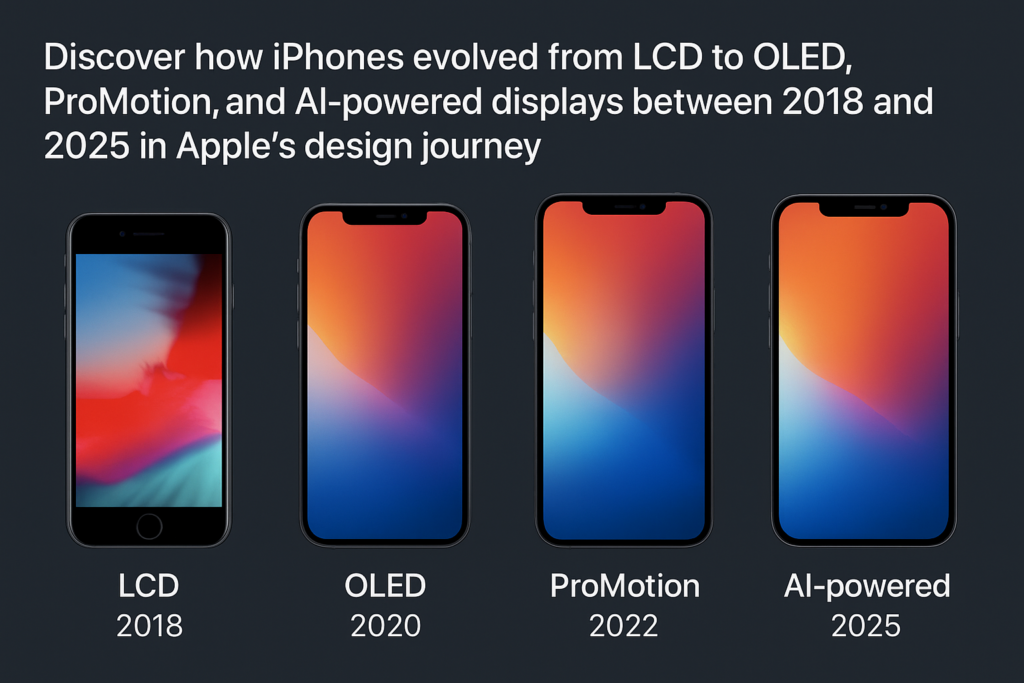
Vessünk egy pillantást az iPhone-ok közötti fejlődésre 2018 és 2025, köztük néhányat jövőbeli előrejelzések amelyek tükrözik az iparági trendeket és az Apple pályáját.
iPhone Evolution: Tól 2018 -hoz 2025
Között 2018 és 2025, Az Apple szinte minden modellnél áttért az LCD-ről az OLED-re. A Liquid Retina HD LCD-k utat engedett Super Retina XDR OLED-ek, amelyek most uralják a felállást. Az út jelentős mérföldköveket is tartalmaz – mint pl 5G, ProMotion, Mindig bekapcsolt kijelző, és a váltson USB-C-re.
Által 2025, az iPhone-kínálat várhatóan olyan finomítási szintet ér el, amely integrálja AI-alapú kamerarendszerek, okosabb kijelzők, és rendkívül hatékony lapkakészletek.
Az Apple megjelenítési technológiáinak megértése
LCD vs OLED
LCD (Folyékony kristály kijelző) olyan korábbi modellekben használták, mint az iPhone XR és SE. OLED (Szerves fénykibocsátó dióda), viszont, mélyebb feketéket biztosít, jobb kontraszt, és megnövelt hatékonyság – immár alapfelszereltség az Apple zászlóshajó modelljeiben.
Super Retina HD és XDR
Az Apple bemutatta Super Retina HD be 2018 és Super Retina XDR be 2019, kiváló fényerőt és kontrasztot kínál. A XDR (Extrém dinamikus tartomány) technológia javítja a HDR tartalom megjelenítését, élénk színvisszaadást biztosít.
ProMotion és Mindig bekapcsolt kijelző
ProMotion technológia, először a iPhone 13 Profi, lehetővé teszi a 120Hz-es frissítési gyakoriság-simább animációk és görgetés létrehozása. Később, a Mindig bekapcsolt kijelző az iPhone-ban 14 A Pro sorozat még akkor is láthatóvá tette az információkat, amikor a képernyő tétlen volt.
iPhone modellek áttekintése (2018–2023)
2018: Az OLED és az LCD elválasztó
A iPhone XS, XS max, és XR az Apple kettős megközelítését jelölte meg: prémium OLED és megfizethető LCD opciók. Az XR-ek Folyékony Retina LCD a költségvetés-tudatos felhasználókat vonzotta.
2019: Háromszoros kamera és teljesítménynövelés
A iPhone 11 Profi sorozat hozta hármas kamerák és a A13 Bionic chip, növeli a fényképezést és az akkumulátor élettartamát.
2020: 5G és Flat-Edge Design
Az Apple visszatért a lapos élekhez iPhone 12 sorozat, hozva a felfrissített dizájn, Kerámia pajzs, és 5G kapcsolat. Az OLED kijelzők szabványossá váltak a termékkínálatban.
2021: A ProMotion iPhone-ra érkezik
A iPhone 13 Profi és Pro Max kiemelt ProMotion kijelzők, támogatja a 120 Hz-es frissítési gyakoriságot – ideális játékosok és tartalomkészítők számára.
2022: Dinamikus szigeti forradalom
A iPhone 14 Profi sorozat bemutatta a Dinamikus sziget, a bevágás cseréje és interaktív értesítések felkínálása. A Mindig bekapcsolt kijelző és a A16 Bionic chip új korszakot határozott meg.
2023: Titán kialakítás és USB-C integráció
A iPhone 15 Profi sorozat bevezetve titán keretek, USB-C portok, és a testreszabható Action gomb– jelentős tervezési és funkcionalitási ugrás.
Megjósolt modellek (2024–2025)
2024: iPhone 16 Sorozatjavítások
Iparági elemzők azt jósolják, hogy a iPhone 16 Profi nőni fog 6.3 hüvelyk, míg a Pro Max -re bővül 6.9 hüvelyk. Az Apple is hozzáadhat a dedikált rögzítő gomb és javítja a frissítési gyakoriságot a nem Pro modellek esetében.
2025: Az iPhone 17 Sorozat és azon túl
A iPhone 17 felállás várhatóan finomítani fogja a kijelzőtechnológiát energiatakarékos OLED-ek és esetleg mikrolencsés tömb kijelzők. Az Apple is debütálhat AI által támogatott kijelző kalibrálás a fokozott vizuális hűség érdekében.
Teljes iPhone specifikációs táblázat (2018–2025)
Az alábbiakban a átfogó Excel stílusú táblázat az összes iPhone modellt összefoglalva 2018 -hoz 2025:
| Modell | Megjelenés éve | Kijelző típusa & Szemüveg | Méretek (mm) | Megjegyzések |
|---|---|---|---|---|
| iPhone XS | 2018 | 5.8″ OLED, Super Retina HD, 2436×1125, 458 ppi | 143.6 x 70.9 x 7.7 | Megszakított |
| iPhone XS Max | 2018 | 6.5″ OLED, Super Retina HD, 2688×1242, 458 ppi | 157.5 x 77.4 x 7.7 | Megszakított |
| iPhone XR | 2018 | 6.1″ LCD, Liquid Retina HD, 1792×828, 326 ppi | 150.9 x 75.7 x 8.3 | Megszakított |
| iPhone 11 | 2019 | 6.1″ LCD, Liquid Retina HD, 1792×828, 326 ppi | 150.9 x 75.7 x 8.3 | Megszakított |
| iPhone 11 Profi | 2019 | 5.8″ OLED, Super Retina XDR, 2436×1125, 458 ppi | 144 x 71.4 x 8.1 | Megszakított |
| iPhone 11 Pro Max | 2019 | 6.5″ OLED, Super Retina XDR, 2688×1242, 458 ppi | 158 x 77.8 x 8.1 | Megszakított |
| iPhone SE (2nd Gen) | 2020 | 4.7″ LCD, Retina HD, 1334×750, 326 ppi | 138.4 x 67.3 x 7.3 | |
| iPhone 12 Mini | 2020 | 5.4″ OLED, Super Retina XDR, 2340×1080, 476 ppi | 131.5 x 64.2 x 7.4 | Megszakított |
| iPhone 12 | 2020 | 6.1″ OLED, Super Retina XDR, 2532×1170, 460 ppi | 146.7 x 71.5 x 7.4 | |
| iPhone 13 Pro Max | 2021 | 6.7″ OLED, XDR, ProMotion 120Hz | 160.8 x 78.1 x 7.65 | Megszakított |
| iPhone 14 Profi | 2022 | 6.1″ OLED, XDR, Mindig bekapcsolva, 2556×1179 | 147.5 x 71.5 x 7.85 | Dinamikus sziget |
| iPhone 15 Profi | 2023 | 6.1″ OLED, XDR, ProMotion, 2556×1179 | 146.6 x 70.6 x 8.25 | Titán, USB-C |
| iPhone 16 Profi | 2024* | 6.3″ OLED, XDR, ProMotion | TBD | Megjósolt |
| iPhone 17 Pro Max | 2025* | 6.9″ OLED, Következő generációs XDR | TBD | Megjósolt |
(*A várható modellek változhatnak)
Trendek és legfontosabb megfigyelések
Méret Evolúció
Az Apple fokozatosan növelte a képernyő méretét, felől mozogva 5.8″ (iPhone XS) egy megjósolthoz 6.9″ (iPhone 17 Pro Max). Az olyan kompakt modelleket, mint a „mini” sorozat, az alacsony kereslet miatt fokozatosan megszüntették.
Kijelző frissítések
Tól LCD OLED-re, Az Apple fókusza a jobb fényerő felé tolódott el, kontraszt, és az energiahatékonyság. A 120Hz-es frissítési gyakoriság és Mindig bekapcsolt funkció tükrözik az Apple törekvését a zökkenőmentes interaktivitás felé.
Anyag- és kiviteli változások
Titán keretek, vékonyabb keretek, és javított tartósság jelöli a 15 Profi sorozat. A jövőbeli modellek várhatóan tovább csökkentik a vastagságot, miközben megőrzik az akkumulátor élettartamát.
Jóslatok a jövő iPhone-jaihoz
előre tekintve, Az Apple lehet:
- Fogadj örökbe microLED kijelzők a páratlan fényerőért.
- Integrálni AI-alapú kijelző kalibrálás.
- bevezetni adaptív frissítési gyakoriság 120 Hz felett.
- Mozgás felé port nélküli kivitelek által 2026.
Az iPhone fejlődése egyértelműen tükrözi az Apple egyesülési törekvését technológia, művészi, és a fenntarthatóság egy kompakt készülékben.
Következtetés
2018-tól Super Retina debütálás a közelgőhöz AI-vezérelt, rendkívül hatékony modellek a 2025, az iPhone a mérnöki kiválóság kirakatává változott. Minden modell az utolsóra épít, okosabbá teszi a felhasználókat, karcsúbb, és fenntarthatóbb technológia.
GYIK
1. Melyik iPhone használt először OLED technológiát??
A iPhone X (2017) bemutatta az OLED-et, és által 2020, a legtöbb modellnél standard lett.
2. Mikor mutatta be az Apple a ProMotion kijelzőket??
In 2021 a iPhone 13 Profi sorozat.
3. Mitől az iPhone 15 A Pro kijelzője egyedi?
Jellemzők a Super Retina XDR OLED, 120Hz ProMotion, és titán váz a jobb hőkezelés érdekében.
4. Megerősítették a 2024–2025-ös iPhone specifikációkat?
Még nem – ezeken alapulnak iparági elemzés és hiteles kiszivárogtatás.
5. Az Apple visszahozza a kisebb iPhone-okat??
Valószínűtlen. A piaci adatok azt mutatják, hogy a felhasználók inkább nagyobb kijelzők a média és a termelékenység érdekében.