Bevezetés
A mai okostelefon -világban, A képernyők minden. Akár játék, Binge-figyelés a kedvenc sorozatodat, Vagy csak görgessen át a társadalmi hírcsatornáján, A megjelenítési élmény minden eddiginél jobban számít. Míg az OLED képernyők sok zümmögést kapnak, Az LCD képernyők még mindig nagyon vannak a játékban - és gyorsan fejlődnek. Merüljünk be a legforróbb trendekbe, amelyek jelenleg az okostelefon LCD képernyő piacát alakítják, és nézzük meg, miért lehet még mindig egy csúcstechnikai LCD-t a következő telefonján.
Az okostelefon -kijelzők evolúciója
Nem volt olyan régen, hogy az okostelefon -képernyők nehézkesek voltak, nem reagáló, És sehol, amit ma látunk. A korai ellenálló érintőképernyőknek szüksége volt egy ceruzára vagy szilárd sajtóra. Aztán jött a kapacitív érintőképernyők, jobb reagálási képesség és több tapintású gesztusok kínálása.
Ahogy a technológia előre versenyezött, Két kijelzőtípus a tetejére emelkedett: LCD (Folyékony kristály kijelző) és OLED (Organikus fénykibocsátó dióda). Lcds, Megfizethetőségükkel és megbízható szín reprodukciójával, gyorsan uralta a közép- és költségvetési piacot, Míg az OLED átvette a zászlóshajó reflektorfényét.
Mi teszi az LCD -képernyőket továbbra is relevánssá?
OLED hibás hírneve ellenére, Az LCD képernyők a sajátjukat tartják. Miért? Mert édes helyet ütnek az ár között, teljesítmény, és tartósság. A középkategóriás okostelefonok-amelyek a globális értékesítés hatalmas darabját képviselik-továbbra is támaszkodnak az Advanced LCD panelekre, hogy kiváló minőségű látványt nyújtsanak anélkül, hogy a bankot megszakítanák.
Az LCD képernyők is elkerülik a kérdéseket, mint például a beégetés, Egy probléma, amelyet néhány OLED kiállít az arccal hosszabb használat után.
Népszerű trendek az okostelefonok LCD-képernyőjének jelenlegi piacán
Soroljuk fel, mi a legmenőbb az LCD világában.
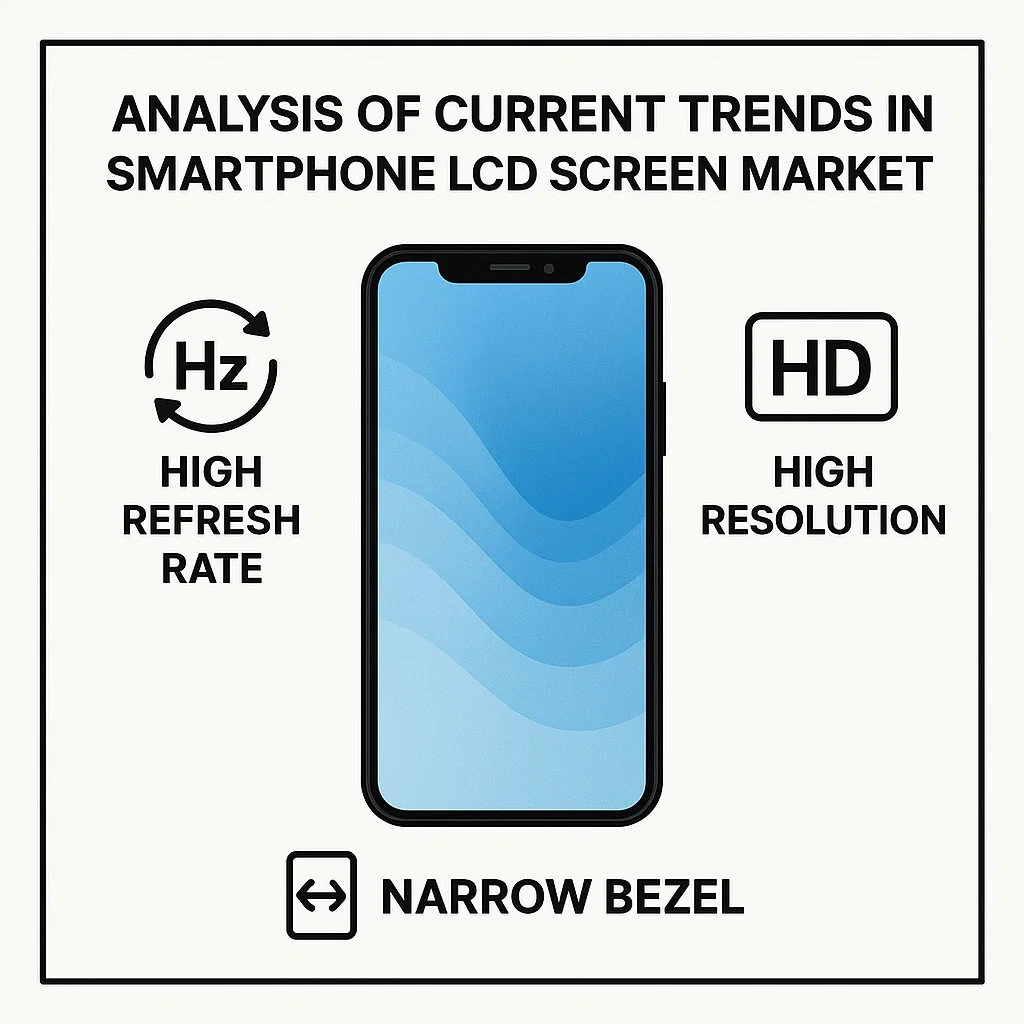
Magas frissítési gyakoriság (90Hz, 120Hz, és Beyond)
Nem régen, a 60 Hz-es képernyő volt az általános. Jelenleg? Bármi, ami 90 Hz alatt van, lassúnak tűnik. A frissítési gyakoriság azt jelenti, hogy másodpercenként hányszor frissíti a képernyő a képet. A 120 Hz-es kijelző frissül 120 másodpercenként, animációk készítése, görgetés, és a játék vaj sima.
Játékosoknak és nehéz felhasználóknak, a magasabb frissítési gyakoriság gyorsabb vezérlést és vizuálisan zökkenőmentes élményt jelent – abszolút változást hoz, még az LCD képernyőkön is.
Magasabb felbontások (FHD+, QHD, 4K)
A képernyő élessége hosszú utat tett meg. Full HD (1080p) régen lenyűgöző volt; ma, A Full HD+, sőt a 4K LCD-képernyők kristálytiszta képet nyújtanak.
A nagyobb felbontású képernyők javítják a fényképek részletességét, videó élessége, és az általános tisztaság, a Netflixtől az Instagram Storiesig minden tisztábbnak és élesebbnek tűnik.
Keskeny előlapok és teljes képernyős kijelzők
Az okostelefon-gyártók az a küldetésük, hogy minimalizálják a kereteket – a képernyő körüli szegélyeket. Az eredmény? Nagyobb kijelzők, amelyek kompaktak és modernek a kézben. Még a pénztárcabarát LCD telefonok is apró előlappal rendelkeznek, magával ragadó, széltől szélig tartó megtekintési élmény.
Adaptív fényerő- és kékfényszűrők
A modern LCD-képernyők okosabbak lettek, a fényerő beállítása a környezet alapján, és a káros kékfény-expozíció csökkentése. Ezek a funkciók nem csak a kényelemről szólnak, hanem a szem védelméről is szólnak késő esti görgetés vagy kültéri használat közben.
Lyukasztó- és bevágásos kivitelek
Emlékezzen arra, amikor a telefonok hatalmas felső és alsó előlappal rendelkeztek? Már nem. A lyukas kivágások és bevágások ma már elülső kameráknak adnak helyet anélkül, hogy felemésztenék az értékes képernyő-ingatlanokat. Ezek a kialakítások megszakítás nélküli és modern megjelenésű kijelzőket biztosítanak, miközben megőrzik a funkcionalitást.
HDR támogatás az LCD paneleken
Magas dinamikatartomány (HDR) nem csak az OLED-hez való. A fejlett LCD-panelek mostantól támogatják a HDR10-et, kontraszt fokozása, színmélység, és fényerő tartományok. Ez a frissítés jelentősen javítja a megtekintési élményt filmek nézése vagy intenzív vizuális játék közben.
Hogyan javítják ezek a trendek a felhasználói élményt
Simább játék- és videólejátszás
A magas frissítési gyakoriságnak és a jobb válaszidőknek köszönhetően a játékok és a videók hihetetlenül gördülékenyek lesznek. Mobiljátékosoknak, még egy kis késés is vereséget jelenthet – a 120 Hz-es LCD-képernyő biztosítja, hogy minden csúsztatás és koppintás valós időben történjen.
Fokozott médiafogyasztás
Akár YouTube-függő vagy, akár Netflix-mániás, a nagyobb felbontású kijelzők HDR támogatással gazdagabbak, magával ragadóbb látványvilág. A színek pop, az árnyékok mélyülnek, és a részletek kiélesednek, a legkisebb képernyőt is házimozinak érezheti.
Jobb szemkomfort és látási rugalmasság
Az adaptív fényerőnek és a kék fényszűrőknek köszönhetően a modern LCD-képernyők sokkal könnyebben érintik a szemet. Az éjszakai üzemmódok és a színhőmérséklet-beállítások azt jelentik, hogy olvashat, óra, és bármikor kényelmesen böngészhet, bárhol.
Alkalmazási forgatókönyvek modern LCD-kijelzőkhöz
Mindennapi használatra és olcsó okostelefonok
Az LCD-képernyők továbbra is a legjobb választás az alkalmi felhasználók számára, akik értékelik a megfizethetőséget és a megbízható teljesítményt. Egységes színpontosságot biztosítanak, fényesség, és tartósság – tökéletes napi feladatokhoz, például üzenetküldéshez, böngészés, és videohívások.
Mobil játékeszközök
Játékos okostelefonok, különösen költségvetési és középkategóriás kategóriákban, Használja ki a nagy frissítési gyakoriságú LCD-ket, hogy érzékeny játékmenetet biztosítson OLED-árcédula nélkül. Alacsony válaszidővel kombinálva, ezek a kijelzők versenyelőnyt biztosítanak a játékosoknak.
Médiaközpontú telefonok
Olyan felhasználóknak, akik előnyben részesítik a streamelést és a fotózást, A HDR-támogatással rendelkező nagy felbontású LCD-képernyők kivételes látványt nyújtanak. Videókat készítenek, fotók szerkesztése, és a tartalom böngészése vizuálisan kielégítő.
Jövőbeli kilátások LCD okostelefon-képernyőkre
Miközben az OLED továbbra is uralja a zászlóshajó készülékeket, Az LCD technológia nem hátrál meg. Az olyan közelgő újítások, mint a mini-LED háttérvilágítás jobb kontrasztot és fényerőt ígérnek, a teljesítménybeli különbségek csökkentése.
Várható, hogy az LCD-képernyők ragaszkodjanak, különösen a középkategóriás készülékekben, játék telefonok, és masszív okostelefonok, ahol a tartósság, megfizethetőség, és a hosszú élettartam a legfontosabb.
Következtetés
Az okostelefonok LCD-kijelzőinek piaca él, jól, és gyorsan innovatív. Magas frissítési gyakoriság, továbbfejlesztett felbontások, HDR támogatás, és az olyan okos tervezési finomítások, mint a lyukasztó kivágások, versenyképesek maradnak az LCD-kijelzők között. Ezek a funkciók mindent javítanak a játéktól és a videónézéstől a mindennapi használhatóságig, miközben az eszközöket széles közönség számára hozzáférhetővé teszik.
Ha egy új telefonra vágyik, és azon tűnődik, hogy az LCD-képernyő képes-e lépést tartani – a válasz határozott igen.
GYIK
Q1: Mekkora az elérhető legmagasabb frissítési gyakoriság az LCD képernyőknél?
A legtöbb fejlett LCD-képernyő ma már akár 144 Hz-et is kínál, elsősorban a játékra összpontosító okostelefonokban.
Q2: Az LCD-képernyők bizonyos szempontból még mindig jobbak, mint az OLED??
Igen, Az LCD-képernyők kevésbé hajlamosak a beégésre, gyakran megfizethetőbb, és egyenletes fényerőt biztosít.
Q3: Az LCD képernyők hatékonyan támogatják a HDR tartalmat??
A HDR10 támogatással rendelkező, modern, csúcskategóriás LCD panelek jól kezelik a HDR tartalmat, jobb kontrasztot és színmélységet kínál.
Q4: Miért használnak egyes okostelefonok továbbra is LCD-t OLED helyett??
Az LCD képernyők költséghatékonyak, tartós, és elkerülje az OLED beégési problémáit, így ideálisak a középkategóriás és pénztárcabarát eszközökhöz.
Q5: Hogyan befolyásolja a magas frissítési gyakoriság az LCD-telefonok akkumulátorának élettartamát??
A magasabb frissítési gyakoriság több energiát fogyaszt, de a modern LCD telefonok adaptív frissítési gyakoriság technológiát alkalmaznak a teljesítmény és az akkumulátor élettartamának egyensúlyára.