Bevezetés
A megfelelő választás iPhone csere képernyő már nem olyan egyszerű, mint kiválasztani a legolcsóbb lehetőséget. Az elmúlt néhány évben, az utópiac gyorsan fejlődött, többféle megjelenítési technológiát kínál, amelyeket úgy terveztek, hogy kielégítsék a vásárlók különböző elvárásait és üzleti modelljeit. Javító műhelyek, nagykereskedők, felújítók, és a forgalmazók most fontos döntés előtt állnak Rugalmas OLED (Puha OLED) és Kemény OLED, két termék, amelyek első pillantásra hasonlónak tűnhetnek, de a mindennapi használat során egészen másként teljesítenek.
Ha javítási vállalkozást működtet, hírneve nagymértékben függ minden telepített csereképernyő minőségétől. Az ügyfelek élénk színeket várnak el, reszponzív érintésérzékenység, nagy fényerő, és hosszú távú tartósság. Egy gyengébb minőségű kijelző telepítése kezdetben pénzt takaríthat meg, de garanciális igényekhez vezethet, vásárlói panaszok, és elveszett üzlet. Másrészt, csak prémium képernyők vásárlása csökkentheti a haszonkulcsot, ha ügyfelei elsősorban megfizethető javítást keresnek.
Az egyes OLED-technológiák erősségeinek és gyengeségeinek megértése lehetővé teszi a vásárlók számára, hogy okosabb vásárlási döntéseket hozzanak. Ez az útmutató mindent elmagyaráz a gyártási technológiától és a kijelző teljesítményétől a beszállító kiválasztásáig, minőségellenőrzés, és nagykereskedelmi beszerzési stratégiák, segít maximalizálni az ügyfelek elégedettségét és a jövedelmezőséget.
Az iPhone csereképernyő-piacának megértése
Az Apple bemutatta az OLED technológiát kezdve a iPhone X, alapjaiban változtatta meg az okostelefon-kijelzőipart. Azóta, szinte minden zászlóshajó iPhone OLED panelt alkalmaz, mert kivételes kontrasztot kínálnak, igazi feketék, kiemelkedő energiahatékonyság, és vékonyabb konstrukció a hagyományos LCD-kijelzőkhöz képest. Mivel a csereképernyők iránti kereslet megnőtt, az utángyártott iparág számos alternatívát fejlesztett ki, amelyek egyensúlyban tartják a minőséget és a megfizethetőséget.
Ma, a cserepiac általában öt kategóriából áll:
| Képernyő típusa | Minőség | Ár | Legjobb For |
|---|---|---|---|
| OEM eredeti | Kiváló | Legmagasabb | Prémium javítások |
| Felújított Eredeti | Kiváló | Magas | Professzionális javítóműhelyek |
| Rugalmas (Puha) OLED | Nagyon magas | Közepes-magas | Minőségi utángyártott javítás |
| Kemény OLED | Jó | Közepes | Költségvetés-tudatos vásárlók |
| Incell LCD | Alapvető | Legalacsonyabb | Gazdaságos javítások |
Minden kategória más ügyfélszegmenst szolgál ki. A prémium felhasználók általában az OEM vagy a felújított eredeti kijelzőket részesítik előnyben, míg a legtöbb független javítóműhely nagymértékben támaszkodik a Soft OLED-re, mivel az szorosan megismétli az Apple eredeti megtekintési élményét sokkal alacsonyabb költségek mellett. A kemény OLED népszerűvé vált a fejlődő piacokat kiszolgáló nagykereskedők körében, ahol a megfizethetőség gyakran fontosabb, mint a gyári szintű teljesítmény.
Mi a rugalmas (Puha) OLED?
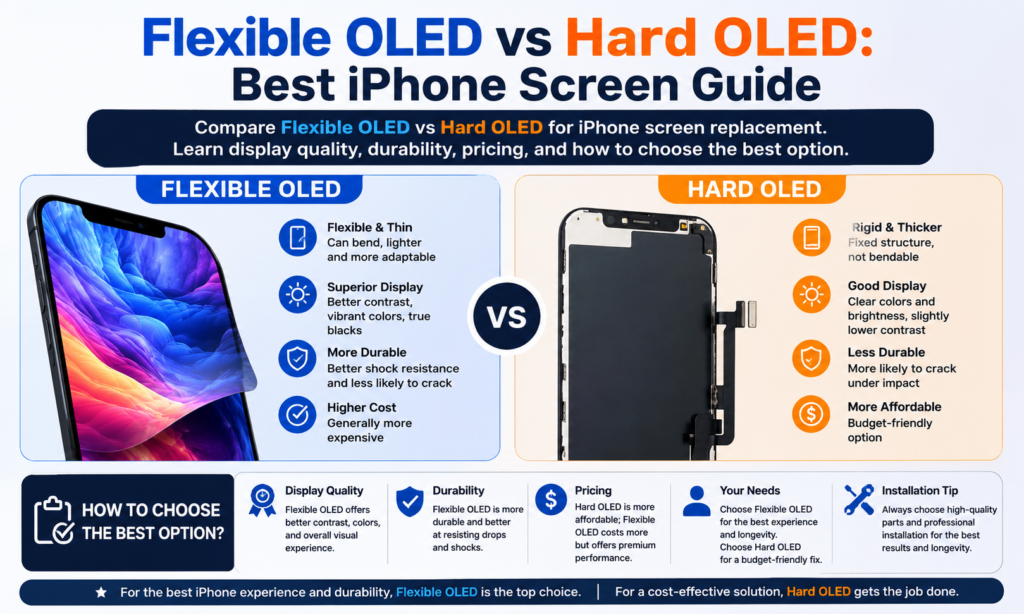
Rugalmas OLED, közönségesen nevezik Puha OLED, használ a műanyag hordozó üveg helyett. Ez a rugalmas alap lehetővé teszi, hogy a kijelző panel enyhén meghajoljon, ami rendkívül hasonlít az Apple által eredetileg telepített OLED panelekhez. Felépítése miatt, A puha OLED vékonyabb méreteket kínál, javított ütésállóság, és egyszerűbb telepítés a merev alternatívákhoz képest.
Az egyik legnagyobb előnye a kijelző teljesítménye. A színek élénknek és természetesnek tűnnek, a fekete szintek tökéletesen mélyek maradnak, és a fényerő általában nagyon közel van az eredeti Apple specifikációhoz. A látószögek állandóak maradnak, videók készítése, játékok, a fényképek pedig szinte teljesen megegyeznek a gyárilag telepített képernyőkön megjelenőkkel.
A professzionális technikusok is értékelik a Soft OLED-et, mert a telepítés kevésbé megterhelő. A rugalmas panel elnézőbb az összeszerelés során, csökkenti a véletlen repedés esélyét, miközben a kijelzőt a telefon keretébe illeszti. Ez alacsonyabb telepítési kockázatot és kevesebb jótállási visszatérítést jelent.
Bár a Soft OLED többe kerül, mint a Hard OLED, sok nagykereskedő megéri a további befektetést, mert a vásárlók elégedettsége lényegesen magasabb marad. A prémium szervizek gyakran hirdetik a Soft OLED-et standard csereopcióként, mivel kiváló egyensúlyt kínál az ár és a teljesítmény között. Az iparági vásárlási útmutatók következetesen a Soft OLED-et az eredeti Apple-kijelzők legközelebbi utópiaci alternatívájaként azonosítják, az eredeti vizuális élmény körülbelül 90–95%-ával.
Mi az a kemény OLED?
A Hard OLED egy másik széles körben használt kijelzőtechnológia az iPhone-javítási iparban. A Flexible OLED-del ellentétben, A kemény OLED-et a merev üveghordozó, ami szilárd szerkezetet ad a panelnek, de jelentősen csökkenti a rugalmasságát. Ez a gyártási folyamat olcsóbbá teszi a Hard OLED gyártását, lehetővé teszi a nagykereskedők és a javítóműhelyek számára, hogy megfizethetőbb képernyőcseréket kínáljanak azoknak a vásárlóknak, akik az árat részesítik előnyben a prémium kijelzőteljesítmény helyett.
A Hard OLED népszerűségének egyik elsődleges oka a kiváló költség-teljesítmény arány. A hagyományos Incell LCD kijelzőkkel összehasonlítva, A kemény OLED mélyebb feketét biztosít, magasabb kontrasztarány, és élénkebb színek, mert minden OLED pixel saját fényt bocsát ki. Az LCD-ről frissítő felhasználók általában drámai képminőség javulást észlelnek. Az erős versenypiacokon működő javítási vállalkozások számára, A Hard OLED vonzó megoldást kínál, amely áthidalja a szakadékot az olcsó LCD-k és a prémium Soft OLED panelek között.
Vannak, viszont, A vevőknek meg kell érteniük néhány kompromisszumot, mielőtt tömeges megrendeléseket adnának. Mivel az üveghordozó nem tud meghajolni, A kemény OLED panelek általában vastagabbak, mint a rugalmas OLED képernyők. A telepítés során, A technikusoknak fokozott óvatossággal kell eljárniuk, mert a szélek körüli túlzott nyomás megrepedhet a kijelzőn. A merev felépítésnek köszönhetően a képernyő kissé kevésbé ellenáll a véletlen leejtéseknek és ütéseknek a telepítés után. Miközben a mai gyártási folyamatok jelentősen javultak, A kemény OLED panelek még mindig nem replikálják tökéletesen az Apple eredeti kijelzőinek vékony profilját és rugalmasságát.
E korlátok ellenére, A kemény OLED továbbra is az egyik legkelendőbb utángyártott opció világszerte. Sok nagykereskedő szállít kemény OLED kijelzőket a láncok javításához, forgalmazók, és online kiskereskedők, mert megbízható minőséget kínálnak versenyképes nagykereskedelmi áron. Azoknak az ügyfeleknek, akik megfizethető javítást keresnek anélkül, hogy visszatérnének az LCD technológiához, A kemény OLED kiváló kompromisszumot jelent a költségek és a vizuális teljesítmény között.
Rugalmas OLED és kemény OLED összehasonlítás
A rugalmas OLED és a kemény OLED közötti választás végső soron a megcélzott ügyfelektől függ, javítási szabványok, és az üzleti stratégia. Mindkét technológia OLED pixeleket használ, amelyek kivételes kontrasztot és valódi feketéket képesek előállítani, gyártási módszereik mégis érezhető különbségeket hoznak létre a tartósságban, telepítés, és az általános felhasználói élményt.
Kijelző minősége
A rugalmas OLED általában az eredeti Apple-kijelzőhöz legközelebb álló vizuális élményt nyújtja. A fényerő magasabb, a színvisszaadás pontosabb, és a betekintési szögek szinte minden irányból azonosak maradnak. A fehérek tisztábbnak tűnnek, a feketék tökéletesen mélyek maradnak, és a HDR-tartalom gazdagabbnak tűnik. A prémium szolgáltatásra összpontosító professzionális javítóműhelyek gyakran ajánlják a Soft OLED-et, mert az ügyfelek kevésbé valószínű, hogy észrevesznek különbséget a gyárilag telepített képernyőhöz képest..
A kemény OLED kiváló képminőséget is produkál, különösen az Incell LCD alternatívákkal összehasonlítva. A színek élénkek maradnak, és a kontraszt lényegesen jobb, mint az LCD technológia. Viszont, enyhe eltérések a maximális fényerőben, színkalibráció, és a kijelző egyenletessége észrevehetővé válhat, ha egy eredeti Apple kijelzővel vagy egy jó minőségű rugalmas OLED panellel hasonlítjuk össze..
Tartósság
A rugalmas OLED egyértelmű előnye a tartósság a műanyag hordozójának köszönhetően. A kijelző hatékonyabban képes elnyelni a kisebb ütéseket, csökkenti a repedések kockázatát a telepítés és a napi használat során. Ez a rugalmasság azt is lehetővé teszi a gyártók számára, hogy vékonyabb kijelzőket készítsenek, amelyek jobban illeszkednek az Apple eredeti kialakításához.
A kemény OLED merev üvegszerkezete érzékenyebbé teszi a túlzott igénybevétel miatti törésekre. Míg a modern védőüveg javította a tartósságot, A technikusok általában nagyobb törési arányról számolnak be a telepítés során, mint a rugalmas OLED esetében.
Telepítési nehézség
A telepítés egy másik fontos szempont a javítási vállalkozásokat szállító nagykereskedők számára. A rugalmas OLED panelek természetesen illeszkednek az iPhone keretébe, megkönnyíti a telepítést és csökkenti a véletlen sérülések lehetőségét. Ez az alacsonyabb telepítési kockázat gyakran alacsonyabb munkaerőköltségeket és kevesebb garanciális igényt jelent.
A kemény OLED panelek további odafigyelést igényelnek a telepítés során. Mivel a panel nem tud hajlítani, a technikusoknak kerülniük kell a csavarást vagy az egyenetlen nyomást. A tapasztalt technikusokat foglalkoztató üzletek továbbra is kiváló eredményeket érhetnek el, de a tapasztalatlan telepítők nagyobb kockázattal találkozhatnak a véletlen károsodásban.
Ár-összehasonlítás
A Hard OLED legnagyobb előnye kétségtelenül a megfizethetőség. A nagykereskedelmi ár általában között mozog 20% és 40% alacsonyabb mint a hasonló rugalmas OLED kijelzők, bár a tényleges árak típusonként változnak, minőségi fokozat, rendelési mennyiség, és szállítója.
| Funkció | Rugalmas OLED | Kemény OLED |
|---|---|---|
| Kijelző minősége | ★★★★★ | ★★★★☆ |
| Fényesség | Kiváló | Nagyon jó |
| Színpontosság | Kiváló | Jó |
| Telepítés | Könnyebb | Mérsékelt |
| Vastagság | Vékonyabb | Kicsit Vastagabb |
| Tartósság | Jobb | Jó |
| Nagykereskedelmi ár | Magasabb | Alacsonyabb |
| Ügyfél-elégedettség | Nagyon magas | Magas |
Prémium ügyfeleket kiszolgáló javítóműhelyek számára, A rugalmas OLED gyakran a legjobb hosszú távú értéket nyújtja a jótállási igények csökkentése és a vásárlók nagyobb elégedettsége révén. A nagy volumenre összpontosító vállalkozások, az árérzékeny piacok a kemény OLED-et találhatják a jövedelmezőbb megoldásnak.
Mely iPhone-modellek használnak OLED-et?
Az OLED kijelzőkkel felszerelt iPhone modellek megértése segít a nagykereskedőknek hatékonyabban kezelni a készletet, és kompatibilis csereképernyőket ajánlani az ügyfeleknek.. Az Apple megkezdte az OLED technológiára való átállást a iPhone X be 2017, és ma már szinte minden zászlóshajó iPhone-modell OLED-kijelzővel rendelkezik.
Az alábbi táblázat összefoglalja az iPhone legújabb generációiban használt megjelenítési technológiákat:
| iPhone modell | Eredeti kijelző technológia | Javasolt utángyártott csere |
| iPhone X | OLED | Rugalmas OLED |
| iPhone XS / XS max | OLED | Rugalmas OLED |
| iPhone 11 Profi / Pro Max | OLED | Rugalmas OLED |
| iPhone 12 Sorozat | OLED | Rugalmas vagy kemény OLED |
| iPhone 13 Sorozat | OLED | Rugalmas vagy kemény OLED |
| iPhone 14 Sorozat | OLED | Rugalmas vagy kemény OLED |
| iPhone 15 Sorozat | OLED | Prémium rugalmas OLED |
| iPhone 16 Sorozat | OLED | Prémium rugalmas OLED |
A javítóműhelyeknek figyelembe kell venniük az ügyfelek elvárásait is, amikor csereernyőket ajánlanak. Az újabb zászlóshajó modellek tulajdonosai általában az eredetihez nagyon közeli megjelenítési minőséget várnak el, a rugalmas OLED előnyben részesítése. A régebbi eszközök vagy a költségvetési javítások jobban megfelelnek a kemény OLED-nek, ahol gyakran a költségmegtakarítás a döntő tényező.
Ahogy az Apple tovább finomítja az OLED technológiát világosabb panelekkel, javított hatékonyság, és megnövelt tartósság, az utánpiac várhatóan szorosan követni fogja. A gyártók jelentős összegeket fektetnek be a jobb minőségű Soft OLED kijelzők gyártásába, amelyek megismétlik az eredeti felhasználói élményt, miközben megfizethetőek maradnak a nagykereskedők és a javítási vállalkozások számára.
A képernyő minőségének értékelése vásárlás előtt
A megfelelő szállító kiválasztása csak az egyenlet fele. Ugyanilyen fontos, hogy minden csereképernyő minőségét értékelje, mielőtt az elérné az ügyfeleket. A tapasztalt nagykereskedők és professzionális javítóműhelyek tisztában vannak azzal, hogy nem minden OLED kijelzőt gyártanak azonos szabványok szerint. Még a papíron azonosnak tűnő képernyők fényereje is jelentősen eltérhet, érintésérzékenység, tartósság, és az általános felhasználói élményt.
Fényerő és megjelenítési teljesítmény
A fényerő a kiváló minőségű OLED-kijelzők egyik első mutatója. A prémium csereképernyőnek tisztanak és olvashatónak kell maradnia közvetlen napfényben, miközben egyenletes megvilágítást kell biztosítania az egész panelen. Egyenetlen fényerő, látható sötét foltok, vagy a túlzott színeltolódások az alacsonyabb minőségű gyártás gyakori jelei.
A képernyő tesztelésekor, megvizsgálni:
- Maximális fényerő
- Egységes színeloszlás
- Fekete szintű konzisztencia
- A fehéregyensúly pontossága
- Betekintési szögek
A kiváló minőségű flexibilis OLED panelek általában az Apple eredeti kijelzőihez közeli fényerőt biztosítanak, ideálissá téve azokat az ügyfelek számára, akik prémium vizuális élményre számítanak.
Érintésérzékenység és válaszkészség
Az iPhone képernyője több, mint egy kijelző – ez az elsődleges interfész a felhasználó és az eszköz között. Minden csúsztatás, csap, és a gesztusnak simának és pontosnak kell lennie. A gyenge érintési teljesítmény gyakran késleltetett válaszokat eredményez, Ghost megérinti, vagy holt zónák, ami az ügyfelek elégedetlenségéhez és a garanciális igények növekedéséhez vezet.
Tömeges vásárlás előtt, a szállítóknak tesztelniük kell:
- Multi-touch funkció
- Csúsztatási pontosság
- Arcazonosító kompatibilitás
- A közelségérzékelő teljesítménye
- Környezeti fényérzékelő funkció
- Érintési késleltetés
A professzionális gyárak általában többszörös érintésvizsgálatot végeznek a gyártás során, hogy megbizonyosodjanak arról, hogy minden panel megfelel a szigorú minőségi előírásoknak.
Színpontosság
A színpontosság egy másik lényeges tényező, különösen azoknak az ügyfeleknek, akik gyakran néznek videókat, fényképek szerkesztése, vagy mobiljátékokkal játszhat. A prémium OLED-kijelzőknek gazdagnak kell lenniük, élénk színek anélkül, hogy túltelítettek vagy kimosódnának.
Keresse a megfelelő képernyőket:
- Természetes bőrtónusok
- Pontos fehéregyensúly
- Széles színskála
- Stabil színkonzisztencia különböző fényerőszinteken
A mintaegységek kérése a nagy rendelések leadása előtt az egyik legjobb módja a színteljesítmény valós körülmények közötti értékelésének.
Megbízható nagykereskedelmi beszállító kiválasztása
Megbízható beszállító keresése nagyobb hatással lehet vállalkozására, mint a rugalmas OLED és a kemény OLED közötti választás. A megbízható beszállító nemcsak minőségi termékeket szállít, hanem állandó készletet is biztosít, versenyképes árképzés, érzékeny értékesítés utáni támogatás, és hatékony logisztikát.
A potenciális partnerek értékelése során, vegye figyelembe a következő tényezőket:
| Értékelési kritériumok | Miért számít |
|---|---|
| Gyártási tapasztalat | Műszaki szakértelmet és gyártási stabilitást jelez |
| Minőség-ellenőrzési folyamat | Csökkenti a hibás termékek és a garanciális igények számát |
| Terméktanúsítványok | Az ipari szabványoknak való megfelelést bizonyítja |
| Jótállási szabályzat | A beszállítói bizalmat tükrözi a termék minőségében |
| Készletkapacitás | Csúcskereslet idején stabil ellátást biztosít |
| Szállítási sebesség | Minimálisra csökkenti a javítási vállalkozások állásidejét |
| Műszaki támogatás | Segít a telepítési és kompatibilitási problémák megoldásában |
Nagykereskedőknek és javítóláncoknak, egy megbízható gyártóval való hosszú távú kapcsolat kiépítése gyakran jobb árakat eredményez, kiemelt gyártási ütemezések, és hozzáférést biztosít a legújabb megjelenítési technológiákhoz.
Gyári tanúsítványok
Egy professzionális kijelzőgyártónak nemzetközileg elismert minőségirányítási rendszerek szerint kell működnie. A tanúsítványok segítségével a vásárlók ellenőrizhetik, hogy a gyártási folyamatok megfelelnek-e a megállapított szabványoknak, és hogy a termékek következetes tesztelésen esnek át.
Az általános tanúsítványok közé tartozik:
- ISO 9001 minőségirányításhoz
- RoHS a veszélyes anyagokra vonatkozó korlátozások betartása
- CE tanúsítás az európai piacokra
- FCC adott esetben megfelelőség
Bár a tanúsítványok nem garantálják a tökéletes termékeket, további bizalmat adnak afelől, hogy a szállító szabványos gyártási és minőségbiztosítási eljárásokat követ.
Minőség-ellenőrzési szabványok
A vezető gyárak átfogó ellenőrzési eljárásokat hajtanak végre a gyártási folyamat során. Ahelyett, hogy csak a kész terméket tesztelnénk, több szakaszban értékelik az alkatrészeket a hibák korai felismerése és az állandó minőség fenntartása érdekében.
Egy tipikus minőség-ellenőrzési folyamat magában foglalja:
- Nyersanyag vizsgálat
- Kijelző panel tesztelése
- Illesztőprogram IC ellenőrzése
- Érintőfunkciók tesztelése
- Fényerő kalibrálása
- Színpontossági vizsgálat
- Halott pixel vizsgálat
- Végső megjelenési vizsgálat
- Funkcionális tesztelés
- Csomagolás ellenőrzése
Néhány prémium gyártó többet teljesít, mint 30 egyedi ellenőrzési lépések az egyes képernyők szállítása előtt, jelentősen csökkenti a hibaarányt és javítja az ügyfelek elégedettségét.
Gyakori vásárlási hibák
Even experienced buyers occasionally make purchasing decisions based solely on price. While reducing costs is important, focusing exclusively on the lowest quotation often leads to higher expenses later through warranty replacements, vásárlói panaszok, és megsértette az üzleti hírnevét.
One common mistake is failing to request samples before placing a large order. Testing a small batch allows buyers to evaluate display quality, installation difficulty, and compatibility before committing significant capital.
Another frequent error is ignoring warranty policies. A supplier offering extremely low prices but no warranty may expose your business to considerable financial risk if defects appear after installation.
Buyers should also avoid assuming that all “OLED” screens are identical. Rugalmas OLED, Kemény OLED, felújított eredeti kijelzők, and OEM panels each serve different market segments. Understanding your customers’ elvárások lehetővé teszik a legmegfelelőbb termék kiválasztását és a jövedelmezőség maximalizálását.
Végül, fontolja meg a logisztikát és a készlettervezést. A stabil készletszinteket fenntartó és hatékony nemzetközi szállítást kínáló beszállítókkal való együttműködés segíthet megelőzni a késéseket a nagy kereslet időszakában.
Következtetés
Választás között Rugalmas OLED és Kemény OLED végső soron a teljesítmény kiegyensúlyozásán múlik, tartósság, és a költségvetést. A rugalmas OLED az Apple eredeti kijelzőjéhez legközelebb álló élményt kínálja, kiemelkedő fényerővel rendelkezik, élénk színek, könnyebb telepítés, és megnövelt tartósság. Ez az előnyben részesített választás a prémium javítási szolgáltatásokhoz, ahol a vevői elégedettség és a hosszú távú megbízhatóság a legfontosabb.
Kemény OLED, másrészt, kiváló egyensúlyt biztosít a minőség és a megfizethetőség között. Alacsonyabb gyártási költsége vonzó megoldássá teszi az árérzékeny ügyfeleket kiszolgáló javítóműhelyek számára, miközben jelentős frissítést biztosít a hagyományos LCD csereképernyőkhöz képest..
Nagykereskedőknek és forgalmazóknak, a siker nem csak a megfelelő kijelzőtechnológia kiválasztásán múlik, hanem egy jó hírű gyártóval való együttműködésen is, amely szigorú minőségellenőrzést folytat, megbízható leltár, és érzékeny ügyfélszolgálat. A jó minőségű termékekbe és a megbízható ellátási láncokba való befektetés segít csökkenteni a garanciális igényeket, erősíti az ügyfélkapcsolatokat, és fenntartható vállalkozást építsen az egyre versenyképesebb okostelefon-javítási iparágban.
Gyakran Ismételt Kérdések
1. A rugalmas OLED jobb, mint a kemény OLED?
Igen. A rugalmas OLED általában jobb megjelenítési minőséget kínál, nagyobb tartósság, könnyebb telepítés, és olyan felhasználói élményt, amely sokkal közelebb áll az Apple eredeti OLED képernyőihez.
2. Miért olcsóbb a Hard OLED??
A kemény OLED merev üveghordozót használ, amelynek előállítása egyszerűbb és olcsóbb, mint a lágy OLED kijelzőkben használt rugalmas műanyag hordozó.
3. Melyik OLED képernyőt válasszák a javítóműhelyek?
A prémium szolgáltatásra összpontosító javítóműhelyeknek a rugalmas OLED-et kell választaniuk. A költségvetés-tudatos vásárlókat megcélzó vállalkozások a Hard OLED-et találhatják a jobb ár-érték aránynak.
4. A Hard OLED helyettesítheti az eredeti iPhone OLED képernyőt?
Igen. A Hard OLED teljes mértékben kompatibilis számos OLED-del felszerelt iPhone modellel, bár teljesítménye és tartóssága nem feltétlenül egyezik az eredeti kijelzővel.
5. Mit kell keresniük a nagykereskedőknek az OLED-szállítóknál??
A nagykereskedőknek előnyben kell részesíteniük az erős minőség-ellenőrzési rendszerrel rendelkező gyártókat, elismert tanúsítványok, átfogó jótállási szabályzat, stabil készlet, versenyképes árképzés, és érzékeny értékesítés utáni támogatás.