📱 Introducere în ambalajul pentru afișaj mobil
Ce este un driver de display IC (DICK)?
Dacă v-ați întrebat vreodată ce controlează de fapt pixelii de pe ecranul telefonului dvs, răspunsul se află în ceva numit Driver de afișare IC (DICK). Acest mic cip semiconductor acționează ca creierul afișajului dvs, trimiterea de semnale electrice la fiecare pixel deci imagini, culorile, iar animațiile apar corect. Fără el, ecranul tău ar fi practic o bucată de sticlă fără viață.
În smartphone-urile moderne, DDIC joacă un rol critic în traducerea datelor de la procesor în conținut vizibil. Controlează luminozitatea, rata de reîmprospătare, Precizia culorilor, și chiar capacitatea de răspuns la atingere. Potrivit surselor din industrie, toate tehnologiile de afișare, indiferent dacă este LCD sau OLED, se bazează în mare măsură pe cât de eficient este integrat acest cip în panou . Poziționarea și ambalarea acestui cip influențează direct performanța, grosime, și designul general al dispozitivului.
Aici lucrurile devin interesante: modul în care acest cip este montat pe afișaj definește dacă ecranul folosește COG, Cof, sau tehnologia COP. Si da, acest mic detaliu tehnic poate schimba dramatic modul în care arată și se simte un smartphone în mână.
De ce este importantă tehnologia de ambalare în telefoane inteligente
S-ar putea să credeți că calitatea ecranului este doar despre rezoluție sau luminozitate, dar aceasta este doar suprafața. În culise, tehnologia de ambalare determină lucruri precum dimensiunea cadrului, durabilitate, flexibilitate, și chiar costă.
De exemplu, de ce unele telefoane au margini groase de jos, în timp ce altele par aproape „fără margini”? Răspunsul constă adesea în dacă afișajul folosește COG, Cof, sau COP. Aceste tehnologii decid unde se află cipul și cât spațiu ocupă.
Pe măsură ce smartphone-urile au evoluat în design cu ecran complet, producătorii aveau nevoie de modalități de a reduce ramele și de a crește raportul ecran-corp. Metode flexibile de ambalare precum COF și COP au apărut pentru a rezolva această problemă, permițând afișajelor să se îndoaie și să se înfășoare în jurul marginilor . Între timp, COG tradițional a rămas relevant pentru ecranele LCD rentabile.
Aşa, alegerea dintre aceste tehnologii nu este doar o decizie tehnică, ci este o filozofie de design.
🔍 Prezentare generală a COG, Cof, și COP
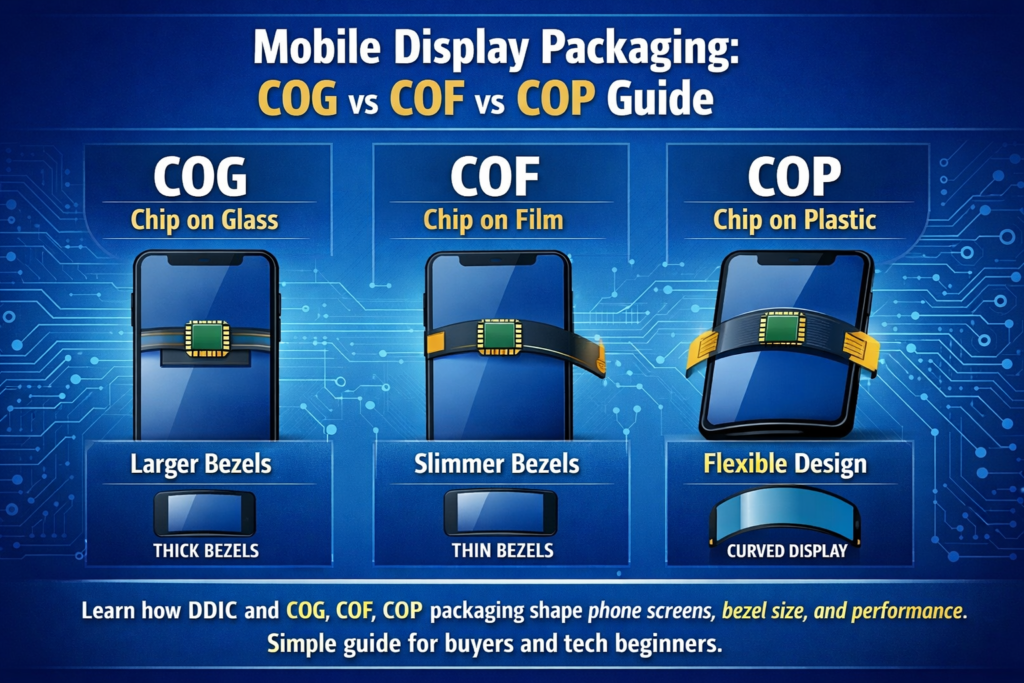
Definiţia COG (Cip pe sticlă)
COG înseamnă Cip pe sticlă, și este cea mai tradițională și utilizată metodă de ambalare pentru afișaj. În această structură, DDIC este lipit direct pe substratul de sticlă al panoului LCD. Această conexiune directă reduce complexitatea și costurile de producție.
Pentru că totul este montat pe o bază rigidă din sticlă, Ecranele COG sunt foarte stabile și fiabile. Sunt utilizate în mod obișnuit pe ecranele LCD, în special în smartphone-urile bugetare și dispozitivele industriale. Cu toate acestea, dezavantajul este că sticla nu se poate îndoi, ceea ce limitează flexibilitatea proiectării.
Definiţia COF (Cip pe film)
Cof, sau Cip pe film, reprezintă un pas semnificativ înainte. În loc să atașați cipul direct pe sticlă, DDIC este montat pe o peliculă flexibilă (de obicei un FPC pe bază de poliimidă). Acest film este apoi conectat la afișaj.
Această flexibilitate permite plierea filmului în spatele ecranului, reducând ramele vizibile și permițând modele mai moderne. Ca urmare, COF este utilizat pe scară largă în smartphone-urile de ultimă generație și chiar în unele ecrane OLED.
Definiţia COP (Cip pe plastic)
COP înseamnă Cip pe plastic, și în prezent este cea mai avansată tehnologie de ambalare. În această configurație, DDIC este direct integrat într-un substrat flexibil din plastic.
Spre deosebire de COF, care mai foloseşte o peliculă intermediară, COP elimină straturile suplimentare, permițând o și mai mare flexibilitate. Acest lucru îl face ideal pentru afișaje curbate, telefoane pliabile, și rame ultra-subțiri. De fapt, COP este adesea considerată soluția premium pentru dispozitivele moderne de vârf.
🧩 Structura COG Deep Dive
Cum funcționează COG în panourile LCD
Într-o structură COG, driverul IC este lipit direct pe substratul de sticlă folosind tehnici precum filmul conductor anizotrop (ACF). Acest lucru creează o conexiune compactă și eficientă între cip și afișaj.
Pentru că nu este nevoie de circuite flexibile suplimentare, structura este relativ simplă. Această simplitate se traduce prin randamente ridicate de producție și costuri de producție mai mici. Acesta este motivul pentru care COG este încă utilizat pe scară largă în smartphone-urile și modulele LCD entry-level.
Cu toate acestea, există un compromis. Din moment ce cipul stă pe sticlă, ocupă spațiu la marginea afișajului – de obicei în partea de jos. Acest lucru are ca rezultat o lunetă „bărbie” mai groasă, ceea ce este mai puțin de dorit în modelele de astăzi cu ecran complet.
Avantajele și limitările COG
COG are mai multe puncte forte. Este rentabil, de încredere, și ușor de produs în masă. Structura sa rigidă îl face, de asemenea, mai puțin predispus la deteriorări mecanice în comparație cu soluțiile flexibile.
Dar limitările sunt greu de ignorat. Incapacitatea de a îndoi sau plia substratul înseamnă că designerii trebuie să lase spațiu suplimentar pentru cip. Acest lucru duce la rame mai largi și la un raport ecran-corp mai mic .
Deci, în timp ce COG este perfect pentru dispozitivele bugetare, se luptă să îndeplinească cerințele estetice ale smartphone-urilor moderne.
🔄 COF Structure Deep Dive
Cum COF îmbunătățește designul ecranului
COF schimbă jocul prin introducerea flexibilității. Prin montarea DDIC pe o folie flexibilă, producătorii pot plia circuitul în spatele panoului de afișare. Acest design inteligent ascunde cipul din vedere și reduce rama de jos.
Acesta este motivul pentru care multe smartphone-uri moderne au rame aproape simetrice. Capacitatea de a repoziționa cip permite o utilizare mai eficientă a spațiului și un aspect mai curat.
Avantajele și compromisurile COF
COF oferă un echilibru puternic între performanță și cost. Permite modele mai subțiri, rame mai înguste, si o estetica mai buna. De asemenea, este compatibil atât cu panourile LCD, cât și cu OLED, făcându-l versatil.
Cu toate acestea, această flexibilitate are un preț. Procesul de fabricație este mai complex, iar materialele sunt mai scumpe. În plus, filmul flexibil poate fi mai vulnerabil la stres și deteriorare în timpul asamblarii .
Încă, pentru majoritatea smartphone-urilor mid-high-end, COF oferă compromisul ideal.
🚀 Structura COP Deep Dive
De ce COP activează afișajele pe tot ecranul
COP duce flexibilitatea la următorul nivel. Prin integrarea cipului direct într-un substrat de plastic, elimină nevoia de straturi intermediare. Acest lucru permite afișajului să se îndoaie mai liber, chiar înfășurarea în jurul marginilor dispozitivului.
Aceasta este tehnologia din spatele multor smartphone-uri curbate și „fără lunetă”.. Acesta permite producătorilor să depășească limitele designului și să atingă rapoarte extrem de ridicate dintre ecran și corp.
Avantajele și provocările COP
COP oferă performanță premium. Oferă rame ultra-subțiri, flexibilitate excelenta, și durabilitate superioară la solicitarea de încovoiere. De asemenea, este ideal pentru aplicații avansate, cum ar fi telefoanele pliabile.
Dezavantajul? Cost. COP este cea mai scumpă dintre cele trei tehnologii și necesită procese avansate de fabricație. Este de obicei rezervat dispozitivelor emblematice și ecranelor OLED de ultimă generație .
📊 Diferențele cheie între COG, Cof, și COP
Tabel de comparație structurală
| Caracteristică | COG | Cof | POLIŢIST |
|---|---|---|---|
| Poziția cipului | Pe sticlă | Pe film flexibil | Pe substrat de plastic |
| Flexibilitate | Nici unul | Moderat | Ridicat |
| Dimensiunea ramei | Lat | Îngust | Ultra-subțire |
| Cost | Scăzut | Mediu | Ridicat |
| Aplicație | LCD (buget) | LCD & OLED | OLED premium |
Diferențele de performanță și costuri
Din punct de vedere al performanței, COP conduce pachetul, urmat de COF, apoi COG. Dar când vine vorba de costuri, ordinea este inversată. Acest lucru creează un compromis clasic între preț și performanță.
COG este ideal pentru accesibilitate, COF echilibrează costul și calitatea, și COP oferă performanțe de top pentru dispozitivele premium.
📈 Aplicație în telefoanele inteligente moderne (2026 Tendințe)
Scenarii de utilizare LCD vs OLED
În 2026, piața de afișare este clar împărțită. Panourile LCD se bazează în continuare pe COG și COF, în timp ce panourile OLED adoptă din ce în ce mai mult COF și COP pentru flexibilitate și avantaje de design.
COF rămâne dominant în afișajele de înaltă rezoluție, piața se așteaptă să crească constant datorită cererii de dispozitive ultra-subțiri și rame înguste .
Tendințele pieței și ratele de adopție
Trecerea către dispozitive fără ramă și pliabile accelerează adoptarea COP. Între timp, COG continuă să deservească piețele sensibile la costuri.
Gândește-te așa: COG este „clasa economică,” COF este „clasa de afaceri,” și COP este „de primă clasă” în lumea tehnologiei de afișare.
🛠️ Cum să alegi tehnologia de afișare potrivită
Pentru Producători
Producătorii trebuie să echilibreze costurile, performanţă, și obiectivele de proiectare. Dacă accesibilitatea este cheia, COG este cea mai bună alegere. Pentru o estetică premium, COF sau COP este necesar.
Pentru cumpărători și industria reparațiilor
Dacă cumpărați ecrane de schimb, Înțelegerea acestor tehnologii vă ajută să evitați plata în exces sau performanța insuficientă. COF oferă adesea cea mai bună valoare, în timp ce COP oferă o calitate aproape originală.
🔮 Tendințe viitoare în ambalajele de afișare
Display-uri flexibile și pliabile
Viitorul aparține afișajelor flexibile. Tehnologia COP permite deja telefoane inteligente pliabile și ecrane rulabile.
Inovații de nouă generație dincolo de COP
Cercetătorii explorează metode de ambalare și mai avansate, țintind mai subțire, mai eficient, și afișaje mai durabile.
🏁 Concluzie
COG, Cof, și COP ar putea suna ca jargon tehnic, dar joacă un rol enorm în modelarea experienței tale cu smartphone-ul. De la dimensiunea ramei la durabilitate, aceste metode de ambalare definesc modul în care arată și performanțe moderne.
Înțelegerea diferențelor lor vă ajută să luați decizii mai inteligente, indiferent dacă proiectați produse, aprovizionarea cu piese, sau pur și simplu alegerea următorului telefon.
❓ Întrebări frecvente
1. Care este principala diferență între COG și COF?
COG montează cipul direct pe sticlă, în timp ce COF folosește un film flexibil, permițând rame mai înguste și o mai bună flexibilitate a designului.
2. De ce este COP considerată cea mai bună tehnologie?
Pentru că oferă flexibilitate maximă, rame ultra-subțiri, și performanță premium, mai ales pentru ecranele OLED.
3. Este COG încă folosit în 2026?
Da, în principal în dispozitivele LCD de buget datorită costului scăzut și fiabilității ridicate.
4. Ceea ce este mai bine pentru repararea telefonului: COF sau COP?
COF este de obicei cel mai bun echilibru între preț și performanță, în timp ce COP este mai aproape de calitatea originală.
5. Ambalajul afectează calitatea ecranului?
Da, afectează dimensiunea cadrului, durabilitate, flexibilitate, și chiar performanța tactilă.