A Samsung OLED Ecosystem bemutatása
Az okostelefonoktól a minden képernyőig
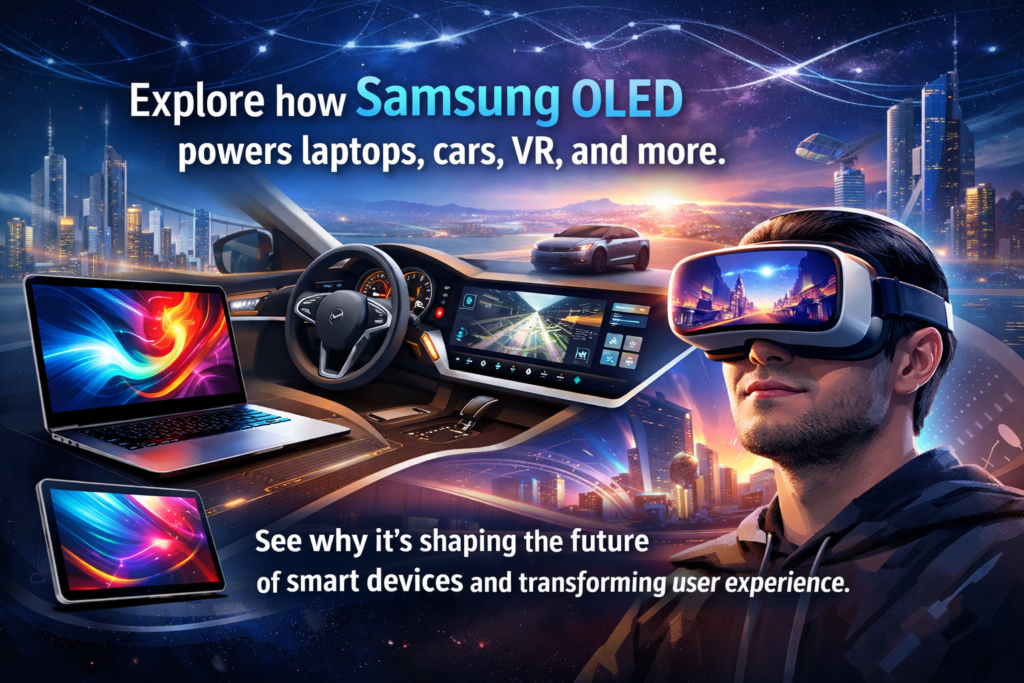
Amikor az emberek arra gondolnak Samsung OLED, az eszük általában egyenesen az okostelefonokra ugrik. Ez igazságos – a Samsung több mint egy évtizede uralja a mobil kijelzőket. De itt van a csavar: Az OLED már nem csak a telefonokról szól. Csendben szinte minden okoseszköz vizuális gerincévé válik, amellyel naponta kommunikál.
In 2026, Az OLED agresszíven terjed a laptopokká, tabletek, autóipari kijelzők, VR fejhallgatók, és még mesterséges intelligenciával hajtott robotok is. Iparági adatok szerint, A Samsung közepes és nagy OLED panelek szállítása megugrott 58% be 2025, jelentős elmozdulást jelezve a mobil eszközökön kívül. Ez nem csak növekedés – ez a teljes megjelenítési ökoszisztéma átalakulása.
Gondoljon az OLED-re, mint a modern technológia „bőrére”.. Legyen szó összecsukható képernyőről, egy ívelt autó műszerfal, vagy egy ultra-nagy pixelsűrűségű VR headset, Az OLED alakítja a gépek vizuális kommunikációját az emberekkel.
Miért lett az OLED az alapvető kijelzőtechnológia?
Akkor miért veszi át az OLED az uralmat?? Ez három fő előnyben rejlik: önkibocsátó pixelek, rugalmasság, és kiváló vizuális minőség. Ellentétben az LCD-vel, amely háttérvilágításra támaszkodik, Az OLED pixelek saját fényt bocsátanak ki. Ez lehetővé teszi az igazi feketéket, végtelen kontraszt, és vékonyabb kivitelben.
De az igazi varázslat az alkalmazkodóképességben rejlik. Az OLED panelek meghajolhatnak, hajtogatni, és még nyúlik is – amit a hagyományos LCD egyszerűen nem tud. Ez a rugalmasság új eszközkategóriák előtt nyit ajtót, a feltekerhető laptopoktól a hajlított autóipari műszerfalakig.
Az AI-korszakban, A kijelzők már nem passzív alkatrészek, hanem interaktív felületek. A Samsung az OLED-et a jövő okoseszközeinek központi interfész rétegeként pozicionálja, gazdagabbá teszi, magával ragadóbb ember-gép interakciók .
OLED a laptopokban
Az OLED térnyerése a prémium notebookokban
Az OLED laptopok egykor a kreatívok és a rajongók réstermékei voltak. Gyors előre a 2026, és egyre nagyobb népszerűségnek örvendenek – különösen a prémium szegmensekben. A Samsung hatalmas beruházásokkal vezeti ezt az átmenetet 8.6-generációs OLED gyártósorok, kifejezetten informatikai eszközökhöz készült .
Miért most? Mert a technológia kiforrott. Az új innovációk, mint pl tandem OLED szerkezetek javítja a fényerőt, élettartama, és hatékonyság – megoldja azokat a korábbi korlátokat, amelyek visszatartották az OLED-et a laptopokban .
Még érdekesebb, A Samsung olyan energiatakarékos technológiákat vezetett be, mint a SmartPower HDR, akár az OLED laptop energiafogyasztásának csökkentése 22% a fényerő feláldozása nélkül. Ez megváltoztatja az akkumulátor élettartamát a hordozható számítástechnikában.
OLED kontra LCD a kreatív munkafolyamatokban
Legyünk gyakorlatiak. Ha tervező vagy, videó szerkesztő, vagy tartalomkészítő, az OLED és az LCD közötti különbség nem finom – drámai.
| Funkció | OLED | LCD |
|---|---|---|
| Kontraszt | Végtelen | Korlátozott |
| Színpontosság | Rendkívül magas | Mérsékelt |
| Fekete szintek | Igazi Fekete | Szürkés |
| Vastagság | Ultra vékony | Vastagabb |
| Rugalmasság | Igen | Nem |
OLED szállít pixel tökéletes színpontosság, ami kritikus a tervezésben dolgozó szakemberek számára, fényképezés, és videógyártás. OLED laptopon HDR tartalmat nézni olyan érzés, mintha az ablakon keresztül néznénk, nem pedig a képernyőn.
Röviden, Az OLED nem csak jobb, hanem újradefiniálja, milyen lehet egy laptop kijelzője.
OLED táblagépekben
Samsung Galaxy Tab stratégia
A Samsung régóta használja Galaxy Tab S sorozat az AMOLED technológia kirakataként. Ezek a táblagépek nem csak a teljesítményben, hanem a tapasztalatban is versenyeznek.
OLED kijelzők integrálásával, A Samsung egyértelmű különbséget hoz létre: mélyebb feketék, gazdagabb színek, és jobb külső láthatóság. Ez nem csak az esztétikára vonatkozik; a használhatóságról van szó. Olvasás, folyó, és még a rajzolás is természetesebb és magával ragadóbb.
Versenyelőny a Display Innováció révén
Az OLED stratégiai előnyt is biztosít a Samsungnak a versenytársakkal szemben. Mivel az Apple várhatóan 2026-ra bevezeti az OLED-et iPad-ekre és MacBookokra – a Samsung panelek segítségével – egyértelmű, hogy ki vezeti a kijelzős játékot .
Ez lenyűgöző dinamikát hoz létre: A Samsung mind a szállító és versenytárs. Pont azt a technológiát biztosítja, amely segíti a riválisokat a versenyben, miközben egyúttal az innovációt is előremozdítja.
Ez olyan, mintha motorokat adnál el a versenytársaidnak, miközben magad készítesz gyorsabb autókat.
Autóipari OLED kijelzők
Rugalmas OLED és intelligens pilótafülke
Az autó belseje gyökeres átalakuláson megy keresztül, és az OLED van a közepén. Felejtsd el a hagyományos műszerfalakat – a modern járművek kezdenek lenni digitális pilótafülke, ahol a képernyők határozzák meg a teljes felhasználói élményt.
A rugalmas OLED panelek hajlítást tesznek lehetővé, zökkenőmentes kijelzők, amelyek integrálódnak a jármű dizájnjába. Által 2026, Az OLED várhatóan majdnem rögzíti 9% az autóipari bemutatók piacáról, jelentős ugrás egy viszonylag új alkalmazáshoz .
Az autós felhasználói élmény jövője
Képzeljen el egy műszerfalat, amely körülveszi Önt, navigáció megjelenítése, szórakozás, és a jármű adatai egy folyamatos felületen. Az OLED ezt lehetővé teszi.
A biztonságot is javítja. A jobb kontraszt és fényerő biztosítja a láthatóságot minden fényviszonyok között, míg a testreszabható elrendezések fokozzák a vezető fókuszát.
Önálló járművekben, a kijelző még fontosabbá válik – eszközből szórakoztató központtá válik.
VR/AR és OLEDoS technológia
Miért fontos a magas PPI?
A virtuális valóság megkövetel valamit, amit a legtöbb kijelző nem tud teljesíteni: extrém pixelsűrűség. Ott van az OLEDoS (OLED szilikonon) bejön.
A Samsung bemutatta a mikro-kijelzőket 5,000 PPI, messze meghaladja a hagyományos képernyőket . Ez a részletgazdagság kiküszöböli a „képernyőajtó-effektust” a VR-ben, hogy a virtuális környezet valóban valóságos legyen.
Az OLED mint a metaverzum gerince
Ha a metaverzum mainstream lesz, Az OLED lesz az egyik alapvető technológia. Miért? Mert az elmélyülés a vizuális hűségtől függ, fogékonyság, és kényelem – minden olyan terület, ahol az OLED kiemelkedő.
A magas frissítési gyakoriság csökkenti a mozgási betegséget, míg a mély kontraszt a realizmust fokozza. AR szemüvegben, Az OLED könnyű súlyt tesz lehetővé, kompakt kialakítás a minőség feláldozása nélkül.
Bizonyos értelemben, Az OLED nem csak megjeleníti a virtuális világot, hanem fel is építi azt.
Samsung és Apple partnerség
Szállítói és versenytársi dinamika
Az OLED-ipar egyik legérdekesebb aspektusa a Samsung és az Apple kapcsolata. Egyrészt, keményen versenyeznek az okostelefonok és táblagépek terén. A másikon, A Samsung OLED paneleket szállít az Apple készülékekhez.
Által 2026, A Samsung várhatóan OLED kijelzőket fog szállítani MacBookok és iPadek, az okostelefonok piacát már most uraló partnerség kibővítése .
Hatás a globális kijelző-ellátási láncra
Ez a partnerség átformálja a globális ellátási láncot. A Samsung dominanciája biztosítja, hogy továbbra is kulcsszereplő maradjon, még a nem márkázott termékekben is.
Ez egyben az egész iparág lécet is magasabbra teszi. Amikor az Apple elfogad egy technológiát, felgyorsítja a mainstream elfogadást. Ez azt jelenti, hogy az OLED már nem opcionális – ez elkerülhetetlen.
A fogyasztói elektronikán túlmutató terjeszkedés
AI-eszközök, Robotok, és viselhető
A CES-en 2026, A Samsung váratlan helyeken mutatta be az OLED-et: robotok, okos asszisztensek, és még a retró ihletésű készülékeket is .
Ez egy szélesebb tendenciát jelez – az OLED egyre inkább a alapértelmezett interfész az AI-alapú hardverekhez.
OLED interfész rétegként
Az AI-korszakban, az interakció minden. Az OLED intuitívabb működést tesz lehetővé, reszponzív interfészek, legyen szó érzelmeket megjelenítő robotról vagy valós idejű adatokat megjelenítő hordhatóról.
A kijelzők már nem csak kimenetek – kommunikációs eszközök.
Piaci trendek és az ipar növekedése
Szállítás növekedés és befektetés
A számok lenyűgöző történetet mesélnek el. A Samsung OLED-szállítmányai gyorsan növekszenek, a laptopok iránti kereslet vezérli, tabletek, és autóipari alkalmazások .
Az új gyártósorokba történő hatalmas beruházások tovább erősítik ezt a tendenciát. Az iparág olyan jövőre készül, ahol az OLED a szabvány, nem a kivétel.
Áttérés az IT OLED-korszakra
Beírjuk azt, amit a szakértők a "IT OLED korszak." Ez a váltás a közepes méretű kijelzőkre – a laptopokra – összpontosít, monitorok, és táblagépek – ahol az OLED elterjedése felgyorsul .
Már nem csak a jobb látványról van szó. Ez a hatékonyságról szól, teljesítmény, és az AI rendszerekkel való integráció.
Kihívások és korlátok
Költség, Beégés, és Skálázhatóság
Előnyei ellenére, Az OLED nem tökéletes. Továbbra is fennállnak a magasabb gyártási költségek és a beégéssel kapcsolatos aggályok, különösen a hosszú távú statikus tartalom esetén.
Viszont, az olyan újítások, mint a tandem OLED és a továbbfejlesztett anyagok, megoldják ezeket a problémákat.
Más megjelenítési technológiák versenye
Az OLED versenytársa a Mini-LED és a MicroLED is. Mindegyiknek megvan a maga erőssége, különösen fényességben és tartósságban.
De az OLED rugalmassága és vizuális minősége egyedülálló előnyt biztosít – különösen a feltörekvő eszközkategóriákban.
Következtetések és jövőbeli kilátások
A Samsung OLED technológiája már nem korlátozódik az okostelefonokra – újradefiniálja az okoseszközök teljes környezetét. A laptopoktól és táblagépektől az autókig és a VR fejhallgatókig, Az OLED válik az univerzális kijelzőmegoldássá.
Ami ezt az evolúciót lenyűgözővé teszi, az a hullámzás hatása. Ahogy az OLED terjed, átformálja a felhasználói elvárásokat, terméktervezés, és még azt is, hogyan lépünk kapcsolatba magával a technológiával.
A következő években, a kérdés nem az lesz, hogy egy eszköz használ-e OLED-et, hanem az, hogy mennyire kreatívan használja azt.
GYIK
1. Miért jobb az OLED, mint az LCD a modern eszközökben??
Az OLED jobb kontrasztot kínál, igazi feketék, és a rugalmasság, így ideális magával ragadó és innovatív dizájnokhoz.
2. Mi az OLEDoS és miért fontos??
Az OLEDoS szilíciumra épülő OLED, ultra-nagy pixelsűrűségű megjelenítést tesz lehetővé VR és AR eszközök számára.
3. Megérkezik az OLED a laptopokhoz és a táblagépekhez?
Igen, Az OLED gyorsan terjeszkedik laptopok és táblagépekké, jelentős átvétel várható 2026.
4. Hogyan használják az OLED-et az autókban??
Az OLED-et hajlított műszerfalakban használják, okos pilótafülke, és szórakoztató rendszerek a jobb felhasználói élmény érdekében.
5. Az OLED-nek van valami hátránya??
Az OLED drágább lehet, és beégési problémákkal szembesülhet, de az új technológiák csökkentik ezeket a kockázatokat.