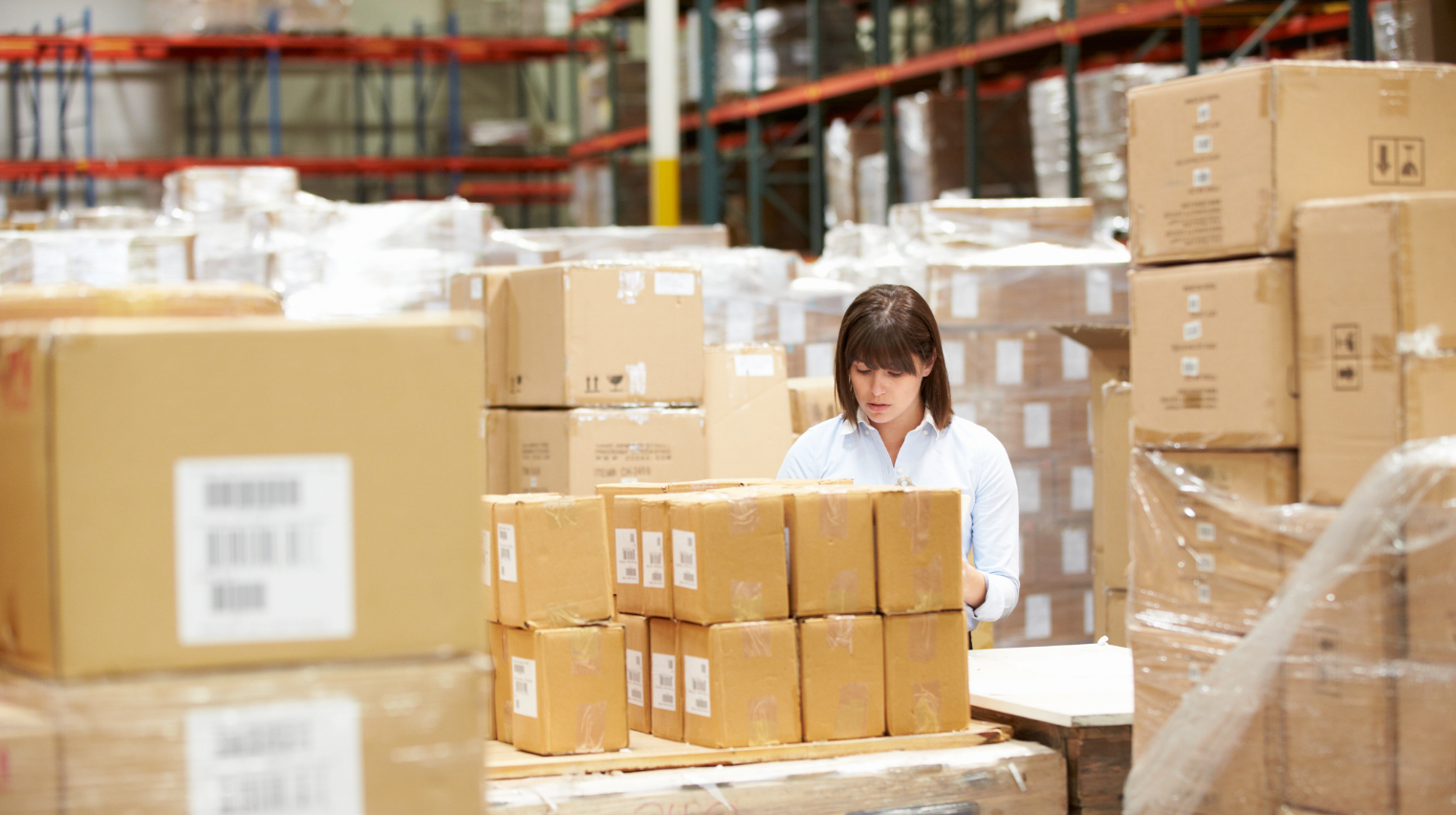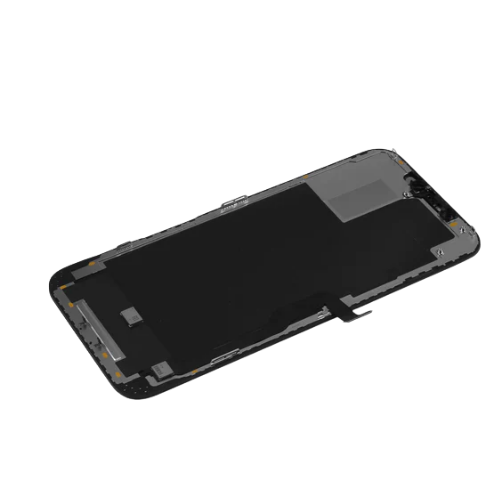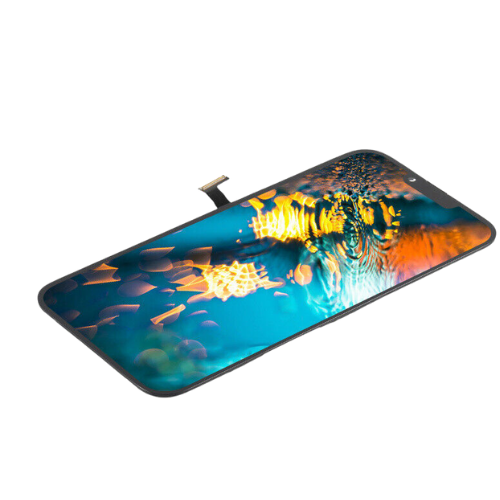
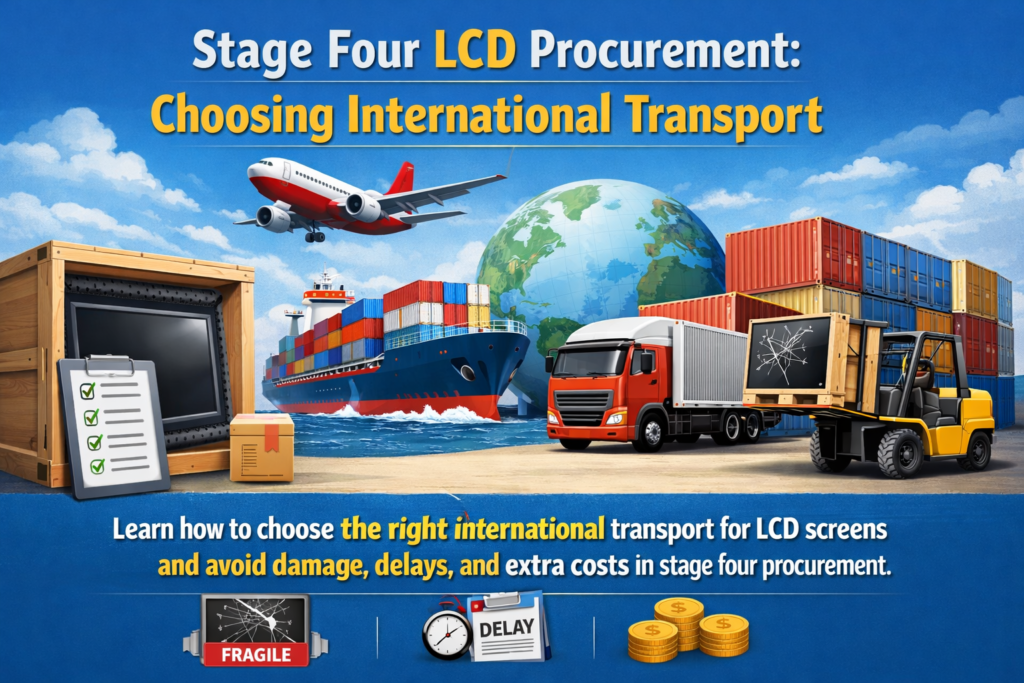
Când oamenii vorbesc despre aprovizionarea cu ecrane LCD pentru telefoane mobile, de obicei sunt obsedați de preț, calitate, și furnizorii. Dar iată adevărul: chiar și cele mai bune ecrane pot deveni o pierdere totală dacă transportul internațional merge prost. Etapa a patra a achizițiilor LCD este locul în care logistica se întâlnește cu strategia și unde cumpărătorii inteligenți își protejează profiturile în liniște.
Gândiți-vă la această etapă ca la alegerea vehiculului potrivit pentru o călătorie lungă. Nu ați conduce o mașină sport printr-o furtună de zăpadă sau nu ați transporta mobilier pe o motocicletă. Aceeași logică se aplică și pentru expedierea ecranelor LCD la nivel internațional.
Înțelegerea etapei a patra din procesul de achiziție LCD
De ce este important transportul internațional
Ecranele LCD sunt fragile, de mare valoare, și sensibil la timp. Un panou crăpat, o expediere întârziată, sau un document lipsă poate șterge instantaneu marginile. Etapa a patra se concentrează pe selectarea metodei de transport internațional potrivite și pe gestionarea întregii operațiuni de la plecare până la sosire.
Riscuri comune în transportul LCD transfrontalier
Deteriora, întârzieri, detine vamale, taxe de stadie, iar marfa pierdută sunt suspecții obișnuiți. Vestea bună? Cele mai multe dintre aceste riscuri pot fi evitate cu o planificare corectă.
Potrivirea modurilor de transport la volum, Timp, și Bugetul
Factori cheie care afectează deciziile de transport
Alegerea unei metode de expediere nu este o presupunere – este o decizie calculată.
Greutate, Volum, și Fragilitate
Ecranele LCD sunt ușoare, dar delicate. Volumul contează adesea mai mult decât greutatea, în special pentru transportul aerian și transporturile LCL.
Așteptări de timp de livrare
Este aceasta o reaprovizionare urgentă sau un stoc de rutină? Viteza costă bani, iar transportul lent costă timpul.
Costul și impactul fluxului de numerar
Costurile de transport afectează direct costul debarcat. Cea mai ieftină opțiune nu este întotdeauna cea mai profitabilă.
Livrare International Express
Când să folosiți curieri internaționali
Transportul rapid internațional este perfect pentru loturi mici, bunuri de mare valoare, sau probe urgente și reaprovizionare.
Avantajele transportului rapid
Serviciu din ușă în ușă, documente minime, și tranzit rapid — de obicei 3 la 7 zile. Este comoditatea la maxim.
Limitări și considerații de cost
Dezavantajul? Cost unitar ridicat. Pentru expedieri în vrac LCD, transportul expres devine rapid neeconomic.
Transport aerian internațional
Scenarii ideale pentru transportul aerian
Transportul aerian se potrivește expedițiilor de volum mediu care necesită viteză, dar care nu justifică prețurile de curierat.
Timpul de tranzit și manipularea aeroportului
Transportul aerian este rapid, dar nu uitați de handling la sol, controale de securitate, și orarele de zbor.
Vămuire și livrare finală
Veți avea în continuare nevoie de vămuire eficientă și livrare locală la aeroportul de destinație.
Transport maritim internațional
De ce transportul maritim este cel mai rentabil
Pentru volume mari, transportul maritim este rege. Este opțiunea cu cel mai mic cost pentru livrarea în vrac a ecranelor LCD.
Timpul de tranzit și cerințele de planificare
Aştepta 20 la 40 zile in functie de trasee. Transportul maritim recompensează planificatorii și pedepsește cei care amână.
Încărcare completă a containerului (FCL) Transport
Ce este FCL și când să-l folosești
FCL înseamnă că mărfurile dumneavoastră umplu un întreg container. Dacă transportul dvs. LCD poate umple unul, aceasta este cea mai sigură și eficientă opțiune.
Tipuri de containere: 20ft vs 40ft
20-containerele de picior se potrivesc marfurilor grele, în timp ce containerele de 40 de picioare funcționează bine pentru volum mare, Ecrane LCD ușoare.
Mai puțin decât încărcarea containerului (LCL) Transport
Cum funcționează LCL
Când transportul dvs. nu este suficient de mare pentru un container plin, LCL vă permite să partajați spațiu cu alți expeditori.
Calculul costurilor și riscurile
Costurile sunt bazate pe volum. Manipularea este mai mare, la fel și riscul de întârzieri sau deteriorări.
Cadrul de luare a deciziilor în domeniul transporturilor
Viteza de echilibrare, Cost, și Siguranță
Nu există o metodă „cea mai bună”, doar cea mai potrivită. Cumpărătorii inteligenți potrivesc modurile de transport cu prioritățile afacerii.
Master Bill of Lading (MBL) Explicat
Importanță juridică și comercială
Conosamentul principal este emis de transportator și acționează ca dovadă a dreptului de proprietate și de livrare.
Operațiuni de eliberare telex
Cum eliberarea Telex accelerează colectarea mărfurilor
Eliberarea Telex permite ridicarea mărfurilor fără facturi originale, economisind timp și costuri de curierat - perfect pentru expedieri repetate.
Tipuri de conosamente oceanice
Transportatorul B/L vs Transportator B/L
Înțelegerea cine emite B/L afectează procedurile de eliberare a încărcăturii și gestionarea riscurilor.
Pe borderoul de transport (AWB) în transportul aerian de marfă
Diferențele cheie față de Ocean B/L
AWB-urile nu sunt negociabile. Marfa este eliberată pe baza notificării de sosire și a verificării identității.
Asigurare de marfă pentru ecrane LCD
De ce asigurarea nu este opțională
Ecranele LCD sunt valoroase și fragile. Asigurarea transferă riscul din bilanţul dumneavoastră către asigurător.
Acoperirea tuturor riscurilor explicată
Asigurarea „tot riscul” acoperă majoritatea scenariilor de daune și pierderi legate de transport.
Urmărirea mărfurilor și vizibilitate
Utilizarea eficientă a numerelor B/L și AWB
Numerele de urmărire oferă vizibilitate în timp real și liniște sufletească pe tot parcursul tranzitului.
Avizul de sosire și coordonarea destinației
Pregătirea pentru sosirea în port sau aeroport
Avizele de sosire declanșează vămuirea și planificarea livrării. Lipsa lor cauzează întârzieri.
Managementul documentelor de transport
Evitarea întârzierilor prin transferul la timp a documentelor
B/L originale, facturi, iar listele de ambalare trebuie să sosească înainte de încărcătură — sau totul se oprește.
Controlul costurilor de stație și detenție
Cum să evitați taxele neașteptate
Cunoașteți limitele de timp liber în porturile de destinație și planificați vămuirea din timp.
Soluții de transport multimodal
Conexiuni pe cale ferată și pe mare-camion
Pentru destinații interioare, transportul multimodal asigură livrarea fără probleme pe ultimul kilometru.
Gestionarea excepțiilor și urgențelor
Întârziere, Deteriora, și Proceduri de Reclamații
Aveți un plan clar pentru întârzieri, rapoarte de daune, și daune de asigurare înainte de apariția problemelor.
Concluzie
Etapa a patra a achiziției de ecrane LCD pentru telefoane mobile este cea în care deciziile logistice se transformă în rezultate financiare reale. Prin alegerea metodei de transport internațional potrivite, gestionarea documentelor cu grijă, și pregătirea pentru excepții, cumpărătorii își pot proteja atât marfa, cât și profiturile. În comerțul global, logistica inteligentă nu este opțională – este un avantaj competitiv.
Întrebări frecvente
1. Ce metodă de transport este cea mai bună pentru ecranele LCD?
Depinde de volum, urgenţă, și buget - nu există un răspuns unic.
2. Transportul maritim este sigur pentru ecranele LCD?
Da, cu ambalaj corespunzator, asigurare, și selecția containerului.
3. Când ar trebui să folosesc eliberarea telex?
Pentru cumpărători de încredere și expedieri repetate unde viteza contează.
4. Chiar am nevoie de asigurare de marfă?
Absolut. Ecranele LCD prezintă un risc ridicat, produse de mare valoare.
5. Cum pot evita taxele de șopie?
Planificați vămuirea din timp și înțelegeți perioadele de depozitare gratuite.