Az iPhone képernyőjavítási piac hatalmas. Nem csak nagy – összetett, rétegzett, és néha zavaró. Javítóműhelyeknek és nagykereskedőknek, az utángyártott képernyő specifikációinak megértése nem kötelező. Ez a különbség az erős nyereség és az állandó vásárlói panaszok között.
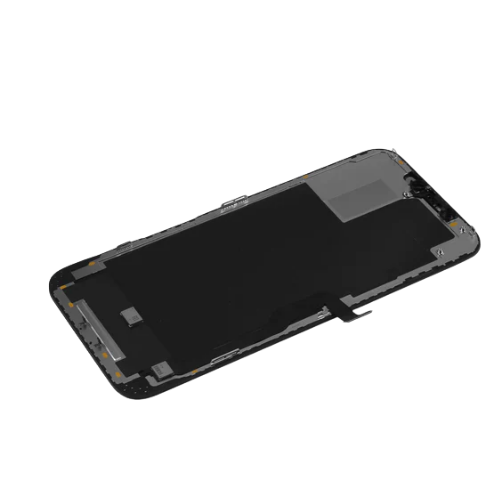
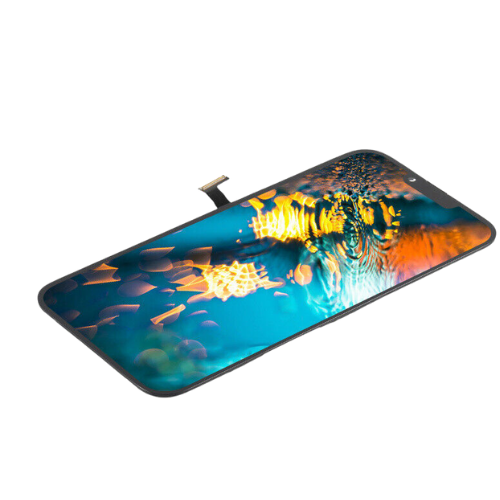
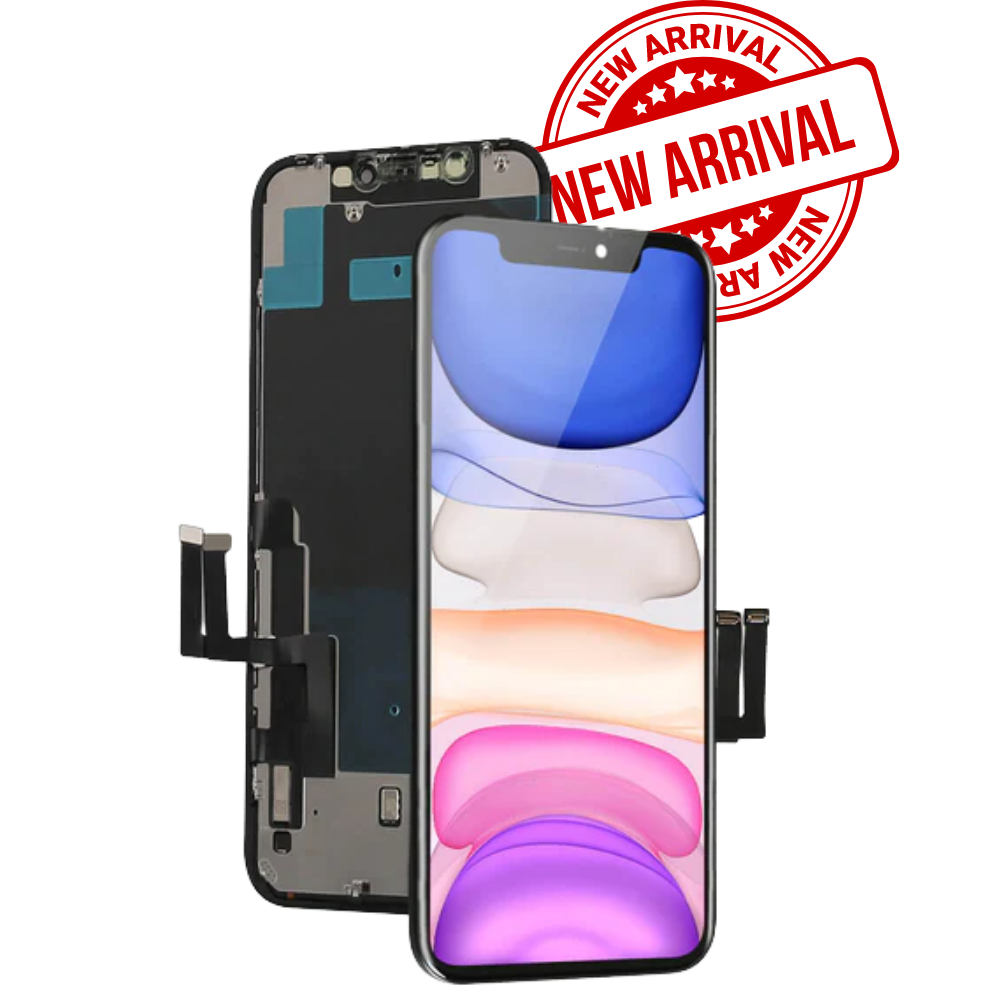
Képzeljen el egy iPhone képernyőt, mint a telefon szívét. Ez nem csak egy üvegdarab. Ez egy teljesen integrált modul, amely kombinálja a kijelzőt, érintéses digitalizáló, Face ID összetevők, közelségérzékelők, fülhallgató, és több. Helytelenül cserélje ki, és az egész élmény megváltozik.
Tehát hogyan válassza ki a megfelelő képernyőt? Bontsuk le lépésről lépésre.
Miért uralják az iPhone képernyők a javítási ipart?
A képernyő sérülése az első számú iPhone javítás világszerte. Cseppek történnek. Üvegrepedések. A kijelzők feketék lesznek. És amikor ez megtörténik, az ügyfelek nem magyarázatot akarnak, hanem megoldást.
De itt van a trükkös rész: nem minden csereképernyő egyforma.
Képernyőt vásárolhat hozzá $15 vagy $150. Mindkettő "megfelel". De vajon ugyanazt végzik-e? Egyáltalán nem.
Ekkor válik versenyelőnyévé a specifikációk megértése.
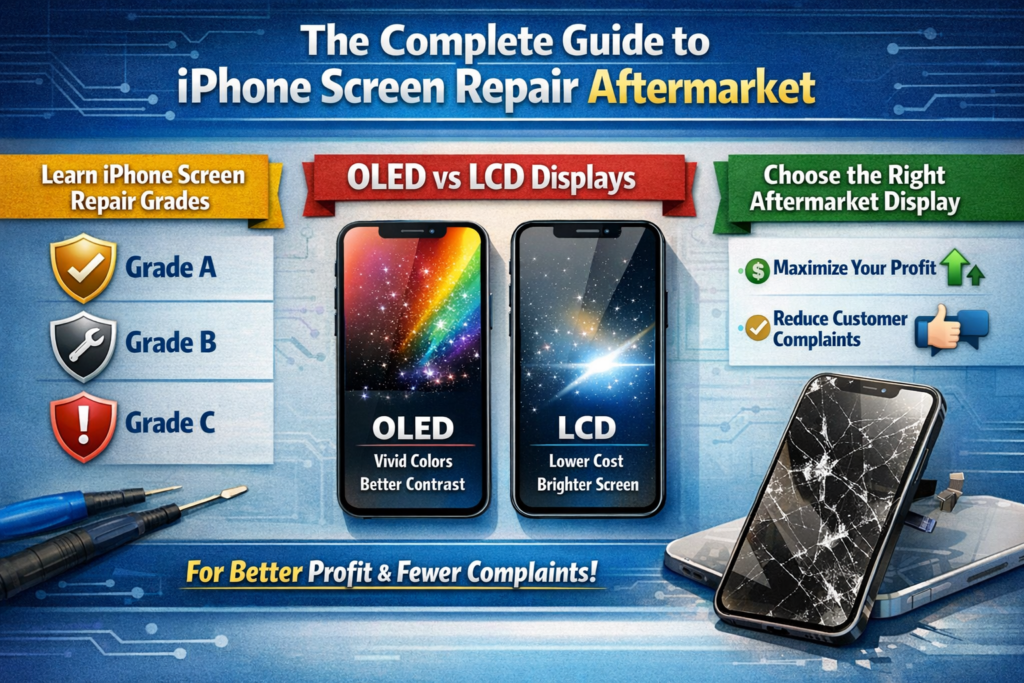
Az Alapítvány – Két alapvető képernyőtechnológia
Mielőtt még az utángyártott minőségekről beszélnénk, meg kell értenünk egy alapvető igazságot:
Az iPhone-okban csak két alapvető megjelenítési technológia található.
LCD technológia magyarázata
LCD (Folyékony kristály kijelző) képernyőket használtak olyan modellekben, mint pl:
- iPhone 6 / 7 / 8
- iPhone XR
- iPhone 11
- iPhone SE sorozat
Az LCD képernyők háttérvilágítást igényelnek a pixelek megvilágításához. Ezért a feketék kissé szürkének tűnnek – a háttérvilágítás mindig be van kapcsolva.
Előnyök:
- Alacsonyabb költség
- Érett utángyártott kínálat
- Stabil teljesítmény
Korlátozások:
- Alacsonyabb kontraszt
- Kevésbé élénk színek
- Kicsit vastagabb szerkezet
Az OLED technológia magyarázata
Az iPhone X-től kezdve, Az Apple áttért az OLED-re a legtöbb prémium modellnél.
OLED paneleket használnak:
- iPhone X
- iPhone 12 / 13 / 14 / 15 / 16 sorozat (kivéve SE)
Minden pixel saját fényt bocsát ki. Ez azt jelenti, hogy igazi feketék, végtelen kontraszt, és jobb energiahatékonyság.
Az OLED vékonyabb, világosabb, és élénkebb – de sokkal drágább az előállítása is.
Főbb különbségek az LCD és az OLED között
| Funkció | LCD | OLED |
|---|---|---|
| Háttérvilágítás | Kívánt | Nem szükséges |
| Fekete Szín | Szürkés | Igazi fekete |
| Kontraszt | Korlátozott | Végtelen |
| Vastagság | Vastagabb | Vékonyabb |
| Költség | Alacsonyabb | Magasabb |
Ez a technológiai különbség mindent meghatároz az utángyártott piacon.
Öt fő utángyártott iPhone képernyőminőség
Most pedig lépjünk be az igazi csatatérbe – az utángyártott besorolásba.
1. Eredeti húzott képernyők (OEM szétszedve)
Ezek eredeti Apple képernyők, amelyeket eltávolítottak a használt eszközökről.
Nincs harmadik féltől származó gyártás. Nincs alkatrészcsere.
Miért prémiumok:
- Tökéletes színpontosság
- Eredeti fényerőszintek
- True Tone & A ProMotion teljes mértékben támogatott
- A Face ID kompatibilitás megőrizve
Gyári szintű teljesítményt nyújtanak.
Hátránya? Magas költség és korlátozott kínálat.
2. Felújított eredeti képernyők (Üveg Cserélve)
Itt válik érdekessé.
A technikusok eltávolítják a törött üveget az eredeti panelről, és új üvegréteget laminálnak.
A belső OLED vagy LCD panel eredeti marad.
Teljesítmény:
- A kijelző minősége szinte megegyezik az OEM minőségével
- Az érintési teljesítmény az üveg minőségétől függ
- A True Tone rendszerint megmarad
Tekintsd úgy, mint az „ablak” javítását az eredeti motor megtartása mellett.
Ár: Alacsonyabb, mint az OEM húzott, de még mindig prémium.
3. Diagnosztikailag tesztelt eredeti képernyők
Ezek eredeti képernyők, amelyeket szakmailag teszteltek és minősítettek.
Jöhetnek hivatalos szervizprogramokból vagy nagyszabású felújítási központokból.
A teljesítmény egyenletes és megbízható, bár kisebb esztétikai hibák előfordulhatnak.
Ez a kategória egyensúlyt kínál az ár és a megbízhatóság között.
4. Harmadik féltől származó OLED képernyők
Ez a legversenyképesebb szegmens a mai piacon.
Teljes mértékben harmadik fél gyárai gyártják.
Két fő típus létezik:
Kemény OLED
Merev aljzatot használ.
Jellemzők:
- Kicsit vastagabb
- Szélesebb alsó keret ("áll")
- Megfizethetőbb
Teljesítmény:
- Tisztességes szín
- Mérsékelt fényerő
- Alacsonyabb tartósság az eredetihez képest
Rugalmas (Puha) OLED
Az Apple eredeti paneleihez hasonló rugalmas hordozót használ.
Előnyök:
- Vékony kialakítás
- Keskeny keret
- Jobb színvisszaadás
- Nagyobb fényerő
A csúcskategóriás lágy OLED képernyők még az adatátvitel után is támogatják a True Tone-t.
De még a csúcskategóriás puha OLED képernyők is megjelenhetnek:
- Extrém szögeknél enyhe színeltolódás
- Magasabb beégési kockázat
- Alacsonyabb alacsony fényerejű egyenletesség
Rendszer figyelmeztetés? Igen – az iPhone valószínűleg a következőt fogja látni: „Nem lehet ellenőrizni, hogy az iPhone eredeti Apple kijelzővel rendelkezik”.
5. Harmadik féltől származó LCD (Incell / TFT) OLED modellekhez
Ez a költségvetési lehetőség.
Egyes javítási piacok az OLED képernyőket LCD alternatívákkal cserélik le a költségek csökkentése érdekében.
Kompromisszumok a teljesítményben:
- Alacsonyabb fényerő
- Kimosott színek
- Rossz betekintési szögek
- Nincs igaz hang
Működik – de olyan, mintha gazdaságos abroncsokat tennénk egy sportautóra.
Natív LCD modellekhez (mint az iPhone 11), a harmadik féltől származó LCD-minőség érettebb és elfogadhatóbb, bár még mindig gyengébb az eredetinél.
Az alapvető teljesítmény összehasonlítása
Egyszerűsítsünk.
| Fokozat | Szín | Fényesség | True Tone | Tartósság | Ár |
|---|---|---|---|---|---|
| OEM húzott | Kiváló | Kiváló | Igen | Kiváló | $$$$ |
| Felújított OEM | Kiváló | Kiváló | Igen | Nagyon jó | $$$ |
| Puha OLED | Nagyon jó | Nagyon jó | Részleges | Jó | $$ |
| Kemény OLED | Mérsékelt | Mérsékelt | Nem | Mérsékelt | $$ |
| Incell LCD | Alapvető | Alacsony | Nem | Alapvető | $ |
Egy dolog világos: az ár a teljesítményt tükrözi.
Fontos technikai feltételek, amelyeket ismernie kell
Incell technológia
Az Incell az érintést integrálja az LCD-rétegbe.
Utángyártott nyelven, általában az olcsóbb LCD cserékre utal.
True Tone funkcionalitás
A True Tone a színhőmérsékletet a környezeti fény alapján állítja be.
Eredeti adatátviteli eszközök nélkül, ez a funkció nem működik a legtöbb harmadik féltől származó képernyőn.
IC chip kompatibilitás
A kijelző-illesztőprogram IC szabályozza a fényerőt és az érintésre adott választ.
A felső kategóriás képernyők lehetővé tehetik az IC átvitelt az eredeti panelekről, stabilitás javítása.
Kemény OLED vs rugalmas OLED
A rugalmas OLED magasabb szintű.
Ha egy szállító ezt nem tudja egyértelműen meghatározni, az piros zászló.
Árképzési stratégia a javítóműhelyek számára
Az intelligens üzletek nem kínálnak egyetlen lehetőséget. Hármat kínálnak.
- Költségvetés
- Standard
- Prémium
Magyarázza el világosan a különbségeket.
A vásárlók jobban utálják a meglepetéseket, mint a magas árakat.
Az átláthatóság bizalmat épít.
Az alacsony árú csapdák elkerülése
Ha az ár túl jól hangzik ahhoz, hogy igaz legyen – az.
Egyes beszállítók a kemény OLED-et „eredeti minőségként” jelölik.
Tegyen fel közvetlen kérdéseket:
- Rugalmas OLED?
- Támogatja-e a True Tone funkciót az átvitel után??
- Mi a fényerő szintje?
A részletek elválasztják a profikat az amatőröktől.
Beszerzési tanácsok nagykereskedőknek
Az OLED modellek most uralják a piacot.
Csökken a kereslet az OLED-eszközök olcsó LCD-csereire.
A leltári stratégiára kell összpontosítani:
- Rugalmas OLED
- Felújított OEM
- Válassza az OEM húzott készletet
Az olcsó Incell cserék mozgathatják a mennyiséget, de az árrések vékonyak és a panaszok magasabbak.
Utolsó gondolatok az okosabb döntésekről
Az iPhone képernyő utáni piaca nem csak az olcsóbb alkatrészek vásárlásáról szól.
A technológia megértéséről van szó, osztályozás, teljesítmény, és az ügyfelek elvárásait.
Gondolj rá, mint a borra. Vannak asztali palackok és vintage választék. Mindkettő iható. De különböző közönséget szolgálnak ki.
A te munkád? Illessze a terméket a vásárlóhoz.
Egyensúlyozza a költségvetést és a teljesítményt.
És ne feledje – a képernyőcsere során, valóban azt kapod, amiért fizetsz.
Következtetés
Az iPhone képernyőjavítási piac hatalmas, versenyképes, és rendkívül technikás. Az eredeti húzható kijelzőktől a rugalmas OLED és olcsó Incell LCD opciókig, minden kategória más célt szolgál. Javítóműhelyek számára, a többszintű opciók kínálata jobb ügyfél-elégedettséget biztosít. Nagykereskedőknek, Az osztályzatbeli különbségek megértése egészségesebb árrést és kevesebb megtérülést biztosít. Végül, A képernyő specifikációinak elsajátítása nem csupán technikai tudás, hanem üzleti stratégia.
GYIK
1. A rugalmas OLED mindig jobb, mint a kemény OLED?
Igen, a legtöbb esetben. A rugalmas OLED jobb megjelenítési minőséget kínál, vékonyabb kivitel, és az eredeti képernyőkhöz közelebbi teljesítmény.
2. Támogathatják-e a harmadik féltől származó képernyők a True Tone-t??
Egyes csúcskategóriás, rugalmas OLED-képernyők támogatják a True Tone-t az eredeti képernyőadatok speciális eszközökkel történő átvitele után.
3. Miért jelenít meg az iPhone „nem eredeti kijelző” figyelmeztetést??
Mivel az Apple ellenőrzi a képernyő sorozatszámait. A legtöbb harmadik féltől származó képernyő aktiválja ezt az értesítést.
4. A felújított eredeti képernyők megbízhatóak?
Ha szakszerűen fel lett újítva, megőrzik az eredeti kijelzőpaneleket, és közel OEM-teljesítményt kínálnak.
5. A javítóműhelyekben kell lennie az Incell LCD-nek az OLED modellekhez?
Csak rendkívül árérzékeny piacokon. A vásárlói elégedettség alacsonyabb lehet, mint az OLED cserék esetében.