Vezetői összefoglaló
Kulcsfontosságú piaci eredmények
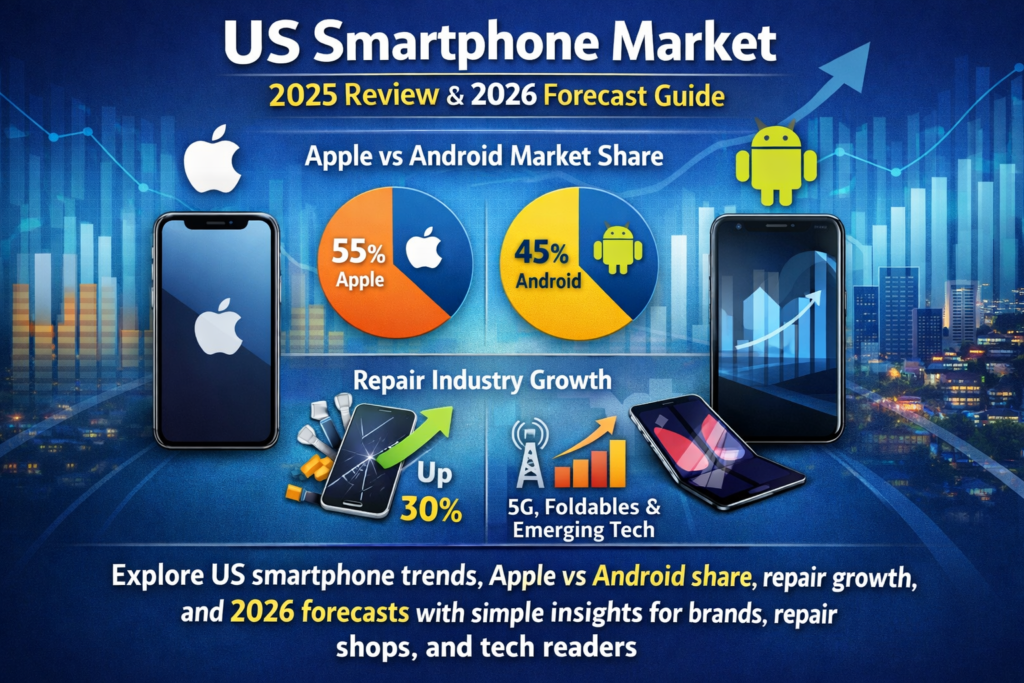
Az amerikai okostelefon-piacon 2025 az érettség és az átalakulás lenyűgöző keverékét mutatta. Az értékesítés növekedése lassult az előző évekhez képest, de a bevétel tovább emelkedett a magasabb átlagos eladási áraknak és az erős prémiumkeresletnek köszönhetően. Az Apple rekorderrel uralta a piacot 69% részesedése a negyedik negyedévben 2025, vezető pozíciójának megerősítése. A Samsung továbbra is a második legnagyobb játékos, míg a kisebb Android-márkák kiélezett versenyt folytattak a résszegmensekben.
Közben, az okostelefonok javítási iparága folyamatosan bővült. A fogyasztók egyre inkább a javítást választják a csere helyett, az emelkedő készülékárak miatt, fenntarthatósági tudatosság, és hosszabb csereciklusok.
A növekedés motorjai és kihívásai
Több erő alakította a piacot. AI funkciók, fejlett kamerák, és az ökoszisztéma integrációja prémium frissítéseket eredményezett. Viszont, a növekvő hardverköltségek és a geopolitikai ellátási lánc eltolódása nyomást gyakorolt a gyártókra. Ahogy felé nézünk 2026, az iparág potenciális fordulópont előtt áll: magasabb árakat, lassabb egységnövekedés, és az innovációra való fokozott támaszkodás.
Az Egyesült Államok okostelefon-piacának áttekintése itt 2025
Piacméret és bevételi trendek
Az Egyesült Államok továbbra is a világ egyik legérettebb okostelefon-piaca. In 2025, az összértékesítés csak kismértékben – nagyjából – nőtt 1% évről évre – a bevétel mégis erőteljesebben nőtt. Miért? Mert a fogyasztók a gazdasági bizonytalanság idején is folyamatosan prémium készülékeket vásároltak.
Középkategóriás okostelefonok ára között $300 és $600 jelentős hullámot látott, körül 27% növekedés. Csúcskategóriás modellek a fenti áron $600 stabil maradt, de a legtöbb iparági nyereséget termelte.
Fogyasztói kereslet változásai
Prémium vs középkategóriás szegmensek
A fogyasztók jobban egyensúlyoznak a teljesítmény és az érték között, mint valaha. A prémium modellek továbbra is vonzzák a hűséges vásárlókat, akik a legújabb funkciókra vágynak. Egy időben, a középkategóriás készülékek egyre erősebbek, „zászlóshajó-szerű” élményeket kínálva alacsonyabb áron.
Csereciklus-trendek
Az átlagos okostelefoncsere-ciklus tovább nőtt, gyakran meghaladja a három évet. A magasabb árak és az eszközök jobb tartóssága arra késztette az embereket, hogy kétszer is meggondolják a frissítést.
Az Apple piacvezető szerepe
Piaci részesedés növekedése és adatok
Az Apple dominanciáját nehéz figyelmen kívül hagyni. A 4. negyedévben 2025, elérte az amerikai piaci részesedését 69%, történelmi mérföldkövet jelölve. A siker nagy része a Pro Max modellek iránti erős keresletnek és a középkategóriás eszközökre való stratégiai terjeszkedésnek köszönhető.
Ökoszisztéma-stratégia
Az Apple ökoszisztémája – a hardverek kombinálása, szoftver, és szolgáltatások – magas vásárlói hűséget teremt. Az olyan funkciók, mint a zökkenőmentes eszközszinkronizálás és az előfizetési szolgáltatások, arra ösztönzik a felhasználókat, hogy maradjanak az Apple környezetben.
Fuvarozói partnerségek
Az Apple szoros kapcsolatai olyan nagy amerikai szolgáltatókkal, mint az AT&T, Verizon, és a T-Mobile fellendítette az akciókat és a finanszírozási ügyleteket, a prémium eszközök elérhetőbbé tétele.
Középkategóriás bővítés
A megfizethetőbb modellek piacra dobása lehetővé tette az Apple számára, hogy az árérzékeny fogyasztókat vonzza a prémium imázs romlása nélkül.
Márkaverseny táj
A Samsung stratégiája és álláspontja
A Samsung megőrizte erős második helyét kb 13% piaci részesedés. Széles termékválasztéka – a Galaxy S zászlóshajóitól az A-sorozatú középkategóriás telefonokig – több árszintet is lefedett.. Az összecsukható eszközök szintén jelentős megkülönböztető tényezőként szolgáltak.
A Google Pixel és az AI megkülönböztetése
A Google Pixel eszközök nagy hangsúlyt fektettek az AI-funkciókra és a kamera teljesítményére. A natív Android-integráció és a fejlett szoftverek vonzották a technológia szerelmeseit.
Motorola és költségvetési piaci siker
A Motorola továbbra is uralta a belépő szintű és az előre fizetett piacokat. Affordable models with reliable performance appealed to cost-conscious buyers.
OnePlus and Performance-Focused Users
OnePlus targeted enthusiasts who wanted high performance at competitive prices, often positioning itself as a “flagship killer.”
Brand Market Share Comparison Table
| Márka | Estimated US Market Share (Q4 2025) | Core Strategy | Key Product Lines |
|---|---|---|---|
| alma | 69% | Premium ecosystem + mid-range expansion | iPhone Pro/Max, iPhone 16e |
| Samsung | 13% | Wide product range + foldable innovation | Galaxy S, Z Fold/Flip, A sorozat |
| ~6% | AI software leadership | Pixel Series | |
| Motorola | ~7% | Budget and prepaid focus | Moto G, Razr |
| Mások | ~5% | Niche innovation and value | OnePlus and smaller brands |
US Smartphone Repair Market Analysis
Market Size and Growth
The US smartphone repair industry is a multibillion-dollar market estimated between $3.8 billion and $5 milliárd. Growth remained steady due to increasing device prices and sustainability concerns.
A javítási igény fő mozgatórugói
Fenntarthatósági tudatosság
A fogyasztók egyre inkább környezettudatosak. A telefon cseréje helyett megjavítása csökkenti az elektronikai hulladékot és pénzt takarít meg.
Eszközök emelkedése
Ahogy a zászlóshajó okostelefonok meghaladják $1,000, a javítás vonzóbb lehetőséggé válik, mint egy új készülék vásárlása.
Főbb javítási szolgáltatók
Az iparhoz hivatalos gyártói javítóközpontok tartoznak, országos láncok, független üzletek, és barkács javító közösségek.
Általános javítási típusok
A képernyőcsere és az akkumulátorcsere messze a leggyakoribb javítások. A kamerával és a töltőporttal kapcsolatos problémák is jelentősen hozzájárulnak.
A javítási iparág kihívásai és trendjei
Az alkatrészek elérhetősége és a gyártói korlátozások
A független javítóműhelyek gyakran nehezen jutnak hozzá az eredeti alkatrészekhez. Az alkatrészek párosítása és a szoftverzárak szintén bonyolíthatják a javítást.
Technikus képzés és új technológiák
Az olyan új funkciók, mint az összecsukható kijelzők és a fejlett kamerarendszerek speciális eszközöket és képzést igényelnek.
Az online javítási szolgáltatások növekedése
Számos vállalkozás kínál most postai úton történő javítási szolgáltatásokat és online foglalási rendszereket, az ügyfelek kényelmének javítása.
2026 Piaci előrejelzés
Növekvő hardverköltségek és anyagjegyzék-nyomás
A legnagyobb kihívás számára 2026 az alkatrészköltségek emelkedése. A memóriaárak várhatóan meredeken emelkednek, arra ösztönzi a gyártókat, hogy emeljék az árakat vagy csökkentsék az árrést. Ennek eredményeként, a piac „kisebb mennyiséget, de magasabb árakat” tapasztalhat.
Eszközoldali AI integráció
A mesterséges intelligencia praktikusabb lesz, és beépül a mindennapi funkciókba – az akkumulátor optimalizálása, fényképezés javítása, és személyre szabott asszisztensek.
Összehajtható és innovatív formatényezők
Az összecsukható okostelefonok népszerűsége várhatóan növekedni fog, különösen az új élményekre vágyó tech-rajongók körében.
Az ellátási lánc kiigazítása és a politikai kockázatok
Tarifák és gyártási műszakok
A gyártók a kockázatok csökkentése érdekében diverzifikálják a termelést Kínán kívül olyan országok felé, mint India és Vietnam.
A javításhoz való jogra vonatkozó jogszabályok
Az új törvények előírhatják a gyártóknak, hogy tegyék könnyebbé az eszközök javítását, független javítóműhelyek és fogyasztók számára.
Stratégiai ajánlások
Tanácsok okostelefon-márkák számára
Összpontosítson az innováció és a megfizethetőség közötti egyensúlyra. Fektessen be olyan mesterséges intelligencia-funkciókba, amelyek valóban javítják a felhasználói élményt, a feltűnő marketingtrükkök helyett.
Tanácsok javítóvállalkozásoknak
Bővítse ki a szolgáltatásokat az okostelefonokon túl a táblagépekkel és laptopokkal is. Képezze ki a technikusokat az olyan új technológiák kezelésére, mint az összecsukható kijelzők.
Tanácsok fogyasztóknak és befektetőknek
A fogyasztóknak a tartósságot és a hosszú távú szoftvertámogatást kell előnyben részesíteniük telefonok vásárlásakor. A befektetőknek figyelniük kell azokat a cégeket, amelyek erős ellátási lánc-ellenőrzést és prémium márkapozíciót biztosítanak.
Jelentéskorlátozások
Ez a jelentés nyilvánosan elérhető iparági adatokon és piackutatáson alapul. A piaci részesedés adatai a módszertantól és az adatforrásoktól függően kis mértékben eltérhetnek. A gyors iparági változások megváltoztathatják a jövőbeli eredményeket.
Következtetés
Az amerikai okostelefon-piacon 2025 stabilitást és átalakulást egyaránt mutatott. Az Apple dominanciája erős maradt, míg az Android márkák az innováció és az érték révén keresték a megkülönböztetést. A javítási ipar virágzott, mivel a fogyasztók fenntartható alternatívákat kerestek a gyakori frissítésekre.
Előre tekintve 2026, a növekvő hardverköltségek és a mesterséges intelligencia integrációja átformálja az iparágat. A márkáknak egyensúlyban kell tartaniuk az innovációt a megfizethetőséggel, a javítási vállalkozásoknak alkalmazkodniuk kell az új technológiákhoz, és a fogyasztók valószínűleg magasabb árakkal, de fejlettebb funkciókkal szembesülnek majd. Végül, a piac jövője attól függ, hogy a vállalatok mennyire tudják kezelni a költségnyomást, miközben érdemi innovációt hoznak létre.
GYIK
1. Miért uralja az Apple az Egyesült Államok okostelefon-piacát??
Az Apple erős ökoszisztémája, fuvarozói partnerségek, és a magas vásárlói hűség erőteljes versenyelőnyt jelent.
2. Mi hajtja a növekedést az okostelefon-javítási ágazatban??
Magasabb készülékárak, fenntarthatósági tudatosság, és a hosszabb csereciklusok kulcstényezők.
3. Emelkedni fognak az okostelefonok árai 2026?
Igen, az emelkedő hardverköltségek és az ellátási lánc változásai várhatóan magasabbra fogják nyomni az árakat.
4. Milyen hatással lesz a mesterséges intelligencia az okostelefonokra a jövőben?
Az AI javítani fogja az akkumulátorkezelést, fényképezés, és személyre szabható, nem pedig csak feltűnő funkciók hozzáadása.
5. Az összehajtható telefonok valószínűleg általánossá válnak??
Folyamatosan nőnek, de az elfogadás a tartósság javításától és az alacsonyabb áraktól függ.