Vezetői összefoglaló
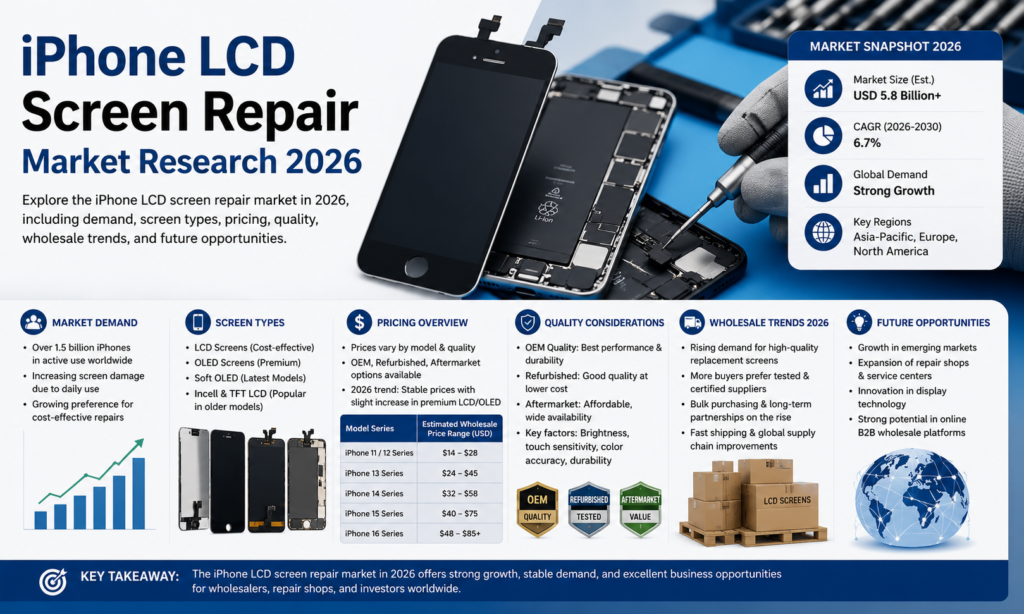
A iPhone képernyőjavítási piac továbbra is a globális okostelefon-utánpiac egyik fontos szegmense 2026, de az üzlet gyorsan változik, ahogy az Apple áttér a hagyományos LCD-panelekről az egyre kifinomultabb OLED-kijelzők felé., míg a javítási vállalkozások ezzel egyidejűleg magasabb alkatrészköltségekkel szembesülnek, szigorúbb minőségi követelmények, szoftver alapú alkatrészellenőrzés, és a növekvő vásárlói elvárások. Javítóműhelyek számára, nagykereskedők, felújítók, és alkatrészforgalmazók, a lehetőség már nem csupán egy olcsó csereképernyő vásárlásából és beszereléséből áll. Az igazi versenyelőny egyre inkább a kijelzőtechnológia megértésében rejlik, a megfelelő képernyőminőséget az ügyfél költségvetéséhez igazítani, a hibaarány szabályozása, megbízható beszállítók fenntartása, és a javítás utáni konfiguráció megfelelő elvégzése. Az Apple saját jelenlegi támogatási dokumentációja megerősíti, hogy az eredeti kijelzőket az iOS rendszerrel együtt tervezték olyan funkciókhoz, mint például a Multi-Touch., fényesség, színpontosság, fehéregyensúly, True Tone, Éjszakai műszak, és a Haptic Touch, míg a nem eredeti alkatrészek kompatibilitási vagy teljesítményproblémákat okozhatnak.
A piacra is úgy kell tekinteni, mint a az ökoszisztéma javítása, nem pedig egyetlen termékkategória. Az egyik végén az Apple és az Apple hivatalos szolgáltatói vannak, amelyek eredeti alkatrészeket és szabványos szervizeljárásokat használnak. Egy másik helyen független javítószolgáltatók és szakszervizek találhatók, amelyek esetleg eredetit használnak, használt, felújított, vagy utángyártott alkatrészek az ügyfél igényeitől és a helyi előírásoktól függően. Az Apple a használt alkatrészek támogatását is kiterjesztette: márciusa 2026 dokumentáció szerint az iPhone 15, iPhone 16, és az iPhone 17-családhoz tartozó eszközök meghatározott körülmények között támogatják a használt kijelzőket. Ez egy érdekes középutat teremt a piac számára, mivel egy korábban használt eredeti kijelző más értékajánlatot kínálhat, mint egy vadonatúj eredeti alkatrész és egy olcsó utángyártott panel.. Nagykereskedőknek, ez azt jelenti A minőségi szegmentálás egyre fontosabb, mint az „iPhone képernyő” egyszerű eladása. A sikeres beszállítónak pontosan el kell magyaráznia, hogy a vevő mit vásárol, milyen funkciók támogatottak, hogyan kell felszerelni az alkatrészt, és milyen utólagos telepítési eljárásokra lehet szükség.
Kulcsfontosságú piacvezetők
Számos erő alakítja az iPhone kijelzőjavítás iránti keresletet 2026. Első, az iPhone-ok telepített bázisa továbbra is óriási, Ez azt jelenti, hogy készülékek milliói keringenek a másodlagos piacokon még jóval az eredeti vásárlás után. Második, prémium iPhone modellek magas csereértékkel rendelkeznek, a javítás gazdaságilag vonzóvá tétele, ha a képernyőcsere költsége lényegesen alacsonyabb, mint egy másik telefon vásárlása. Harmadik, a felhasználók egyre inkább hosszabb ideig tartják meg okostelefonjukat, további karbantartási és felújítási igényeket teremtve. Egy időben, Az Apple termékfejlesztése megváltoztatja az alkatrészösszetételt: az újabb generációk nagymértékben támaszkodnak az OLED technológiára, míg a régebbi LCD-alapú modellek továbbra is javítási keresletet generálnak, mivel továbbra is aktívak a fejlődő piacokon és a másodlagos piacokon. Ez létrehozza a kétsebességes javítási gazdaságosság amelyben a régebbi LCD-modellek volument, míg az újabb OLED-modellek magasabb átlagos tranzakciós értékeket generálnak. A javítási vállalkozásoknak ezért egyensúlyba kell hozniuk a készletmélységet a technológiai átállásokkal, ahelyett, hogy azt feltételeznék, hogy a legújabb iPhone automatikusan megteremti a legnagyobb javítási lehetőséget..
A jelenlegi Apple-irányelvek egy másik jelentős hajtóerő. Az Apple hivatalos javítási információi szerint az ügyfelek az Apple-n keresztül kaphatnak képernyőszervizt, Apple hivatalos szolgáltatók, és más támogatott javítási csatornák, míg a független javítószolgáltatók hozzáférhetnek az eredeti Apple alkatrészekhez. Az Apple önkiszolgáló javítást is kínál tapasztalt felhasználók számára a jogosult piacokon és modelleken. Ezek a lehetőségek növelik az átláthatóságot, és jobban felhívják a fogyasztók figyelmét a javítási minőségre. Emellett emelik a lécet a független vállalkozások számára, mert az ügyfelek egyre nagyobb valószínűséggel kérdezik meg, hogy a csereképernyő eredeti-e, eredeti használt, felújított, vagy utángyártott. Más szóval, maga a képernyő már nem a teljes termék; a javítási bizalom a termék része. Egy javítóműhely, amely egyértelmű információkat tud adni a képernyő eredetéről, érintési teljesítmény, színminőség, garanciális fedezet, és a javítás utáni viselkedés gyakran akkor is sikeresen versenyezhet, ha annak ára nem a legalacsonyabb a piacon.
iPhone kijelző technológia és javítási igény
Az iPhone mögött meghúzódó kijelzőtechnológia közvetlen hatással van a javítási gazdaságosságra. A korábbi iPhone generációk széles körben alkalmazták az LCD technológiát, míg a későbbi generációk egyre inkább az OLED paneleket alkalmazták, mert az OLED mélyebb feketét tud biztosítani, nagyobb kontraszt, vékonyabb konstrukció, és nagyobb rugalmasság az ipari tervezésben. Javítási-üzleti szempontból, viszont, az átállás bonyolultabb annál, mint hogy egyszerűen lecseréljük az egyik képernyőt egy másikra. A különböző technológiák eltérő beszerzési stratégiát igényelnek, vizsgálati eljárások, ragasztórendszerek, rugalmas kábelkezelés, kalibrálási elvárások, és technikusi készségek. Az ügyfél egyszerűen leírhatja a problémát: „az iPhone képernyőm elromlott,”, de a beszállítónak tudnia kell a pontos modellt, képernyő technológia, minőségi fokozat, és a tervezett alkalmazást, mielőtt cserét javasolna. A kedvező árú utángyártott képernyő és a jó minőségű felújított vagy eredeti kijelző közötti különbség jelentős lehet a fényerő tekintetében, érintésre adott válasz, szín konzisztenciája, tartósság, és a vevők hosszú távú elégedettsége.
A piac tehát több gyakorlati minőségi kategóriába sorolható. Új eredeti kijelzők általában a prémium kategóriájúak, mert az Apple specifikációi szerint gyártják őket, és erős kompatibilitási elvárásokat támasztanak. Eredeti használt kijelzők potenciálisan alacsonyabb költséggel hiteles hardvert biztosíthat, bár figyelembe kell venni a korábbi használati és felújítási előzményeket. Felújított kijelzők kombinálhatja az eredeti kijelzőegységet csereüveggel vagy más felújított alkatrészekkel, magát a felújítási folyamatot kritikus minőségi változóvá téve. Utángyártott kijelzők az Apple eredeti ellátási láncán kívül gyártják, és jelentősen eltérhetnek a gyárak és a termékkategóriák között. Az Apple jelenlegi támogatási útmutatója kifejezetten figyelmezteti, hogy a nem eredeti kijelzők Multi-Touch vagy kompatibilitási problémákat okozhatnak, és hogy „Ismeretlen alkatrész” üzenet jelenhet meg, ha a kijelzőt nem lehet ellenőrizni, hogy eredeti-e vagy megfelelően összekapcsolható-e.. Nagykereskedőknek, ez azt jelenti, hogy a minőségi besorolásnak pontosnak kell lennie, nem pedig homályos címkéket, például „AAA” vagy „prémium”.
LCD, OLED, és AMOLED különbségek
Bár a kifejezés "iPhone LCD javítás" továbbra is nagyon fontos a régebbi eszközök számára, a piacot kutató vállalkozások 2026 kerülni kell, hogy az LCD-t a teljes iPhone-kijelző utángyártott termék szinonimájaként kezeljék. Az LCD-javítás iránt továbbra is nagy a kereslet, mivel a régebbi iPhone modellek továbbra is forgalomban vannak, különösen az árérzékeny piacokon, ahol a fogyasztók szívesebben javítják a meglévő készüléket, mintsem egy újabb zászlóshajót vásárolnak.. OLED, közben, egyre fontosabbá válik a nagyobb értékű javításoknál, és a gazdaságossága nagyon eltérő lehet. Az OLED panelek kiváló vizuális teljesítményt nyújtanak, de gondosabb kezelést igényelhetnek, és a jó minőségű és a rossz minőségű cserepanelek közötti árkülönbség jobban láthatóvá válhat a vásárló számára. Egy olyan javítóműhely, amely csak a régebbi LCD-modellek köré építi készletezési stratégiáját, azt kockáztatja, hogy elmulasztja az érték költöztetését az újabb kijelzőtechnológiák felé..
Hasznos módja ennek az átállásnak az autóipari utópiachoz hasonló gondolkodásmód. Egy szerelő nem rendelkezik egy univerzális szélvédővel minden járműhöz, egyszerűen azért, mert minden autónak van üvege. Hasonlóképpen, a képernyő szállítója nem kezelhet minden iPhone kijelzőt cserélhető áruként. A modellszám, kijelző technológia, vázszerkezet, flex konfiguráció, érintési réteg, minőségi fokozat, és a kalibrálási követelmények mindegyik befolyásolja a javítás valós költségét. A vásárlóknak, A vásárlási döntéseknél ezért inkább a teljes javítási gazdaságosság szempontját kell figyelembe venni, nem pedig az egységárat. Olyan képernyő, amely kevesebbe kerül, de magas a DOA rátája, gyenge érintési reakció, inkonzisztens fényerő, vagy a javítás utáni bonyolult konfiguráció végső soron drágább lehet, mint egy jobb minőségű alkatrész. Nagykereskedelmi tevékenységben, a beszállítói megbízhatóság és a megtérülési arány ugyanolyan hatással lehet a jövedelmezőségre, mint a jegyzett vételár.
Az iPhone javítási piac jelenlegi szerkezete
Az iPhone javítási piac nagyjából négy csoportra osztható: Az Apple hivatalos szervizhálózata, Független javítási szolgáltatók, helyi független javítóműhelyek, és speciális alkatrészekkel/felújítással foglalkozó vállalkozások. Ezek a csoportok különböző dimenziókban versenyeznek. A hivatalos szerviz az eredeti alkatrészekre helyezi a hangsúlyt, szabványosított eljárások, márka bizalom, garanciális fedezet, és kiszámítható ügyfélélmény. A független javítóműhelyek általában a sebességgel versenyeznek, kényelem, az ár rugalmassága, modell lefedettség, és a helyi kapcsolatokat. Az alkatrész-nagykereskedők tovább működnek, és a termékkínálaton keresztül versenyeznek, minőségi konzisztencia, készlet elérhetősége, logisztika, technikai támogatás, és az értékesítés utáni szolgáltatás. Ez egy réteges piacot hoz létre, ahol ugyanaz a sérült iPhone több különböző vállalkozás számára is bevételt termelhet, mielőtt a javítás elérné a végső vásárlót..
Az Apple hivatalos szingapúri támogatási oldala azt írja, hogy a képernyőszolgáltatás az Apple Store-okon és az Apple hivatalos szolgáltatóin keresztül is megoldható., miközben postai szolgáltatás is elérhető. Az Apple azt állítja, hogy a tanúsított szervize eredeti Apple alkatrészeket használ, szervizére és cserealkatrészeire pedig garanciát vállalunk 90 nap vagy a fennmaradó Apple jótállási idő, amelyik hosszabb, a megadott feltételeknek megfelelően. Ez prémium viszonyítási alapot teremt a független javítási vállalkozások számára. Viszont, a független piac továbbra is releváns, mert az ügyfelek gyakran az azonnali szolgáltatást részesítik előnyben, alacsonyabb árak, helyi elérhetőség, vagy készülékek javítása a hivatalos szervizcsatornákon kívül. A piaci lehetőség tehát nem szűnik meg pusztán azért, mert létezik hatósági javítás. Helyette, a versenykérdés válik: melyik ügyfélszegmensben szolgál jobban a független javítási üzletág?
Apple hivatalos javítás
A hivatalos javítási csatorna jelentős versenyelőnnyel rendelkezik a fogyasztói bizalom és az eredeti alkatrészekhez való hozzáférés miatt. Az Apple dokumentációja elmagyarázza, hogy az eredeti kijelzőket tervezték, tesztelve, és az Apple minőségi és teljesítmény szabványai szerint gyártják, és hogy a megbízható javításhoz eredeti alkatrészeket használó képzett technikusok ajánlottak. Drága, újabb iPhone-okkal rendelkező vásárlóknak, különösen a Pro és a prémium modellek, az eredeti alkatrészekhez kapcsolódó megnyugvás magasabb javítási árat indokolhat. Az Apple strukturált szervizlehetőségeket és javítási dokumentációt is biztosít, csökkenti a bizonytalanságot azon fogyasztók számára, akik jobban aggódnak az eszköz integritása miatt, mint az abszolút költségek miatt.
A hivatalos csatorna azonban teret ad a független vállalkozásoknak is. Nem minden ügyfél akar prémium szolgáltatási árat fizetni, vagy várni egy találkozóra vagy postai úton. Egyes felhasználóknak még aznap javításra van szükségük, míg másoknak régebbi készülékeik vannak, amelyek piaci értéke megnehezíti a drága hatósági javítások indokolását. Ezt a hiányt egy szakképzett független bolt több javítási szint felajánlásával pótolhatja. Például, a vállalkozás prémium eredeti vagy felújított lehetőséget kínálhat, középkategóriás, kiváló minőségű utángyártott opció, és költségvetési lehetőség a régebbi eszközökhöz. A kulcs az átlátható pozicionálás. Ha az ügyfelek tudják, hogy mit fizetnek, az üzlet a termékkülönbségeket inkább versenyelőnnyé, mintsem panaszforrássá változtathatja.
Független javítóműhelyek
A független javítóműhelyek továbbra is a cserekijelzők egyik legfontosabb keresleti csatornája, mivel közel vannak a fogyasztókhoz, és gyorsan reagálnak a helyi keresletre. Üzleti modelljük nagymértékben függ a technikusok képzettségétől, javítási sebesség, készletforgalom, és az ügyfelek bizalmát. Az a bolt, amely rövid időn belül képes megjavítani egy általános iPhone-modellt, és ésszerű garanciát vállal, előnyben van azokkal a vállalkozásokkal szemben, amelyeknek minden képernyőt meg kell rendelniük az ügyfél fogadása után. Éppen ezért a készlettervezés központi szerepet játszik a jövedelmezőség szempontjából. A túl kevés készletezés eladáskiesést és késéseket okoz, míg a túl sok raktárkészlet leköti a készpénzt, és növeli annak kockázatát, hogy a régebbi modellek lassan mozgó készletekké válnak.
A legjobb független üzletek egyre inkább úgy viselkednek kis technológiai szolgáltató központok, nem pedig egyszerű képernyőcsere pultok. Diagnosztizálják, hogy a probléma valójában a kijelzővel van-e, vizsgálja meg a keretet, tesztelje a Face ID-t és a kamerákat, ellenőrizze az érintés funkcióját, ellenőrizze a töltési viselkedést, ellenőrizze a víz- vagy ütközési sérüléseket, és felnyitás előtt jegyezze fel a készülék állapotát. Ez a folyamat mind az ügyfelet, mind a javítási üzletet védi. Lehetőséget teremt a legális szolgáltatások, például a takarítás továbbértékesítésére is, akkumulátor csere, lakásjavítás, vagy adott esetben más alkatrész működik. Egy olyan piacon, ahol a csereképernyők árucikké válhatnak, az üzlet valódi megkülönböztető tényezője a diagnózis és az átfogó szolgáltatás minősége lesz.
iPhone LCD képernyő cserealkatrészek piaca
A cserealkatrészek piaca kifinomult globális ellátási lánctá fejlődött, amely összeköti a kijelzőgyártókat, alkatrész beszállítók, felújítási gyárak, nagykereskedők, forgalmazók, javítóműhelyek, és online eladók. Shenzhen és más jelentős elektronikai gyártóközpontok továbbra is fontos beszerzési központok maradnak, mivel egyesítik az alkatrészek rendelkezésre állását, gyártási szakértelem, felújítási kapacitás, logisztikai infrastruktúra, és a technikusokhoz való hozzáférés. A vevők gyakran először az egységár alapján értékelik a szállítókat, de a tapasztalt javítóvállalkozások tudják ezt hozam, következetesség, garanciális kezelés, és a szállítási megbízhatóság nagyobb hatással lehet a hosszú távú jövedelmezőségre.
Nagykereskedelmi vásárlóknak, egy hasznos beszerzési keret az, ha a termékeket egyértelműen meghatározott kategóriákba osztják szét, ahelyett, hogy összekevernék őket. A szállítónak meg kell határoznia, hogy egy kijelző új eredeti-e, eredeti használt, felújított eredeti, vagy utángyártott; hogy tartalmaz-e keretet; megőrizték-e az eredeti érintő- és kijelzőelemeket; hogy az alkatrész átment-e a funkcionális tesztelésen; és hogy szükség van-e kalibrálásra vagy szoftveres eljárásokra. Az Apple márciusa 2026 A dokumentáció megerősíti, hogy a használt kijelzőket több legújabb iPhone-generáció is támogatja, beleértve az iPhone-t is 15 család, iPhone 16 család, és iPhone 17 család, felsorolt feltételei mellett. Ez a fejlesztés különösen érdekessé teszi a használt-eredeti kategóriát azon vállalkozások számára, amelyek az eredeti hardverhez közelebb álló minőséget kívánnak kínálni anélkül, hogy mindig egy vadonatúj eredeti alkatrész árát fizetnék..
Eredeti, Használt, Felújított, és utángyártott képernyők
| Képernyő típusa | Tipikus pozíció | Fő előny | Fő kockázat | Legjobb Ügyfélszegmens |
|---|---|---|---|---|
| Új Eredeti | Prémium | Erős kompatibilitás és minőség | Legmagasabb költség | Prémium eszközök/ügyfelek |
| Használt Eredeti | Felső-közép | Eredeti hardver potenciálisan alacsonyabb áron | Korábbi viselet/előzmény | Értéktudatos prémium felhasználók |
| Felújított Eredeti | Középtől-felsőig | Minőség és költség egyensúlya | Felújítási következetesség | Professzionális javítóműhelyek |
| Kiváló minőségű utángyártott | Középkategóriás | Versenyképes ár és elérhetőség | A minőség beszállítónként eltérő | Általános javítások |
| Költségvetési utángyártott | Gazdaság | A legalacsonyabb beszerzési költség | Magasabb minőségű variáció | Régebbi/alacsony értékű készülékek |
A kereskedelmi lehetőség nem feltétlenül az egyik kategória kiválasztása és az összes többi elutasítása. Egy jól irányított javítási vállalkozás többféle minőségi szintet tud tárolni, és ezeket a különböző ügyfelekhez igazítja. Például, egy régebbi iPhone-t javító ügyfél előnyben részesítheti a megfizethetőséget, míg valaki, aki egy viszonylag új Pro modellt javít, sokkal jobban törődik a szín pontosságával, érintési teljesítmény, viszonteladási érték, és hosszú távú megbízhatóság. Az Apple dokumentációja azt is megjegyzi, hogy egy korábban használt alkatrész működhet egy másik kompatibilis iPhone-ban, de a korábbi használat vagy módosítás kevésbé egyenletessé teheti a teljesítményt és a minőséget. A beszállítóknak pontosan ezért van szükségük nyomon követhetőségre és tesztelési szabványokra. A „használt eredeti” címke önmagában nem árulja el a vásárlónak, hogy az alkatrész kiváló-e, elfogadható, erősen kopott, vagy nem megfelelően felújított.
A képernyőjavítási árakat befolyásoló főbb tényezők
Az iPhone képernyőjavítás végső árát sokkal több határozza meg, mint a panel nagykereskedelmi ára. A legnyilvánvalóbb tényező az iPhone modell, mert az újabb és magasabb kategóriás modellek általában drágább kijelzőegységeket használnak, és speciálisabb javítási eljárásokat igényelnek. A második tényező a képernyő minősége. Előfordulhat, hogy egy javítóműhelynek többet kell fizetnie egy magasabb minőségű alkatrészért, de a többletköltség igazolható, ha csökkenti a megtérülést és javítja a vevői elégedettséget. A munka egy másik fő változó, különösen azokon a piacokon, ahol a technikusok bére és a kereskedelmi bérleti díjak magasak. Logisztika, adókat, garanciális tartalékok, diagnosztikai idő, ragasztóanyagok, tesztelő berendezések, és a fizetési feldolgozási költségek is hozzájárulnak a végső árhoz.
A regionális verseny drámai különbségeket hozhat létre a javítási árakban még akkor is, ha az alapul szolgáló képernyő ugyanabból a gyártási régióból származik. Egy magas költségű városban, egy javítóműhelynek nagyobb bruttó árrésre lehet szüksége a bérleti díj és a munkadíj fedezésére, míg az alacsonyabb költségű piac alacsonyabb árréssel és nagyobb javítási volumen mellett működhet. Az Apple saját szingapúri támogatási oldala nem tesz közzé egyetlen univerzális rögzített képernyőárat; elmagyarázza, hogy a becsült szolgáltatási díjak a kiválasztott eszköztől függenek, és hogy az Apple vagy a hivatalos szervizszolgáltatók adják meg a végső becslést az ellenőrzés után. Ez megerősít egy fontos piackutatási elvet: nincs egységes globális „iPhone képernyőjavítási ár”. Egy hasznos tanulmánynak modell szerint kell szegmentálnia az árképzést, képernyő típusa, földrajz, javítási csatorna, és ügyfélszegmens.
Fogyasztói kereslet és javítási magatartás
A fogyasztói javítási döntéseket általában egy egyszerű számítás vezérli: javítási költség versus csereköltség. Ha egy készülék javítása lényegesen kevesebbe kerül, mint egy hasonló funkciójú cseretelefon vásárlása, a javítás vonzóvá válik. Érzelmi kötődés, a készüléken tárolt adatok, operációs rendszer ismerete, és az új telefonra váltás kényelmetlensége erősítheti ezt a preferenciát. Ez különösen fontos az iPhone-ok esetében, mivel sok felhasználó az Apple ökoszisztémáján belül marad, hogy egy meglévő eszköz javításának értéke magasabb legyen, mint amennyit a hardver ára önmagában sugallhatna. Régebbi iPhone-okhoz, viszont, az egyenlet gyorsan változik: ha a képernyőjavítás megközelíti az eszköz viszonteladási értékének nagy százalékát, az ügyfelek nagyobb valószínűséggel vesznek másik telefont vagy választanak olcsóbb javítási lehetőséget.
A fogyasztói elvárások is egyre kifinomultabbak. Előfordulhat, hogy az ügyfelek nem értik a kijelzőmérnöki terminológiát, de azonnal észrevehetik a képernyőt, amely más érzést kelt. Csere kijelző gyenge fényerővel, pontatlan színek, gyenge érintési reakció, látható halott pixelek, túlzott energiafogyasztás, vagy a rossz illeszkedés akkor is panaszokat okozhat, ha a képernyő műszakilag működik. Az Apple jelenlegi dokumentációja kifejezetten kiemeli a Multi-Touch funkciót, fényesség, színpontosság, fehéregyensúly, True Tone, Éjszakai műszak, és a Haptic Touch, mint a valódi megjelenítési teljesítményhez kapcsolódó területek. A javítóműhelyeknek ezért túl kell gondolkodniuk a „munka a nem munka” helyett. A professzionális tesztelésnek az ügyfél által látható minőséget kell mérnie, mert végső soron ez határozza meg az ismétlődő üzleti és online értékeléseket.
Regionális piaci lehetőségek
Észak-Amerika és Európa
Észak-Amerika és Európa vonzó piacot jelent a professzionális iPhone-javítás számára az iPhone magas penetrációja miatt, viszonylag magas munkaerőköltségek, és nagy az igény a kényelmes szolgáltatás iránt. A kihívás az, hogy ezeken a piacokon az ügyfelek rendkívül érzékenyek lehetnek a minőségre és a garanciális feltételekre. Egy javítóvállalkozás nem versenyezhet egyszerűen azzal, hogy a legalacsonyabb képernyőárat kínálja, mert a gyenge minőségű kijelző drága visszahívásokat generálhat. Adatvédelem, fogyasztóvédelem, javítási szabályzat, és a termékfelelősséggel kapcsolatos elvárások is befolyásolhatják a működési gyakorlatot. Ennek eredményeként, ezeken a piacokon a legerősebb üzletágak valószínűleg a dokumentációra helyezik a hangsúlyt, átlátszó alkatrészminőségek, technikus képzés, és garanciákat, ahelyett, hogy kizárólag az árban versenyeznének.
Ázsia-csendes-óceáni és feltörekvő piacok
Az ázsiai-csendes-óceáni és a feltörekvő piacok eltérő lehetőségprofilt kínálnak. Sok árérzékeny piacon, A régebbi iPhone-ok továbbra is forgalomban vannak, mert a fogyasztók szívesebben vásárolnak használt készülékeket vagy javítanak telefonokat ahelyett, hogy gyakran cserélnék őket. Ez keresletet teremt a megfizethető cserekijelzők és felújított alkatrészek iránt. A nagykereskedelmi vásárlók előnyben részesíthetik elérhetősége, alacsony leszállási költség, gyors szállítás, és rugalmas minimális rendelési mennyiség. A piac széttagoltabb is lehet, sok kis javítóműhely nem közvetlenül nagy gyártóktól, hanem forgalmazókon keresztül vásárol. Szállítóknak, ez lehetőséget teremt regionális elosztási hálózatok kiépítésére és vegyes modell rendelések felkínálására ahelyett, hogy egyetlen modellből nagy mennyiségben kellene.
Ellátási lánc és nagykereskedelmi piac
Az iPhone kijelzők nagykereskedelmi üzletága egyre inkább a készletgazdálkodási üzletágra hasonlít. Egy szállító több ezer különböző képernyőmodellhez és -minőséghez férhet hozzá, de a kihívás az, hogy tudjuk, mely termékek fognak ténylegesen mozogni. A kereslet-előrejelzésnek ezért kombinálnia kell a múltbeli értékesítéseket, javítóműhelyi visszajelzés, készülék kora, helyi iPhone piaci részesedés, szezonális minták, és az új modellek másodlagos piacra lépésének sebessége. A régebbi modellek egyenletes mennyiséget, de csökkenő árrést produkálhatnak, míg az újabb modellek magasabb árakat, de nagyobb bizonytalanságot produkálhatnak. Az a nagykereskedő, aki agresszíven vásárol a modellszintű forgalom figyelése nélkül, végül lassan mozgó készletben tarthatja a tőkét.
Ugyanilyen fontos a minőségbiztosítás. A professzionális szállítónak meg kell határoznia a bejövő ellenőrzési eljárásokat, funkcionális tesztelés, mintavizsgálat, kötegkövetés, és garanciális besorolás. Minimum, a tesztelésnek ki kell terjednie megjelenítő kép, érintésre adott válasz, fényesség, szín konzisztenciája, halott pixelek, flex állapot, csatlakozó integritása, keret illeszkedik, ahol lehetséges, és látható fizikai sérülés. Felújított termékekhez, további figyelmet kell fordítani a felújítási folyamat minőségére. A szállítónak világos szabályokat kell fenntartania a DOA követelésekre és a garanciális visszaküldésekre vonatkozóan is. Ez inkább operatívnak, mint stratégiainak tűnhet, de közvetlenül befolyásolja a piaci versenyképességet: egy kicsit magasabb árú és drámaian alacsonyabb hibaarányú nagykereskedő jövedelmezőbb lehet a javítóműhely számára, mint a legolcsóbb szállító.
Minőségellenőrzés és műszaki kihívások
A képernyő javítása precíziós folyamat, és minőségi problémák több ponton is eredhetnek. Lehet, hogy maga a cserealkatrész hibás, a szerelő a telepítés során megsértheti a hajlékony kábelt, a keret elhajolhat az eredeti ütközéstől, előfordulhat, hogy a ragasztó nem megfelelően van felhordva, vagy a szoftver konfigurációja a telepítés után hiányos maradhat. Ezért professzionális javítási munkafolyamatra van szükség javítás előtti diagnózis, ellenőrzött szétszerelés, gondos telepítés, javítás utáni tesztelés, és végső ügyfél-ellenőrzés. Egy szakasz átugrása olyan problémákat okozhat, amelyek később jelentkeznek, és nehezen hozzárendelhetők a szállítóhoz vagy a technikushoz.
A piac is egyre nagyobb tudáshiánnyal néz szembe. A régebbi iPhone LCD-szerelvények cseréjét szívesen látott technikusnak további képzésre lehet szüksége az újabb kijelzőarchitektúrák és a szoftverrel támogatott javítási eljárások kezeléséhez.. Az Apple Self Service Repair programja maga hangsúlyozza, hogy a folyamat az elektronikus eszközök javításában ismeretekkel és tapasztalattal rendelkező személyek számára készült, és javítási kézikönyveket biztosít., eredeti alkatrészek, és professzionális minőségű eszközök a jogosult termékekhez. Ez egyértelmű jelzés az iparág irányáról: a javítás egyre technikásabb, nem kevésbé technikai. Azok a vállalkozások, amelyek diagnosztikába és képzésbe fektetnek be, ezt az összetettséget akadályként használhatják az alacsony minőségű versenytársakkal szemben.
Apple Alkatrészpárosítási és -javítási asszisztens
Az iPhone javítási piacának egyik legfontosabb fejleménye a szoftverek egyre nagyobb szerepe a hardverjavításban. Az Apple most biztosítja Javító asszisztens, amely felhasználható bizonyos iPhone- és iPad-javítások befejezésére egy alkatrész telepítése után. Apple április 2026 dokumentáció utasítja a felhasználókat az alkatrészek elérésére & Szervizelőzmények, és válassza az „Újraindítás” lehetőséget & Javítás befejezése,” aktuális szoftvert igénylő eszközzel, egy internet kapcsolat, és elegendő akkumulátortöltöttség. Ez azt jelenti, hogy a fizikailag kompatibilis kijelző telepítése nem mindig jelenti a javítási munkafolyamat végét.
Az Apple támogatási dokumentációja azt is elmagyarázza, hogy egy korábban használt összetevő társítható egy másik Apple-fiókhoz az aktiválási záron keresztül, és bizonyos részek zárolását fel kell oldani, mielőtt egy másik kompatibilis eszközön konfigurálhatnák őket. Nagykereskedőknek és javítóműhelyeknek, ez új beszerzési szempontot teremt: a rész származása számít. Egy használt eredeti képernyő műszakilag kompatibilis lehet, de kereskedelmileg problémás lehet, ha korábbi története megakadályozza a megfelelő konfigurációt. A használt alkatrészekkel foglalkozó vállalkozásoknak ezért jobb szűrésre és nyomon követhetőségre van szükségük. A piac egy olyan modell felé halad, ahol a hardverminőséget és a szoftverkompatibilitást együtt kell értékelni.
Verseny az eredeti és az utángyártott kijelzők között
A valódi versus-utópiaci vita valószínűleg nem szűnik meg, mert a két kategória különböző gazdasági problémákat old meg. Az eredeti alkatrészek olyan ügyfeleket céloznak meg, akik az eredeti specifikációkat és a bizalmat helyezik előtérbe, míg az utángyártott termékek olyan ügyfeleket céloznak meg, akik a megfizethetőséget és a rendelkezésre állást helyezik előtérbe. Az Apple saját dokumentációja elismeri, hogy a harmadik féltől származó alkatrészek kompatibilisek lehetnek, de előfordulhat, hogy nem működnek olyan szinten, mint az eredeti vagy használt Apple alkatrészek. Javítóműhelyek számára, ez nem jelenti automatikusan azt, hogy az utángyártott kijelzőknek nincs helye a piacon. Ez azt jelenti, hogy az üzletnek megbízható osztályozási rendszerre van szüksége, és kerülnie kell az alacsonyabb költségű komponensek eredeti alkatrészével egyenértékű bemutatását..
Egy professzionális nagykereskedő versenyképes megkülönböztetést teremthet azáltal, hogy biztosítja világos termékszintek és mérhető minőségi szabványok. Ahelyett, hogy egyszerűen felajánlaná az „iPhone képernyőcserét,” a szállító tud költségvetési szintet kínálni, professzionális utángyártott szint, felújított eredeti szint, és eredeti szint, ahol elérhető. Minden kategóriának meghatározott vizsgálati kritériumokkal kell rendelkeznie, garanciális feltételek, és az ügyfél pozicionálása. Ez a megközelítés a minőségi különbségeket szervezett termékportfólióvá alakítja. Csökkenti a vitákat is, mivel a javítóműhely és a végfelhasználó tudja, mit vásárolt. Kiforrott utángyártott állapotban, az átláthatóság értékesebbé válhat, mint az „eredetiségre” vonatkozó eltúlzott állítások.
Jövedelmezőségi elemzés javítási vállalkozások számára
Az iPhone képernyőjavítás jövedelmezősége a közötti kapcsolattól függ alkatrészek költsége, munkaerőköltség, javítási kötet, hibaarány, garanciális visszaküldések, és ügyfélszerzési költség. Egy bolt, amely képernyőt vásárol $50 és eladja a javítást $100 úgy tűnhet, hogy a $50 bruttó árrés, de ez a számítás figyelmen kívül hagyja a munkát, bérlés, eszközöket, fogyóeszközök, fizetési díjak, adókat, garanciális igények, sikertelen telepítések, és készlettartási költségek. Ha az üzlet magas meghibásodási arányt tapasztal, látszólagos széle gyorsan eltűnhet. A helyes mérőszám tehát a sikeres javításonkénti hozzájárulás, nem egyszerűen jelölés a képernyőn.
Nagykereskedőknek, hasonló elv érvényesül. Tegyük fel, hogy A szállító képernyőket ad el a következőhöz $40 a 5% hiba/visszatérési arány, míg a B szállító hasonló képernyőket árul $44 a 1% hibaarány és jobb garanciális támogatás. Előfordulhat, hogy a második szállító jobb gazdasági eredményt produkál annak ellenére, hogy a számlaára magasabb. A különbség még nagyobb, ha beleszámítjuk a visszaküldéshez kapcsolódó munkaerő- és szállítási költségeket. Ezért a professzionális vásárlóknak értékelniük kell a beszállítókat leszállási költség, felhasználható hozam, visszatérési arány, szállítási következetesség, garanciális válasz, és fizetési feltételek nem pedig önmagában a vételár. A nyertes szállító nem feltétlenül az, aki a legolcsóbb képernyővel rendelkezik; ez az, amelyik a legalacsonyabb megbízható költséget termeli befejezett javításonként.
Piaci trendek keresztül 2030
felé nézve 2030, az iPhone-javítási piac valószínűleg egyre inkább polarizálódik. A régebbi LCD-modellek továbbra is keresletet fognak generálni a másodlagos és árérzékeny piacokon, de átlagos javítási értékük fokozatosan csökkenni fog. Az újabb OLED-alapú eszközöknek a bevételek növekvő részét kell képviselniük, különösen, mivel a prémium iPhone-ok drágulnak, és a fogyasztók vonakodnak a nagy értékű készülékek cseréjétől kisebb sérülések után. Az Apple a használt alkatrészek támogatását is kiterjeszti az újabb iPhone-generációkra, amely ösztönözheti a strukturáltabb másodlagos alkatrészek piacát. Március 2026 Az alkatrészek dokumentációja már felsorolja a használt kijelzőket, amelyeket több közelmúltbeli iPhone-család is támogat.
Egy időben, Az okostelefon alkatrészek költségei a fogyasztói gazdaságtan fontos tényezőjévé válnak. A legutóbbi piaci jelentések a memóriaköltségek várható jelentős növekedésére és az iPhone jövőbeli áraira nehezedő esetleges nyomásra utaltak, bár ezek az előrejelzések továbbra is az ellátási lánc feltételeitől függenek. Ha az új iPhone-ok drágulnak, a javítás kontra csere számítás egyes fogyasztók számára a javítás javára tolható el. Ez nem garantálja a korlátlan növekedést, mert a technológiai változások a javításokat is bonyolultabbá és drágábbá tehetik. A valószínű hosszú távú irány tehát az nagyobb értékű javítások, nagyobb technikai bonyolultság, nagyobb kereslet a megbízható alkatrészek iránt, és nagyobb szegmentálás a prémium és olcsó javítási csatornák között.
Lehetőségek LCD képernyős nagykereskedők számára
Nagykereskedőknek, a legvonzóbb lehetőség nem egyszerűen több egység eladása; az a speciális iPhone kijelző-ellátó platform. Egy ilyen platform kombinálhatja a termékbeszerzést, minőségi minősítés, készletgazdálkodás, műszaki dokumentáció, gyors logisztika, garanciális feldolgozás, és javítóműhelyi támogatás. A vásárlóknak egyre inkább segítségre van szükségük annak meghatározásához, hogy melyik kijelző a megfelelő az egyes javítási helyzetekhez. Egy olyan beszállítót, aki gyorsan meg tud válaszolni ezekre a kérdésekre, nehezebb lecserélni, mint egy olyan beszállítót, aki csak árlistát ad.
Egy másik nagy lehetőség a vegyes készlet. A javítóműhelyeknek ritkán van szükségük több ezer egyforma képernyőre egyszerre; gyakran szükségük van modellek széles választékára, kisebb mennyiségben. Szállítók, akik támogatják az alacsony minimális rendelési mennyiséget, vegyes mintájú kartondobozok, gyors utánpótlás, és a megbízható szállítás ezért megragadhatja azokat a kisebb javítási vállalkozásokat, amelyeket a nagy gyártók nem tudnak hatékonyan kiszolgálni. A nagykereskedők az ügyfelek lojalitását is növelhetik a tesztelési szabványok közzétételével és a termék egységes minősítésével. Egy homályos terminológiával teli piacon, maga a világosság értékesítési jellemzővé válik. A legerősebb beszállítók valószínűleg kombinálják a versenyképes árat a műszaki hitelességgel ahelyett, hogy egyiket választanák a másikkal szemben.
Kockázatok és kihívások
A legnagyobb piaci kockázatok közé tartoznak a gyors modellváltások, következetlen utángyártott minőség, hamisított vagy hamis címkével ellátott alkatrészek, növekvő logisztikai költségek, szoftver alapú javítási korlátozások, és a növekvő technikai összetettség. A készletek elavulása különösen veszélyes, mert a ma jól fogyó kijelzők sokkal lassabbak lehetnek, miután egy új generáció megváltoztatja a fogyasztói preferenciákat. A beszállítóknak ezért kerülniük kell azt a feltételezést, hogy a korábbi kereslet változatlan marad. A rendszeres készletelemzés elengedhetetlen, különösen a régebbi LCD modellekhez.
A megtévesztő minőségi állításokkal kapcsolatban reputációs kockázat is áll. Ha egy beszállító egy felújított kijelzőt „eredeti újnak” nevez, vagy egy alacsony minőségű utángyártott panelt ad el eredeti hardverrel egyenértékűnek, az azonnali értékesítés magasabb árrést eredményezhet, de a hosszú távú költségbe beletartozhat a hozam is, negatív vélemények, elveszett ügyfelek, és fizetési viták. Az Apple jelenlegi dokumentációja világossá teszi, hogy a nem eredeti kijelzők funkcionális vagy kompatibilitási eltéréseket mutathatnak, és hogy a kijelző állapota az Alkatrészek között jelenhet meg. & Szervizelőzmények. Emiatt, a felelősségteljes termékcímkézést kereskedelmi stratégiának kell tekinteni, nem csupán megfelelési probléma.
Stratégiai ajánlások
A piackutatás több gyakorlati stratégiára mutat rá a javítóműhelyek és a nagykereskedők számára. Első, a vállalkozásoknak fel kell osztaniuk termékportfóliójukat iPhone generáció, kijelző technológia, minőségi fokozat, és vásárlói árszegmens. Második, a beszállítóknak erősíteniük kell a bejövő ellenőrzéseket és a tételszintű minőségkövetést, ahelyett, hogy kizárólag a gyári állításokra hagyatkoznának. Harmadik, a javítóműhelyeknek szabványos elő- és a javítás utáni tesztelés, hogy a képernyővel kapcsolatos problémák azonosíthatók legyenek, mielőtt az ügyfél távozik. Negyedik, a használt eredeti alkatrészeket kezelő vállalkozásoknak nagyobb figyelmet kell fordítaniuk az összetevők eredetére és a szoftverkonfigurációs követelményekre. Az Apple jelenlegi dokumentációja kifejezetten azt jelzi, hogy egyes korábban használt alkatrészek feloldását és javítási asszisztens eljárást igényelhetnek a konfiguráció befejezése előtt.
Végül, a vállalkozásoknak versenyezniük kell a teljes érték, nem pedig a legalacsonyabb képernyőár. Egy javítóműhely erősebb márkát építhet fel, ha átlátszó képernyőminőségeket kínál, egyértelmű garanciák, professzionális szerelés, gyors kiszolgálás, és őszinte magyarázatok. A nagykereskedő hosszú távú vevőkapcsolatokat tud kialakítani azáltal, hogy stabil minőséget kínál, rugalmas mennyiségben, gyors szállítás, technikai támogatás, és érzékeny garanciális kezelés. A piac elég nagy ahhoz, hogy támogassa a különböző üzleti modelleket, de a leggyengébb pozíció az, hogy nem a legolcsóbb szállító és nem a legmegbízhatóbb. Egy kiforrott javítási piacon, Az ügyfelek egyre inkább jutalmazzák azokat a vállalkozásokat, amelyek egy bonyolult döntést egyszerűnek éreznek.
Következtetés
A iPhone LCD képernyő javítási piac 2026 kereskedelmi szempontból vonzó marad, de szerkezete egy viszonylag egyszerű cserealkatrész-üzletből egy műszaki és minőségérzékenyebb utópiactá fejlődik.. A régebbi LCD-modellek továbbra is hangerőt biztosítanak, különösen az árérzékeny és másodlagos piacokon, míg az újabb OLED eszközök egyre fontosabbak a bevételnövekedés szempontjából. A piac már eredeti kijelzőket is tartalmaz, eredeti alkatrészeket használtak, felújított szerelvények, és több minőségű utángyártott termék, lehetőségeket teremt a vállalkozások számára, amelyek képesek szegmentálni az ügyfeleket és egyértelműen kommunikálni a termékkülönbségeket. Az Apple jelenlegi támogatási ökoszisztémája, beleértve az eredeti alkatrészeket is, használt alkatrészek támogatása, Önkiszolgáló javítás, Alkatrészek & Szervizelőzmények, és Javító asszisztens, megváltoztatja azt is, hogy a független javítóvállalkozások hogyan viszonyulnak az alkatrészek beszerzéséhez és telepítéséhez.
Javítóműhelyek számára, a központi lecke egyszerű: ne építsd az üzletet olcsó képernyők köré; építse a sikeres javítás köré. Nagykereskedőknek, a lehetőség a versenyképes beszerzés és a megbízható minőségellenőrzés kombinálásában rejlik, pontos termékleírások, rugalmas készlet, technikai támogatás, és hatékony értékesítés utáni szolgáltatás. Mint okostelefon árak, megjelenítési technológiák, és a szoftverrel segített javítási folyamatok folyamatosan fejlődnek, az ügyfelek egyre gyakrabban fogják összehasonlítani nemcsak a javítási árakat, hanem a megbízhatóságot és a bizalmat is. Az ehhez a változáshoz alkalmazkodó vállalkozásoknak jobb helyzetben kell lenniük ahhoz, hogy megragadják a globális iPhone-javítás utáni piac következő szakaszát.
GYIK
1. Az iPhone LCD-képernyő javítása továbbra is jó üzlet? 2026?
Igen, különösen akkor, ha az üzlet a megfelelő eszközgenerációkat és ügyfélszegmenseket célozza meg. A régebbi LCD-alapú iPhone-ok továbbra is forgalomban vannak a másodlagos piacokon, míg az újabb OLED modellek nagyobb értékű javítási lehetőségeket teremtenek. A jövedelmezőség nagymértékben függ a beszerzési költségektől, technikus hatékonysága, hibaarányok, garanciális igények, és a helyi javítási árak a képernyő mennyisége helyett.
2. Mi a különbség az eredeti között, felújított, és utángyártott iPhone képernyő?
A eredeti kijelző az Apple specifikációi szerint készül, és általában a prémium kategóriás végén található. A eredeti használt kijelző egy hiteles komponens, amelyet korábban telepítettek egy másik eszközre. A felújított kijelző eredeti alkatrészeket használhat, amelyek felújításon estek át, mint például az üvegcsere. An utángyártott kijelző az Apple eredeti alkatrészellátási láncán kívül gyártják, és minősége jelentősen eltérhet a gyártók és a termékkategóriák között.
3. Használt eredeti iPhone kijelzők használhatók javításokhoz?
Az Apple jelenlegi dokumentációja megerősíti a használt kijelzők támogatását számos új iPhone-családon, beleértve az iPhone-t is 15, iPhone 16, és iPhone 17 modelleket meghatározott feltételek mellett. Viszont, rész története, kompatibilitás, Aktiválási zár, és a javítás utáni konfiguráció befolyásolhatja az eredményt, ezért a javítóműhelyeknek gondosan át kell vizsgálniuk a használt alkatrészeket.
4. Miért olyan fontos a minőség-ellenőrzés az iPhone képernyő-nagykereskedők számára??
Mert a vételár csak egy része a valós költségnek. A nagy hibaarányú képernyő visszaküldést generálhat, technikus munka, vásárlói panaszok, visszatérítéseket, és elveszett üzlet. A valamivel magasabb egységárakkal, de lényegesen jobb konzisztenciával rendelkező beszállító tehát alacsonyabb összköltséget termelhet egy professzionális javítóműhely számára.
5. Mire kell összpontosítania egy iPhone képernyőjavító vállalkozásnak a jövőben??
A legerősebb lehetőségek valószínűleg innen származnak minőségi szegmentálás, professzionális diagnosztika, megbízható utángyártott beszerzés, felújított eredeti alkatrészek, gyors készletfeltöltés, és technikus képzés. A vállalkozásoknak meg kell érteniük az Apple fejlődő javítási szoftvereit és alkatrész-ellenőrzési folyamatait is. A piac a magasabb műszaki követelmények felé halad, így a javítási szakértelem és a beszállítói megbízhatóság egyre fontosabb versenyelőny lesz.