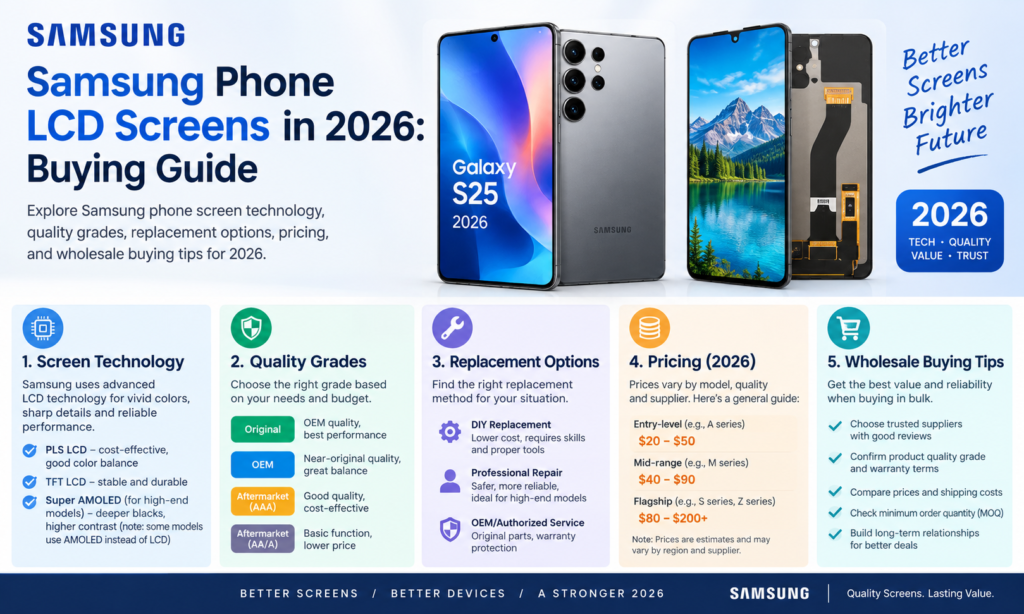
2026 A Samsung telefon képernyőjének piaci áttekintése
A Samsung továbbra is az egyik legfontosabb név a globális okostelefon-kijelzőiparban, de a „Samsung LCD képernyőkről” beszélünk 2026 fontos megkülönböztetést igényel: sok modern Galaxy telefon már nem használ hagyományos LCD-panelt. Helyette, A Samsung fokozatosan továbbfejlesztette okostelefon-portfólióját OLED és AMOLED technológiák, különösen a prémium Galaxy S és Galaxy Z családokban, valamint a Galaxy A sorozat nagy részén. A Samsung saját üzleti jelentése szerint az OLED becsült értéket képvisel 51% a globális okostelefon-panelpiacon 2025, felfelé 50.7% be 2024, miközben a vállalat továbbra is vezető mobil OLED-szállítóként pozícionálja magát.
Ez a műszak megváltoztatja a javítóműhelyek működését, forgalmazók, nagykereskedők, és a végfelhasználóknak gondolniuk kell a csereképernyőkre 2026. Egy egyszerűen „Samsung LCD”-ként hirdetett képernyő valójában egy AMOLED csere, merev OLED, rugalmas OLED, vagy utángyártott LCD átalakítás, a Galaxy modelltől függően. Csere kijelzőket vásárló vállalkozás számára, a különbség nem kozmetikai. A panel technológia befolyásolja a fényerőt, fekete szintek, frissítési gyakoriság, vastagság, érintési teljesítmény, akkumulátor viselkedése, tartósság, ár, és az ügyfelek elégedettsége. Azt is meghatározhatja, hogy egy csere az eredeti gyári kijelzőhöz hasonlít-e, vagy csak olcsóbb helyettesítőként funkcionál.. In 2026, ez a megkülönböztetés még fontosabbá válik, mivel az okostelefon-összetevők növekvő költségei arra ösztönzik a gyártókat és a beszállítókat, hogy olcsóbb kijelzőmegoldásokat keressenek.. Az Omdia előrejelzése szerint az AMOLED okostelefonok globális szállítása csökkenni fog 2026 magasabb memóriaárak és gyengébb kereslet közepette, áprilisi előrejelzésével 2026 AMOLED-szállítmányok kb 778 millió egység.
Miért használ a Samsung AMOLED-et a hagyományos LCD helyett?
A hagyományos LCD technológia a folyadékkristály réteget megvilágító háttérvilágításon alapul, míg az OLED pixelek saját fényt állítanak elő. Ez az alapvető különbség számos előnnyel jár az AMOLED kijelzőknek, amelyek különösen jól illeszkednek a modern Galaxy okostelefonokhoz. Az egyes OLED pixelek teljesen kikapcsolhatók, mély feketék és nagy kontraszt létrehozása külön háttérvilágítás nélkül. A technológia azt is lehetővé teszi a gyártók számára, hogy vékonyabb kijelző-összeállításokat készítsenek, és támogatja a prémium okostelefonokban található egyre keskenyebb kereteket és ívelt vagy rugalmas alaktényezőket.. A Samsung jelenlegi Galaxy kijelzőstratégiája ezt az irányt tükrözi, a vállalat a magas frissítési gyakoriságot hangsúlyozta, nagy fényerő, továbbfejlesztett képfeldolgozás, és speciális kijelzőszerkezetek, ahelyett, hogy visszatérnénk a hagyományos LCD-hez, mint a prémium telefonok elsődleges technológiájához.
Javító vállalkozások számára, viszont, a szót AMOLED nem szabad automatikusan az eredeti minőség garanciájaként kezelni. A cserepiac különböző minőségeket tartalmaz, gyártási források, és összeszerelési konfigurációk. A kiváló minőségű csere az eredeti telefon vizuális teljesítményének nagy részét reprodukálhatja, míg egy olcsóbb panel színhőmérsékletbeli különbségeket mutathat, fényesség, érintésérzékenység, látószög, energiafogyasztás, vagy a frissítési ráta viselkedését. Ez az oka annak, hogy a professzionális vásárlónak a teljes képernyő-összeállítást kell értékelnie, nem pedig pusztán a legalacsonyabb egységár alapján vásárolni.. Előfordulhat, hogy a Samsung Galaxy vásárlók nem ismerik az OLED közötti technikai különbséget, AMOLED, és LCD, de azonnal észreveszik, ha a csereképernyő halványnak tűnik, szokatlan színei vannak, rosszul reagál az érintésre, vagy másként viselkedik görgetés közben. Gyakorlati szempontból, a kijelző a telefon ablaka az operációs rendszerre, így egy gyengébb minőségű panelre cserélve olcsón érezheti magát egy egyébként kiváló Galaxy készülék.
Samsung Galaxy S Series kijelzők 2026
A Galaxy S sorozat a Samsung prémium okostelefon-kijelző technológiáját képviseli, és a 2026 A Galaxy S26 generációja bemutatja, hogy a vállalat milyen messzire lépett túl a hagyományos LCD-n. A Samsung jelenlegi termékinformációi szerint a Galaxy S26 Ultra 6,9 hüvelykes kijelzővel rendelkezik, akár 120 Hz-es frissítési gyakorisággal és maximum fényerővel. 2,600 nits. A Samsung az S26 Ultra hardveralapú adatvédelmi kijelzőjét is kiemeli, amely szűkíti a tényleges látószöget, hogy megakadályozza, hogy a közelben lévők érzékeny tartalmat lássanak..
Képernyőcsere vásárlóknak, ezek a specifikációk komoly kihívást jelentenek: nem minden cserepanel képes reprodukálni az eredeti élményt. Egy alapszintű utángyártott képernyő fizikailag passzolhat a telefonhoz, de még mindig jelentősen eltér a fényerőben, színpontosság, érintésre adott válasz, frissítési gyakoriság, vagy látószög. Az S26 Ultra adatvédelmi kijelzője ezt még speciálisabbá teszi, mivel az adatvédelmi funkció a kijelző hardverébe van integrálva, nem pedig egy egyszerű külső adatvédelmi film.. Az iFixit által az S26 Ultra lebontása azt is megállapította, hogy a kijelző javítási útja különösen megerőltető annak ellenére, hogy az eszköz más részein pozitív javíthatósági jellemzők vannak.
| Samsung telefon kategória | Tipikus megjelenítési irány befelé 2026 | Csere prioritás |
|---|---|---|
| Galaxy S zászlóshajója | Prémium AMOLED/OLED | Eredeti vagy kiváló minőségű OLED |
| Galaxy S Ultra | Fejlett AMOLED/OLED speciális funkciókkal | A legjobb minőségű kompatibilis összeállítás |
| Galaxy Z Fold | Rugalmas OLED | Speciális összecsukható OLED |
| Galaxy Z Flip | Rugalmas OLED | Speciális összecsukható OLED |
| Galaxy A középkategóriás | Az AMOLED/OLED egyre gyakoribb | Modellspecifikus OLED/OLED-kompatibilis megoldás |
| Régebbi/takarékos Galaxy modellek | Generációtól függően LCD vagy OLED | Rendelés előtt erősítse meg az eredeti panel típusát |
A Samsung Galaxy A sorozat és a változó kijelző-ellátási lánc
A Galaxy A család különösen érdekes a 2026 csereképernyők piacán, mert a Samsung egyensúlyban tartja a teljesítményt, kiskereskedelmi árképzés, alkatrész költségei, és az ellátási lánc rugalmassága. Jelentések be 2026 azt jelzi, hogy a Samsung jelentős mennyiségű OLED panelt szerezhet be kínai beszállítóktól néhány közelgő Galaxy A és FE készülékhez, a költségcsökkentés fontos motiváció. Az egyik jelentés körülbelüli sorrendet idézett 15 millió OLED panel a China Star Optoelectronics Technology cégtől bizonyos jövőbeli Galaxy modellekhez.
Ez a fejlődés azért számít, mert a szavak Samsung telefon kijelzője és Samsung gyártmányú kijelzőpanel egyre inkább leírhat két különböző dolgot. Galaxy okostelefon is tervezhető, összeszerelve, márkás, és a Samsung értékesíti, miközben egy másik kijelzőszállító által gyártott kijelzőpanelt használ. Nagykereskedőknek, ez egyszerre teremt lehetőségeket és bonyodalmakat. Több beszállító növelheti a panelek rendelkezésre állását, és potenciálisan csökkentheti a csereköltségeket, de fontosabbá teszi a minőségi osztályozást is. A vásárlóknak figyelniük kell a panelek eredetére, technológia, fényesség, felbontás, frissítési gyakoriság, érintési teljesítmény, keret kompatibilitás, és minőség-ellenőrzési eljárások ahelyett, hogy feltételeznénk, hogy minden Samsung-kompatibilis modellszámmal rendelkező képernyő azonos specifikációkkal rendelkezik.
LCD vs OLED vs AMOLED Samsung képernyőcsere
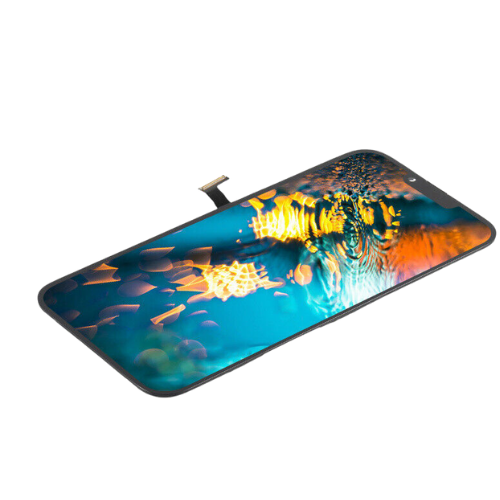
Samsung csereképernyők vásárlásakor, az első kérdés az legyen valójában milyen technológiát használt az eredeti telefon? LCD, OLED, és az AMOLED nem cserélhető fel, egyszerűen azért, mert mindegyik képes megjeleníteni az Androidot. Az LCD háttérvilágítást igényel, míg az OLED pixelszintű fényt állít elő, alapvetően eltérő optikai struktúra létrehozása. Az AMOLED a Samsung aktív mátrix OLED technológiájának megvalósítása, és széles körben kapcsolódik a modern Galaxy okostelefonokhoz.
Régebbi Samsung modellekhez, amelyeket eredetileg LCD-panellel szállítottak, az LCD csere ésszerű és gazdaságos választás lehet. Egy eredetileg AMOLED köré tervezett Galaxy modellhez, viszont, a kijelző LCD konverzióra cseréje kompromisszumot jelenthet a vastagságban, kontraszt, fekete szintek, fényesség, hatalmi viselkedés, és az általános megjelenés. Egyes javítást végző ügyfelek elfogadhatják ezeket a kompromisszumokat, mert az ár a fő szempont, míg mások azt várják, hogy a csere a lehető legközelebb álljon a gyári képernyőhöz. Éppen ezért a professzionális árajánlatnak egyértelműen meg kell határoznia a panel típusát, nem pedig olyan homályos kifejezéseket, mint a „kiváló minőség” vagy az „eredeti minőség”. Az átlátható szállítónak közölnie kell a vásárlókkal, hogy a termék eredeti-e, húzta, felújított, OEM minőségű, utángyártott OLED, vagy LCD átalakítás.
Eredeti, Húzták, Felújított és utángyártott Samsung képernyők
A cserepiac általában több minőségi kategóriát tartalmaz, és ezek megértése megelőzheti a drága hibákat. An eredeti új képernyő összeállítás általában a gyári alkatrészhez legközelebbi egyezést képviseli, bár a rendelkezésre állás és az ár modellenként jelentősen eltérhet. A húzott képernyő eltávolítva egy másik eszközről, és eredeti lehet, de az állapota a forrástelefontól és a korábbi használattól függ. A felújított képernyő jellemzően egy használt kijelzőegység bizonyos alkatrészeinek helyreállítását vagy cseréjét foglalja magában, miközben egy utángyártott képernyő önállóan gyártják, és a beszállítótól és a gyártási folyamattól függően a nagyon jótól a gyengeig terjedhet.
A megfelelő választás az ügyféltől és a javítási vállalkozástól függ. A közel eredeti teljesítményre vágyó ügyfeleket kiszolgáló prémium javítóműhely előnyben részesítheti az eredeti vagy a csúcsminőségű felújított szerelvényeket. Egy nagy volumenű javítóközpont, amely erősen verseng az árakkal, ehelyett több utángyártott minőséget is tartalmazhat. A nagykereskedők hasznosabb termékskálát hozhatnak létre, ha a termékeket egyértelműen meghatározott kategóriákba osztják, ahelyett, hogy mindent egyetlen általános „Samsung LCD” címke alatt adnának el.. A legsikeresebb beszerzési stratégia nem feltétlenül a legolcsóbb panel megtalálása; ez megtalálja a legalacsonyabb összköltség, amely még mindig megfelel az elvárt minőségi szintnek.
Főbb minőségellenőrzések Samsung csereképernyők vásárlása előtt
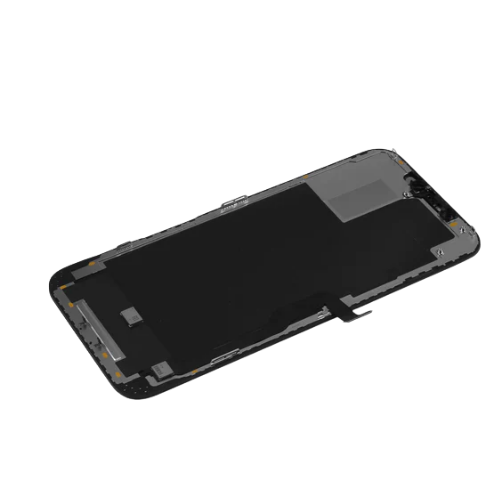
Egy jó Samsung képernyő-ellenőrzés jóval túlmutat annak ellenőrzésén, hogy a kijelző bekapcsol-e. A professzionális vásárlóknak meg kell vizsgálniuk a panelen az elhalt pixeleket, rendellenes színvisszaadás, egyenetlen fényerő, érintse meg a holt zónákat, szellem érintés, beégés, képmegtartás, vonalhibák, háttérvilágítási problémák az LCD-termékeken, és fizikai sérülés a keret vagy a hajlékony kábel körül. AMOLED termékeken, a vásárlóknak az árnyalatra is figyelniük kell, egységessége, fekete szintű viselkedés, fényerő konzisztencia, és hogy a panel megfelelően viselkedik-e különböző frissítési gyakoriság mellett.
Tömeges megrendelésekhez, a minőség-ellenőrzés még fontosabbá válik, mert egy kis hibaszázalék jelentős anyagi veszteséget okozhat több száz darab vásárlásakor. Ideális esetben a szállítónak egy meghatározott ellenőrzési eljárást és egyértelmű jótállási szabályzatot kell biztosítania a megrendelés feladása előtt. A javítóvállalkozásoknak adott esetben fontos funkciókat is tesztelniük kell, például az ujjlenyomat-kompatibilitást, közelségérzékelő viselkedés, érintési pontosság, adaptív fényerő, és a telepítés után megjeleníti a választ. Egy egyszerű „kigyullad” teszten átmenő képernyő nem feltétlenül kereskedelmileg elfogadható csere. Tekintse az ellenőrzési folyamatot szűrőként: annál alaposabban szűri a bejövő készletet, annál kevesebb ügyfélpanasz érkezik a javítópultjához.
Samsung képernyőcsere ára 2026
Nincs egyetlen Samsung LCD képernyő ára 2026 mert a csereköltségek modellenként rendkívül eltérőek, panel technológia, minőségi fokozat, szállító, régióban, és hogy a terméket csupasz panelként vagy komplett összeállításként értékesítik. Egy prémium Galaxy S Ultra kijelző sokszorosába kerülhet, mint egy régebbi olcsó Galaxy modell csereképernyője. Az összecsukható kijelzők egy másik kategória, mivel a rugalmas OLED-konstrukció és a speciális összeszerelési követelmények lényegesen bonyolultabbá és költségesebbé tehetik a cserét.. A Samsung legújabb javítási elemzése 2026 A zászlóshajó készülékek azt is bemutatják, hogy a kijelző felépítése hogyan befolyásolhatja a javítási nehézségeket, nem csak magának a panelnek az ára.
| Képernyő kategória | Relatív költség | Tipikus vásárló | Fő szempont |
| Alap LCD csere | $ | Költségvetési javítás | Alacsony költség |
| Szabványos utángyártott OLED | $$ | Ártudatos javítóműhely | Ár és minőség egyensúlya |
| Kiváló minőségű OLED | $$$ | Szakszerű javítás | Jobb vizuális teljesítmény |
| Eredeti/prémium összeszerelés | $$$$ | Prémium javítás | Legközelebbi gyári tapasztalat |
| Összecsukható OLED összeállítás | $$$$+ | Speciális javítás | Komplex építés és szerelés |
Mert a nagykereskedelmi árak a kínálattal együtt változnak, modell kora, árfolyamok, logisztika, és a panel elérhetősége, buyers should request current quotations rather than relying on an old price list. In 2026, rising component costs are also putting pressure on smartphone manufacturers and display suppliers, which means market prices can move faster than they did during more stable periods. Omdia specifically identifies rising memory costs and broader supply-chain pressures as factors influencing smartphone and AMOLED procurement decisions in 2026.
2026 Trends in Samsung Replacement Screen Wholesale
The wholesale market is becoming more segmented. Instead of one generic replacement product for each model, suppliers increasingly compete through different grades, beleértve az eredetit is, felújított, premium aftermarket OLED, standard aftermarket OLED, and lower-cost LCD alternatives where technically feasible. Ez a szegmentálás nagyobb rugalmasságot biztosít a javítóműhelyeknek, mivel a képernyőt az ügyfél költségvetéséhez igazíthatják ahelyett, hogy csak egy terméket kínálnának..
Egy másik fontos trend az beszállítói diverzifikáció. A Samsung saját kijelző üzletága továbbra is jelentős erőt képvisel, de a Samsung további OLED-kapacitást a kínai gyártóktól való beszerzéséről szóló jelentések azt mutatják, hogy a kijelző-ellátási láncok hogyan válnak rugalmasabbá. Nagykereskedőknek, ez nagyobb hozzáférést jelenthet a versenyképes OLED-termékekhez, de ez azt is jelenti, hogy erősebb minőség-ellenőrzési rendszerekre van szükség. Amikor több gyár vizuálisan hasonló termékeket állít elő, a szállító, aki stabil minőséget tud nyújtani, pontos modellkompatibilitás, egységes csomagolás, a hibás egységek gyors cseréje, és a megbízható logisztika értékesebb lehet, mint a legalacsonyabb kezdeti árajánlatot kínáló szállító.
Összecsukható Samsung képernyők: A Specialized 2026 Piac
A Samsung Galaxy Z Fold és Z Flip családja teljesen más kategóriába sorolta az okostelefonok kijelzőit. A hagyományos merev panel helyett, Az összehajtható telefonok rugalmas OLED-szerkezeteket használnak, amelyeket úgy terveztek, hogy tolerálják az ismételt hajlítást. Ez új javítási kihívásokat jelent, mivel a kijelző nem csak egy lapos alkatrész; ez egy gondosan megtervezett rendszer része, amely magában foglalja a rugalmas panelt, védőrétegek, csuklós mechanizmus, keret, és a kapcsolódó alkatrészek.
A Galaxy Z Fold 8 Ultra, beengedték 2026, 8 hüvelykes belső OLED kijelzővel és 6,5 hüvelykes külső képernyővel szemlélteti a piac prémium végét. A készülék azt is bemutatja, miért bonyolultabb az összehajtható képernyő javítása, mint egy hagyományos lapos telefonkijelző cseréje. Az iFixit korai javíthatósági értékelése megadta a Fold-ot 8 az ideiglenes pontszám 4/10 és kiemelte a csuklópánttal és a törmelékkel kapcsolatos javíthatósággal kapcsolatos aggályokat. Nagykereskedőknek, ez azt jelenti, hogy az összehajtható Samsung képernyőket speciális termékkategóriaként kell kezelni, nem pedig egyszerűen egy Galaxy cserealkatrészként.
Hogyan válasszunk Samsung képernyőszállítót? 2026
A beszállító kiválasztását azzal kell kezdeni a termék átláthatósága. Kérdezze meg, hogy a szállító pontosan mit ért eredeti alatt, OEM, felújított, utángyártott, OLED, AMOLED, vagy LCD. Ezután kérdezze meg, hogyan tesztelik az egyes képernyőket, mekkora az elfogadható hibaarány, milyen jótállási idő vonatkozik rá, és hogyan kezelik a hibás termékeket. Egy olyan beszállítóval, aki egyértelműen válaszol ezekre a kérdésekre, általában könnyebb együtt dolgozni, mint azzal, aki egyszerűen alacsony árat küld technikai információk nélkül.
A második tényező a következetesség. Egy kiváló minta nem garantálja, hogy a következő 100 az egységek ugyanúgy fognak működni. Nagy rendelés leadása előtt, a javítóvállalkozásoknak lehetőség szerint tesztelniük kell a tényleges gyártási tételből származó mintákat. Ellenőrizze a fényerőt, érintés, szín, frissítési gyakoriság, illeszkedik, keret minősége, flex-kábel konstrukció, és kompatibilitás az adott Samsung modellel. Szintén okos a tételszámok és a hibaarányok nyilvántartása, mivel ezek az információk segítenek azonosítani az ismétlődő problémákat, és konkrét bizonyítékot szolgáltatnak a szállítónak, ha minőségi vita lép fel..
A Samsung képernyő-logisztikai és csomagolási kockázatai
Egy jó minőségű kijelző akkor is rossz üzleti vásárlás lehet, ha sérülten érkezik meg. Az okostelefonok képernyői érzékeny alkatrészek, és a csomagolásnak védenie kell az üvegfelületet, flex kábel, csatlakozó, és keret ütés ellen, nyomás, rezgés, nedvesség, és a helytelen egymásra rakás. Az ömlesztett szállítmányoknál megfelelő egyéni védelmet kell használni erős külső kartondobozokkal kombinálva, a beszállítóknak pedig egyértelműen el kell különíteniük a különböző modelleket és minőségeket, hogy csökkentsék a raktári hibákat.
Nemzetközi vásárlóknak, a szállítási mód is befolyásolja a teljes kirakodási költséget. Az expressz szállítás általában vonzó a sürgős cserekészletekhez, mert csökkentheti a készletezési időt, míg a légi fuvarozás vagy a konszolidált fuvarozás ésszerűbb lehet nagyobb megrendeléseknél. A legolcsóbb egységár nem feltétlenül a legolcsóbb vásárlás a szállítás után, vám, hibás egységek, újracsomagolás, és a csere költségeit is tartalmazza. A hasznos vásárlási képlet egyszerű: landed cost = termékköltség + teherszállítás + vámok/adók + ellenőrzés költsége + várható hibaköltség + kezelési költség. A teljes egyenlet áttekintése segít a nagykereskedőknek a beszállítók intelligensebb összehasonlításában.
A Samsung telefonkijelzők jövője túlmutat 2026
A Samsung kijelzőkutatása azt sugallja, hogy az okostelefonok következő generációja sokkal többre fog összpontosítani, mint a felbontás növelésére. Az MWC-nél 2026, A Samsung Display bemutatta a LEAD-et 2.0 technológia, a jelentések szerint a prototípus fényereje eléri a 5,000 nittek és kialakítások, amelyek a nagy fénysűrűség kombinálását célozzák, erős színteljesítmény, és nagyon keskeny keretek. Közben, A Samsung kereskedelmi forgalomban kapható Galaxy S26 Ultra már bemutatja az irányt a speciális kijelzőfunkciók felé az integrált adatvédelmi kijelzőn keresztül.
Ez arra utal, hogy a jövőbeni cserepiac egyre specializálódottabb lesz. Egy egyszerű „képernyőcsere” során előfordulhat, hogy meg kell őrizni a fejlett funkciókat, például az adatvédelmi szabályozást, adaptív frissítés, nagy fényerejű viselkedés, biometrikus kompatibilitás, kis teljesítményű működés, és kifinomult érintési funkciók. Javítóműhelyeknek és nagykereskedőknek, ez azt jelenti, hogy a technikai tudás versenyelőny lesz. Azok a vállalkozások, amelyek továbbra is minden kijelzőt cserélhető üvegként kezelnek, nehézségekbe ütközhetnek, míg azok, akik értenek a panelépítészethez, minőségi fokozatok, tesztelés, és a modell-specifikus kompatibilitás jobb helyzetben lesz az ügyfelek kiszolgálásához.
Samsung LCD-képernyő vásárlási ellenőrzőlista javítóműhelyek számára
Mielőtt megrendelné a Samsung csereképernyőket 2026, egy javítási vállalkozás használhatja a következő ellenőrzőlistát:
- Erősítse meg a pontos Samsung modell és regionális változat.
- Ellenőrizze, hogy az eredeti képernyő-e LCD, OLED, AMOLED, vagy rugalmas OLED.
- Kérdezd meg, hogy van-e csere eredeti, húzta, felújított, OEM minőségű, vagy utángyártott.
- Erősítse meg a felbontást, frissítési gyakoriság, fényesség, érintési teljesítmény, és a keret konfigurációja.
- Teszteljen mintákat a nagyméretű nagykereskedelmi rendelések leadása előtt.
- Kérdezzen az elhalt pixelekről, érintési hibák, beégés, színproblémák, és elfogadható hibaarányok.
- Erősítse meg a szállító garanciális és cserepolitikáját.
- Nemzetközi szállítás előtt ellenőrizze a csomagolás minőségét.
- Az egységárak összehasonlítása helyett inkább számítsa ki a teljes leszállási költséget.
- A különböző minőségi fokozatokat egyértelműen fel kell tüntetni a készletben.
A professzionális vásárlási folyamat kevésbé egy varázslatos „legjobb Samsung képernyő” megtalálásáról szól, hanem arról, hogy a megfelelő terméket a megfelelő vásárlóhoz illessze.. Egy javítóműhelynek gazdaságos megoldásra lehet szüksége egy régebbi Galaxy A modellhez, míg az S Ultra zászlóshajóját javító ügyfél olyan cserére számíthat, amely megőrzi az eredeti vizuális élményt. Sok beszerzési hiba kezdődik, ha ezt a két munkát azonosként kezeljük.
Következtetés
A Samsung telefon képernyők piaca 2026 már nem nevezik pontosan LCD-piacnak. A hagyományos LCD továbbra is releváns bizonyos régebbi és olcsó készülékek esetében, de Az AMOLED és az OLED uralja a Samsung modern okostelefon-kijelző technológiájának irányát, különösen a prémium Galaxy készülékekben és összecsukható készülékekben. Samsung’s latest products show a clear focus on high refresh rates, nagy fényerő, vékonyabb keretek, rugalmas kijelzők, privacy functionality, és javított energiahatékonyság, míg az iparági előrejelzések bonyolultabbra mutatnak 2026 a komponensek költségei által alakított piac, gyengébb AMOLED-szállítmány-növekedés, és az egyre versenyképesebb panelbeszerzés.
Javítóműhelyeknek és nagykereskedőknek, a legnagyobb lecke egyszerű: szó alapján ne vegyél Samsung csereképernyőt LCD, a legalacsonyabb ár, vagy a szállító általános minőségi állítása. Azonosítsa az eredeti megjelenítési technológiát, összehasonlítani a csereminőségeket, vizsgálati minták, értékelje a szállító minőség-ellenőrzési folyamatát, és kiszámítja a teljes leszállási költséget. Ahogy a Samsung folytatja a fejlett OLED technológiát, és a harmadik féltől származó panelek beszerzése egyre gyakoribbá válik egyes termékszinteken, a cserepiac valószínűleg több választási lehetőséget kínál majd, de több lehetőséget is kínál majd a minőségi zavarokra. Azok a vállalkozások lesznek a legerősebb helyzetben, amelyek megértik ezeket a különbségeket, hogy a Samsung képernyőcserét megbízható és jövedelmező termékkategóriává alakítsák..
GYIK
1. A Samsung telefonok még mindig LCD képernyőt használnak? 2026?
Igen, egyes Samsung telefonok és régebbi Galaxy modellek továbbra is használhatják az LCD technológiát, de a vállalat modern okostelefon-portfóliója erősen eltolódott az OLED és az AMOLED felé. A prémium Galaxy S és Z modellek középpontjában a fejlett OLED technológiák állnak, míg a Galaxy A és a pénztárcabarát készülékek pontos paneltechnológiája típustól és generációtól függ.
2. Az AMOLED jobb, mint az LCD a Samsung telefonjavításhoz?
Általában, Az AMOLED mélyebb feketét kínál, nagyobb kontraszt, vékonyabb konstrukció, és jobb támogatást nyújt a prémium minőségű okostelefonokhoz. Viszont, Az AMOLED csereképernyők általában drágábbak, és nem minden utángyártott AMOLED panel felel meg az eredeti minőségének. A legjobb választás a telefon típusától függ, vásárlói elvárások, és a javítási költségvetés.
3. Honnan tudhatom meg, hogy a Samsung csereképernyő jó minőségű-e??
Tesztelje többet, mint hogy bekapcsol-e. Ellenőrizze a fényerőt, szín egységessége, érintési pontosság, halott pixelek, frissítési gyakoriság, látószögek, adott esetben ujjlenyomat funkció, rugalmas kábel minőség, keret illeszkedik, és beégés vagy képhibák jelei. Nagykereskedelmi vásárláshoz, mindig teszteljen mintákat, és kössön egyértelmű garanciális és hiba-visszaküldési megállapodást a szállítóval.
4. Miért olyan drágák a Samsung zászlóshajó csereképernyői??
A zászlóshajó kijelzők fejlettebb technológiákat használnak, és magas frissítési gyakoriságot is tartalmazhatnak, nagy fényerő, speciális védőrétegek, integrált biometrikus funkciók, vagy egyéb hardverfunkciók. Az összecsukható modellek még bonyolultabbak, mert rugalmas OLED-szerelvényeket és speciális konstrukciót igényelnek. Ezek a tényezők növelik a termelést, beszerzése, és javítási költségek.
5. Mire kell figyelniük a nagykereskedőknek, amikor nagy mennyiségben vásárolnak Samsung képernyőket??
A nagykereskedőknek összpontosítaniuk kell egyenletes minőség, pontos modellkompatibilitás, megbízható ellátás, átlátszó termékosztályozás, ellenőrzési eljárások, garanciális támogatás, csomagolás, és a teljes leszállási költség. Egy kicsivel magasabb árú, alacsonyabb hibaarányú képernyő lényegesen jövedelmezőbb lehet, mint egy olcsóbb termék, amely gyakori visszaküldést és vásárlói panaszokat generál..